“
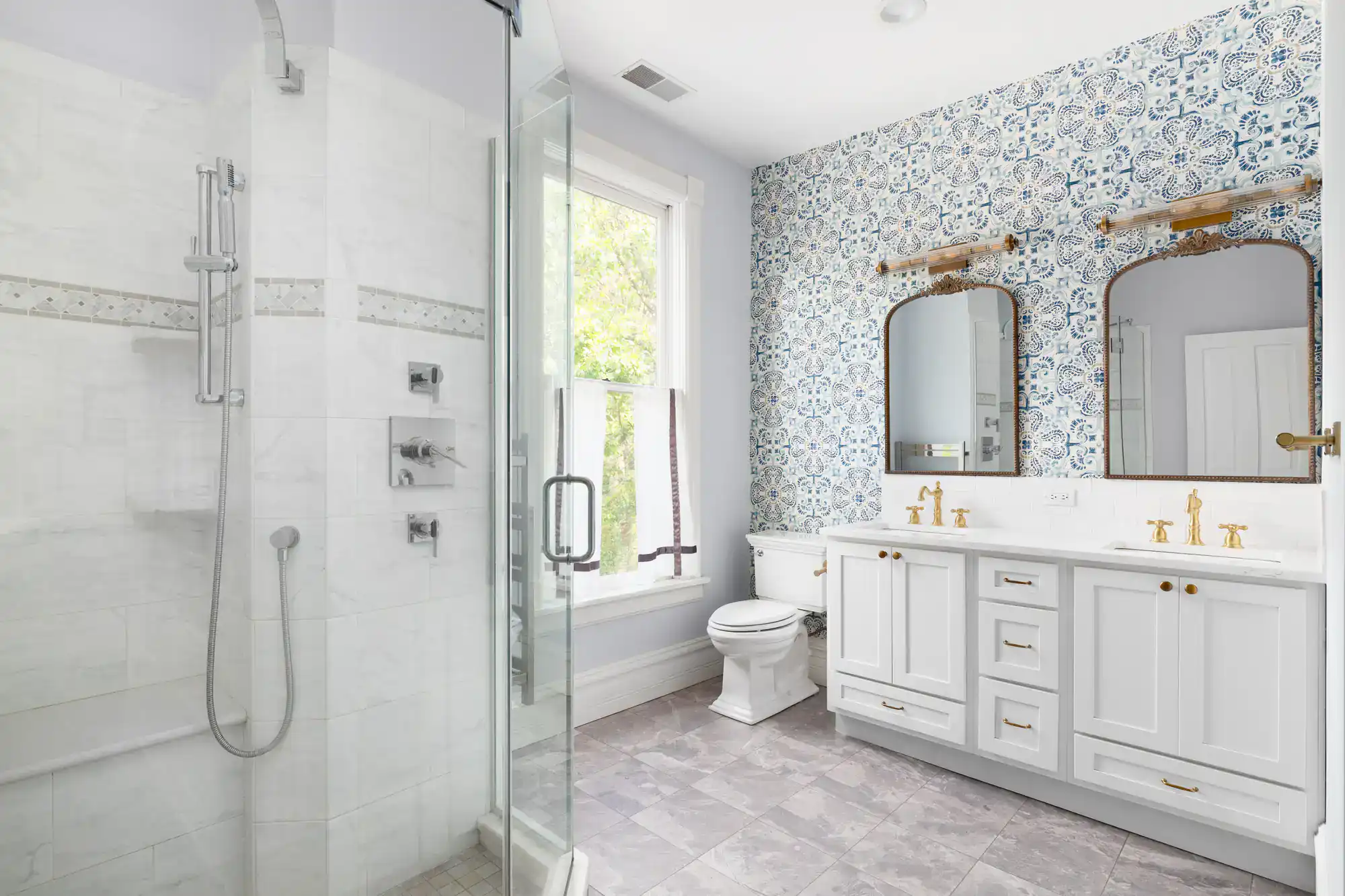
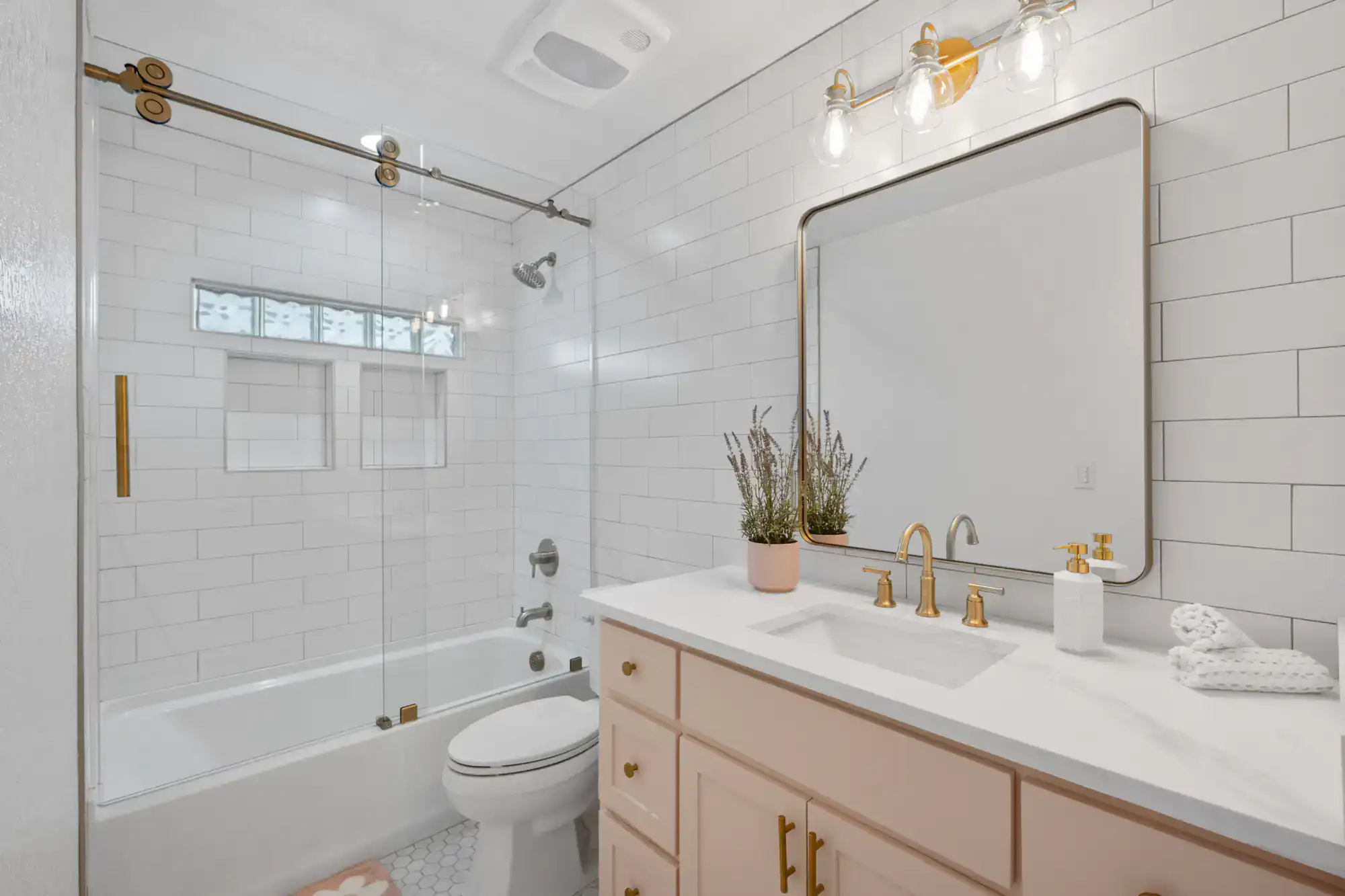
When a bathroom remodel is done well, you stop noticing the bathroom in the best way. The grout isn’t something you’re embarrassed about anymore. The shower actually works the way you want it to. The layout fits how you live, not how the builder assumed you would.
For Clarksburg homeowners, that matters more than it might somewhere else. The majority of homes here were built between 2000 and 2019, which means a large portion of bathrooms in Clarksburg Village, Arora Hills, and Cabin Branch are now 15 to 25 years into their original builder-grade finishes. Those materials weren’t designed for longevity they were designed to get the house sold.
Maryland’s humid summers put real stress on grout lines, caulk seams, and waterproofing that was never installed with the long game in mind. The heat and moisture that rolls through Montgomery County from June through September accelerates deterioration in bathrooms that weren’t built to last.
A properly remodeled bathroom holds up to all of that. Professional-grade waterproofing, correctly ventilated showers, and materials chosen for your specific space not for a subdivision’s budget make a real difference in how the room performs over time. In a home worth $679,000, that’s not a cosmetic upgrade. It’s a decision that protects what you’ve built.
We were founded in 1973 before Clarksburg Village existed, before Arora Hills broke ground, before the I-270 corridor became what it is today. That’s not a trivia point. It means we’ve been working in Montgomery County long enough to know how the permitting process actually works, what the local building codes require, and what shortcuts look like five years later when a homeowner calls back with a leak.
We’re based in Bethesda, licensed in Maryland under MHIC #28145, and bonded and insured. We hold active licenses in DC and Virginia as well, which matters if you’ve owned property across the DMV or are comparing contractors who only operate in one state. We handle tile, painting, carpentry, and plumbing coordination under one roof so you’re not managing three different vendors and hoping they show up on the same day. One team. One schedule. One point of accountability.
Reviews mention crew members by name. That’s not an accident it’s what consistent, in-house work looks like.
It starts with a detailed estimate not a ballpark, not a range designed to get a foot in the door. Before any work begins, you’ll know what’s included, what the timeline looks like, and what to expect at each stage. That specificity matters because it’s the absence of it that causes most remodeling headaches.
Once the scope is agreed on, permits come next. In Clarksburg, bathroom remodeling falls under Montgomery County’s Department of Permitting Services, and any plumbing or electrical work requires separate trade permits on top of the base alteration permit. There’s also a sequential inspection process that’s specific to this area: the Washington Suburban Sanitary Commission has to inspect and sign off before Montgomery County will even schedule its own inspection. A contractor who doesn’t know that can cost you days sometimes more. We handle the permit process, coordinate the inspections, and keep the project moving without putting that burden on you.
If your home is in Clarksburg Village, Arora Hills, or Cabin Branch, your HOA may also have deed restrictions that apply to construction work. That’s a layer most contractors don’t mention upfront. We do, because it’s easier to get it right the first time than to unwind something that wasn’t approved.
From there, the work follows a clear sequence: demolition, waterproofing, tile and installation, fixtures, paint, and final walkthrough. Surface preparation gets real attention not rushed because that’s where long-term quality is either built or lost.
Ready to get started?
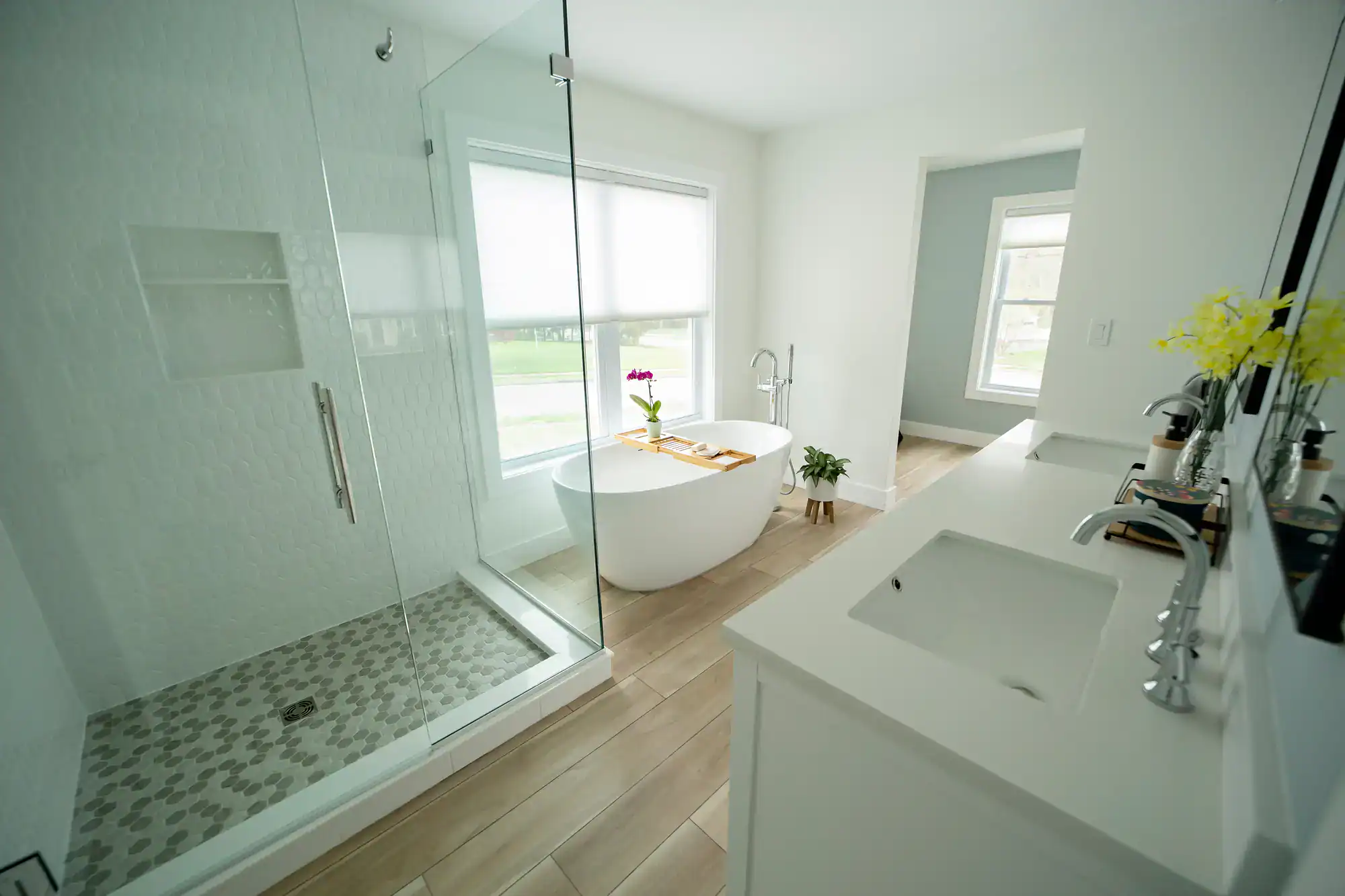
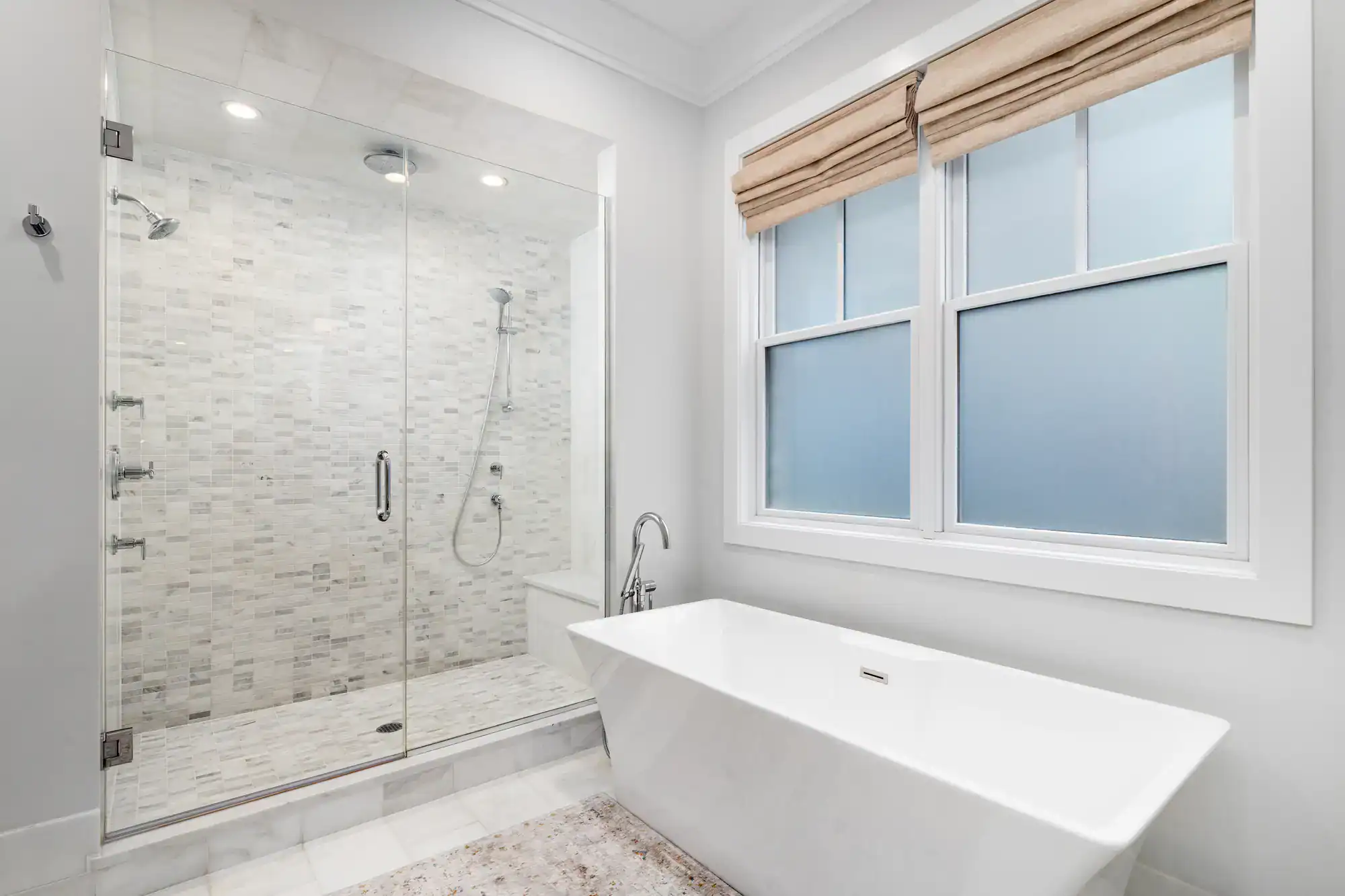
We handle the full range of bathroom renovation work from complete gut-and-rebuild projects to focused upgrades like walk-in shower installation, floor and wall tiling, vanity replacement, and shower remodeling. If you’re converting a tub to a walk-in shower, we design the space to work: custom benches, built-in shelving, half walls, tile layouts that make a smaller bathroom feel more open rather than more cramped.
For Clarksburg’s townhomes and attached units in communities like Arora Hills and Cabin Branch, small bathroom remodeling comes with its own set of considerations shared walls, limited floor space, HOA guidelines around plumbing modifications. Our full-service approach means those details don’t fall through the cracks between vendors. Everything stays coordinated because everything stays in-house.
Montgomery County’s humid climate is a real factor in how bathrooms age here. Proper ventilation sizing, multi-layer waterproofing membranes, and moisture-resistant substrate materials aren’t optional extras they’re what separates a bathroom that holds up for 20 years from one that starts showing problems in three. Every project we take on in this area is built with that in mind.
If aging-in-place features matter to you curbless shower entries, grab bars, bench seating those are part of the conversation too, and they’re increasingly common in remodels across the 45-and-older segment of Clarksburg’s homeowner base.
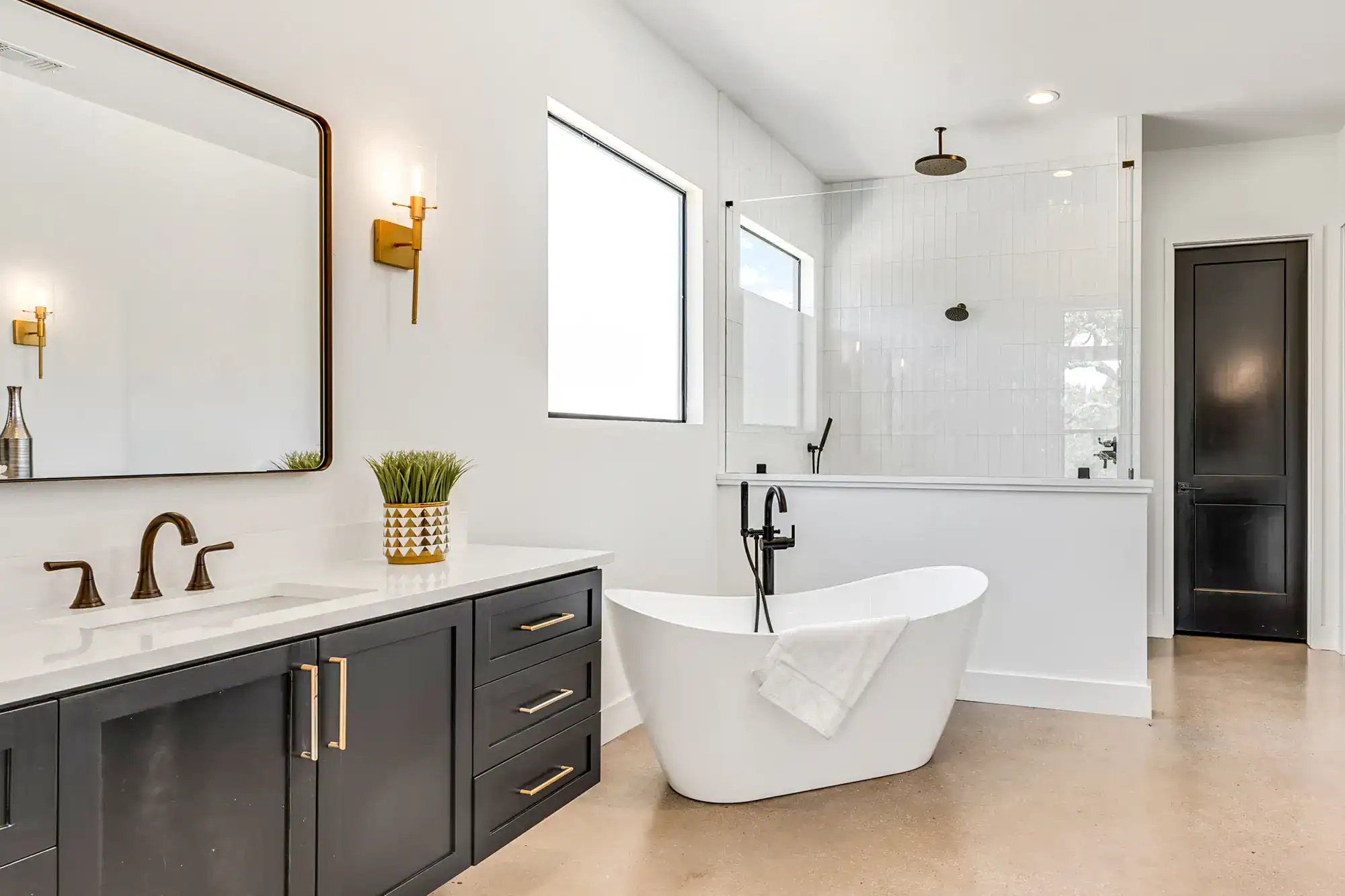
Yes, and it’s more involved than most homeowners expect. In Clarksburg, bathroom remodeling falls under Montgomery County’s Department of Permitting Services. You’ll need a base alteration permit for the remodel itself, plus separate trade permits for any plumbing or electrical work which covers things like moving a drain, replacing supply lines, adding outlets, or upgrading a ventilation fan.
What’s specific to this area is the inspection sequence. The Washington Suburban Sanitary Commission has to inspect the plumbing work and sign off before Montgomery County will even put you on the schedule for its own inspection. That’s a two-agency, sequential process, and a contractor who isn’t familiar with it can create delays that stretch your project timeline without any warning. We’ve been working in Montgomery County long enough to know how this works and handle the permit coordination as part of the job not something you have to chase down yourself.
Bathroom remodeling costs vary based on the scope of work, the size of the space, and the materials involved. Nationally, the median spend for a primary bathroom remodel is around $15,000 in 2025. Walk-in shower installations typically run between $6,000 and $12,000 depending on the design, tile selection, and whether plumbing relocation is involved.
In a market like Clarksburg where median home values are around $679,000 most homeowners are targeting mid-range to higher-end remodels, and the investment reflects that. A midrange bathroom remodel recoups approximately 80% of its cost at resale in 2025, which is the highest return since 2007. In practical terms, that means a well-executed bathroom renovation in a Clarksburg home isn’t just about the daily experience it’s a financially defensible decision. We provide detailed, itemized estimates before any work begins so you know exactly what you’re paying for and why.
A small bathroom remodel typically takes two to three weeks of active construction, with the full timeline including permitting running four to six weeks. A larger or more complex project, like a full master bath renovation, can take longer depending on scope and material lead times.
The disruption question is a real one, especially for households with a single bathroom. There will be days when the bathroom is fully out of service, particularly during demolition and tile work. What makes the difference is how the project is managed whether the crew shows up consistently, works in a logical sequence, and communicates what to expect each day. We keep a consistent, in-house team on each project rather than rotating subcontractors, which means the work moves in a predictable sequence and you’re not left wondering who’s showing up or when. In Montgomery County, the WSSC and county inspection sequence can add a few days to the timeline, and we account for that in the schedule upfront rather than presenting it as a surprise.
It can, depending on your specific HOA’s deed restrictions. Communities like Clarksburg Village, Arora Hills, and Cabin Branch all have HOA governance with construction covenants, and Montgomery County explicitly does not enforce those restrictions on your behalf. That means if your remodel involves work that falls under your HOA’s purview certain plumbing modifications, changes to shared infrastructure, or anything that affects exterior-visible elements you’re responsible for getting HOA approval before work begins.
Most contractors don’t raise this topic proactively, which is how homeowners end up in situations where completed work has to be reviewed or reversed after the fact. The smarter move is to address it at the planning stage. We’re familiar with the HOA landscape in Montgomery County’s master-planned communities and factor that compliance layer into the project conversation from the start. It’s not a complicated process when it’s handled in the right order it just has to be handled.
Often, yes and it’s one of the more common requests we handle across the DC metro area. The instinct is to assume a walk-in shower will make a small bathroom feel more cramped, but a well-designed one tends to do the opposite. Removing a bulky tub surround and replacing it with a frameless glass shower enclosure opens up sightlines and makes the room feel larger, not smaller.
For Clarksburg’s townhomes and attached units particularly in Arora Hills and Cabin Branch, where floor plans are more compact this is a practical upgrade that also aligns with what buyers want. More than 60% of homebuyers now prefer a shower over a tub in the primary bathroom, according to the National Association of Realtors. A custom walk-in shower with a built-in bench or integrated shelving also adds functional value that a standard tub-shower combo doesn’t offer. The key is designing the layout and tile selection to work with the space, not against it which is a conversation that happens during the estimate process, not after the work has started.
In Maryland, any contractor performing home improvement work is required to hold an active Maryland Home Improvement Commission license commonly called an MHIC license. This is the specific credential that authorizes a contractor to legally operate in Montgomery County, which is the jurisdiction Clarksburg falls under. You can verify any contractor’s MHIC license number directly through the Maryland Department of Labor’s online license lookup tool. It takes about two minutes and tells you whether the license is active, whether there are any complaints on file, and when it was issued.
Beyond the MHIC license, you want to confirm that the contractor carries general liability insurance and workers’ compensation coverage. General liability protects your home if something gets damaged during the project. Workers’ comp protects you from liability if someone on the crew gets hurt on your property. Both matter, and a legitimate contractor will provide certificates of insurance without hesitation when asked. We hold Maryland MHIC license #28145, are bonded and insured, and also hold active licenses in DC and Virginia which is relevant context if you’ve worked with contractors who only operate in one state and want to understand the difference in compliance infrastructure.
Other Services we provide in Clarksburg