“
Most Hillandale homes were built between the mid-1940s and the late 1960s. The split-levels, raised ramblers, and Cape Cods along the New Hampshire Avenue corridor were designed for a different era single-bathroom households, minimal ventilation, and no expectation of the daily wear that modern families put on a bathroom. What’s visible on the surface is rarely the whole story.
Behind original tile in a home that’s been standing since 1958, you might find galvanized pipes corroding from the inside, cast iron drain lines that haven’t been touched in decades, and subfloor moisture that’s been quietly accumulating without anyone noticing. A fresh coat of paint and a re-caulk don’t fix any of that.
When a bathroom remodel is done right with proper waterproofing, realistic planning for what’s behind the walls, and a crew that doesn’t cut corners on prep you end up with a bathroom that actually holds up. No grout cracking six months later. No tile shifting. No mold creeping in because the exhaust fan was undersized for Hillandale’s humid mid-Atlantic summers.
You also end up with a home that’s worth more. A midrange bathroom remodel recoups approximately 80% of its cost at resale in 2025 the highest return since 2007 and in a market where Hillandale homes regularly trade near or above $500,000, an updated bathroom is one of the clearest signals of a well-maintained property.
We were founded in 1973 which means we were remodeling bathrooms in Montgomery County before most of Hillandale’s homes had their first major renovation. That kind of history isn’t a marketing line. It means we’ve opened the walls of 1950s and 1960s DMV homes hundreds of times. We know what cast iron drain lines look like after 60 years. We know how to price a project with honest contingency rather than a lowball estimate that balloons mid-job.
We hold an active Maryland MHIC license (#28145), along with licenses in DC and Virginia which matters in Hillandale specifically, because this community straddles the Montgomery and Prince George’s County line. Depending on where your home sits, your permit goes through a different county’s office. We handle that coordination. You don’t have to become an expert in two counties’ building codes to get your bathroom done.
Reviewers on Yelp and Angi name crew members specifically Roger, Edgar, Luis and describe a team that shows up, does thorough prep work, and finishes what we start. That consistency matters in an established neighborhood like Old Hillandale or Hillandale Heights, where homeowners talk.
It starts with a conversation, not a sales pitch. We come out to your Hillandale home, look at what you’re working with, and give you a detailed written estimate that reflects the actual scope including what might be behind the walls in a home built before 1970. If there’s a realistic chance of finding galvanized supply lines or deteriorated subfloor material, that gets factored in upfront, not discovered mid-project and handed to you as a surprise invoice.
Once the scope is agreed on and the estimate is signed, permitting comes next. In Hillandale, that step depends on which side of the county line your home is on. Montgomery County residents go through the Department of Permitting Services, which also requires WSSC review for any plumbing work. If your home falls in the Prince George’s County portion of Hillandale, the process runs through a different office entirely. We manage all of it pulling the permits, scheduling inspections, and making sure everything is above board before a single tile is set.
This matters not just for the project itself, but for when you eventually sell or refinance. The construction phase for a standard bathroom remodel typically runs three to eight weeks depending on scope, with smaller bathrooms often completing in the lower end of that range. Demolition comes first, then any plumbing or electrical rough-in work, then waterproofing, then tile, then fixtures and finishes. Our crew cleans up after themselves. You’re kept in the loop throughout.
Ready to get started?
A bathroom remodel with us isn’t a fixture swap. It’s a full reconstruction of the space from the substrate out. Waterproofing is treated as a foundational step, not an afterthought. In older Hillandale homes where the original shower may have been built without a modern membrane system, or where a previous update used consumer-grade products over whatever was already there, getting the waterproofing right is the job.
Waterproofing failures are the leading cause of post-renovation insurance claims and cost between $2,000 and $12,000 to repair when they go wrong. Doing it correctly the first time is the only financially sound option.
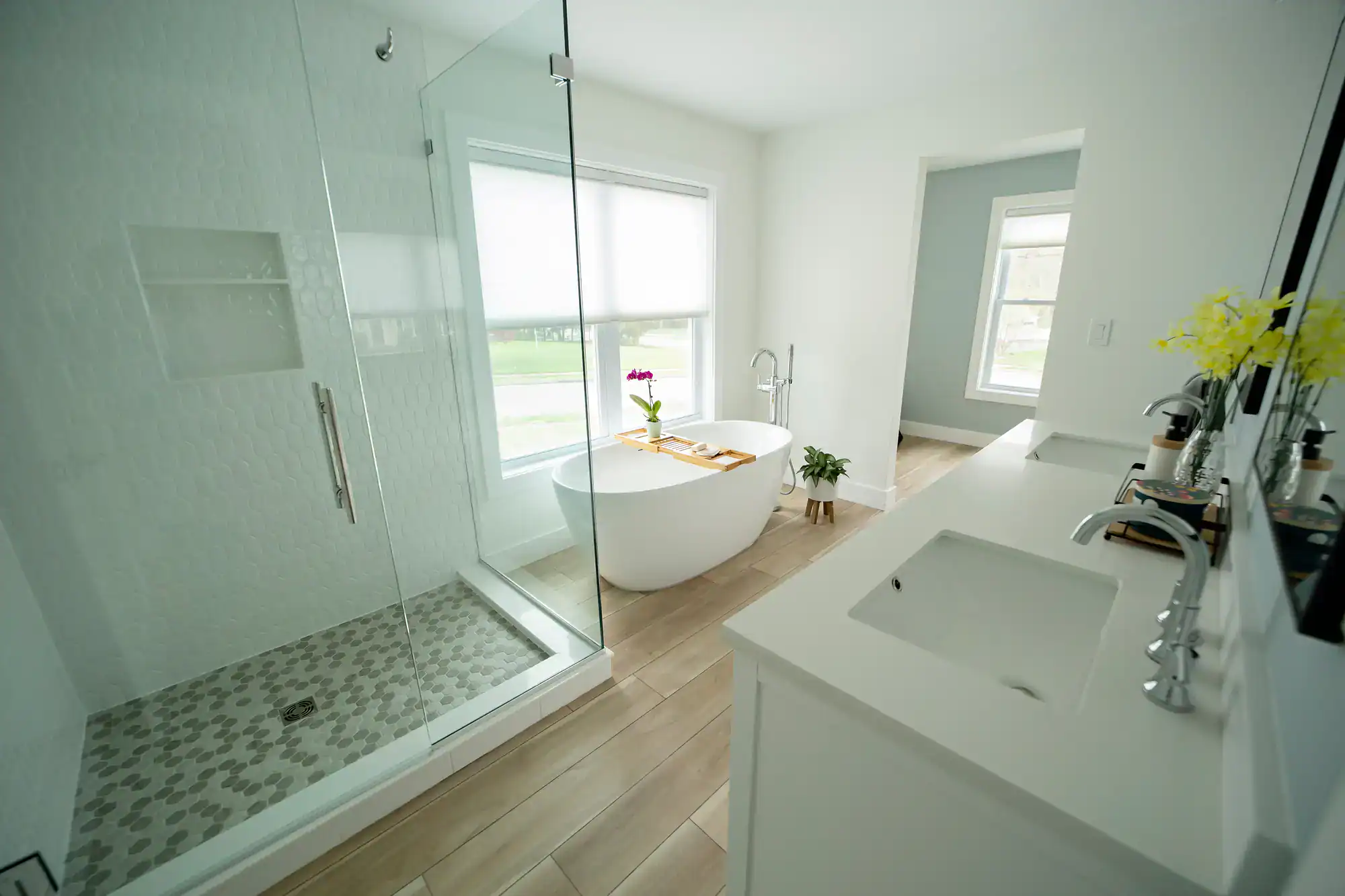
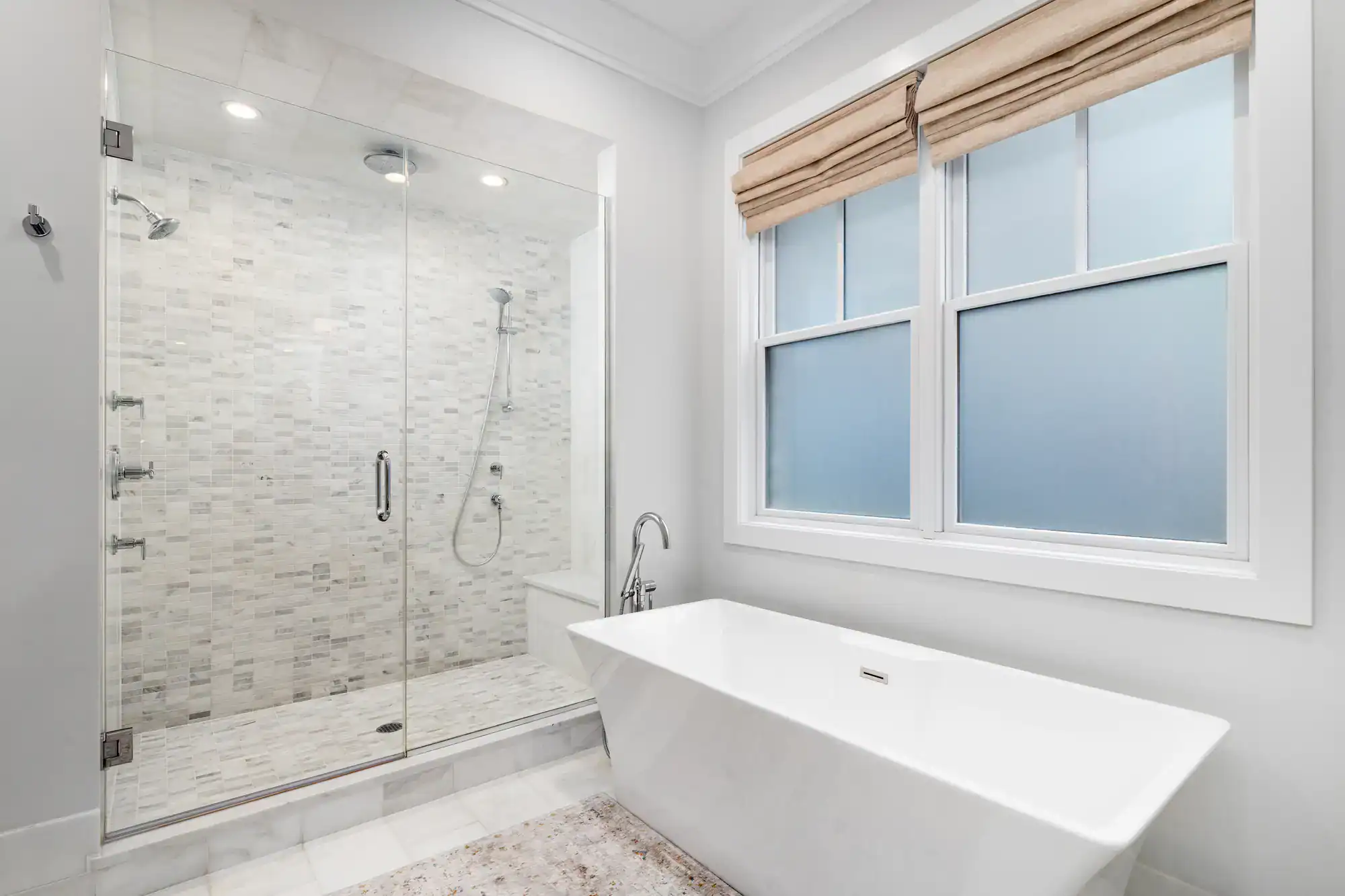
On the shower side, we build custom walk-in showers with built-in benches, half walls, integrated shelving, and curbless entries the kind of design that makes a small bathroom in a Hillandale split-level feel genuinely open rather than cramped. Frameless glass eliminates the visual barrier that a framed enclosure or shower curtain creates, which can transform how a compact bathroom reads.
For homeowners in Hillandale who are thinking about aging in place and with 18.1% of the community aged 65 or older, that’s a real and growing conversation curbless entries, bench seating, and grab bar blocking are design choices that add comfort and safety without making the space feel clinical. The full scope can also include floor tiling, wall tiling, cabinet replacement, vanity work, and repainting. One contractor, one point of contact, one schedule.
Yes and in Hillandale specifically, the answer is a little more involved than it is in most Maryland communities. Because Hillandale straddles the Montgomery and Prince George’s County line, which county’s permitting office handles your project depends on where exactly your home sits. Montgomery County residents go through the Department of Permitting Services, and any project involving plumbing changes also requires a separate review by WSSC the Washington Suburban Sanitary Commission before the permit can be issued. If your home falls in the Prince George’s County portion of Hillandale, you’re dealing with a different office and a different process.
Most bathroom remodels that involve plumbing, electrical work, or ventilation changes require permits regardless of which county applies. Skipping permits isn’t just a code violation it can create real problems when you sell or refinance, because unpermitted work has to be disclosed and can trigger required corrections. We handle the permitting process from start to finish, including WSSC coordination where applicable, so you’re not navigating two counties’ systems on your own.
The national median spend for a primary bathroom remodel in 2025 is $15,000, and that figure is a reasonable starting point for a mid-range project in Hillandale. What pushes costs higher in this area is the age of the housing stock. Homes built in the 1950s and 1960s which describes most of Hillandale frequently have conditions behind the walls that newer homes don’t: galvanized supply pipes, cast iron drain lines, deteriorated subfloor material from decades of slow moisture infiltration.
Contractors experienced with older DMV homes typically build in a contingency of around 15% above the base estimate to account for what gets discovered once demolition begins. Walk-in shower installation specifically tends to run between $6,000 and $12,000 for a mid-range project, with real-world quotes for porcelain tile and frameless glass often landing in the $8,000 to $10,000 range. A full bathroom gut renovation will be higher. The right contractor will give you a detailed written estimate that breaks down scope, materials, and labor not a vague range that leaves you guessing.
For a standard bathroom remodel, active construction typically runs three to eight weeks depending on scope. A smaller bathroom common in Hillandale’s split-levels and ramblers, where original bathrooms were designed to be compact often lands in the lower end of that range, sometimes completing in as little as three to four weeks of construction once permits are in place.
Permitting and planning add time before the crew ever sets foot in the bathroom, so the full timeline from signed contract to finished tile is usually longer than the construction window alone. If you have only one bathroom in your home, that’s worth discussing directly during the estimate. We’ll walk through the sequencing with you what phases require the bathroom to be fully offline, and what can be done in stages to minimize disruption.
A tub-to-shower conversion in a Hillandale home involves more than removing the tub and setting a shower pan in its place. In a home built in the 1950s or 1960s, the existing plumbing was designed around a tub which means the drain location, supply lines, and sometimes the rough-in dimensions need to be reconfigured for a shower. That’s plumbing work, which requires a permit and WSSC review in the Montgomery County portion of Hillandale.
Once the plumbing rough-in is sorted, the substrate and waterproofing layer go in before any tile. This is the step that determines whether your shower holds up for 20 years or starts showing moisture problems in five. After waterproofing, tile selection, layout, and the glass enclosure or frameless panels are installed. The result especially with a curbless entry and frameless glass tends to make a small bathroom feel significantly more open. More than 60% of homebuyers now prefer a shower over a tub in the primary bathroom, so this conversion also tends to read well at resale.
In Maryland, any contractor performing home improvement work valued at more than $500 is required to hold an active Maryland Home Improvement Commission license commonly called an MHIC license. You can verify any contractor’s MHIC license number directly through the Maryland Department of Labor’s online lookup tool. The license number must also appear on any permit pulled for your project, so if a contractor is pulling permits correctly, their MHIC number is part of the public record.
Beyond the MHIC license, you want to confirm that the contractor carries general liability insurance and workers’ compensation coverage. As of June 2024, Maryland requires contractors to carry at least $500,000 in general liability. This protects you not just the contractor if something goes wrong on your property during the project. We hold MHIC #28145, are bonded and insured, and carry active licenses in DC and Virginia as well. Every credential is verifiable before you sign anything.
Generally, yes especially in a market like Hillandale where homes are trading near or above $500,000 and buyers are paying attention to the condition of kitchens and bathrooms. A midrange bathroom remodel recoups approximately 80% of its cost at resale in 2025, which is the highest return the industry has seen since 2007. For a home in Hillandale, where buyers often expect move-in-ready condition and updated finishes, an original 1960s bathroom can be a real sticking point in negotiations.
The timing also matters. The Hillandale Gateway development 463 mixed-use units at New Hampshire Avenue and Powder Mill Road broke ground in September 2024 and is expected to complete by early 2027. When that development brings hundreds of new residents to the northern edge of the community, the profile of the New Hampshire Avenue corridor will shift. Existing homeowners who update their properties ahead of that transition are positioning themselves in front of the market, not behind it. A bathroom remodel completed now, done correctly and with proper permits, is a documented improvement that shows up clearly when it’s time to sell.
Other Services we provide in Hillandale