“
Most North Bethesda homeowners aren’t remodeling because they saw something on a design blog. They’re remodeling because the original 1970s or 1980s tile work in their Luxmanor colonial or Randolph Hills rambler has quietly been losing the battle against moisture for years. Grout that old doesn’t waterproof anymore. Exhaust fans from that era weren’t sized for how people actually use bathrooms today.
When Montgomery County summers push outdoor humidity above 90%, a bathroom without proper ventilation and a real waterproofing system underneath the tile becomes a slow-moving problem. The clay-heavy soils in North Bethesda also create exterior moisture pressure that finds its way into walls and subfloors if the original construction didn’t account for it and most homes built here in the 1960s through 1980s didn’t.
A professionally remodeled bathroom changes that. You get a shower that drains correctly, tile that’s set on a proper moisture barrier, ventilation that actually clears steam before it settles into the walls, and a space that functions the way it should for the next 20 to 30 years. That matters whether you’re in a detached home in Luxmanor or a condo in the Pike District where you’re sharing walls and working around building management schedules.
There’s also the financial side worth knowing. A midrange bathroom remodel recoups approximately 80% of its cost at resale in 2025 the highest return since 2007. In a North Bethesda market where single-family homes regularly sell above $1 million, a bathroom that’s been done right isn’t just more comfortable to live in. It’s a meaningful part of what your home is worth.
We’ve been operating out of Bethesda since 1973 which means we were already remodeling bathrooms in North Bethesda when many of the homes in Luxmanor and Randolph Hills were first being constructed. That’s not a stat to fill space. It means that when we open a wall in a 1978 colonial off Old Georgetown Road, we’ve seen what’s behind it before. We know what original plumbing from that era looks like, what shortcuts builders took, and what actually needs to be addressed versus what can stay.
We hold an active Maryland Home Improvement Commission license (MHIC #28145), which is the credential that lets us legally pull permits on your behalf through Montgomery County’s Department of Permitting Services. We’re also licensed in DC and Virginia, bonded, and fully insured covering on-site injuries, neighbor property damage, and damage to your home. Our BuildZoom score of 91 puts us in the top 37% of more than 58,000 licensed Maryland contractors. These aren’t things you have to take our word for every one of them is publicly verifiable.
It starts with a conversation, not a sales pitch. Someone comes out, looks at your bathroom, understands what you’re working with whether that’s a dated primary bath in a Randolph Hills split-level or a compact builder-grade shower in a White Flint Station condo and gives you a detailed written estimate before anything else happens. No vague ranges, no surprises later. You know the scope, the materials, and the timeline before you sign anything.
Once the project is confirmed, we handle the permit process through Montgomery County’s Department of Permitting Services. For any work involving plumbing, electrical, or ventilation changes which covers most bathroom remodels Montgomery County requires an alteration permit along with the relevant trade permits. If you’re in a condominium building, there’s also the HOA or building management approval process to navigate, and that coordination happens before demolition begins, not after. We handle the scheduling with building management for elevator access and material delivery so you’re not stuck in the middle.
The work itself follows a set sequence: demolition, moisture barrier and waterproofing, rough plumbing and electrical if needed, tile installation, fixtures, paint, and final detail work. A small bathroom remodel with permits typically runs four to six weeks from start to finish. Throughout the project, the same crew shows up not a rotating group of subcontractors so accountability stays consistent from the first day of demo to the day we clean up and leave.
Ready to get started?
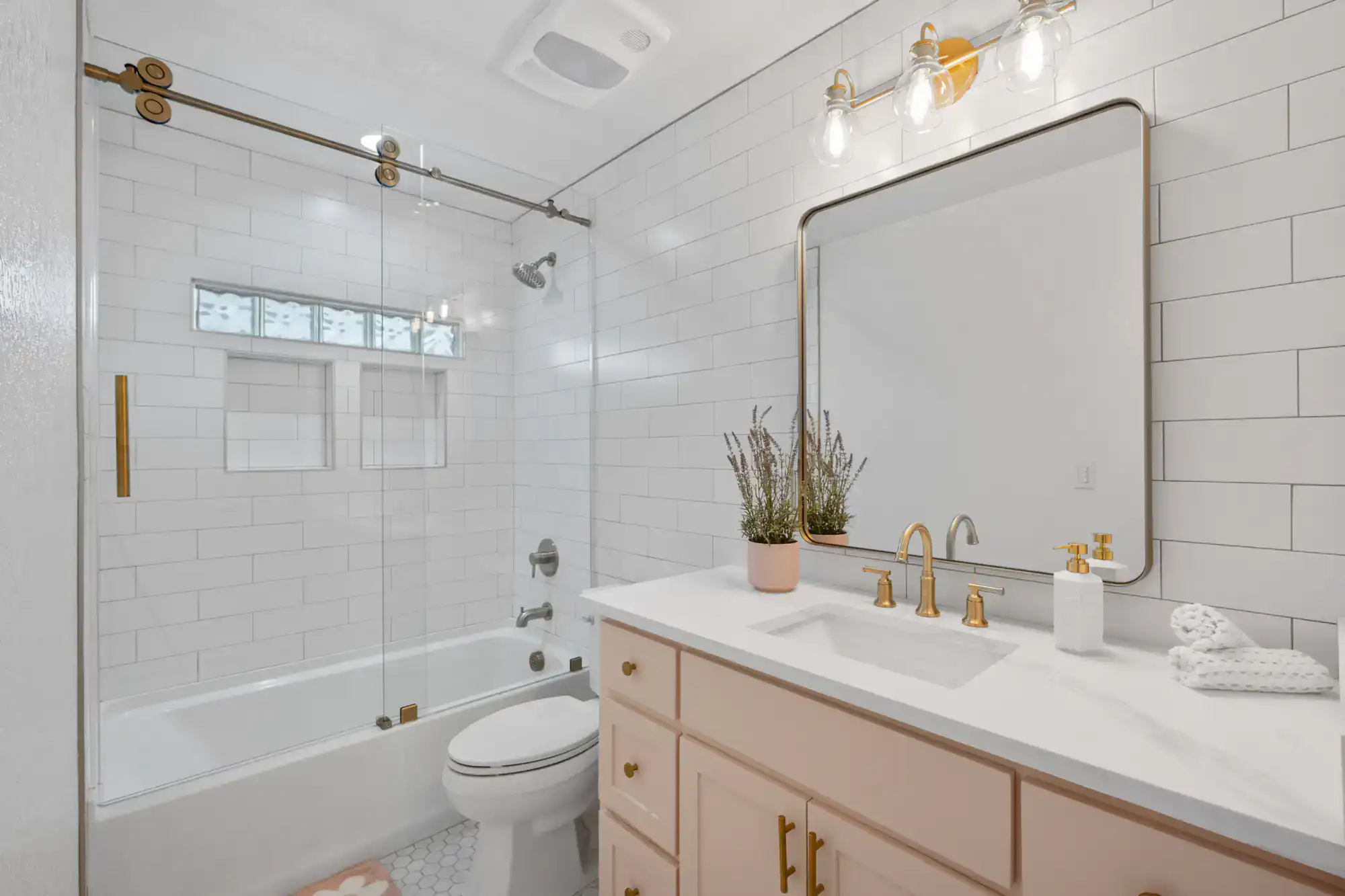
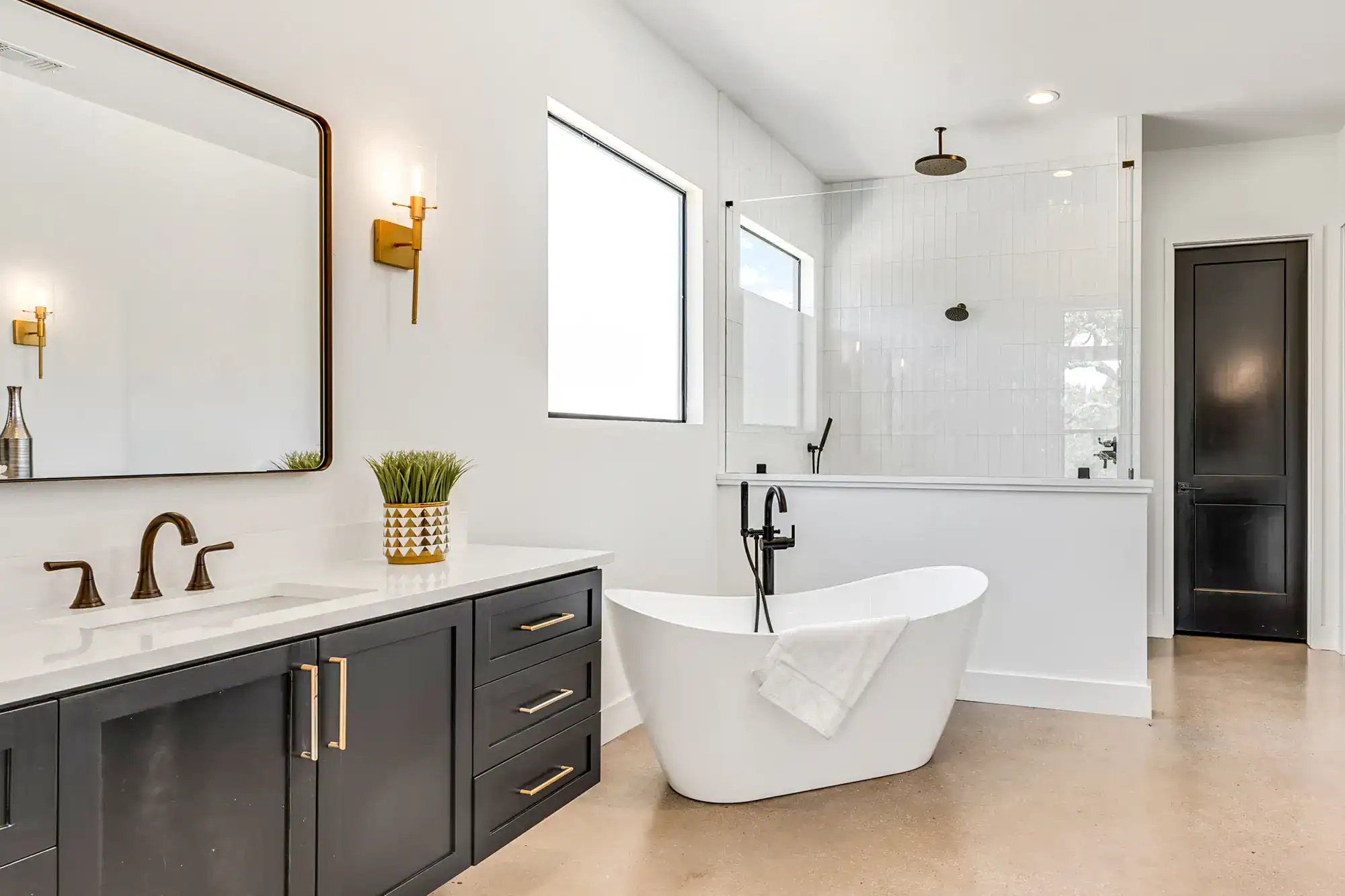
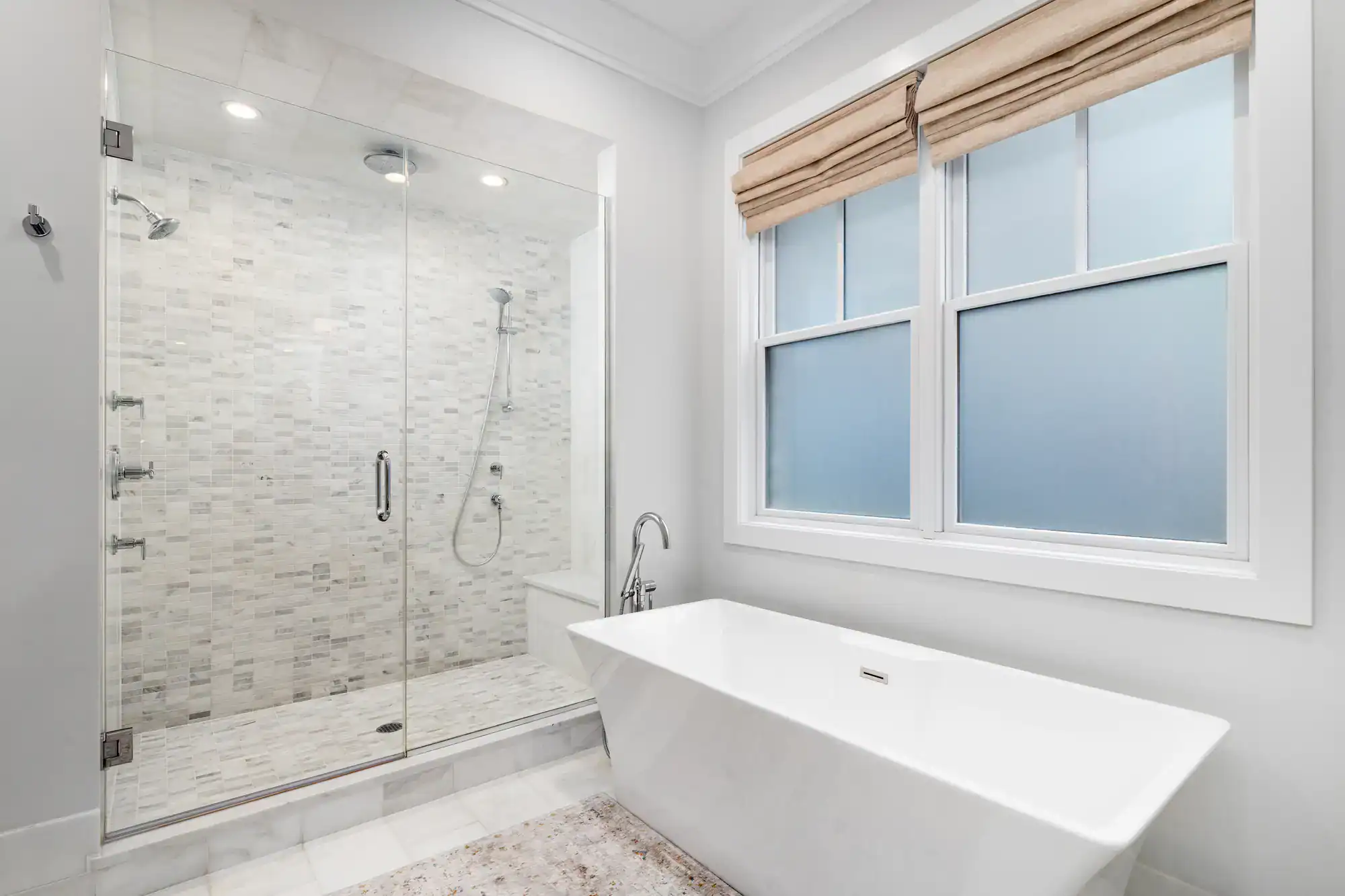
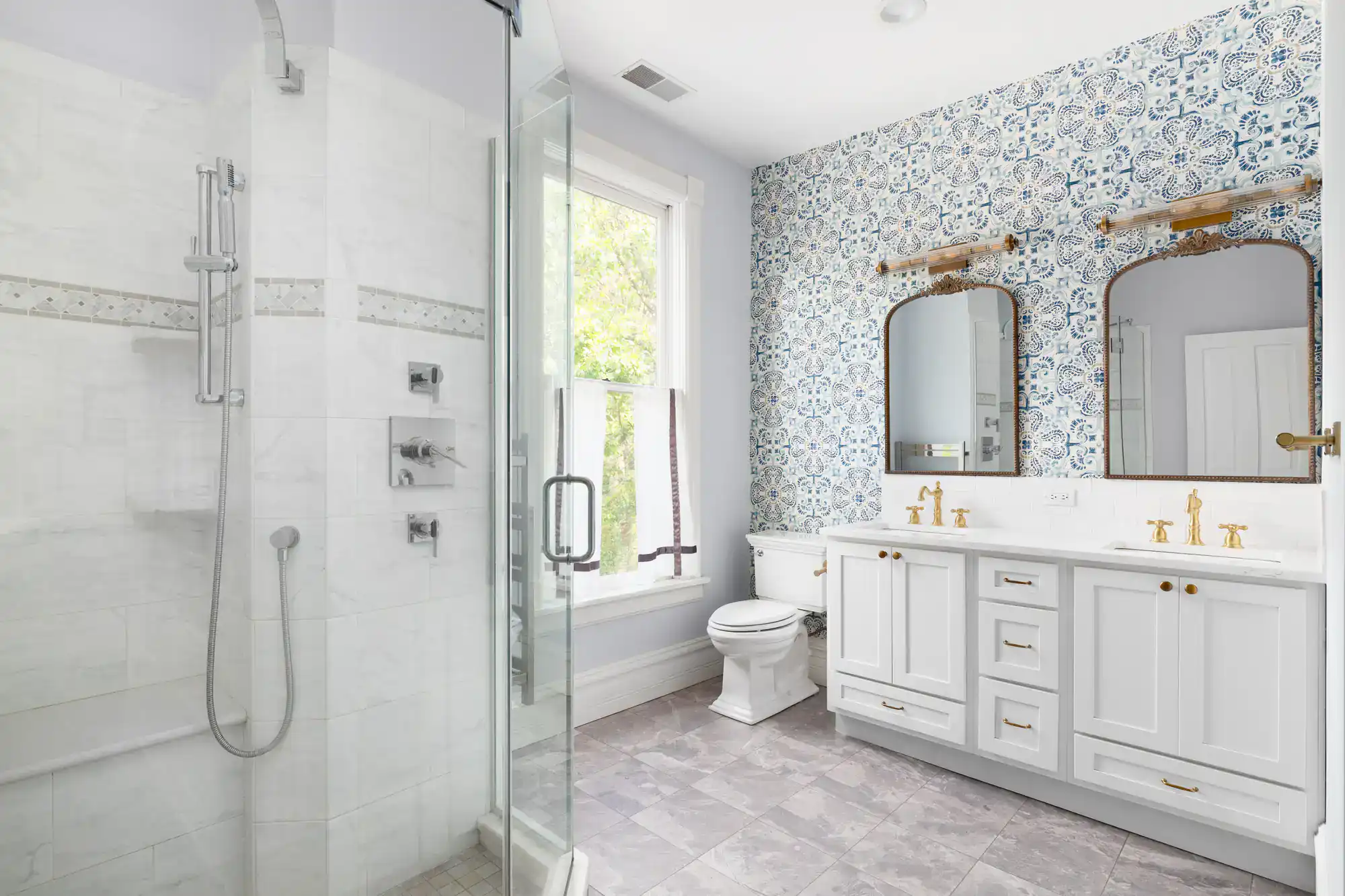
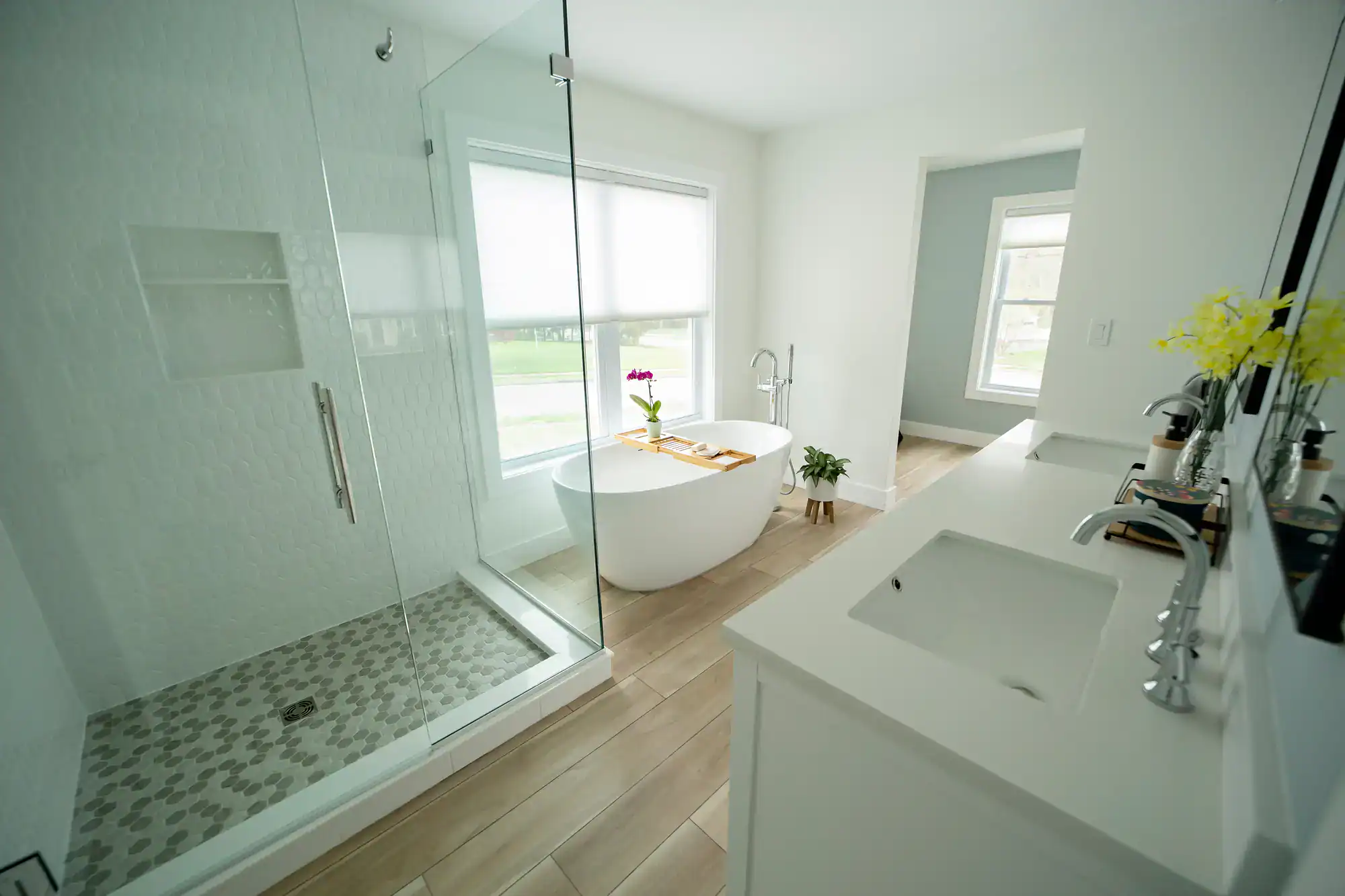
We handle the full scope of bathroom renovation in North Bethesda not just one piece of it. That includes full shower reconstruction with custom benches, half walls, and built-in shelving; walk-in shower installation with curbless entries and frameless glass; floor tiling and wall tiling; cabinet and vanity replacement; and interior painting. For homeowners in Luxmanor or Randolph Hills who haven’t touched their primary bathroom since the 1980s, that often means a complete gut and rebuild. For condo owners in the Pike District or near the Grosvenor-Strathmore Metro, it more often means a targeted renovation replacing builder-grade tile, upgrading the shower enclosure, and swapping out a dated vanity without disturbing shared walls or triggering unnecessary structural work.
Small bathroom remodeling is a real part of what we do, not an afterthought. Compact bathrooms in North Bethesda’s older colonials and mid-rise condos respond well to frameless glass (which opens the visual space), large-format tile (which reduces grout lines and reads as cleaner), and properly sized vanities that don’t eat the floor plan. These aren’t decorative choices they’re functional decisions that make a 50-square-foot bathroom livable.
For homeowners who are thinking about the next 20 years in their home, the aging-in-place angle is worth a direct conversation. Curbless walk-in showers, built-in bench seating, grab bar installation, and non-slip tile are all part of the work we do regularly. With 68% of 2025 bathroom remodels incorporating accessibility features, this isn’t a niche request anymore it’s increasingly the standard for anyone remodeling a primary bathroom they plan to use long-term.
Yes, in most cases. North Bethesda is an unincorporated community in Montgomery County, which means permitting goes through Montgomery County’s Department of Permitting Services not a town hall. For any bathroom remodel that involves plumbing relocation, electrical work, or ventilation changes (like upgrading an exhaust fan), Montgomery County requires an alteration permit plus the applicable trade permits. The Washington Suburban Sanitary Commission also coordinates on plumbing-related permits since WSSC controls water and sewer infrastructure throughout the county.
What doesn’t require a permit is narrower than most people assume: painting, replacing a faucet, swapping countertops, or installing new tile over an existing surface with no structural changes. The moment you’re moving a drain, adding a new circuit, or opening walls, you’re in permit territory. The practical reason this matters is that unpermitted work creates disclosure issues when you sell or refinance and in a North Bethesda market where homes regularly sell above $1 million, that’s not a minor detail. We pull permits as a standard part of every applicable project and manage the DPS process on your behalf.
For a small bathroom with permits, the realistic timeline is four to six weeks from start to finish that includes the permitting and planning phase before demolition begins, not just the construction time. Active construction on a small bathroom typically runs two to three weeks. A larger primary bath or a project involving significant plumbing relocation will run longer, generally in the range of six to eight weeks depending on scope.
One factor that adds time in North Bethesda specifically is the condo and high-rise segment. If you’re in a building like White Flint Station, Gallery at White Flint, or one of the newer Pike District properties, there’s an HOA or building management approval process that happens before any work starts. That coordination scheduling elevator access for material delivery, confirming work-hour restrictions, getting board sign-off needs to be built into the timeline. It’s not a problem, but it’s not something to ignore when you’re planning around a school-year start date or a specific move-in window.
Walk-in shower installation generally runs between $6,000 and $12,000, with mid-range projects porcelain tile, frameless glass enclosure, standard plumbing configuration landing in the $8,000 to $10,000 range based on current real-world project data. Where your project falls within that range depends on the size of the shower, whether plumbing needs to be relocated, the tile and fixture selections, and whether you’re adding features like a built-in bench, half wall, or integrated shelving.
In North Bethesda’s older single-family homes particularly in Luxmanor and Randolph Hills where construction dates back to the 1960s through 1980s there’s always a possibility of discovering deteriorated subfloor material or outdated plumbing once demolition begins. That’s not unique to this area, but it’s worth knowing that homes of this age carry a higher likelihood of finding something behind the wall that needs to be addressed. A contractor who gives you a detailed written estimate and walks through what happens if something unexpected comes up is worth more than one who gives you the lowest number upfront and figures it out later.
Yes, and we do it regularly in North Bethesda’s condo buildings but the process has a few additional steps compared to a detached single-family home. Before any work begins, you’ll typically need approval from your HOA or condo board, and in some buildings, a review by building management as well. That process varies by building, but it generally involves submitting a scope of work, confirming that the contractor carries adequate insurance (which we do), and agreeing to work-hour restrictions that protect other residents.
Beyond the approval process, condo bathroom remodeling requires attention to shared walls, elevator scheduling for material delivery, and noise management during demolition. These aren’t obstacles they’re logistics that a contractor with full-service general contracting experience handles as a normal part of the job. The advantage of working with a single team rather than separate subcontractors for tile, plumbing, and painting is that there’s one point of contact responsible for coordinating all of it, which matters a lot when you’re working within a building’s scheduling constraints.
The honest answer is that it depends on what’s actually happening underneath the surface. Grout that’s discolored or crumbling, caulk lines that keep coming back no matter how many times you reseal them, tile that sounds hollow when you tap it, or persistent musty odors after a shower these are signs that moisture has already gotten past the surface layer and into the substrate. At that point, patching the visible damage doesn’t fix the underlying problem. You’re buying yourself another year or two before the same issue comes back, often worse.
For North Bethesda homes built in the 1970s and 1980s, this situation is common. The original waterproofing systems used in that era or the absence of a proper system entirely weren’t built to last 40 to 50 years of daily use in a Mid-Atlantic climate. Montgomery County’s humid summers push moisture into every gap, and clay-heavy soils in the area create exterior moisture pressure on below-grade and slab-level bathrooms. A proper assessment during an in-home estimate will tell you whether you’re dealing with a surface issue or something that needs to be addressed from the substrate up.
In most cases, yes particularly at the midrange level. A midrange bathroom remodel recoups approximately 80% of its cost at resale in 2025, which is the highest return on that investment since 2007. In North Bethesda’s real estate market, where single-family homes regularly sell above $1 million and median property values sit around $712,100, a bathroom that’s clearly been done right is a competitive advantage, not just a cosmetic upgrade. Buyers in this price range notice the difference between a professionally remodeled bathroom and one that’s been patched and repainted.
There’s also the permit side of this to consider. A bathroom remodel that was done without the required Montgomery County permits is a disclosure issue at closing. Buyers and their agents ask, and unpermitted work on a home in this price range can affect the sale price or create a requirement to remediate before closing. A properly permitted and inspected remodel with the documentation to prove it removes that variable entirely. If you’re planning to sell within the next few years, that paperwork is worth as much as the tile work itself.
Other Services we provide in North Bethesda