
“

When the work is done right, you stop thinking about it. No peeling edges two winters from now. No chalking on the siding. No bubbling around the trim where moisture snuck in. You just have a home that looks sharp and stays that way.
That matters more in Burnt Mills than it does in a lot of places. The housing stock here is older Cape Cods, split-levels, and ramblers that have been through 50, 60, sometimes 80 years of D.C. metro winters. Those homes carry decades of accumulated paint layers, aging wood surfaces, and gaps that open up over time. When a painter doesn’t account for that, the new coat fails fast. When they do, you’re looking at a result that lasts seven to ten years.
Homes near Northwest Branch Park and the Burnt Mills Dam area deal with more shade and moisture than most suburban properties. That combination accelerates mildew growth on exterior surfaces. A paint job that ignores those local conditions won’t last nearly as long as one that accounts for them and the difference shows up within a year or two.
We were founded in 1973 by Gordon Franks, who started the company to pay his tuition at the University of Maryland. That origin story matters because it tells you something about how we operate we were built on problem-solving and doing the work well, not on marketing.
Today, we serve the greater D.C. metro area, including Silver Spring and the Burnt Mills corridor along Colesville Road and New Hampshire Avenue. We hold active licenses in all three jurisdictions: Maryland MHIC #28145, D.C. #39937921, and Virginia #2705077763. Those are auditable license numbers not vague claims. We’ve also earned 300+ recommendations on Washington D.C. Consumers’ Checkbook, which is a paid-subscription nonprofit review platform that professional homeowners in this area actually use to vet contractors.
Named crew members appear in customer reviews by name. Repeat customers have used our team for four or more projects over more than a decade. That’s the kind of track record that speaks for itself.

The process starts with a detailed written estimate. Not a ballpark over the phone a written breakdown of what’s included, what prep steps we’ll take, and what paint we’ll use. That document protects you from scope changes and verbal agreements that shift after the job starts.
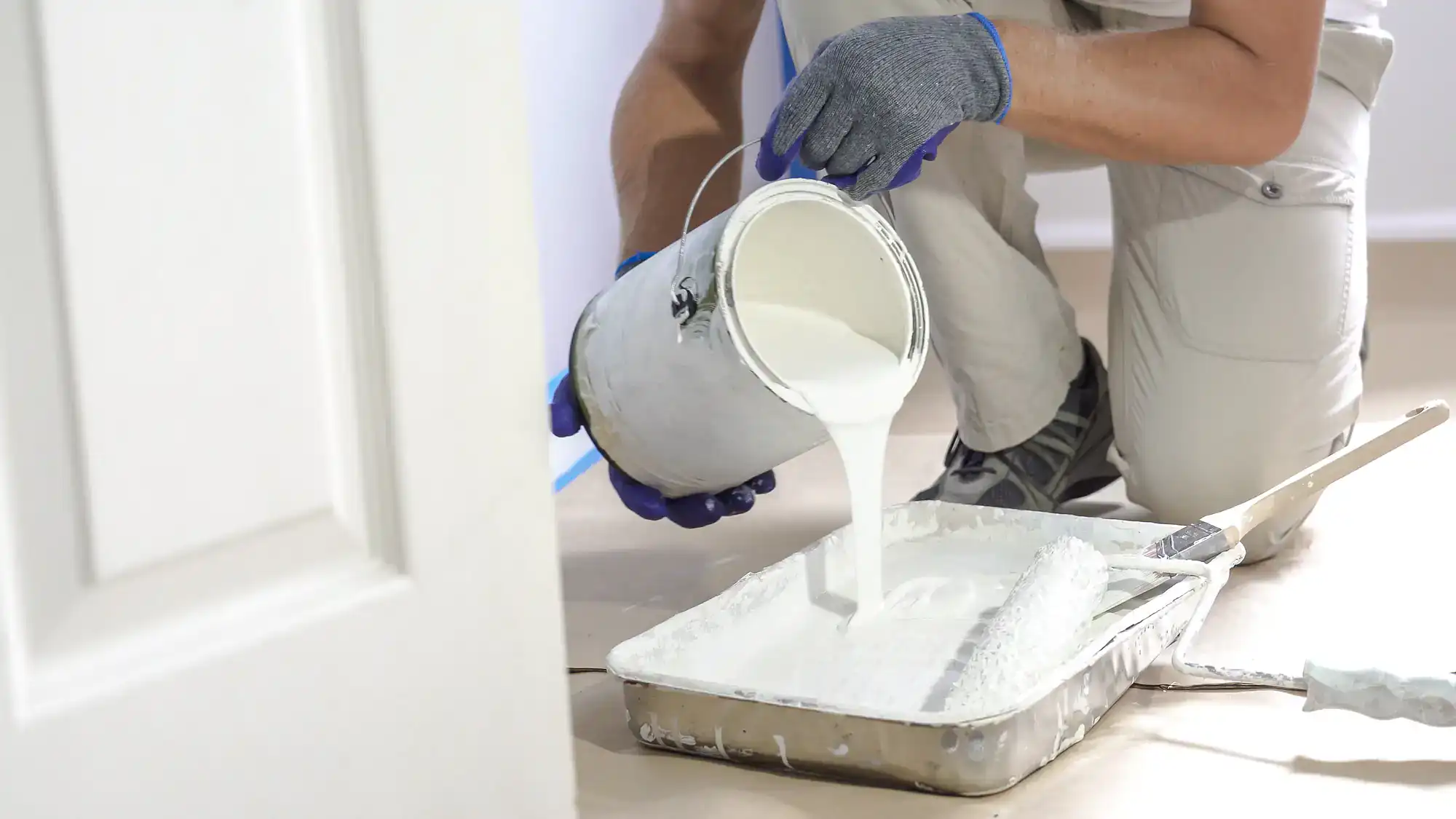
Before any paint goes on, prep work happens. On a mid-century home in Burnt Mills, that means scraping down to stable substrate where old paint is peeling, sanding and feathering edges, caulking gaps that have opened up over decades, priming bare wood, and patching any surface damage. This is the work that most painters rush through or skip entirely and it’s the only reason a paint job lasts. On a home that’s been through 60-plus years of freeze-thaw cycling on the D.C. metro’s humidity, skipping prep guarantees failure.
If your home was built before 1978 which describes most of Burnt Mills lead paint is a real consideration. We offer lead paint removal as a named service, meaning we’re equipped to handle the realities of older homes without creating new problems in the process. Once prep is complete, finish coats go on with the number of coats the surface actually requires not the minimum needed to get out the door. After the job, our crew cleans up and leaves the space the way we found it.
Ready to get started?
Interior painting, exterior painting, cabinet painting and refinishing, deck staining, ceiling painting, door painting, decorative and faux painting, lead paint removal, popcorn ceiling removal, drywall repair these are the services we offer, and they’re relevant in different ways for homes in this neighborhood.
For exterior painting in Burnt Mills, the local microclimate matters. Homes adjacent to Northwest Branch Park deal with higher moisture and shade, which demands mildew-resistant formulations, thorough surface cleaning, and proper primer before a finish coat. The freeze-thaw cycling that hits the D.C. metro every winter is especially hard on older wood siding the kind that’s common throughout Burnt Mills. Getting the prep right is what separates a paint job that lasts from one that starts failing by the second winter.
For cabinet painting, this is worth knowing: professional cabinet painting typically costs a fraction of full replacement, and the mid-century kitchens throughout this neighborhood are strong candidates for a refresh rather than a full renovation. We also handle broader remodeling work flooring, carpentry, kitchen and bath so if your project goes beyond paint, you’re not managing multiple contractors. As for permits, painting alone in Montgomery County generally doesn’t require one, but any structural or drywall work that comes with it may. We hold Maryland MHIC #28145, which is the licensing credential Montgomery County requires of every home improvement contractor working here.
If your home was built before 1978, there’s a real possibility it contains lead-based paint and in Burnt Mills, where the majority of the housing stock was built between 1940 and 1969, that describes most of the neighborhood. Homes from the 1940s and 1950s are particularly likely candidates, since lead paint was standard in residential construction until voluntary phase-outs began in the late 1950s for interiors and the late 1960s for exteriors.
The risk isn’t just cosmetic. When a painter sands, scrapes, or disturbs lead paint without following proper lead-safe work practices, they create a dust hazard especially dangerous for children under six. Maryland’s lead paint laws and the EPA’s Renovation, Repair and Painting Rule exist specifically because this is a documented health risk, not a hypothetical one.
Not every painter in the Silver Spring area is equipped to handle this correctly. We offer lead paint removal as a named service, which means we have the knowledge and protocols to work on pre-1978 homes in Burnt Mills without turning a painting project into a liability issue. If you’re not sure whether your home has lead paint, that’s a conversation worth having before any scraping or sanding begins.
A properly done exterior paint job should last seven to ten years in a moderate climate. In the D.C. metro area which includes Burnt Mills that range is realistic if the prep work is done correctly and the right products are used. If prep is skipped or cheap paint is applied, you’re looking at failure in two to three years, sometimes sooner.
The specific conditions in Burnt Mills matter here. The freeze-thaw cycling that hits this area every winter is hard on exterior paint, especially on older wood siding. Each cycle causes paint to expand and contract, and on surfaces with multiple accumulated paint layers common on homes in Burnt Mills that are 60 to 80 years old that stress accelerates peeling and cracking. Homes near Northwest Branch Park also deal with higher moisture and shade, which shortens paint longevity further if mildew-resistant products aren’t used.
The longevity of an exterior paint job here depends almost entirely on what happens before the paint goes on. Scraping, sanding, caulking, priming that’s what determines whether you’re repainting in three years or ten.
For most mid-century kitchens in Burnt Mills, cabinet painting is worth it and by a significant margin. Professional cabinet painting typically costs a fraction of what full cabinet replacement runs, and a full kitchen renovation with new cabinets can cost many times more than that. If your cabinets are structurally sound and you’re looking for a fresh look, painting is almost always the smarter financial move.
The caveat is that cabinet painting is a specialty. It’s not the same as wall painting. Proper cabinet painting requires degreasing, sanding, priming, and usually spray application to get a smooth, factory-like finish. A painter who brushes cabinet paint over unprepped surfaces will give you a finish that chips and peels within a year which is why the contractor you choose matters as much as the decision to paint versus replace.
Done correctly, a professional cabinet finish can last seven to fifteen years. For a Burnt Mills homeowner thinking about rising property values and whether to sell in the next few years, a kitchen refresh through cabinet painting is one of the highest-return improvements you can make without touching the bones of the room.
For painting alone interior or exterior you generally don’t need a building permit in Montgomery County. Painting is considered routine maintenance, not a structural alteration, so it falls outside the permit requirement in most cases.
Where it gets more complicated is when painting comes alongside other work. If your project involves drywall repair, structural repairs, or anything that alters the building envelope, those components may require a permit under Montgomery County’s building code. Similarly, if your home is in a subdivision or townhouse development with an HOA like some communities within the broader Burnt Mills area there may be color and exterior finish restrictions that require HOA approval before you paint the outside of your home.
What does matter regardless of permits is contractor licensing. Maryland requires any contractor performing home improvement work to hold an MHIC license that’s the Maryland Home Improvement Commission credential. Hiring an unlicensed painter in Montgomery County means no verified insurance, no regulatory oversight, and no real recourse if something goes wrong. We hold MHIC #28145, which is verifiable on the Maryland MHIC website.
Spring is the best window typically mid-March through May. Temperatures are mild, humidity is lower than the summer months, and you’re ahead of the heat that makes exterior paint application and curing more difficult. Most exterior latex paints require temperatures above 50°F to apply and cure properly, and spring in the D.C. metro area reliably delivers those conditions.
Summer in Burnt Mills is workable but less ideal. Temperatures regularly exceed 90°F in July and August, and humidity in the D.C. metro area frequently runs between 70 and 90 percent during those months. High humidity slows drying and can affect adhesion, especially on older wood surfaces. Exterior work can proceed in summer, but scheduling around heat and humidity becomes important.
Fall offers a secondary window September and October are often excellent for exterior painting before temperatures drop. If you missed the spring season, fall is your next best opportunity. Winter exterior painting is generally not feasible in Burnt Mills due to freeze risk. Interior painting, on the other hand, is a year-round project and doesn’t carry the same seasonal constraints.
Ask them directly: what specific steps will you take before the first coat of paint goes on? A contractor who knows what they’re doing will give you a specific answer cleaning, scraping, sanding, feathering edges, caulking gaps, priming bare wood, patching damaged surfaces. A contractor who’s planning to cut corners will give you a vague answer, or change the subject to price.
The prep question matters more in Burnt Mills than in a lot of markets because of the age of the housing stock. On a home that’s been through 60 or 70 years of D.C. winters, the surfaces aren’t clean and simple. There are accumulated paint layers, gaps that have opened up over decades, wood that’s been through hundreds of freeze-thaw cycles. Painting over that without proper prep is the single most common reason a paint job fails within 18 to 24 months.
The other thing to ask for is a written estimate that spells out what’s included. Not a verbal quote a written document. That’s what protects you from scope changes after the job starts, and it’s what separates a professional contractor from one who figures it out as they go. We provide detailed written estimates as a standard part of our process, and named crew members appear in customer reviews by name meaning real people are accountable for the work on your home.
Other Services we provide in Burnt Mills