“
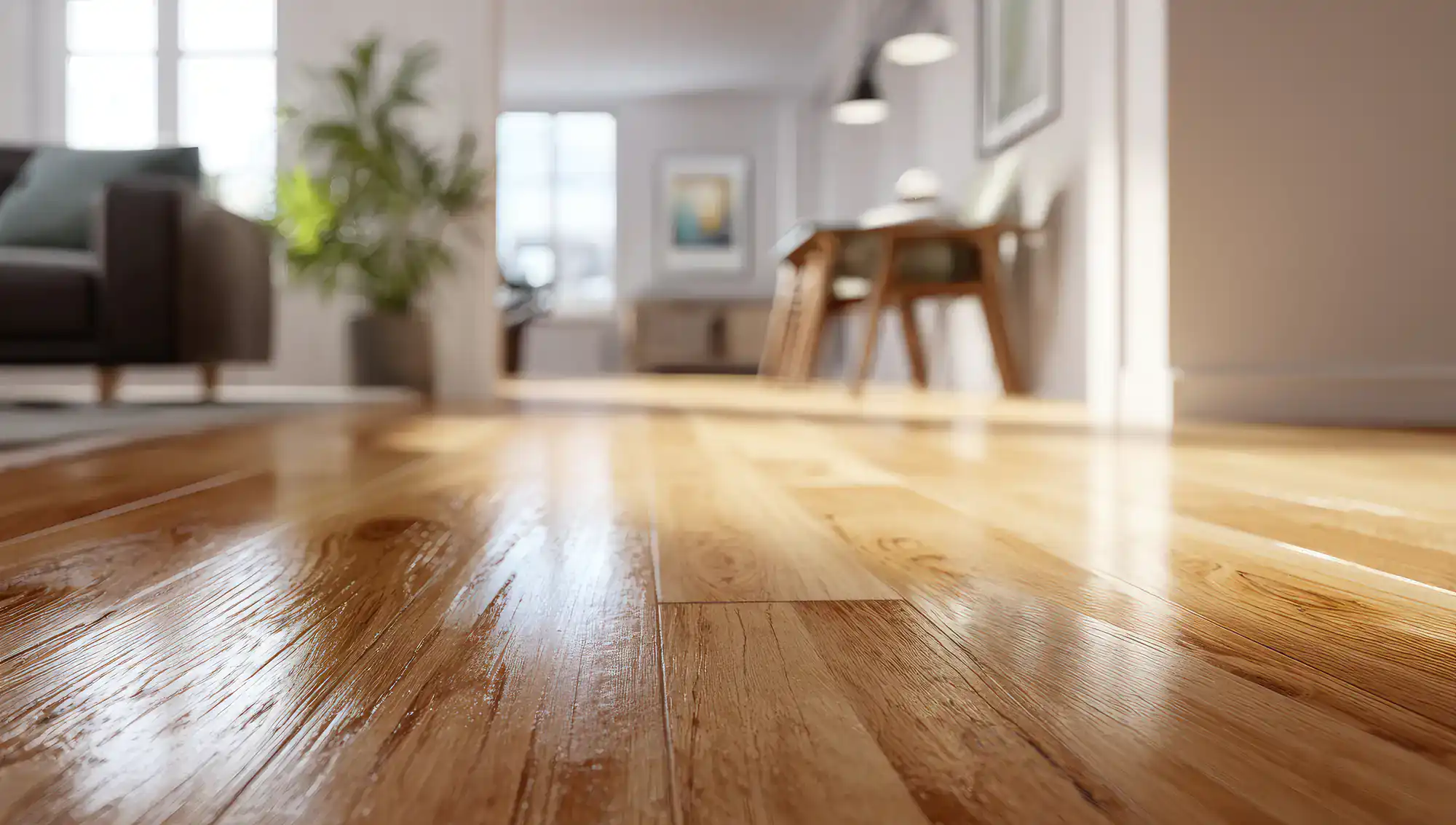
When a floor is refinished properly, it doesn’t just look better—it performs better. The surface is smooth and even, the finish is fully bonded, and the color is consistent from wall to wall. There are no swirl marks, no blotchy patches, no peeling edges six months later.
Most of Poolesville’s housing stock—especially in neighborhoods like Wesmond and Westerly—was built in the 1960s and 1970s, when solid hardwood was the standard. Those floors are real wood, which means they can be sanded and refinished multiple times. But after five or six decades of use, they need more than a surface wipe. They need a contractor who knows how to read the floor before touching it.
Poolesville’s climate adds another layer. Outdoor relative humidity here sits around 72% even in July—the least humid month of the year. That seasonal swing between hot, humid summers and dry winters causes wood to expand and contract in cycles, which is why you might notice slight gapping in February or subtle ridging along board edges in August. A properly refinished floor, done with correct humidity monitoring between coats, is far more resistant to those effects than one that was rushed through the process.
We’ve been working in the DC, Maryland, and Virginia market for over 50 years. That’s not a number pulled from a brochure—it means we’ve been refinishing and installing hardwood floors in Montgomery County homes since before most of Poolesville’s current neighborhoods existed. Wesmond was established in 1972. We were already an active contractor then.
Gordon Franks, our owner, personally supervises crews and stays in direct contact with clients from the first call through the final walkthrough. You’re not handing your home off to an anonymous team and hoping for the best. Gordon’s involved, and that accountability shows in the results.
We hold Maryland MHIC license number 28145—the license that legally qualifies a contractor to work in Poolesville—along with licenses in DC and Virginia. We’re fully insured, and our license numbers are published on our website so you can verify them yourself. With over 300 recommendations on DC Consumers’ Checkbook and a 4.8 out of 5 rating on Houzz, our track record speaks clearly.
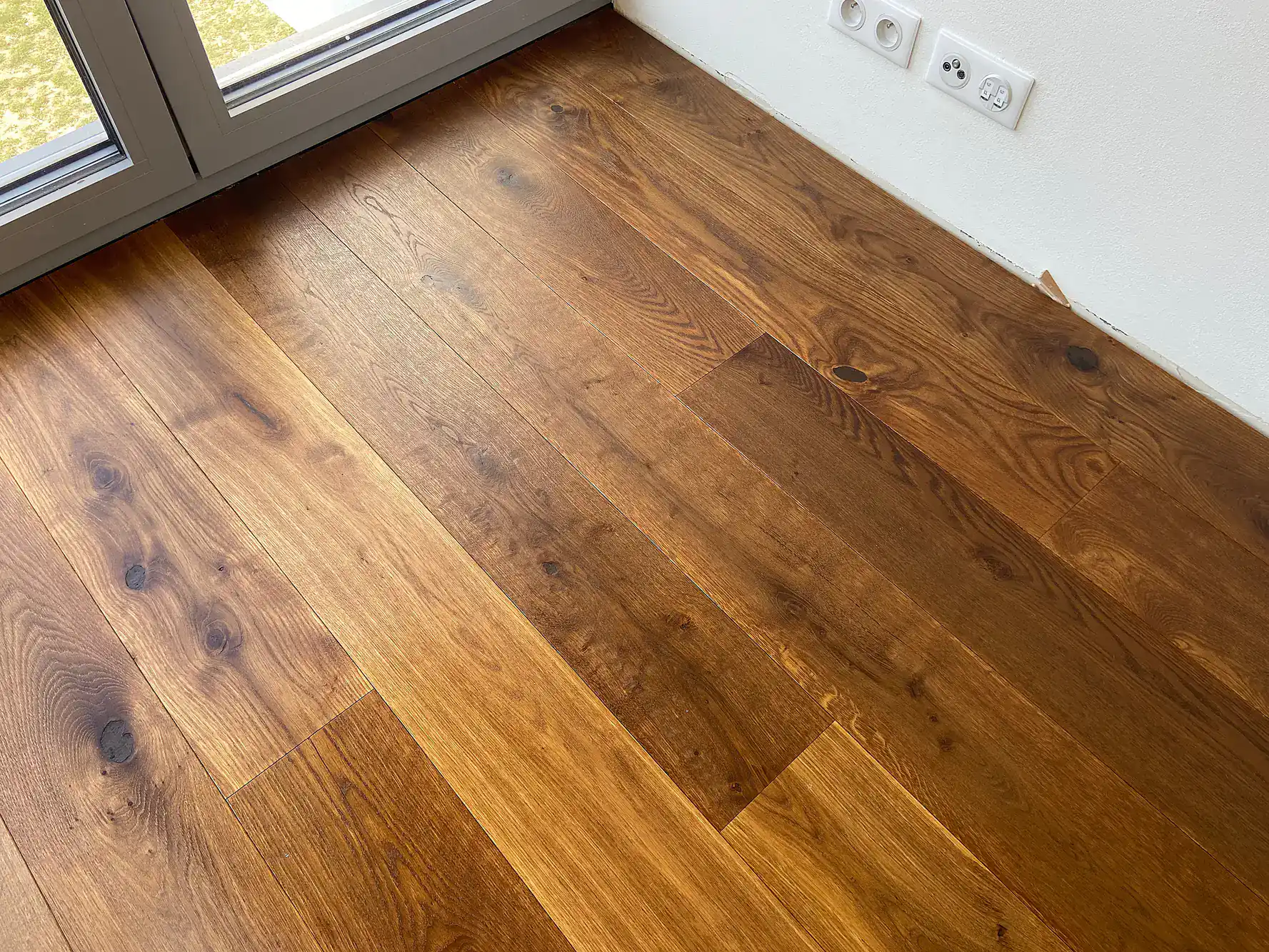
It starts with an honest assessment. Before any equipment comes out, we conduct a thorough inspection—checking for damaged or cupped boards, assessing the finish condition, measuring how much wood remains above the tongue. For older homes in Poolesville, this step often turns up things that weren’t visible at first glance, like boards that have been previously refinished with the wrong product or sections where moisture movement has caused slight warping.
Once we’ve assessed the floor and handled any necessary repairs, sanding begins in stages—multiple grits, working from coarser to finer, to bring the surface back to clean, bare wood without leaving machine marks. If you’re changing the stain color, we use a water-popping technique to open the wood grain and help the stain absorb evenly.
Then the finish goes on in multiple coats, with humidity monitoring between each one. This matters in Poolesville’s climate specifically—applying a finish coat when indoor humidity is out of range produces a finish that looks fine initially but starts to fail within a year or two.
Montgomery County does not require a building permit for hardwood floor installation or refinishing when no structural changes are involved. That means no waiting on county approvals, no inspection scheduling, and no added delays.
Ready to get started?
We cover the full range of hardwood flooring work—installation of new hardwood floors, refinishing worn or damaged floors, hardwood floor sanding, targeted board repair, and engineered hardwood flooring assessment and service. The right recommendation depends on what your floor actually needs, not on what costs more.
For Poolesville homeowners in the older neighborhoods along Fisher Avenue or in Seneca Chase, the most common scenario is a floor that’s been lived on for 40 to 50 years and needs a full sand and refinish. Solid hardwood of that vintage can typically be refinished four to five times over its life—and many of these floors have never been touched professionally. That’s a floor with a lot of life left in it, if it’s handled correctly.
For homes in newer developments or anyone considering engineered hardwood flooring, the question of whether refinishing is possible comes down to wear layer thickness. We can assess that directly—you don’t have to guess or default to full replacement without getting a real answer first. Because we’re also a full-service contractor handling painting, tiling, and remodeling, Poolesville homeowners doing a broader renovation don’t have to coordinate three or four separate companies.
No—Montgomery County does not require a building permit for hardwood floor installation or refinishing as long as no structural changes are being made to your home. This applies directly to Poolesville, which falls under Montgomery County’s Department of Permitting Services jurisdiction.
What this means practically is that there’s no waiting period for county approval, no inspection to schedule, and no added cost or paperwork on your end. You reach out, get an estimate, agree on a start date, and our crew shows up ready to work. The only scheduling that matters is coordinating when you want the rooms cleared and how long you’re comfortable staying off the floors while the finish cures.
Wood is a natural material that responds to moisture in the air—it expands when humidity is high and contracts when it’s low. In Poolesville, outdoor relative humidity averages around 72% even in July, which is the least humid month of the year. That’s a high baseline, and it swings considerably lower in winter when heating systems dry out interior air.
Over years of seasonal cycling, this movement causes small gaps between boards in winter, slight ridging or cupping along board edges in summer, and gradual wear on the finish as the wood flexes beneath it. None of this means your floor is ruined—it means it’s behaving exactly as wood does in this climate. A professional refinishing job addresses the surface damage and applies a finish that’s properly cured under controlled humidity conditions, which makes it far more durable going forward.
It depends on the wear layer—the thin layer of real wood on top of the engineered core. If that layer is approximately 3 millimeters thick or more, the floor can typically be sanded and refinished at least once, sometimes twice. If it’s thinner than that, sanding through it would expose the core material underneath, which is not refinishable.
This matters for Poolesville homeowners in newer construction—developments like Poolesville Crossing or homes built in the 1990s and 2000s that are more likely to have engineered rather than solid hardwood. Many homeowners assume engineered floors can never be refinished, which leads them straight to a full replacement quote when a refinish or recoat might have been the right answer. We assess the wear layer directly and give you a straight answer about what’s actually possible.
For a standard residential refinishing project, most jobs take between three and five days from start to finish—though the exact timeline depends on the square footage, the number of finish coats, and how quickly each coat cures in your home’s conditions. The sanding and staining portion typically moves quickly; it’s the finish coats and the curing time between them that determine the overall schedule.
After the final coat is applied, you’ll generally want to stay off the floors for at least 24 hours before walking on them in socks, and closer to a week before moving furniture back. In Poolesville’s climate, where indoor humidity can fluctuate significantly between seasons, curing times can vary slightly. If the job is being done in summer when humidity is higher, the finish may take a bit longer to fully harden. We give you a realistic timeline before the job starts and walk you through exactly what to expect day by day.
If your floors are showing visible wear—scratches, dullness, uneven color—then yes, refinishing before listing is almost always worth it. Poolesville home prices have risen sharply, with the median sale price reaching $918,000 as of May 2025. At that price point, buyers are expecting the home to show well, and worn floors are one of the first things they notice.
Hardwood floor refinishing returns approximately 147% ROI at resale according to NAR and NARI data—meaning the cost of refinishing typically comes back to you and then some in the final sale price or in how quickly the home moves. In a market as competitive as Poolesville’s, where homes are selling in an average of 22 days, showing a home with freshly refinished floors versus dull, scratched ones can be the difference between multiple offers and a price reduction conversation.
Refinishing involves sanding the floor down to bare wood—removing the old finish entirely—and then applying new stain and finish coats from scratch. It corrects surface scratches, gouges, uneven color, and finish failure. It also gives you the option to change the stain color completely if you want a different look.
Recoating is a lighter process. It scuffs the existing finish just enough to create adhesion, then applies a new topcoat over what’s already there. It refreshes the sheen and adds a layer of protection, but it doesn’t correct scratches or change the color. For many Poolesville homeowners in the older neighborhoods—where the floors may be in decent shape but just need some life brought back—recoating can be a faster and more cost-effective option than a full refinish.
Other Services we provide in Poolesville