“
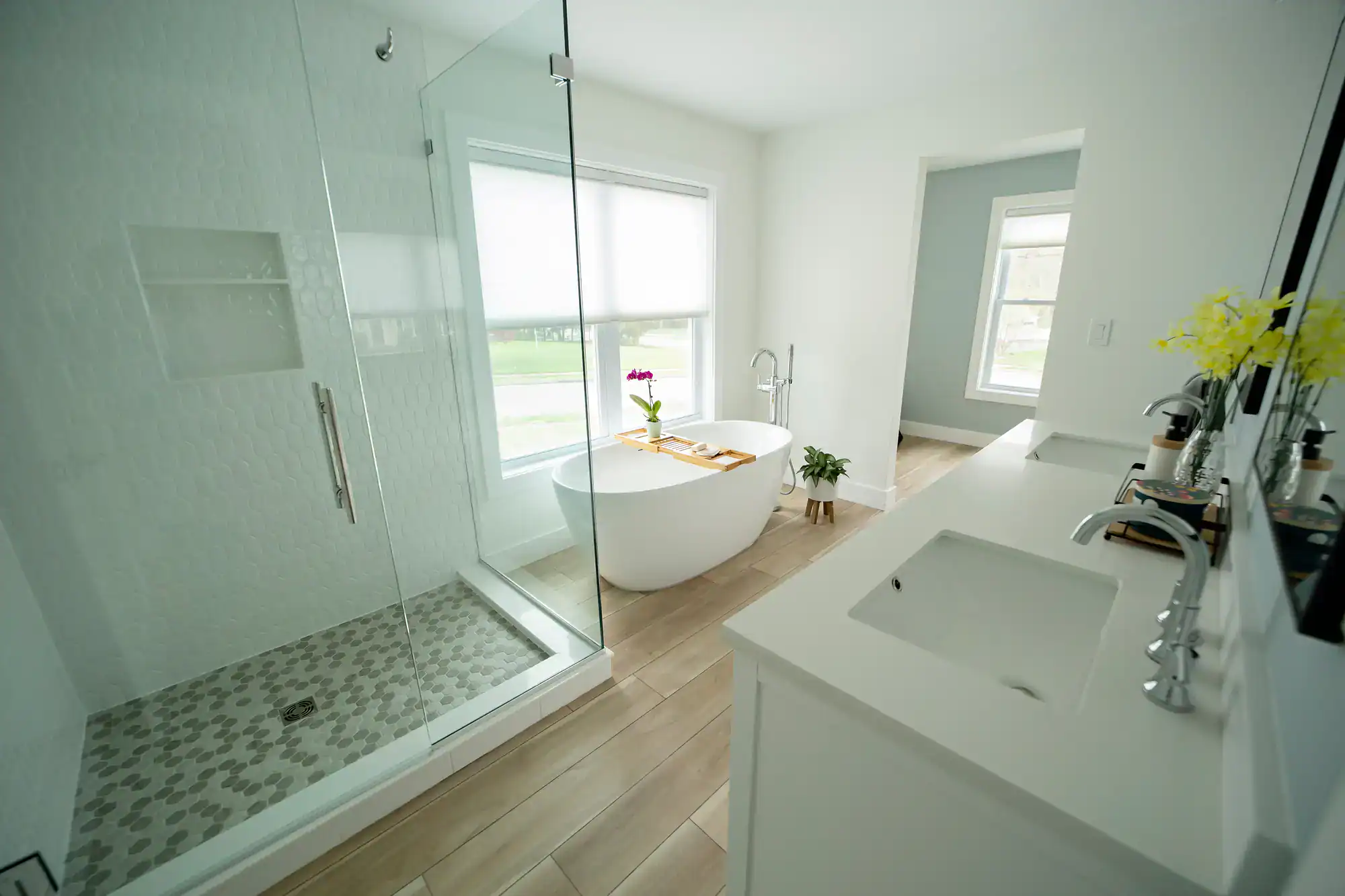
There’s a particular kind of frustration that builds when your bathroom is the weakest room in the house. You’ve updated other things. The kitchen looks decent. But the bathroom still has that original builder tile, a tub nobody uses, and grout that no amount of scrubbing is going to fix. At some point, it stops being a cosmetic issue and starts being a daily one.
For Germantown homeowners especially in Churchill Town Sector, Gunners Lake Village, Waters Landing, and Kingsview Village most of that original construction happened in the late 1970s and 1980s. The median build year here is 1990, which means the average bathroom is pushing 35 years old. That’s not just dated aesthetically. Waterproofing from that era breaks down. Grout cracks. Moisture works its way into walls. And in Maryland’s humid summers, a bathroom that isn’t properly sealed becomes a mold problem faster than most people expect.
A well-executed bathroom renovation changes the math. You get a space that functions the way your household actually lives whether that’s a walk-in shower where a tub used to be, a layout that works for two people getting ready at the same time, or accessibility features that make sense for a multigenerational home. In a market where Germantown homes are going pending in roughly five days, an updated bathroom isn’t just a comfort upgrade. It’s a real equity move.
We’ve been doing this work in the DC metro area since 1973. That’s not a talking point it’s context. The neighborhoods that make up Germantown today were built during our operating history. We know what’s inside the walls of a Montgomery County townhome from that era, what the county’s Department of Permitting Services requires, and how to coordinate with WSSC when plumbing is involved. That institutional knowledge matters more than most homeowners realize until something goes sideways on a project.
We hold Maryland MHIC License #28145, which is the required credential for home improvement work in Maryland and the license that allows a contractor to pull permits on your behalf in Montgomery County. We’re also licensed in DC and Virginia, bonded, and insured which carries real weight in a townhome community like Germantown where your renovation shares walls with your neighbors.
Reviews from real customers call out our crew by name, praise the prep work, and describe a team that shows up when we say we will and cleans up after ourselves. That’s the baseline Germantown homeowners should expect, and it’s what we consistently deliver.
It starts with a straightforward conversation about what you want and what your bathroom currently looks like. From there, we put together a detailed written estimate that breaks down the scope, materials, and timeline. No vague ranges, no verbal agreements that shift later.
In Montgomery County, most bathroom renovations require a permit and we handle that process. We know the county’s DPS requirements, we hold the Maryland MHIC license to pull permits on your behalf, and we coordinate any WSSC-related plumbing steps so you don’t have to figure out which agency handles what.
Once work begins, the sequence is methodical: demolition, waterproofing, tile and fixture installation, paint, and final inspection. The waterproofing step is where a lot of contractors cut corners, and it’s also where the most expensive problems originate. In a Germantown townhome with shared walls, that’s not a risk worth taking. We use professional-grade, multi-layer waterproofing systems on every wet area not the consumer products you’d find at a hardware store.
For a standard bathroom remodel, active construction typically runs two to three weeks. With permitting factored in, plan for four to six weeks total. You’ll know the timeline before anything starts, and the crew that begins your project is the same crew that finishes it.
Ready to get started?
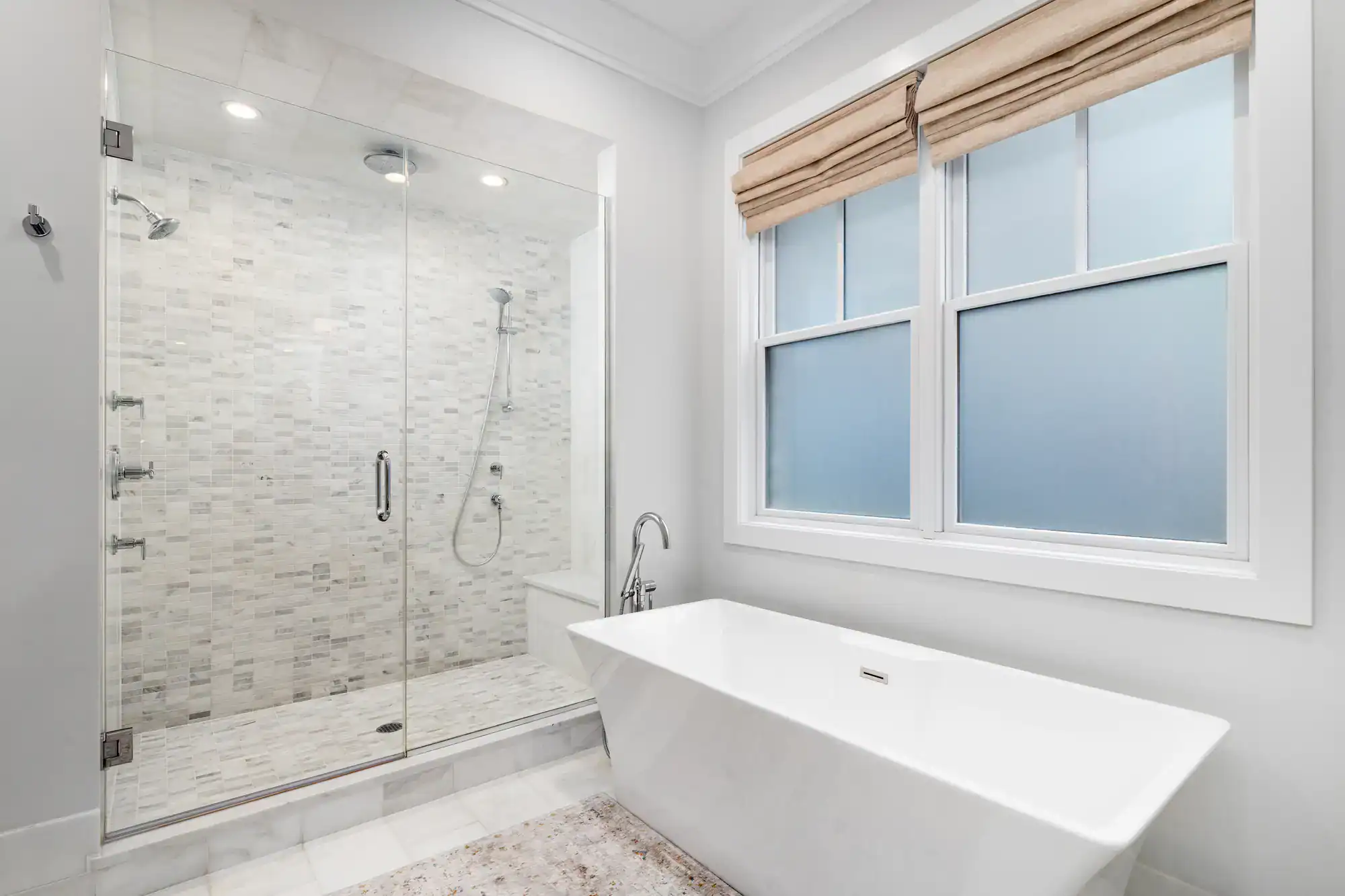
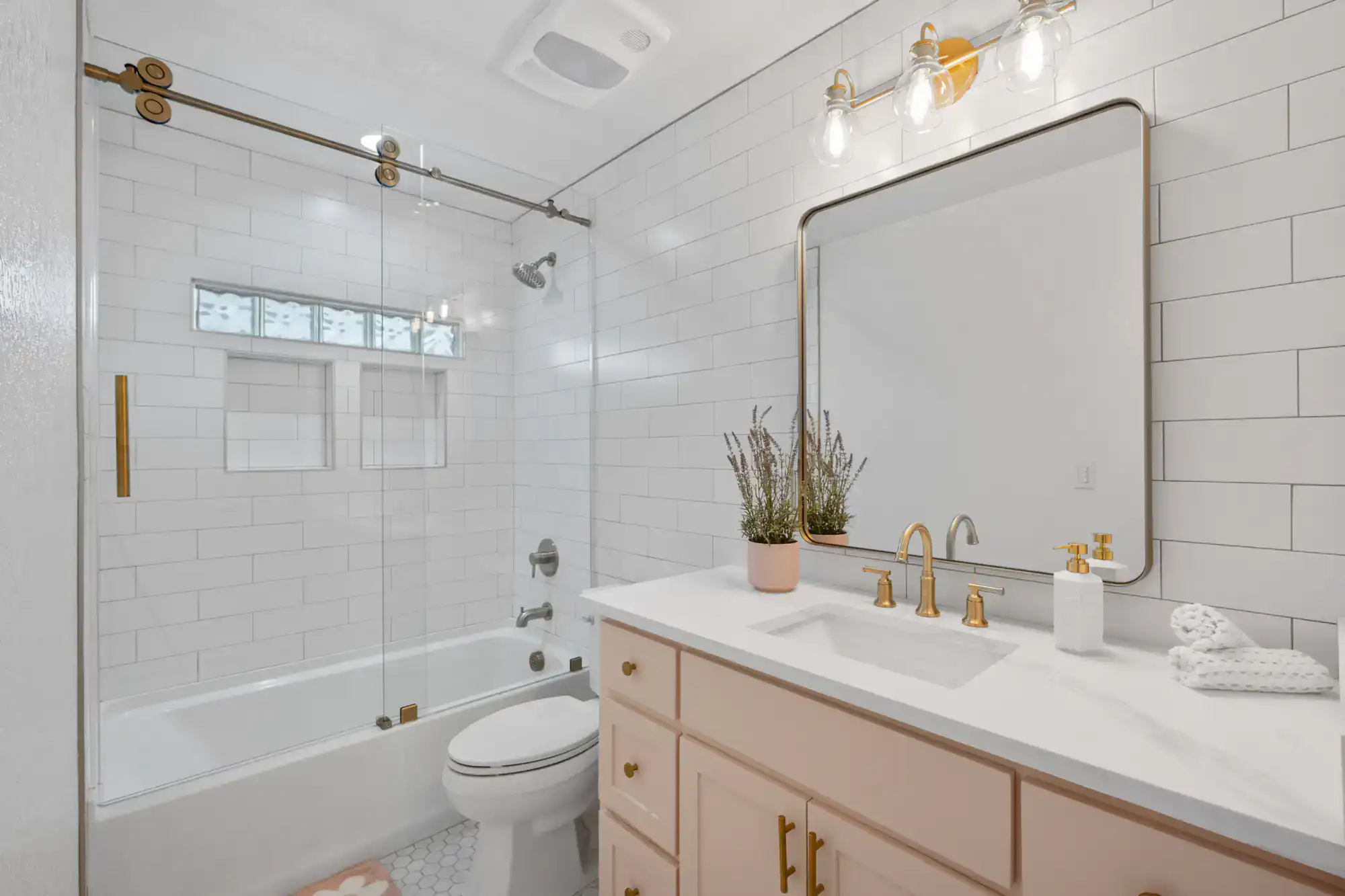
We handle the full scope of bathroom renovation from a focused walk-in shower installation to a complete gut-and-replace of everything in the room. For Germantown’s townhome-heavy housing stock, the most common project we see is the tub-to-shower conversion. The original layouts from the 1980s almost always included a tub-and-shower combo that made sense for a young family at the time. Today, more than 60% of homebuyers prefer a shower over a tub in the primary bathroom, and a well-designed walk-in shower in a compact footprint can make a small bathroom feel significantly more open.
Walk-in shower work includes custom configurations curbless entries, built-in benches, half walls, integrated shelving, and tile work throughout. Small bathroom remodeling is a specific strength for us, because working within the constraints of a Germantown townhome requires a contractor who knows how to maximize a tight space without compromising function or waterproofing integrity. Every shower project gets the same professional-grade moisture management regardless of size.
Beyond showers, our full service range covers floor tiling, wall tiling, cabinet replacement, vanity installation, floor replacement, and interior painting. Because we handle tile, carpentry, and painting under one roof, you’re working with one team and one point of contact from start to finish no subcontractor scheduling, no accountability gaps, no one pointing fingers at someone else when a question comes up mid-project.
Yes, in most cases you do. Germantown is an unincorporated community in Montgomery County, which means all permitting goes through Montgomery County’s Department of Permitting Services. The county is clear on this: most bathroom renovations including tub-to-shower conversions, plumbing changes, and electrical work like adding or relocating exhaust fans require a permit. Painting, replacing a faucet, or swapping out countertops without structural changes are exceptions, but anything involving plumbing or electrical typically triggers the permit requirement.
The practical implication is that only properly licensed contractors can pull permits on your behalf in Montgomery County. We hold Maryland MHIC License #28145, which covers that requirement. We also handle any WSSC coordination when plumbing is involved, which is a step that trips up contractors who aren’t familiar with how Montgomery County’s process works. Skipping permits isn’t just a code issue it can create real problems when you go to sell your Germantown home, because unpermitted work shows up during buyer inspections and can delay or derail a sale.
The national median spend for a primary bathroom remodel in 2025 is $15,000, and in the DC metro area where labor costs run above the national average that figure is a reasonable starting point for a mid-range project. A walk-in shower installation in the mid-range typically runs between $8,000 and $10,000 depending on materials, configuration, and whether any plumbing relocation is involved.
What catches a lot of Germantown homeowners off guard is the budget overrun problem. Nearly half of all bathroom renovations end up running 23 to 35 percent over the original estimate, usually because the initial bid didn’t account for permit costs, proper waterproofing layers, or surface prep. In older Germantown homes particularly those built in the 1980s there’s also the possibility of finding polybutylene supply piping inside the walls, which is a known failure risk from that construction era and something worth addressing while the walls are already open. A contractor who prices the job honestly upfront, including contingencies, saves you from the mid-project conversation nobody wants to have.
For a standard bathroom remodel, active construction typically runs two to three weeks. When you factor in the Montgomery County permitting process at the front end, the total timeline from signed contract to finished bathroom is usually four to six weeks. That’s for a focused project a tub-to-shower conversion or a full tile and fixture replacement in a single bathroom. More complex work, like moving plumbing or reconfiguring the layout, can extend that timeline.
If you have more than one bathroom in your home, the disruption is manageable. If you’re working with a single bathroom which is common in Germantown’s smaller townhomes it’s worth having a direct conversation with us about sequencing the work to minimize the period where the bathroom is completely out of commission. We plan projects with that in mind and give you a realistic timeline before anything starts, not an optimistic estimate that slips week by week.
It’s actually one of the most effective upgrades you can make in a compact space. The assumption that a walk-in shower requires a large bathroom is a common one, but a well-designed curbless shower with frameless glass typically makes a small bathroom feel more open, not more cramped. Removing the tub enclosure eliminates the visual barrier that chops the room in half, and the clean sightline through glass reads as space even when the square footage hasn’t changed.
For Germantown’s townhome bathrooms which were largely designed in the 1980s around a tub-and-shower combo that few households actually use as intended the conversion to a walk-in shower is both a practical and aesthetic improvement. The key is working with a contractor who knows how to design within a tight footprint: proper slope and drainage, waterproofing that accounts for shared walls in an attached home, and a layout that doesn’t sacrifice storage or function. That’s where experience with Germantown’s specific housing stock matters.
Start with the Maryland MHIC license. It’s a non-negotiable requirement for home improvement contractors working in Maryland, and it’s the credential that allows a contractor to pull permits on your behalf in Montgomery County. You can verify any contractor’s MHIC license through Maryland’s state license lookup tool it takes about two minutes and tells you whether the license is active and in good standing. We hold MHIC #28145.
Beyond licensing, look for a contractor who provides a detailed written estimate before any work begins one that breaks down labor, materials, permit costs, and scope clearly enough that you could compare it line by line against another bid. Vague estimates are how budget overruns happen. Also pay attention to how they handle the initial inquiry: responsiveness during the estimate phase is usually a preview of how they’ll communicate once the project is underway. A contractor who takes a week to return your call isn’t going to suddenly become responsive when you have a mid-project question.
It does, and the numbers in 2025 are particularly strong. A midrange bathroom remodel currently recoups approximately 80% of its cost at resale the highest return since 2007. In a market like Germantown, where homes are going pending in roughly five days and buyers have options, an updated bathroom can be the difference between a fast sale at asking price and a price reduction to compensate for dated finishes.
The equity context matters here too. Germantown home values have grown significantly from a median of around $133,400 in 2000 to roughly $448,200 in 2024. Homeowners who purchased a decade or more ago have built real equity, and a bathroom renovation is one of the more reliable ways to protect and build on that value before a sale. It also matters to buyers who are specifically looking at Montgomery County’s competitive market: a home with a renovated bathroom stands out in a townhome community where many of the comparable properties still have their original 1980s finishes.
Other Services we provide in Germantown