“
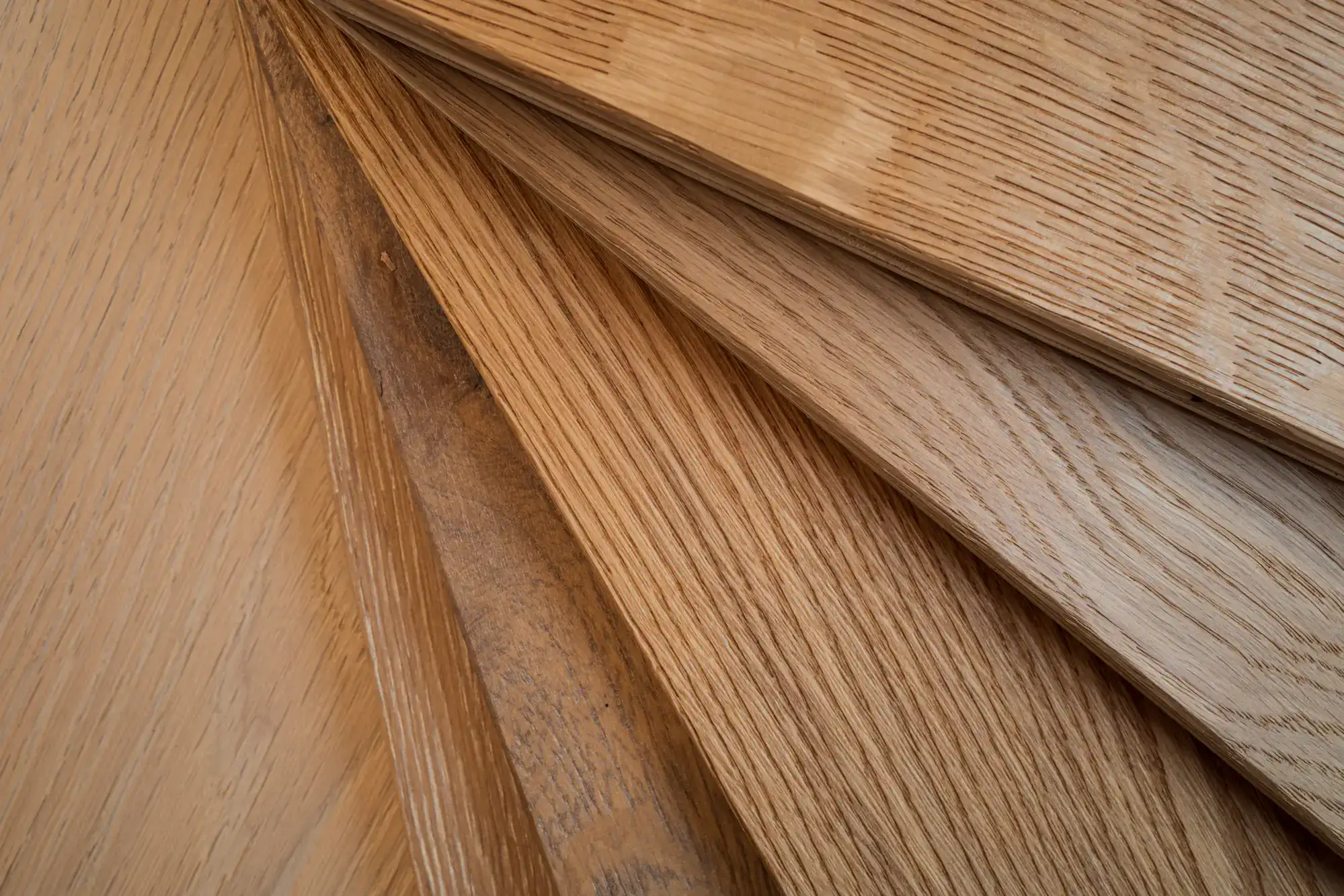
Most homes in Flower Valley, Rock Creek Village, and Manor Woods were built in the 1960s. The hardwood floors in those homes are now 50 to 65 years old and even if they were refinished once in the 1990s, that work is now decades behind them. What you’re seeing today isn’t neglect. It’s the natural result of time, family life, and a Montgomery County climate that puts wood through a full expansion-and-contraction cycle every single year.
Aspen Hill’s humid summers push moisture into wood floors, causing boards to swell and edges to lift. Then winter hits, forced-air heat dries everything out, and boards shrink back leaving gaps, stress cracks, and a finish that’s been flexed past its useful life. After 60 years of that cycle, no amount of mopping or buffing will bring those floors back. Professional refinishing will.
When it’s done right, the difference is immediate. Scratches disappear. Color evens out. The finish holds up to real life kids, pets, the road salt that comes in off Georgia Avenue and Connecticut Avenue every winter. If you’re preparing your home for the market, where Aspen Hill homes are selling at a median of $565,000 in a field rated 80 out of 100 for competitiveness, floors that show well aren’t a luxury. They’re a practical decision.
We’ve been working in the DC metro area for over 50 years. That means we were already established in this market before most of Aspen Hill’s subdivisions were fully built out and we’ve been working on homes exactly like yours ever since. Thousands of successful jobs across DC, Maryland, and Virginia. More than 300 recommendations on DC Consumers’ Checkbook, which is the review platform that Montgomery County homeowners actually trust because it’s curated, not self-selected.
Owner Gordon Franks personally supervises every job. You won’t meet someone at the estimate and then hand your floors off to an anonymous crew. Gordon stays involved from the first conversation through the final walkthrough which is exactly the kind of accountability that matters when you’re trusting someone with 60-year-old hardwood in a home you’ve spent years building.
We hold Maryland MHIC # 28145, along with licenses in DC and Virginia. We’re fully insured, and that insurance protects you not just us in the event of damage or injury on your property.
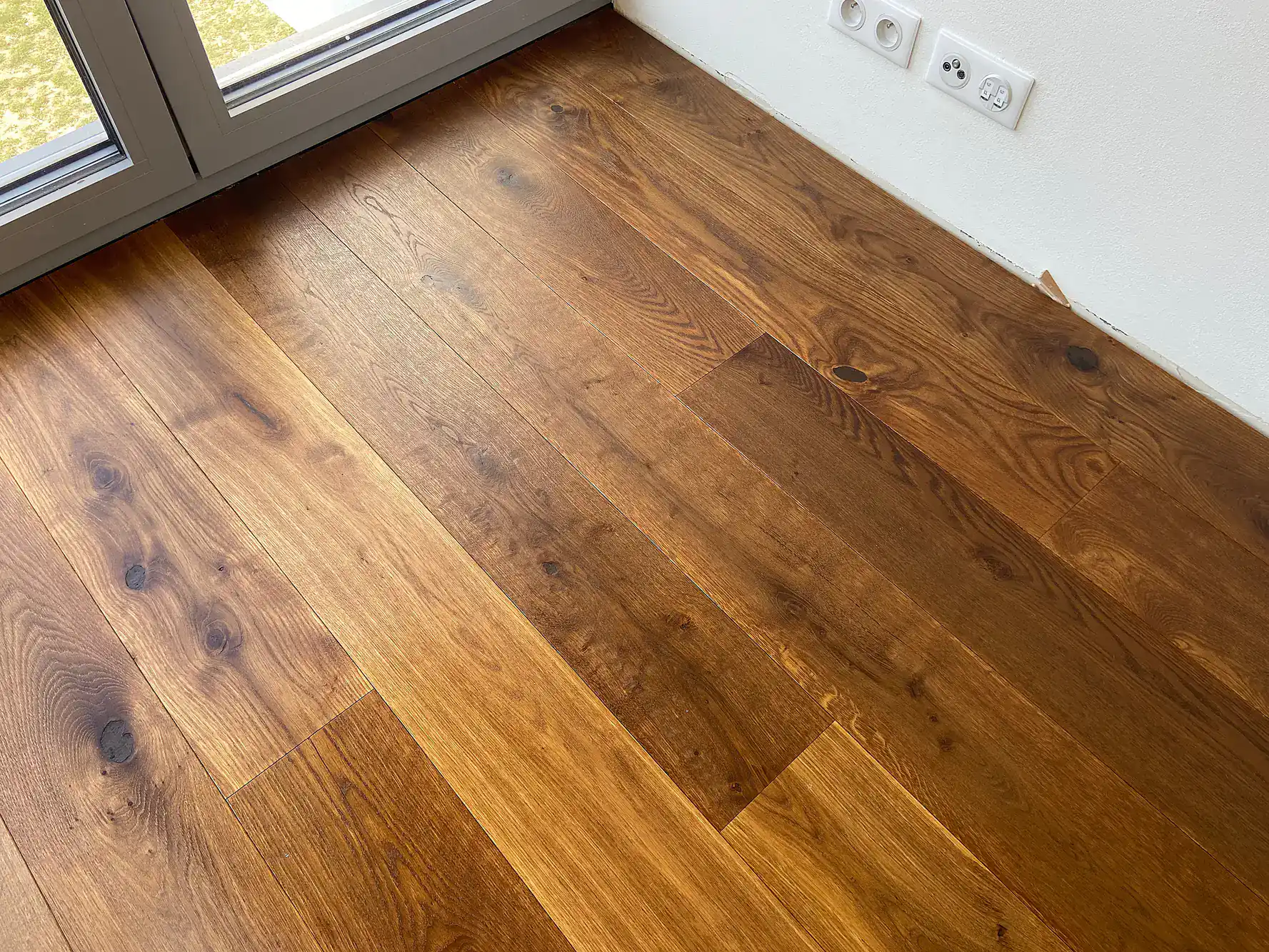
It starts with an honest assessment. Before any sanding happens, we conduct a thorough inspection board condition, wear layer thickness if it’s engineered hardwood, any sections that need repair before refinishing can begin. If boards are damaged or cupped from years of Aspen Hill’s humidity swings, those get addressed first. Refinishing over a structurally compromised floor doesn’t work, and skipping this step sets you up for a result that won’t last.
Once the floor is ready, sanding begins in stages moving through progressively finer grits to open the wood surface evenly without leaving gouges or patterns. We monitor humidity between coats, which matters more in Aspen Hill than in drier climates. The Mid-Atlantic’s seasonal moisture levels affect how finish absorbs and cures, and we account for that. Stain is applied if you’re changing the color, followed by multiple finish coats with proper drying time between each one.
The whole process is designed to be thorough, not rushed. Careful surface preparation isn’t an upsell it’s the reason the finish holds. We take the time to do it right on the first try, because redoing a refinishing job is far more disruptive than doing it correctly from the start.
Ready to get started?
Not every floor situation calls for the same solution, and we don’t push you toward the most expensive option by default. Hardwood floor refinishing makes sense when the existing wood is structurally sound and the wear is primarily cosmetic or finish-related which describes a large share of the 1960s-era hardwood floors still in use across Aspen Hill’s subdivisions. Hardwood floor repair is the right call when specific boards are damaged, water-stained, or cupped beyond what sanding alone can correct. And when floors are past the point of saving, new hardwood floor installation gives you a clean start with material that will last another generation.
For homeowners with engineered hardwood common in Aspen Hill homes that were updated in the 1980s and 1990s the question of whether refinishing is possible depends on the wear layer thickness. Engineered hardwood flooring with a wear layer of 3mm or more can often be refinished successfully. We’ll assess your specific floor and tell you honestly what’s possible, rather than defaulting to replacement.
Because we’re a full-service contractor, we can also handle interior painting, tiling, and other trades in the same engagement. For Aspen Hill homeowners doing a broader refresh before a listing or after years of deferred maintenance, that means one contractor, one schedule, and no juggling multiple vendors across multiple timelines.
For most of the solid hardwood floors installed in Aspen Hill’s 1960s homes, yes refinishing is absolutely still on the table. Solid hardwood can typically be sanded and refinished four to five times over its lifespan, so even a floor that was refinished once in the 1990s likely has at least one more refinishing cycle left in it. The key factors are how much material remains above the tongue-and-groove, whether the boards are structurally intact, and whether any sections have damage that needs repair before sanding can begin.
The bigger question mark for many Aspen Hill homeowners is engineered hardwood, which was commonly installed during renovations in the 1980s and 1990s. Engineered hardwood can often be refinished the determining factor is the thickness of the wear layer. A wear layer of 3mm or more generally qualifies. We’ll inspect your floor, measure what’s there, and give you a straight answer about what’s possible before any work begins.
Most standard hardwood floor refinishing projects take somewhere between three and seven days from start to finish, depending on the size of the area, the condition of the floor, and how many finish coats are applied. The sanding itself is relatively fast we can cover roughly 100 square feet in about five hours but the finish coats require adequate drying time between applications, and that timeline can stretch in humid conditions.
In Aspen Hill, the summer months bring elevated humidity levels that can affect how quickly finish cures between coats. We account for this rather than rush the process. If you’re working toward a specific deadline like a listing date it’s worth discussing timing upfront so the schedule is planned around both the scope of the work and the current season. We communicate clearly about timelines from the first conversation, so you’re not guessing mid-project.
For standard hardwood floor refinishing and installation in Aspen Hill, no building permit is required as long as no structural changes are being made. Montgomery County’s Department of Permitting Services has confirmed that replacing or refinishing flooring hardwood, tile, or carpet does not trigger a permit requirement when the work is cosmetic and the structure of the home is not being altered.
That said, Montgomery County does require that any contractor pulling permits for broader home improvement work hold a Maryland Home Improvement Commission (MHIC) license. We hold Maryland MHIC # 28145, which means we’re fully qualified to operate in Montgomery County and to pull permits when a larger renovation project requires it. If you’re combining flooring work with other trades painting, tiling, or structural updates having a licensed contractor handling everything is a practical protection for you as the homeowner.
In most cases, refinishing is the smarter financial move especially in Aspen Hill’s current market, where homes are selling at a median of $565,000 and competition is real. Refinishing costs a fraction of full replacement, and the return on investment at resale is significant. NAR and NARI data puts the ROI on hardwood floor refinishing at approximately 147%, compared to around 118% for new installation. For a seller trying to maximize what they walk away with, refinishing existing floors that are structurally sound is almost always the better calculation.
Replacement makes more sense when a significant portion of the boards are damaged, cupped beyond repair, or so heavily worn that the wood can’t take another sanding pass. If more than roughly a third of the boards need to be replaced anyway, the economics shift toward starting fresh. We can assess your specific floor and give you an honest recommendation not one based on which option costs more, but on which one actually makes sense for your floors and your timeline.
Refinishing and recoating are not the same thing, and knowing the difference helps you make the right call for your floors. Full refinishing involves sanding down to bare wood removing the existing finish entirely, addressing any surface damage, and applying new stain and finish coats from scratch. It’s the right approach when the finish has broken down, when you want to change the color, or when the floor has scratches and wear that go deeper than the surface coat.
Recoating, sometimes called screening, is a lighter process. It scuffs the existing finish to give the new coat something to bond to, then applies a fresh topcoat without sanding all the way down. It works well when the existing finish is still in reasonable shape but has lost its sheen, and it costs less than full refinishing. The catch is that recoating only works if the current finish is compatible and hasn’t failed at the adhesion level. If you’re not sure which your floor needs, an inspection will tell you and we’ll give you a straight answer rather than defaulting to the more involved option.
Aspen Hill’s climate is genuinely hard on hardwood floors. The area averages 40 to 43 inches of rainfall annually above the national average and summers bring humidity levels that can feel tropical from June through September. When warm, moist air moves through a home, wood absorbs it. Boards swell, edges lift slightly, and finish that was applied under drier conditions starts to show stress. Then winter arrives, forced-air heating pulls moisture out of the indoor air, and the same boards shrink back creating gaps and sometimes surface cracking.
After 50 or 60 years of that cycle, which is exactly where most of Aspen Hill’s original hardwood floors are, the cumulative effect is visible. Finish breaks down faster than it would in a more stable climate. Boards shift and settle in ways that create uneven surfaces. The good news is that a professional refinishing job, done with proper humidity monitoring between coats and finish products suited to a high-humidity-swing environment, can reset the clock significantly. Maintaining indoor humidity between 35% and 55% year-round with a humidifier in winter and air conditioning in summer will extend the life of a refinished floor considerably after the work is done.
Other Services we provide in Aspen Hill