“
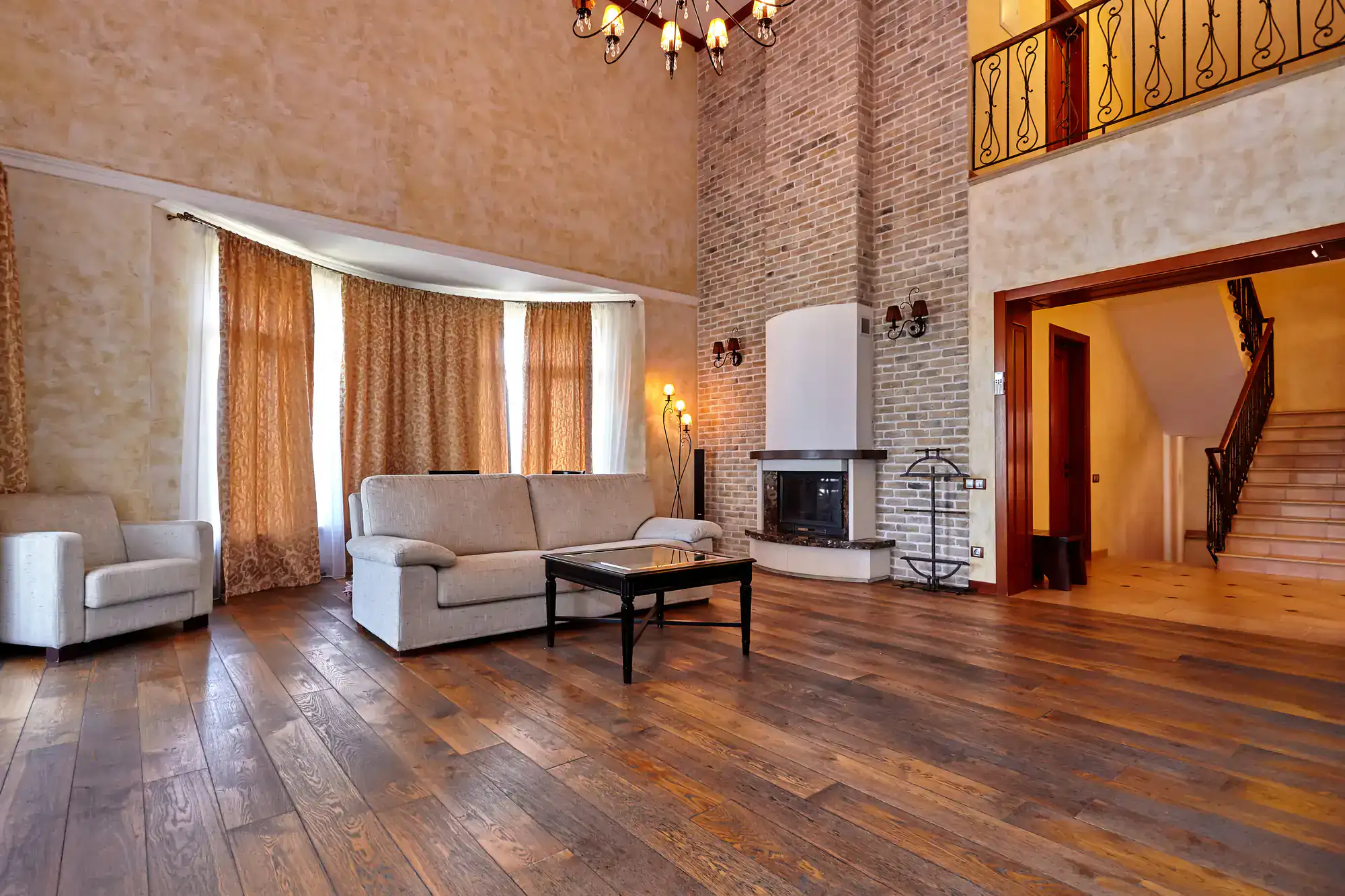
Kensington is one of the few communities in Montgomery County where pulling up old carpet can genuinely surprise you. Queen Anne and Colonial Revival homes built in the 1890s through the 1920s were laid with solid oak, heart pine, or fir floors that have outlasted everything installed since. When those floors come back, refinished correctly, they don’t just look better they look like what the house was always supposed to be.
That outcome depends entirely on how the work is approached. Kensington’s proximity to Rock Creek Park creates a more pronounced humidity cycle than most DC suburbs deal with. Summer moisture from the Rock Creek valley causes wood to expand; winter heating pulls it back. Over decades, that cycling produces cupping, gapping, and finish failure that an inexperienced contractor can easily misread. A professional who understands Maryland’s seasonal humidity patterns and monitors conditions between finish coats produces a floor that holds up through that cycle rather than showing problems within a season.
Whether you’re restoring original boards in the Historic District, refreshing mid-century hardwood in Rock Creek Hills, or preparing a home on Connecticut Avenue for sale, the result you’re after is a floor that looks right, lasts, and doesn’t need to be redone in three years.
Optima Design Group is a Bethesda-based home improvement and general contracting company that has been working in the DC metro area for over 50 years. That means we’ve refinished, installed, and repaired hardwood floors in the kinds of homes that define Kensington: older, character-rich, and unforgiving of shortcuts.
Gordon Franks, our owner, personally supervises every job and stays in direct contact with clients from the first conversation through the final walkthrough. You’re not handing your home off to an anonymous crew. There’s a named person accountable for the outcome, and that matters in a community where your neighbors notice the work and word travels fast.
With 300+ recommendations on DC Consumers’ Checkbook and a 4.8 out of 5 rating on Houzz, the record speaks for itself. We hold Maryland MHIC # 28145, DC Lic # 39937921, and Virginia Lic # 2705077763 fully licensed in all three jurisdictions and fully insured.
It starts with an honest assessment. Before any equipment comes out, we look at the floor carefully board condition, sanding depth remaining, moisture levels, any areas that need repair before refinishing begins. For homes in Kensington’s Historic District, this step matters more than most people realize. A floor that’s already been refinished two or three times over the past century may have limited sanding depth left, and a contractor who skips that evaluation can cause permanent damage. You’ll know what you’re working with before any commitment is made.
From there, repairs come first replacing damaged or warped boards, addressing gaps, and making sure the surface is structurally sound. Then comes sanding, moving through progressively finer grits to create a smooth, even surface. Stain is applied if a color change is requested, and finish coats follow, with humidity monitoring between applications. In Kensington’s climate, that monitoring step isn’t optional ambient moisture levels directly affect how finish adheres and cures, and skipping it is how you end up with a floor that peels or bubbles within a year.
Interior hardwood flooring work in Kensington does not require a Historic Area Work Permit, so there’s no regulatory delay on your end. The timeline for a standard refinishing project typically runs a few days from start to finish, and we’ll keep you informed throughout so you’re never left guessing about what comes next.
Ready to get started?
Kensington’s housing stock isn’t uniform, and neither are the flooring needs that come with it. Homes in the Historic District tend to have original solid hardwood oak, pine, or fir that can typically be refinished multiple times over its lifespan. Solid hardwood can handle four to five full refinishings, and floors in this condition often have more life in them than homeowners expect. Hardwood floor refinishing in Kensington, MD for these properties is almost always the right call over replacement.
Rock Creek Hills and the surrounding mid-century neighborhoods from the 1940s through the 1960s are a different story. Many of those homes have engineered hardwood, and whether it can be refinished depends on the thickness of the wear layer. We assess that before recommending a path forward full refinishing, recoating, or targeted repair. You won’t be pushed toward a more expensive option because it’s the only one on offer.
Beyond refinishing, we provide new hardwood floor installation in Kensington, MD, hardwood floor repair for damaged or water-affected boards, wood floor refinishing, floor refinishing, and hardwood floor sanding. Because we also handle interior painting, tiling, and remodeling, homeowners doing a broader interior refresh particularly in the Historic District where exterior work carries more regulatory weight can coordinate everything through a single contractor rather than juggling multiple schedules.
In most cases, yes but it depends on how many times the floor has already been sanded and how much material is left above the tongue-and-groove joint. Solid hardwood can typically support four to five full refinishings over its lifespan, and floors in Kensington’s Victorian-era homes that were installed in the 1890s through the 1920s have often been refinished fewer times than you’d expect, particularly if they were covered by carpet at some point in the mid-20th century.
The honest answer is that you won’t know for certain until someone actually looks at the floor and measures the sanding depth remaining. That’s the first step in any assessment and it’s the step that separates a contractor who knows what they’re doing from one who will sand regardless and leave you with a structurally compromised floor. If the boards are too thin to sand safely, there are still options: recoating with a fresh polyurethane layer, targeted board replacement, or spot repairs that blend with the surrounding floor. The goal is to preserve what you have, not replace it unnecessarily.
Maryland’s humidity is genuinely hard on hardwood floors, and Kensington’s location near Rock Creek Park makes this more pronounced than in drier, more inland suburbs. During summer, elevated ambient moisture causes wood to expand sometimes enough to produce cupping or raised grain. During winter, forced-air heating systems pull moisture out of the air and the wood contracts, which is when gaps between boards become most visible. This seasonal cycle, repeated over decades, accelerates finish wear and can cause structural issues in floors that aren’t properly maintained.
For homeowners in Kensington, the practical implication is timing. Fall and spring are the best seasons for hardwood floor refinishing because humidity levels are more stable, wood acclimation is more predictable, and finish cures more reliably. Summer refinishing isn’t impossible, but it requires a contractor who monitors humidity between finish coats a step that directly affects whether the finish adheres correctly or develops adhesion problems within the first year. If your floors are gapping noticeably in winter, that’s a normal response to the dry season, not necessarily a sign that refinishing is urgent. A professional assessment will tell you whether what you’re seeing is seasonal movement or something that needs to be addressed.
For the vast majority of Kensington sellers, refinishing is the smarter financial move. Hardwood floor refinishing returns approximately 147% at resale according to NAR and NARI data meaning the cost of the project comes back to you and then some in the final sale price. Replacement doesn’t come close to that return, and it takes significantly longer to complete.
Kensington’s real estate market is competitive. Homes here receive an average of three offers and sell in roughly 52 days, with median list prices frequently above $900,000. In that environment, the condition of your floors directly affects buyer perception and how quickly offers come in. Buyers walking through a home in the Historic District or Rock Creek Hills notice floors immediately and a freshly refinished original hardwood floor reads as quality and care in a way that new LVP or carpet simply doesn’t. The one scenario where replacement makes more sense than refinishing is when more than a third of the boards are damaged enough to require individual replacement at that point, the cost comparison shifts. But for most pre-sale situations in Kensington, refinishing is the right call.
Refinishing involves sanding the floor down to bare wood, which removes the existing finish, surface scratches, stains, and discoloration, then applying new stain (if desired) and multiple coats of fresh finish. It’s the more comprehensive option and the one that addresses real wear, color changes, and deeper surface damage. It also opens up the possibility of changing the stain color entirely going from a golden oak to a darker walnut tone, for example.
Recoating is a lighter process. It doesn’t involve sanding down to bare wood instead, the existing finish is lightly abraded and a new topcoat is applied over it. It’s less disruptive, faster, and less expensive, but it only works if the existing finish is still in reasonably good shape and is compatible with the new coating. You can’t recoat a floor that’s heavily worn, deeply scratched, or has finish that’s peeling or flaking. For Kensington homeowners with floors in decent condition that have just lost their sheen, recoating can be a practical middle option. For floors with real wear especially in high-traffic areas like entryways and hallways in older homes a full refinish is usually what’s actually needed.
Some engineered hardwood floors can be refinished, and some can’t the determining factor is the thickness of the wear layer, which is the solid wood veneer on top of the plywood core. If the wear layer is approximately 3mm or thicker, a light sanding and refinish is generally possible. Thinner wear layers don’t leave enough material to sand safely without cutting through to the core, which would ruin the floor.
This matters for Kensington homeowners in the mid-century neighborhoods Rock Creek Hills and the surrounding subdivisions developed in the 1940s through the 1960s where engineered hardwood is more common than in the Victorian-era Historic District. If you’re not sure what you have, the right move is to have someone look at it before assuming it either can or can’t be refinished. A contractor who defaults to “replace it” without checking the wear layer is leaving money on the table for you. If refinishing isn’t viable, recoating with a compatible topcoat product is sometimes an option, as is replacing only the most damaged sections and blending them with the surrounding floor.
Maryland requires all home improvement contractors to hold an active Maryland Home Improvement Commission (MHIC) license. This applies to any contractor doing flooring, painting, remodeling, or other home improvement work in the state Kensington included. You can verify any contractor’s MHIC license number directly through the Maryland MHIC website, which maintains a publicly searchable database. If a contractor can’t provide an MHIC number or their license shows as inactive, that’s a meaningful red flag not a technicality.
The reason this matters beyond compliance is legal protection. If an unlicensed contractor damages your floor, causes an injury, or does substandard work, your options for recourse are significantly more limited than they would be with a licensed contractor. In a community where homes frequently exceed $800,000 in value, the financial stakes of a flooring project gone wrong are real. We hold Maryland MHIC # 28145, along with DC Lic # 39937921 and Virginia Lic # 2705077763 all three are published on our website and verifiable. For Kensington homeowners doing their due diligence, that’s the starting point, not the finish line but it’s a starting point that not every contractor in the area can meet.
Other Services we provide in Kensington