“
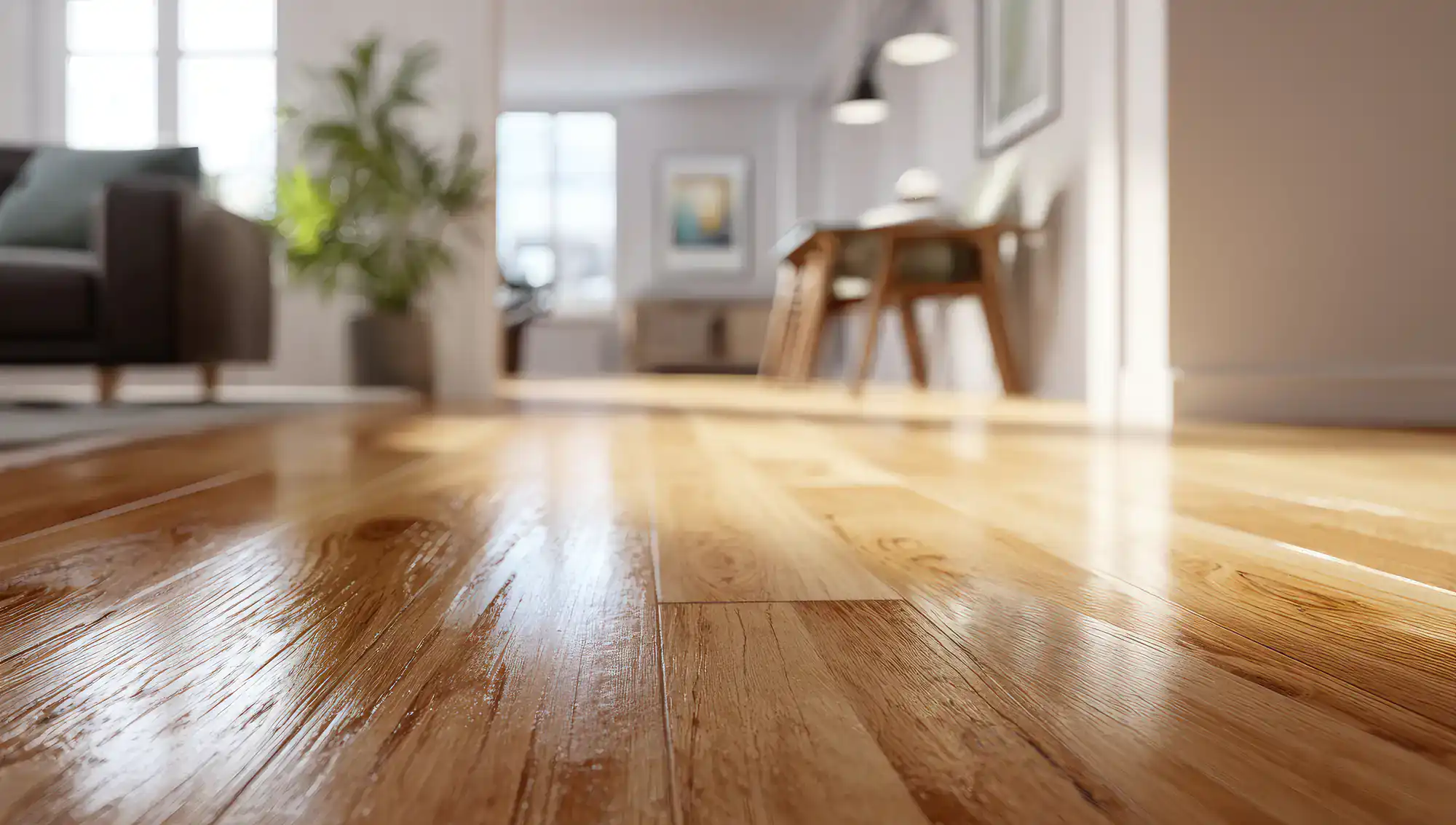
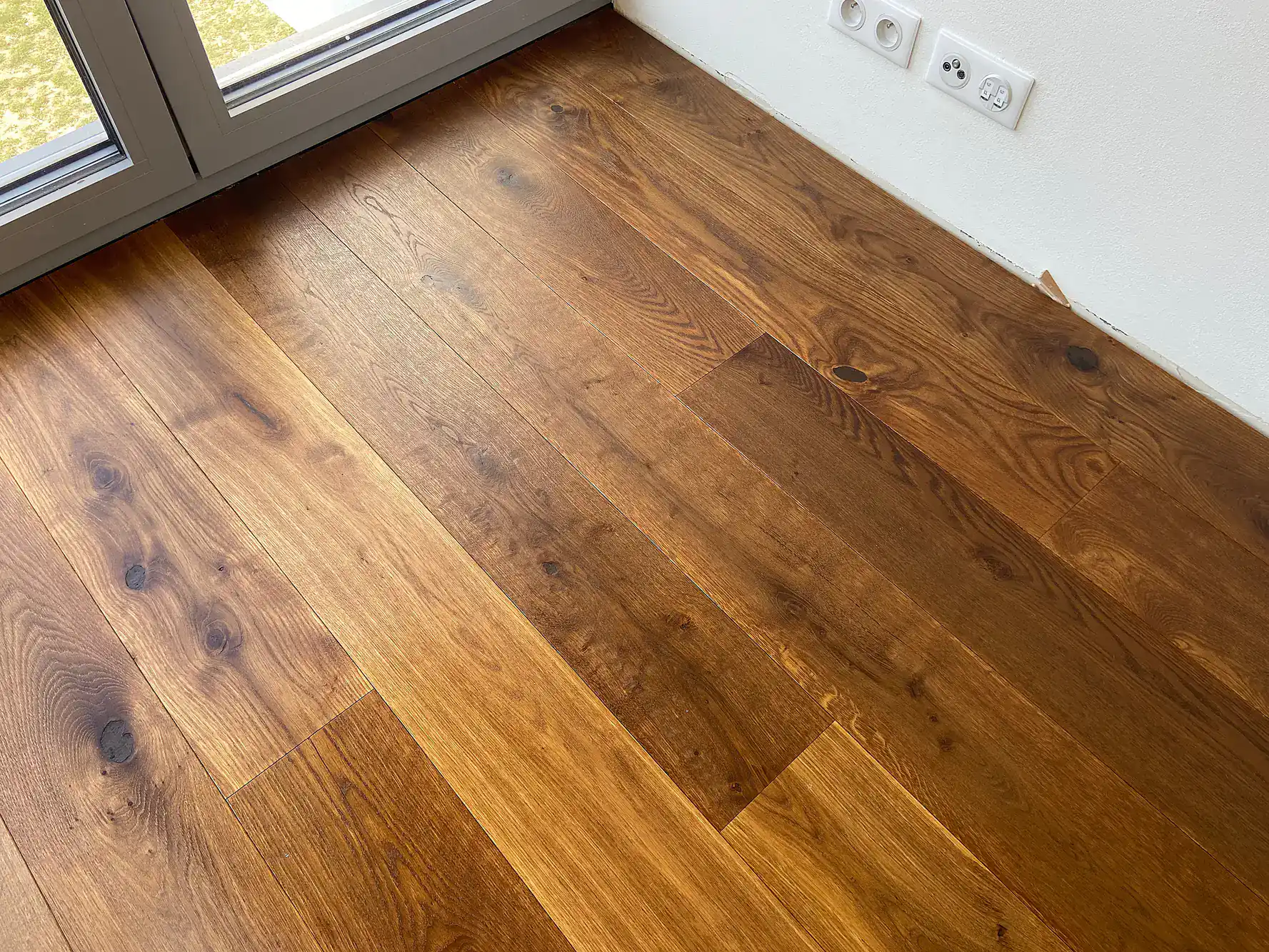
When we refinish your hardwood floors correctly, the difference isn’t subtle. The dullness is gone. The scratches are gone. The finish that was peeling along the edges near the kitchen threshold gone. What you’re left with is a floor that looks the way it did when your Layhill home was new, and one that’s protected to stay that way for years.
For Layhill homeowners specifically, that matters more than it might in a newer suburb. A lot of the housing stock here particularly in Layhill Village and the surrounding neighborhoods developed in the 1960s and 70s was built with solid hardwood as the default. These aren’t thin engineered planks. They’re thick, durable boards that can be sanded and refinished multiple times over their lifespan. The wood itself is not the problem. The finish is. And that’s fixable.
Montgomery County’s humidity also plays a role that most homeowners don’t think about. Summers here push indoor humidity above 80%, which causes boards to expand and edges to rise. Come winter, the heating system dries everything out and those same boards contract, leaving visible gaps. Over time, that cycle beats up a finish faster than foot traffic does. A properly applied finish one that accounts for how wood moves in this climate holds up to that cycle instead of cracking along with it.
We’ve been doing this work in the DC metro area for over 50 years. That’s not a marketing number it means we’ve been refinishing and installing hardwood floors in Montgomery County homes since before most of Layhill South was even built. We’ve worked on the original 1960s hardwood in Layhill Village and the engineered floors in newer Tivoli and Layhill View homes. The range of what we’ve encountered and handled correctly is genuinely hard to match.
What also sets us apart is how we run the business. Gordon Franks, our founder and owner, stays directly involved in every job. You’re not handing your home over to an anonymous crew. Gordon oversees the work, stays in contact with you throughout, and is accountable for the outcome in a way that larger, more anonymous operations simply aren’t.
Over 300 verified recommendations on Washington D.C. Consumers’ Checkbook and a 4.8 out of 5 rating on Houzz aren’t numbers that accumulate by accident. They reflect thousands of completed jobs and a consistent standard that Montgomery County homeowners have recognized for decades.
It starts with an honest assessment. Before any sanding happens, we inspect the floor board by board if necessary. Damaged boards get repaired first. Loose boards get secured. If there are areas where the wood has been compromised by water near a bathroom or kitchen threshold, we address that before the finish work begins. Skipping this step is how refinishing jobs go wrong, and it’s not a step we skip.
Once the floor is prepped, sanding begins with progressively finer grits to remove the old finish evenly without burning through thin spots. For Layhill homes with floors that have already been refinished once or twice over the decades, this stage requires care and experience you’re working with less material than you started with. After sanding, if a stain color change is part of the plan, we water-pop the wood to open the grain and ensure the stain absorbs evenly. Then the finish coats go on, with humidity monitoring between applications to ensure proper curing.
One thing worth knowing for Layhill specifically: Montgomery County’s Department of Permitting Services does not require a permit for hardwood floor installation or refinishing when no structural changes are involved. There’s no paperwork to navigate, no inspection to schedule. You can move forward as soon as you’re ready.
Ready to get started?
We handle the full range of hardwood flooring work installation, refinishing, sanding, repair, and engineered hardwood flooring and the right recommendation depends on what you actually have and what condition it’s in.
For homeowners in Layhill Village or the older parts of the community, the question is usually whether to refinish or repair. Solid hardwood from the 1960s and 70s is typically thick enough to be sanded again, even if it’s been done before. Targeted board replacement can address isolated damage without touching the rest of the floor. Full refinishing restores the entire surface to a consistent finish and color.
For homeowners in Layhill South particularly in Tivoli, Layhill View, or Poplar Run the floors are more likely to be engineered hardwood, which requires a different conversation. Whether engineered hardwood can be refinished depends on the thickness of the wear layer. We can assess that before recommending anything. If the wear layer qualifies, refinishing is an option. If not, recoating or targeted section replacement may be the better path. Our goal is to give you the right answer for your floor, not the answer that generates the largest job.
We hold Maryland MHIC License #28145, which is the state-required authorization for home improvement contractors working in Layhill and throughout Montgomery County so you’re covered from a licensing and consumer protection standpoint before the first call is even made.
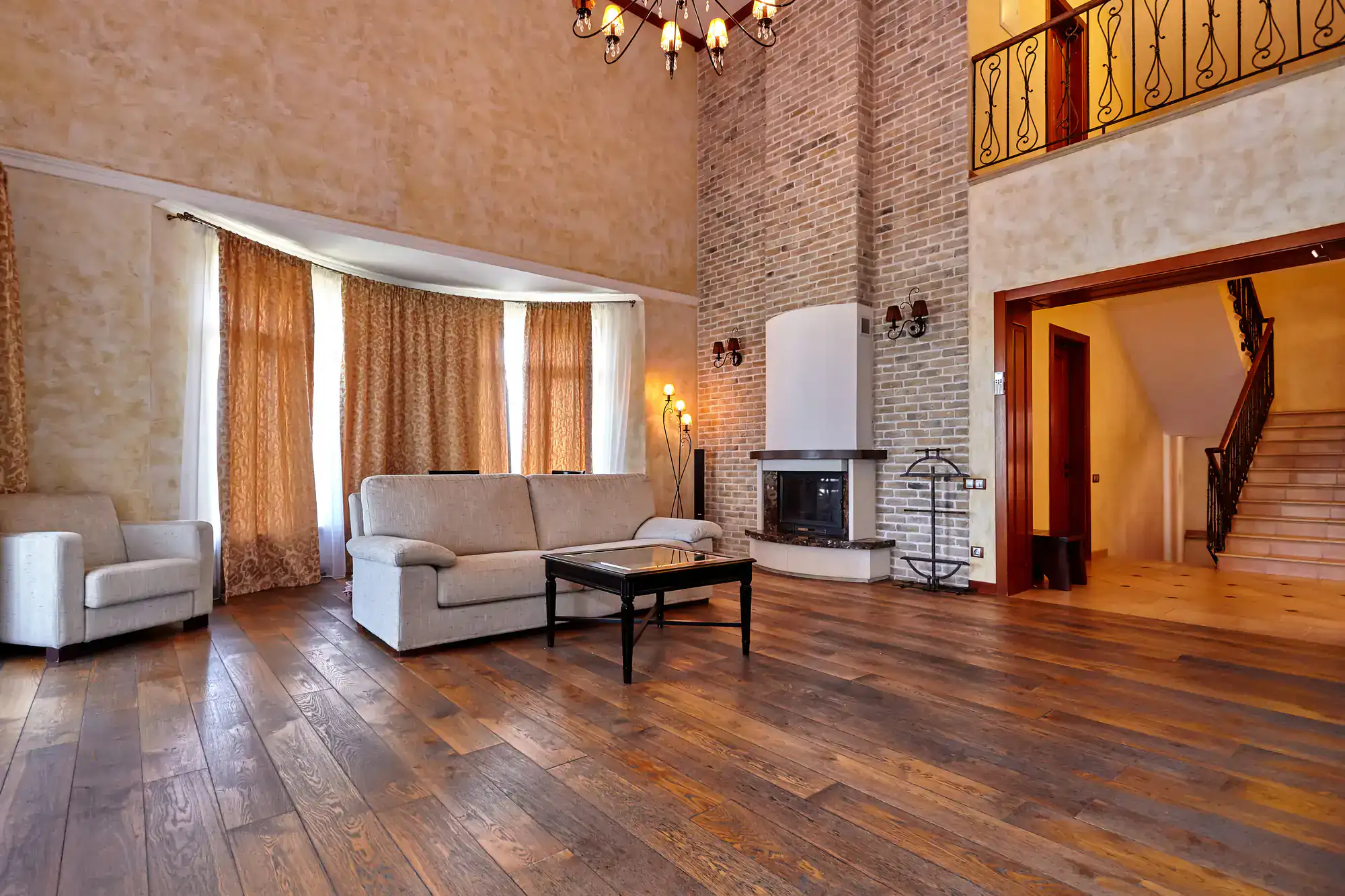
Almost certainly yes, and here’s why. Homes built in Layhill Village starting in 1965 were constructed with solid hardwood flooring as standard not engineered planks, not laminate. Solid hardwood boards are thick enough to be sanded and refinished multiple times over their lifespan, typically four to five times before the wood becomes too thin to work with safely. If your floors haven’t been refinished more than once or twice since the home was built, there’s very likely enough material left to do it again.
The main thing to assess before starting is whether any boards have been damaged beyond what sanding can fix water staining that has penetrated deep into the wood, boards that have cupped severely and stayed that way, or sections where previous repairs used mismatched wood. We’ll identify those areas before any work begins. In most cases, isolated damage can be repaired without replacing the entire floor, and the refinishing can proceed on the rest of the surface. We’ve been working on homes of exactly this vintage in Layhill and Montgomery County for over 50 years, so this is not unfamiliar territory.
It’s one of the more underappreciated factors in this region. Montgomery County has a humid subtropical climate, which means summers are genuinely hot and humid indoor humidity regularly exceeds 80% without climate control and winters are dry, especially once heating systems run continuously. Wood is hygroscopic, meaning it absorbs and releases moisture based on the environment around it. In summer, boards absorb humidity and expand. In winter, they dry out and contract.
Over years of this cycle, floor finishes crack along board seams, edges begin to rise slightly, and gaps that weren’t there a decade ago become visible in January. Most homeowners attribute this to age or normal wear, but it’s really a humidity-stress problem. The right finish system, applied correctly with humidity monitoring between coats, is designed to flex with the wood rather than fight it. A contractor who doesn’t account for local humidity conditions during application especially during the curing phase is setting up a finish that will show problems within a year or two. This is one of the reasons local experience in Layhill and the DC metro area specifically matters.
The honest answer is that refinishing is the right call in the majority of cases, and it’s significantly less expensive than replacement. Refinishing is primarily a labor cost you’re not buying new material. Replacement involves both tearing out what’s there and purchasing and installing new flooring, which is a much larger investment. If your floors are solid hardwood and the boards themselves are structurally sound, refinishing will restore them to a condition that’s essentially indistinguishable from new.
The cases where replacement makes more sense are when more than roughly a third of the boards are damaged beyond repair, when the wood has been sanded so many times that there’s not enough material left to sand again, or when you want to change the floor type entirely. For most Layhill homes with original solid hardwood or even well-maintained engineered floors with an adequate wear layer refinishing is the financially smarter choice. NAR and NARI data consistently shows hardwood refinishing returns around 147% of its cost at resale, which is a meaningful number in a market where Layhill homes are selling in the $600,000 range.
A typical refinishing project takes between three and five days from start to finish, depending on the size of the area, whether staining is involved, and how many finish coats are applied. The rooms being refinished will need to be cleared of furniture and inaccessible during the process. Whether you need to vacate the home entirely depends on the scope of the project and your tolerance for the smell of finish curing water-based finishes have significantly less odor than oil-based, which is worth discussing when you get your estimate.
For families in Layhill with kids or pets, the most practical approach is usually to plan around the project either staying with someone nearby during the heaviest work days or sectioning off the work area from the rest of the house. We’ll communicate the timeline clearly so you’re not guessing. What you should expect is that the rooms being refinished will be off-limits for at least 24 hours after the final coat, and light foot traffic can resume after that, with full cure typically reached within a week. Heavy furniture should stay off the floor until the finish is fully cured.
Sometimes, and the determining factor is the thickness of the wear layer the top layer of real wood that sits above the engineered core. If the wear layer is approximately 3mm or thicker, the floor can typically be sanded and refinished at least once, sometimes twice. If the wear layer is thinner than that, sanding will cut through it and damage the floor rather than restore it. There’s no way to know without measuring, which is why an in-person assessment matters before any work is scheduled.
Homes in Tivoli, Layhill View, and Poplar Run the subdivisions that make up Layhill South were built between the 1980s and 2010s, which puts them squarely in the era when engineered hardwood was widely used in new construction. Some of those floors will qualify for refinishing. Others may be better candidates for recoating, which applies a fresh layer of polyurethane over the existing finish without sanding all the way down. Recoating is less expensive than full refinishing and can significantly improve the appearance of a floor that isn’t worn through but has lost its sheen. We’ll tell you which approach is appropriate for what you have not which one is more profitable to perform.
Yes. We hold Maryland Home Improvement Commission License #28145, which is the state-required license for contractors performing home improvement work in Maryland. The MHIC license isn’t just a credential it means we’re bonded, subject to state oversight, and that you have recourse through the Maryland Home Improvement Commission if something goes wrong. That’s a meaningful consumer protection that unlicensed operators can’t offer, and it’s worth verifying for any contractor you’re considering for work on your home in Layhill or anywhere else in Montgomery County.
Beyond the Maryland license, we also hold DC License #39937921 and Virginia License #2705077763, which matters if you’re coordinating work across properties or referring us to someone in a neighboring jurisdiction. We’re based in Bethesda same county, same commuter corridor as Layhill so this isn’t a distant operation sending crews from out of the area. We’re a local Montgomery County contractor with over 50 years of work in this region and more than 300 verified recommendations from DC-area homeowners who have used us and said so publicly.
Other Services we provide in Layhill