“
There’s a version of your floor you haven’t seen in years. Beneath the scuffs, the worn finish, and the grime that’s built up along the grain, the wood itself is often in far better shape than it looks. A proper refinish strips all of that back and leaves you with a surface that’s clean, even, and genuinely renewed not just cleaner, but structurally sound and protected for years ahead.
For Silver Spring homeowners specifically, that matters more than it might in a newer suburb. A significant portion of homes in the Woodside and Indian Spring neighborhoods were built in the 1940s and 1950s with original solid hardwood that’s never been professionally refinished. That wood typically 3/4-inch red or white oak is thick enough to be sanded and refinished multiple times. The floor that looks like it needs replacing often just needs the right contractor.
Silver Spring’s climate adds another layer to this. Humidity here averages around 69% in August and drops sharply once heating season starts that seasonal swing causes wood to expand and contract every year, which accelerates surface wear and finish breakdown. When refinishing is done correctly, with proper acclimation and humidity-appropriate finish selection, the result holds up through those cycles instead of breaking down again in a season or two.
We’ve been doing this work in the DC metro area for over 50 years. That means we’ve worked in the exact type of homes that define Silver Spring’s older neighborhoods: 1940s colonials off Sligo Creek Parkway, postwar capes in Woodside Park, mid-century split-levels in Kemp Mill. We know what those floors look like before and after, and we know what it takes to get from one to the other.
We’re headquartered in Bethesda, just a few miles from Silver Spring’s western edge, and hold Maryland MHIC License # 28145 the specific credential required for home improvement contractors working in Montgomery County. We’re also fully insured, which matters when you’re handing over a home worth well over half a million dollars to a crew.
With 300+ verified recommendations on Washington D.C. Consumers’ Checkbook and a 4.8 out of 5 rating on Houzz, our track record is documented and verifiable not just claimed.
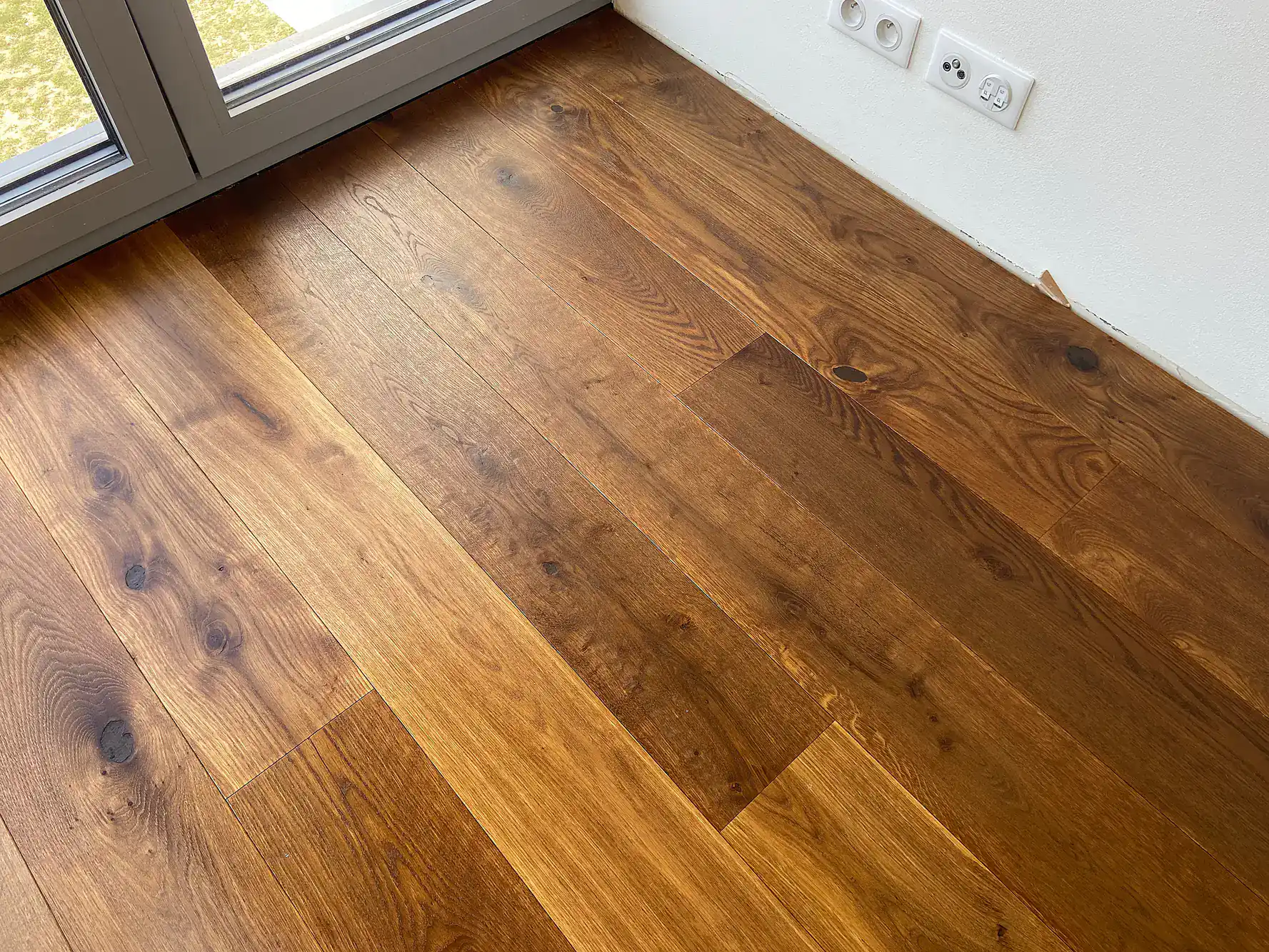
It starts with an honest assessment. Before any work is scheduled, we evaluate the actual condition of your floors checking board integrity, finish depth, moisture levels, and whether refinishing or a targeted repair is the right call. For Silver Spring homes with older housing stock, this step often surfaces details that matter: wax buildup over original finishes, subfloor irregularities common in mid-century construction, or boards that need replacement before sanding begins. You get a clear picture of what’s needed before anything is committed.
Once the scope is confirmed, the work follows a defined sequence. Sanding comes first, moving through multiple grits to remove the old finish layer by layer without cutting too deep into the wood. If you’re changing stain color something many Silver Spring homeowners do when refreshing a 1950s interior the process includes water popping to open the grain and ensure the new stain absorbs evenly. Then comes the finish: multiple coats, with humidity monitoring between each one.
In Silver Spring’s climate, that monitoring step isn’t optional it’s what separates a finish that lasts from one that starts peeling the following summer. Montgomery County doesn’t require a permit for standard hardwood floor installation or refinishing when no structural changes are involved, so most projects move quickly from estimate to completion. We work efficiently, communicate clearly, and leave the space clean.
Ready to get started?
We handle the full range of hardwood flooring work not just one piece of it. Hardwood floor installation covers new floors in spaces that have never had hardwood or are replacing a different surface entirely. Hardwood floor refinishing addresses existing solid floors that have worn through their finish or need a color change. Hardwood floor repair handles the specific stuff: damaged boards, water-affected sections, gaps from seasonal movement, or areas where previous work wasn’t done correctly. We also offer hardwood floor sanding as a standalone service when the finish needs to be stripped and reset without a full refinish scope.
Engineered hardwood flooring is something a lot of Silver Spring homeowners ask about and the answer isn’t always straightforward. Whether an engineered floor can be refinished depends on the thickness of the wear layer. Floors with a wear layer of 3mm or more can typically be sanded and refinished. Thinner wear layers may only be candidates for recoating or topical treatment. We evaluate this during the initial assessment so you’re not guessing.
Because we’re a full-service home improvement contractor, we can also coordinate painting, tiling, and remodeling work in the same engagement. For Silver Spring homeowners doing a pre-sale refresh or a broader renovation, that means one contractor, one point of contact, and a lot less coordination overhead on your end.
In most cases, yes and often more successfully than floors installed in newer construction. The solid hardwood used in Silver Spring’s mid-century homes, particularly in neighborhoods like Woodside and Woodside Park, was typically 3/4-inch thick red or white oak. That thickness allows for multiple sanding and refinishing cycles over the life of the floor. Even floors that have been under carpet for decades, or that have accumulated layers of wax and amateur finish over the years, are frequently good candidates once you strip back what’s on top.
The key is having someone assess the floor honestly before committing to a plan. We start every job with an inspection that looks at board integrity, wear depth, and moisture conditions factors that are especially relevant in older Silver Spring homes where subfloor conditions and past maintenance history vary widely. If refinishing is the right call, you’ll know it going in. If specific boards need replacement first, that gets addressed as part of the same scope rather than discovered mid-project.
Nationally, professional hardwood floor refinishing runs between $3 and $8 per square foot for traditional refinishing, with dustless refinishing typically falling in the $5 to $8 range. The total project cost for most homes lands somewhere between $1,100 and $2,700, though that varies based on the size of the space, the condition of the floor, whether you’re changing stain color, and how much repair work is needed before sanding can begin.
For Silver Spring homeowners, a few specific factors tend to affect where a project lands in that range. Older homes sometimes have boards that need spot replacement before refinishing can proceed, which adds to the scope. Stain color changes common in mid-century homes being updated require additional prep steps like water popping to ensure even absorption. And if the floor has been coated with wax historically, that needs to be fully stripped before any new finish will adhere properly. Getting a specific estimate for your home is the only way to get a number that’s actually useful.
Silver Spring’s climate creates real stress on hardwood floors year-round. Average monthly humidity runs from around 58% in early spring up to 69% in August, then drops sharply once heating systems kick in through the fall and winter. That seasonal swing high summer moisture followed by dry heated air causes wood to expand and contract on a predictable annual cycle. Over time, that movement shows up as surface finish wear, minor gapping between boards in winter, or slight cupping along board edges after a humid summer.
The practical takeaway is that how your floors are finished matters as much as the work itself. Finish selection, the number of coats applied, and the timing of each coat relative to ambient humidity all affect how well the result holds up through those cycles. We monitor humidity between coats during the refinishing process not as an extra step, but as a standard part of how the work gets done. If you have an older Silver Spring home without humidity control, that’s worth discussing during the estimate so we can account for your specific conditions.
For most Silver Spring sellers, refinishing is the better financial decision and by a significant margin. Hardwood floor refinishing returns approximately 147% ROI at resale according to NAR and NARI data, while full replacement costs substantially more and returns less per dollar spent. At Silver Spring’s current median sale prices in the $554,000 to $640,000 range, buyers at that level are comparing multiple homes and will factor visible floor condition directly into their offer. Dull, scratched, or worn floors either reduce the offer price or generate a flooring allowance request that typically exceeds what refinishing would have cost.
The exception is when a floor is genuinely beyond refinishing if more than 30 to 40 percent of the boards require replacement, the math shifts toward full installation. That’s why the initial assessment matters. We evaluate the actual condition of the floor and give you a straight answer on which direction makes sense, rather than defaulting to the more expensive option. With Silver Spring’s active real estate market over 2,300 home transactions in the past year getting that call right before you list is worth the conversation.
It depends on the wear layer, and there’s no shortcut around that answer. Engineered hardwood has a top layer of real wood bonded over a plywood or composite core. If that top layer the wear layer is 3mm or thicker, the floor can typically be sanded and refinished the same way solid hardwood can. If it’s thinner than that, sanding would cut through the wood veneer into the core beneath, which means full refinishing isn’t an option.
For floors that don’t qualify for full refinishing, there are still options worth considering. Recoating applying a fresh topcoat without sanding can restore the sheen and add a layer of protection if the existing finish is still adhering well. Targeted board replacement is another route if the damage is isolated. The right answer depends on the specific floor, which is why we assess the wear layer thickness during the initial walkthrough rather than making assumptions. A lot of Silver Spring homeowners assume their engineered floors can’t be touched and in many cases, they’re wrong.
For a typical residential project, the active work sanding, staining, and applying finish coats generally takes two to four days depending on the size of the space. After the final coat is applied, you’ll want to stay off the floors for at least 24 hours and avoid replacing furniture for a few days beyond that to let the finish cure fully. The total timeline from start to usable floor is usually in the range of four to seven days.
In Silver Spring, timing matters more than it does in some other climates. Spring and fall are the most favorable seasons for refinishing humidity is moderate, temperatures are stable, and the wood acclimation and finish curing processes are more predictable. Summer work is entirely doable, but the higher humidity averaging close to 69% in August means longer dry times between coats and more careful monitoring. Winter refinishing is also common, especially for homeowners preparing to list in the spring market, but the dry heated air can cause wood to contract during acclimation if the home isn’t properly conditioned beforehand. If you’re working toward a specific listing date or renovation deadline, mentioning that upfront lets us plan the schedule around the conditions that will give the best result.
Other Services we provide in Silver Spring