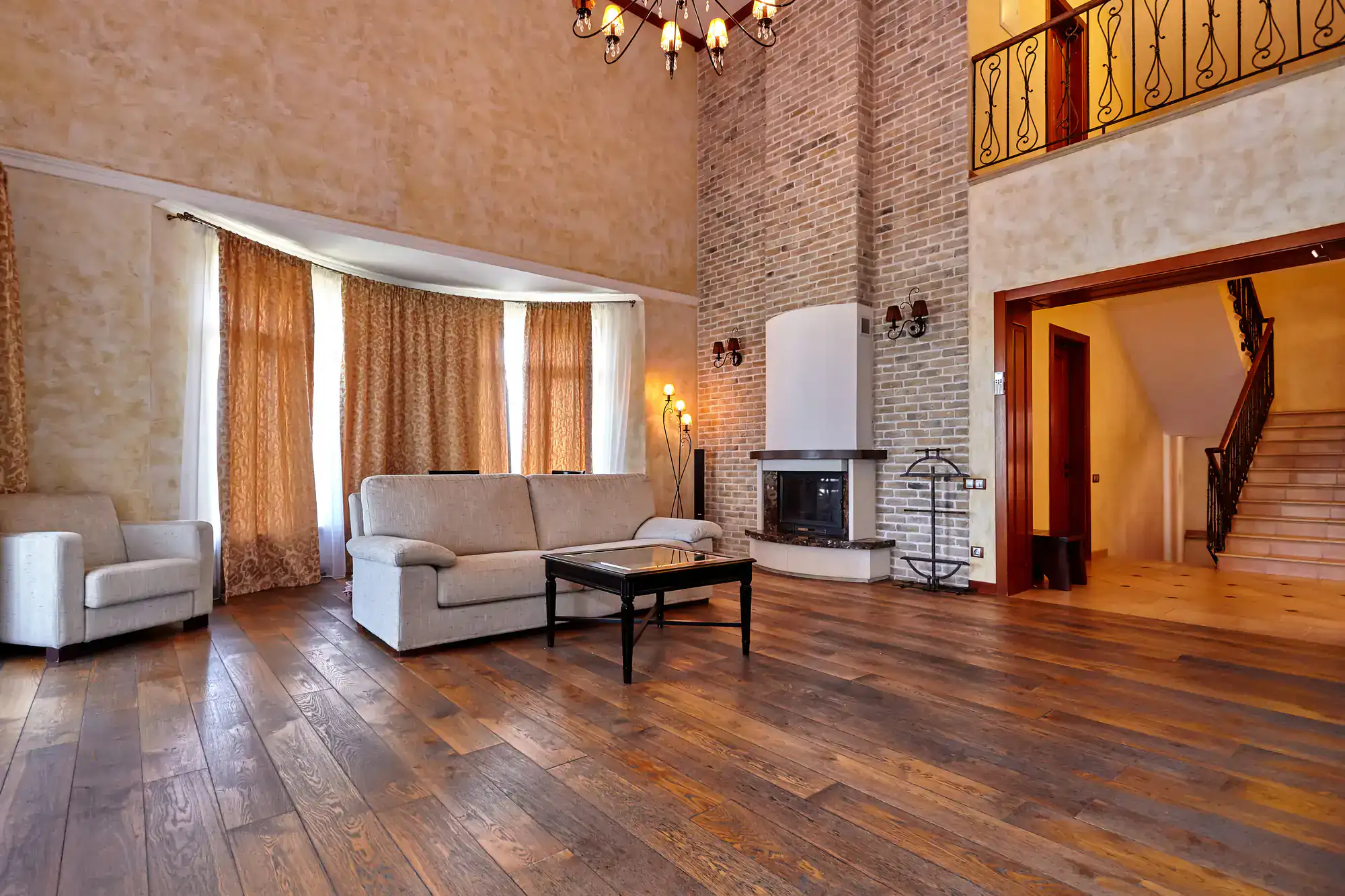
“
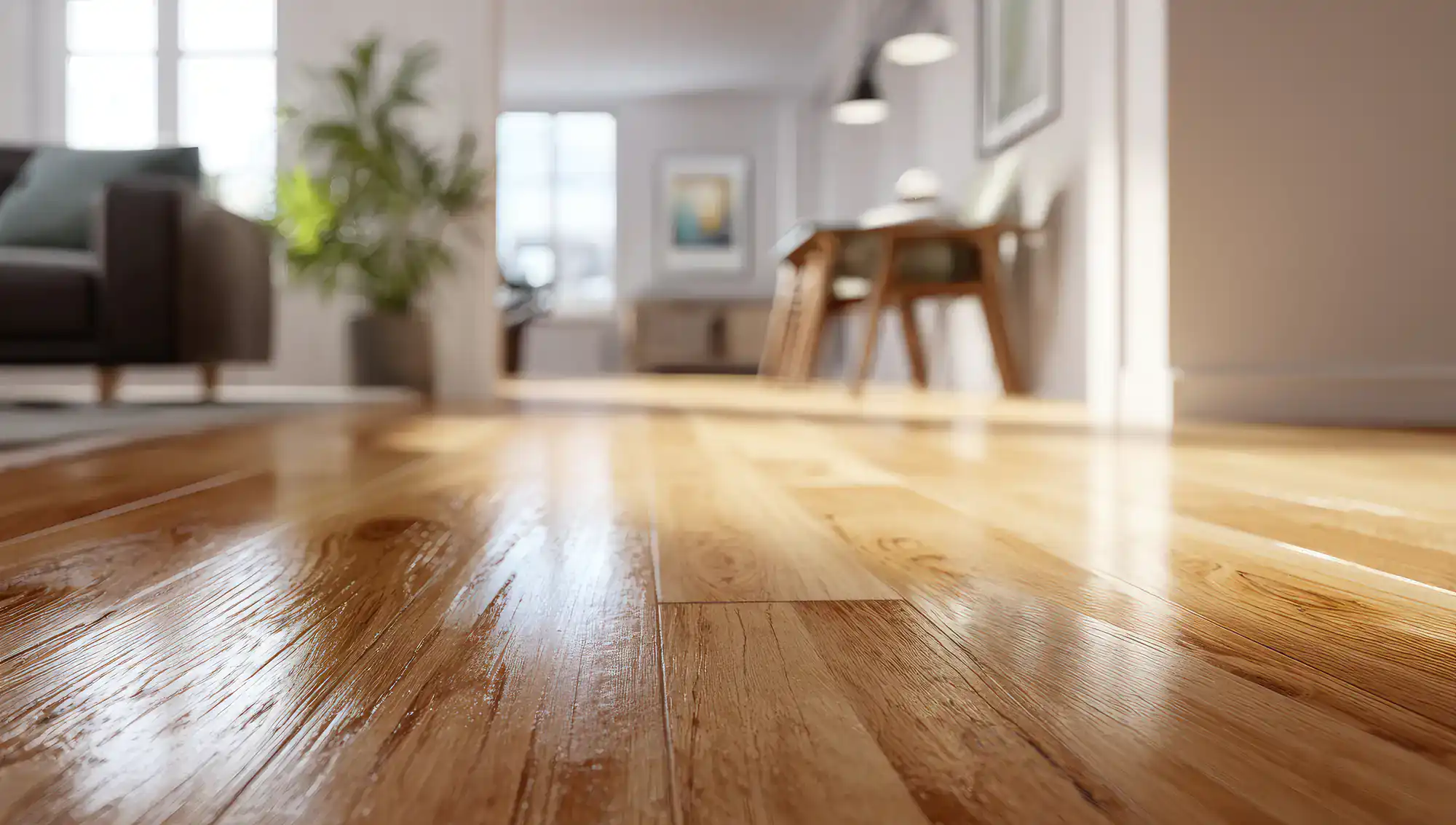
Most South Kensington homes were built in the 1940s and 1950s with solid hardwood floors thick enough to refinish multiple times. That’s the good news. The bad news is what the climate does to them.
DC summers push humidity past 70%. Winter heating drops indoor air below 30%. That cycle repeats year after year, and it shows: finish wears through in traffic paths, boards gap in January and swell back in July. What looked fine a few years ago starts to look its age.
But solid hardwood from that era is thick enough to be restored. You’re not looking at replacement you’re looking at refinishing. After a proper refinish, those floors stop telling the story of every year they’ve been walked on and start looking like the asset they actually are in a home worth $800,000 or more.
If you’re getting ready to list in South Kensington, that matters. Refinished hardwood floors return roughly 147% ROI at resale according to NAR and NARI data. In a market where buyers at this price point are comparing multiple properties and making fast decisions, the condition of your floors is one of the first things they notice and one of the easiest things for you to control before the listing goes live.
We’re based in Bethesda about three to five miles from South Kensington via Connecticut Avenue or the Beltway. That’s not a coincidence. This is the market we were built in, and it’s the market we’ve been working in for over 50 years.
Owner Gordon Franks personally supervises crews and stays in direct contact with clients throughout every job. That’s not a policy it’s just how we operate. When something comes up mid-project, you’re not waiting for a call center to relay a message. You’re talking to the person accountable for the outcome.
On DC Consumers’ Checkbook the review platform that Montgomery County homeowners actually subscribe to and trust we’ve earned 300+ verified recommendations. Reviewers consistently call out our crew’s professionalism, the quality of the finished work, and how straightforward the whole process was. For a homeowner in Rock Creek Palisades or Kensington Parkwood with a 1950s home and original hardwood floors, that track record is exactly what you want before someone starts sanding.
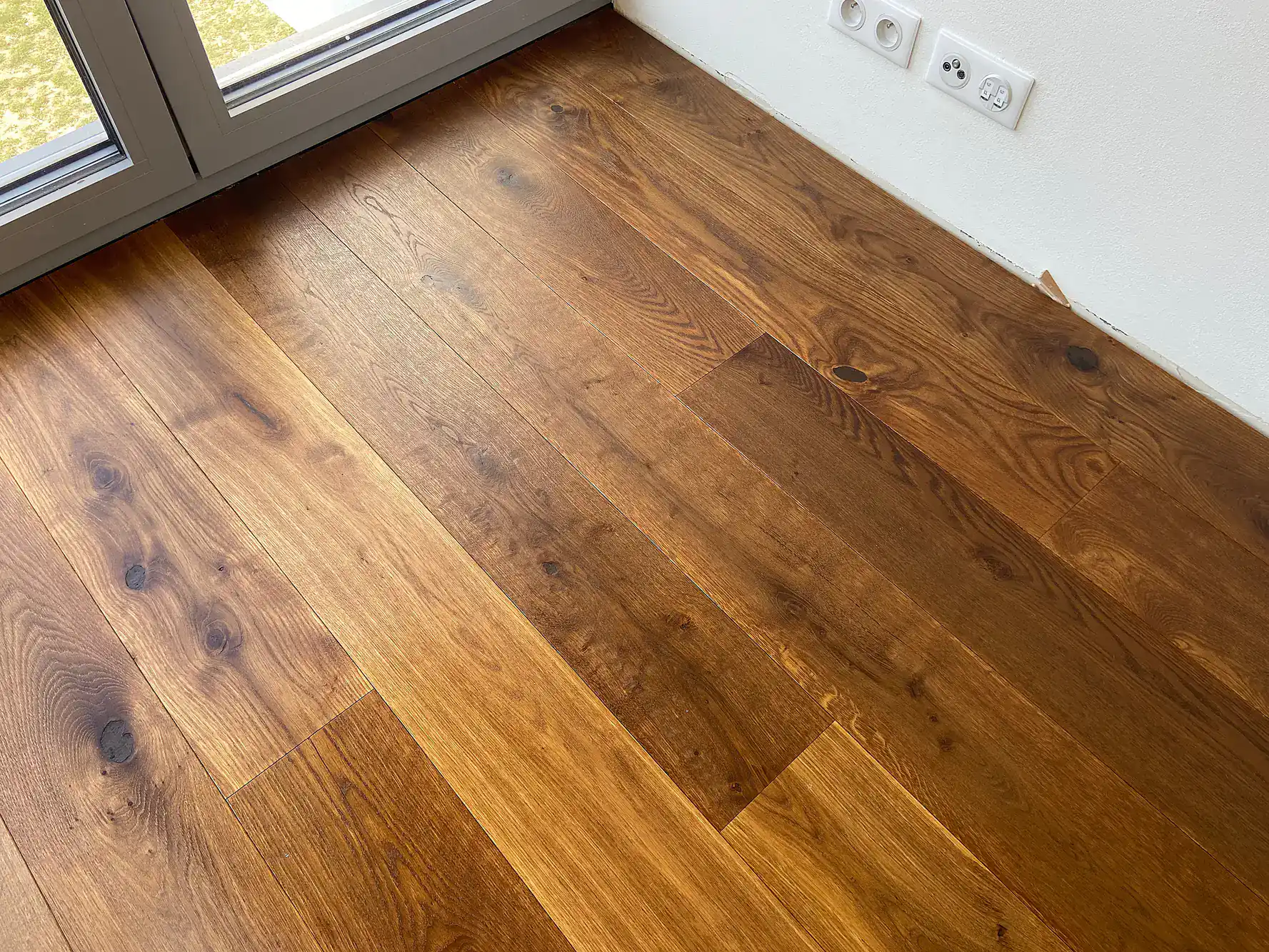
It starts with an honest assessment. Before any sanding happens, we inspect the floor condition of the boards, finish depth, any moisture-related damage from the humidity cycling that’s typical in South Kensington’s older housing stock. If boards need repair before refinishing, we handle that first. We do both, so you’re not coordinating a carpenter separately.
Once prep work is done, sanding begins. Multiple grit passes bring the surface back to bare wood evenly, without the waves or gouges that come from rushed work or inexperienced equipment. For floors getting a new stain color, water popping opens the grain to help the stain absorb consistently a step that separates a professional result from one that looks blotchy six months later.
Finish coats go on in stages, with humidity monitored between each coat. In South Kensington, where indoor humidity can swing significantly between seasons, that monitoring step isn’t optional it’s what keeps the finish from failing prematurely.
Because South Kensington is an unincorporated area in Montgomery County, standard hardwood floor refinishing and installation work doesn’t require a building permit. We hold Maryland MHIC License #28145, which is the state-level credential required for all home improvement work in Maryland. That’s already handled you don’t need to chase it down.
Ready to get started?
Hardwood floor refinishing is the core of what we do in South Kensington sanding back years of wear, applying stain if the color is changing, and laying down a durable finish that holds up to real daily use. But refinishing is only one part of the picture.
Hardwood floor repair comes up often in homes of this age. Water damage near old plumbing, boards worn through near doorways, gaps that have widened from decades of humidity movement these are common in the 1940s–1960s homes throughout Kensington Parkwood and Rock Creek Palisades. We handle repair work as part of the same engagement, not farmed out to someone else.
Hardwood floor installation covers new floors in rooms that were previously carpeted, extensions into renovated spaces, or full replacement when a floor is too far gone to refinish. Engineered hardwood flooring is also an option for areas where solid hardwood isn’t practical. If you already have engineered floors and are wondering whether they can be refinished, the answer depends on the thickness of the wear layer. We can assess that directly and give you a straight answer on whether refinishing, recoating, or replacement makes more sense for what you have.
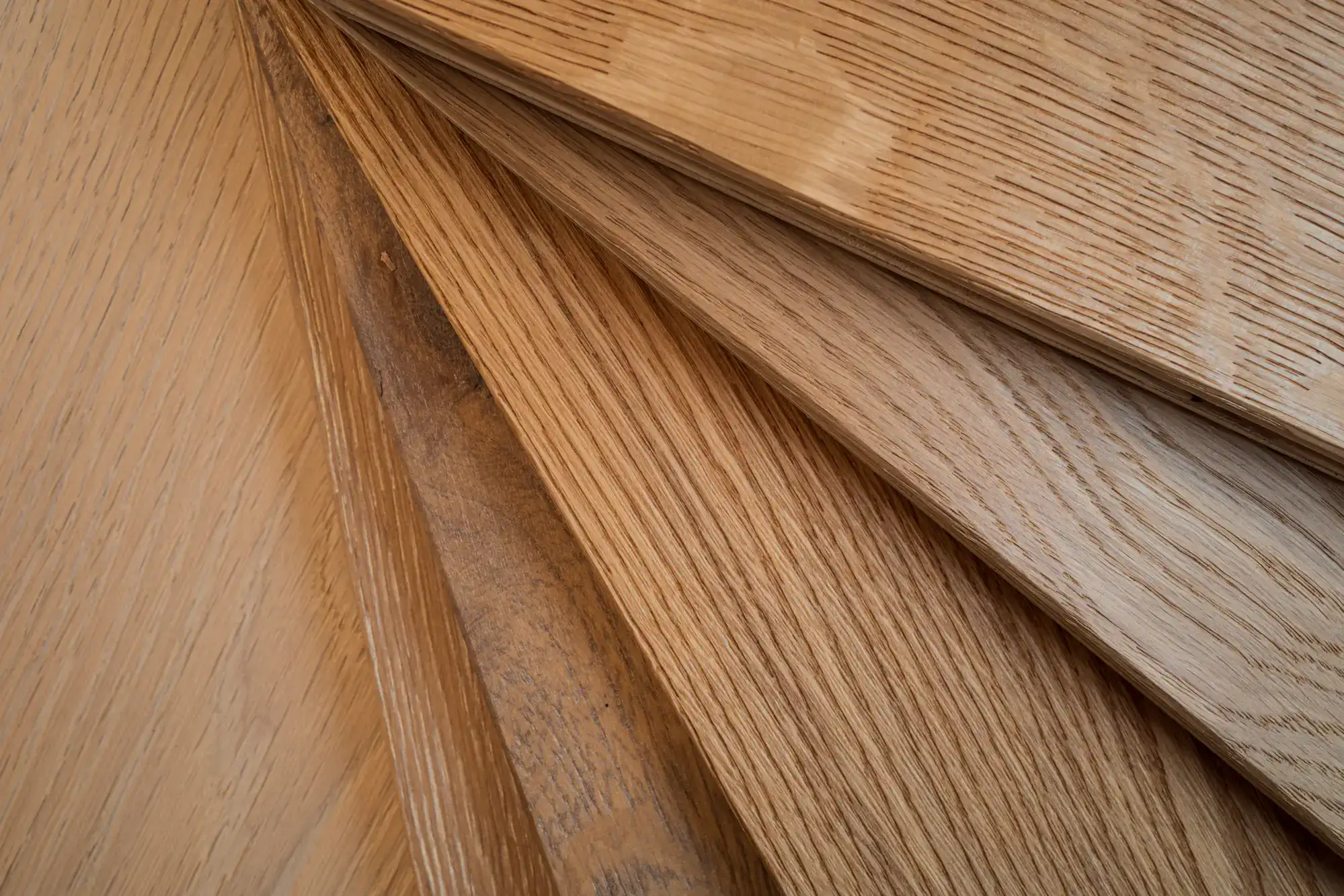
In most cases, yes and this is actually one of the better scenarios to be in. Solid hardwood floors installed in the 1940s and 1950s were built with thick planks that can typically be sanded and refinished four to five times over their lifespan. If your South Kensington home still has its original floors, there’s a good chance they have significant refinishing life remaining, even if they look rough right now.
The key variables are the thickness of the wood above the tongue-and-groove joint and whether there’s any structural moisture damage underneath the surface. Floors that have cupped or warped from humidity cycling common in older homes near the Rock Creek corridor need to be assessed carefully before sanding begins. In some cases, a moisture issue needs to be addressed first. But surface-level wear, scratches, dullness, and even old finish buildup are all things refinishing can fix. An in-person assessment is the only way to know for certain what you’re working with.
A standard refinishing project typically takes three to five days from start to finish, depending on the size of the space, whether any board repair is needed beforehand, and how many finish coats are applied. The sanding and staining portion moves relatively quickly we can cover around 100 square feet in about five hours. The finish coats are where the timeline stretches, because each coat needs adequate dry time before the next one goes on.
In South Kensington’s climate, humidity levels during the curing process matter. High summer humidity can extend dry times between coats, which is one reason spring and fall tend to be the most efficient seasons for this work. After the final coat, we recommend staying off the floors for at least 24 hours for light foot traffic and waiting 48 to 72 hours before moving furniture back. Full cure where the finish reaches its maximum hardness takes about 30 days, though the floors are fully usable well before that point.
Refinishing is almost always the better financial decision when the floors are structurally sound. It costs a fraction of full replacement, it’s faster, and it preserves the original wood which, in a South Kensington home built in the 1940s or 1950s, is often higher-quality solid hardwood than what you’d be putting back in if you replaced it with something new.
The point where replacement starts to make more sense is when more than 30 to 40 percent of the boards are damaged beyond repair deep gouges, severe warping, or rot from prolonged moisture exposure. For most South Kensington homeowners dealing with typical wear and humidity-related surface issues, refinishing is the right call. It also returns roughly 147% ROI at resale, which matters in a market where homes are selling in the $800,000 to $1,000,000+ range. The cost of refinishing is small relative to the value of the home and the return it generates.
For standard hardwood floor refinishing and most installation work, no permit is required. South Kensington is an unincorporated area within Montgomery County, Maryland, and the county does not require building permits for cosmetic surface work like sanding, staining, and refinishing existing floors. This keeps the process straightforward there’s no waiting on permit approvals before the work can begin.
Where permits can come into play is if the project involves structural changes subfloor replacement, modifications to the floor system, or work tied to a larger renovation that triggers permit requirements on its own. We hold Maryland MHIC License #28145, which is the state-level credential required for all home improvement contractors operating legally in Maryland. That license is verifiable through the Maryland Home Improvement Commission’s online lookup, and the number is published openly on our website. If you have questions about whether your specific project triggers any county requirements, that’s something we can clarify during the estimate conversation.
It depends on the wear layer the top veneer of real wood that sits above the core. If the wear layer is approximately 3mm or thicker, the floor can typically be sanded and refinished at least once, sometimes twice. Thinner wear layers can’t withstand sanding without cutting through to the core, which would ruin the floor.
Many South Kensington homeowners have engineered hardwood that was installed over original subfloors during renovations in the 1980s, 1990s, or 2000s a common approach in older homes where solid hardwood installation wasn’t practical. If you’re not sure what you have or whether your floor qualifies for refinishing, the answer comes from a direct assessment of the wear layer thickness. We can evaluate this during the estimate visit and give you a clear answer. If refinishing isn’t viable, recoating applying a fresh topcoat without sanding may be an option to extend the floor’s life before replacement becomes necessary.
South Kensington has a humid subtropical climate with real seasonal extremes. Summer outdoor humidity regularly climbs past 70%, while winter heating systems can push indoor relative humidity below 30%. That swing repeated year after year causes hardwood floors to expand and contract in a cycle that eventually shows up as gaps in winter, raised edges or slight cupping in summer, and finish cracking over time. In homes built in the 1940s and 1950s, before modern vapor barriers and better-sealed construction were standard, ground moisture can also work its way up through the subfloor and affect the wood from below.
The practical fix on the maintenance side is keeping indoor humidity between 45% and 55% year-round using a humidifier in winter and air conditioning or a dehumidifier in summer. On the refinishing side, we account for these conditions monitoring humidity between finish coats, assessing moisture levels before sanding begins, and not rushing the process during high-humidity summer months when dry times extend. Homes near the Rock Creek corridor, where ambient moisture tends to be higher due to the wooded landscape, benefit especially from this kind of attention during the refinishing process.
Other Services we provide in South Kensington