“
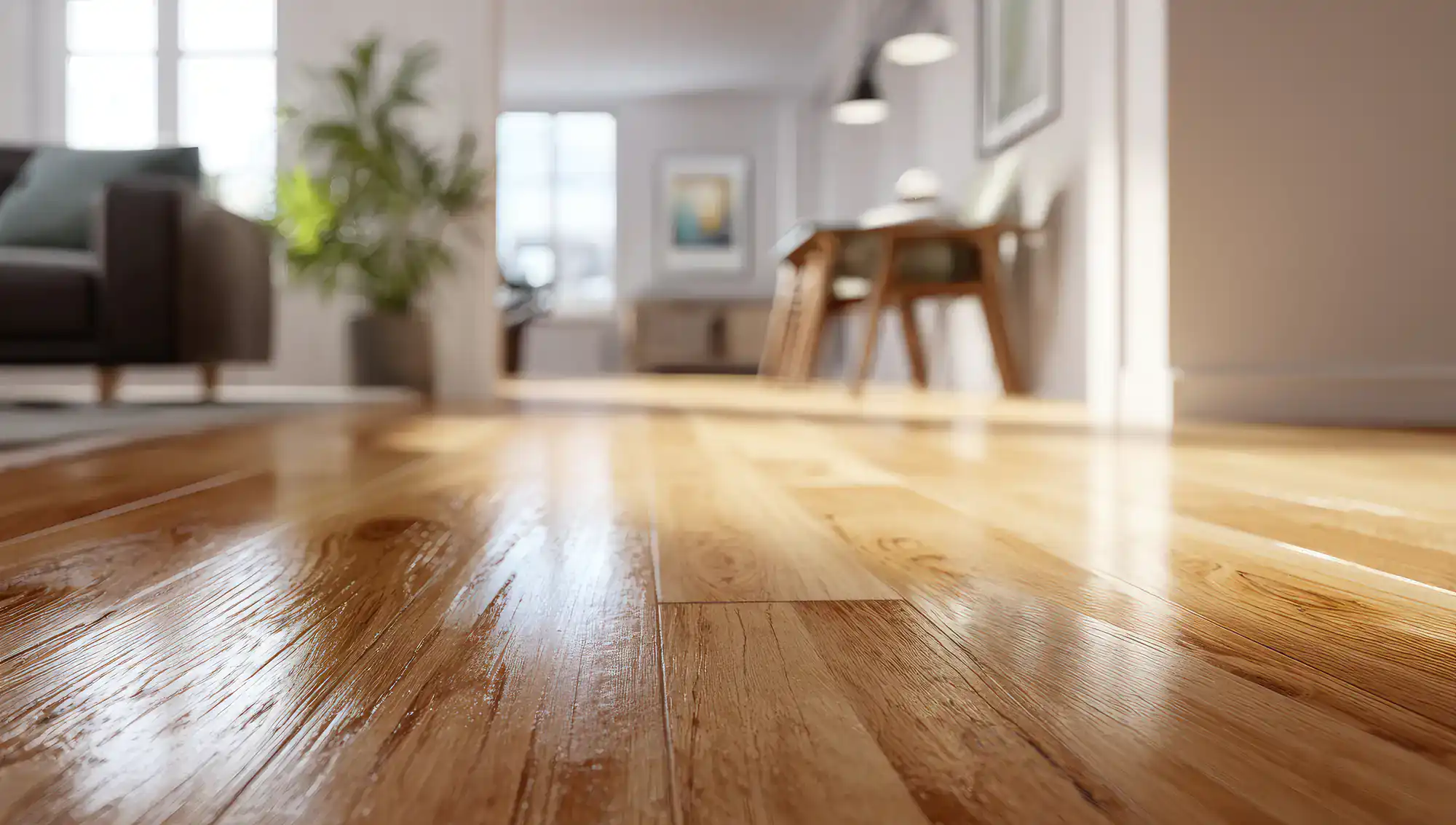
When hardwood floors are refinished properly, the difference isn’t subtle. Boards that looked gray, scuffed, or worn through come back even, smooth, and consistent the kind of result that makes a room feel completely different without changing a single wall.
For Spencerville homeowners specifically, that result matters more than it might elsewhere. The homes in this part of eastern Montgomery County were built primarily between the 1950s and 1970s, and many of them still have their original solid hardwood floors. Those floors have been through decades of Maryland summers and winters the humidity swings that cause wood to cup, swell, and crack over time.
A professional refinish doesn’t just improve the appearance; it addresses what those years of expansion and contraction have done to the surface, and it protects the wood from the next cycle. Refinishing is almost always the smarter financial call compared to replacement, and in a housing market as competitive as Spencerville’s where homes move quickly and buyers notice everything the condition of your floors has a direct impact on what your home is worth.
We’ve been working in the DC, Maryland, and Virginia market for over 50 years. That means we’ve worked on floors in homes exactly like the ones you’ll find off New Hampshire Avenue and Spencerville Road: mid-century colonials, split-levels, and ramblers with original hardwood that’s been through more than a few Maryland winters.
What makes the difference here isn’t just the experience. Owner Gordon Franks personally supervises every job, which means there’s a named person accountable for what happens in your home not a crew dispatcher you’ll never speak to. That kind of direct involvement shows up in the reviews, where clients consistently note how responsive, organized, and careful our team is from start to finish.
We hold Maryland MHIC License #28145, are fully insured, and have earned 300+ recommendations on DC Consumers’ Checkbook the review platform Montgomery County homeowners actually rely on when they’re vetting contractors.
It starts with an honest assessment of what your floors actually need. Not every floor needs a full sand-and-refinish some need targeted board repair first, some need recoating, and some are ready for a full refinish. We evaluate the condition of your floors, explain what we find, and recommend the approach that makes sense for your specific situation.
Once the scope is clear, the work follows a disciplined sequence: surface preparation, sanding through multiple grits to get the floor level and clean, any staining if you’re changing or refreshing the color, and then multiple finish coats applied with humidity monitoring between each one. That last part matters more in Montgomery County than people realize. The seasonal humidity swings in this area summer air that regularly exceeds 80% humidity, winter indoor air that drops sharply once the heat kicks on affect how wood moves and how finish cures. Rushing that process is how you end up with a finish that peels or bubbles within a year.
One thing Spencerville homeowners will appreciate: Montgomery County does not require a permit for hardwood floor installation or refinishing when no structural changes are involved. There’s no county bureaucracy to navigate before the job starts. You call, we assess, and the work gets scheduled.
Ready to get started?
We cover the full range of hardwood flooring work installation of new hardwood floors, refinishing of existing floors, hardwood floor sanding, board-level repair, and engineered hardwood flooring assessment and service. If your floors need work, there’s no scenario where you’d need to call a second company.
Engineered hardwood is worth addressing specifically, because it comes up often in homes in this area. A lot of Spencerville and Cloverly homes that were updated in the 1990s or 2000s had engineered hardwood installed during those renovations. Many homeowners assume engineered floors can’t be refinished that’s not always true. Whether refinishing is an option depends on the thickness of the wear layer. We can assess that and tell you clearly whether refinishing, recoating, or section replacement is the right call, rather than pushing you toward a full replacement you may not need.
Because we also handle interior painting, tiling, and remodeling, homeowners doing a broader refresh don’t have to coordinate multiple contractors across a rural service area. That’s a real convenience advantage in a community like Spencerville, where the nearest commercial centers are a drive away and managing multiple vendors adds friction to what should be a straightforward project.
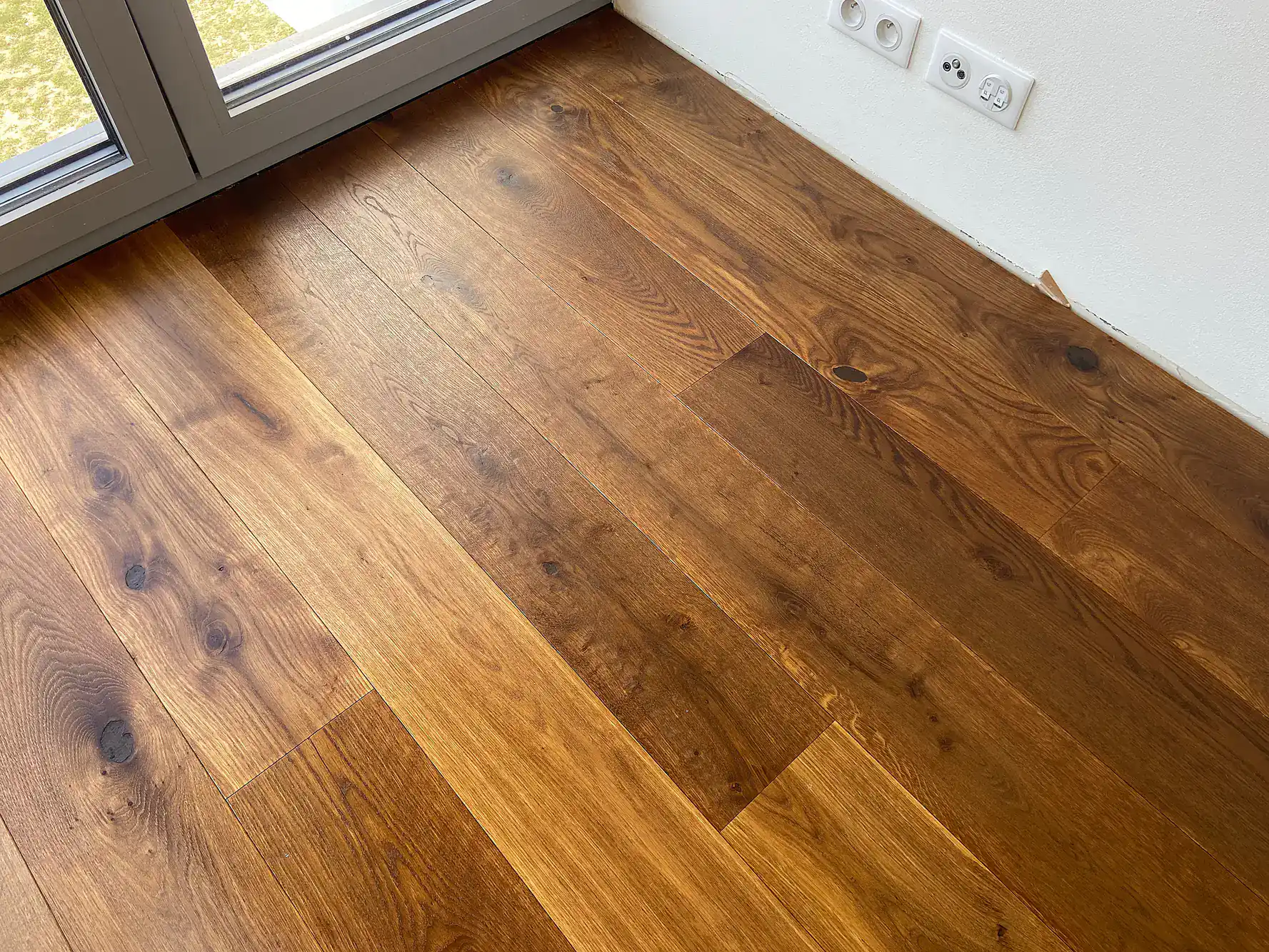
In most cases, yes and the homes in the Spencerville and Cloverly area are a good example of why. The housing stock here was built primarily between the 1950s and 1970s, when solid hardwood floors were standard construction. Solid hardwood can typically be sanded and refinished four to five times over its lifespan, so even a floor that was refinished once in the 1990s likely still has at least two or three refinishing cycles remaining.
The key variable is the thickness of the wood above the tongue-and-groove. If there’s enough material left after decades of wear and any previous sanding, the floor qualifies for a full refinish. We assess the condition before any work begins you’ll know what you’re working with before anyone picks up a sander. If a floor is too far gone for refinishing, targeted board replacement followed by refinishing is often still a better option than tearing everything out and starting over.
Maryland’s seasonal humidity cycle is one of the harder things hardwood floors deal with in this region. Summer humidity in Montgomery County regularly exceeds 80%, which causes wood fibers to absorb moisture and expand that’s what creates cupping, where the edges of boards rise higher than the center. Winter heating drops indoor humidity significantly, which causes the wood to release moisture and contract, leading to gaps between boards and sometimes surface cracking.
In Spencerville specifically, the proximity to the Patuxent River watershed and the surrounding tree cover and open land means ambient moisture levels can run higher than in more urbanized parts of the county. Over time, this cycle takes a visible toll on the finish and the wood itself. Professional refinishing addresses the damage that’s already occurred and, when done correctly with humidity-aware process discipline, gives the floor a fighting chance against the next several years of seasonal movement.
The honest answer is that refinishing is the right call more often than most people expect. Replacement involves tearing out existing boards, disposing of the material, purchasing new flooring, and installing it that’s both labor and material cost. Refinishing is primarily a labor cost, which makes it significantly less expensive in most scenarios. Beyond the cost difference, refinishing preserves the original wood, which in homes from the 1960s and 1970s is often a higher-quality species and cut than what’s readily available today.
The threshold where replacement starts to make more sense is when more than roughly 30 to 40 percent of the boards are damaged beyond what repair can address severe water damage, structural warping, or boards that have been sanded down to the point where there’s nothing left to work with. Short of that, a professional refinish combined with targeted board repair almost always makes more financial sense. In Spencerville’s housing market, where homes sell quickly and buyers notice the condition of floors immediately, a well-executed refinish can meaningfully affect both your sale price and how fast your home moves.
No Montgomery County’s Department of Permitting Services explicitly states that no permit is required for installing hardwood floors, tile, or carpeting when no structural changes are involved. Spencerville is an unincorporated community within Montgomery County, so the same county rules apply here. You don’t need to file paperwork, wait for approvals, or navigate county permitting before work begins on your floors.
The one exception worth knowing about is if your project involves structural modifications removing subfloor, altering floor joists, or changes that go beyond surface-level flooring work. Those scenarios may trigger permit requirements. But for the vast majority of hardwood floor installations, refinishing projects, and repairs, you’re clear to proceed without any county involvement. If you’re in a subdivision with HOA covenants, it’s worth checking those separately, since the county doesn’t enforce private deed restrictions but in Spencerville’s semi-rural, largely unincorporated character, HOA restrictions are less common than in planned suburban communities elsewhere in Montgomery County.
Engineered hardwood can sometimes be refinished, and whether yours qualifies comes down to one factor: the thickness of the wear layer the solid wood veneer on top of the plywood core. Generally, a wear layer of around 3mm or more gives you enough material to sand without compromising the structural integrity of the plank. Thinner wear layers don’t leave enough wood to work with after sanding, which means refinishing isn’t an option.
This matters for a lot of homes in the Spencerville and Cloverly area because many properties that were updated in the 1990s and 2000s had engineered hardwood installed at that time. It was a popular choice during that renovation era, and plenty of those floors are now 20 to 30 years old and showing their age. Before assuming you need a full replacement, it’s worth having the floors assessed. If the wear layer qualifies, refinishing is still on the table and it’s a fraction of the cost of tearing everything out. If it doesn’t qualify, recoating or targeted section replacement may still extend the life of the floor without a full overhaul.
For a typical room or connected floor area, professional refinishing generally takes between three and five days from start to finish though the timeline varies depending on the size of the space, whether repairs are needed before sanding begins, the number of finish coats applied, and how long each coat needs to cure between applications. In Maryland’s more humid months, cure times can run slightly longer because moisture in the air affects how finish dries, which is one reason spring and fall tend to be the most reliable seasons for flooring work in this area.
During the process, you’ll need to keep foot traffic off the floors while finish coats are curing typically 24 hours between coats and at least 48 to 72 hours before normal use resumes after the final coat. Furniture needs to be cleared from the work area before the crew arrives. The sanding phase generates some dust even with vacuum-attached equipment, so it’s worth covering vents and removing items from open shelving in adjacent rooms. The disruption is real but manageable, and it’s significantly less than what a full floor replacement involves no demolition, no disposal, and no extended reconstruction timeline.
Other Services we provide in Spencerville