“
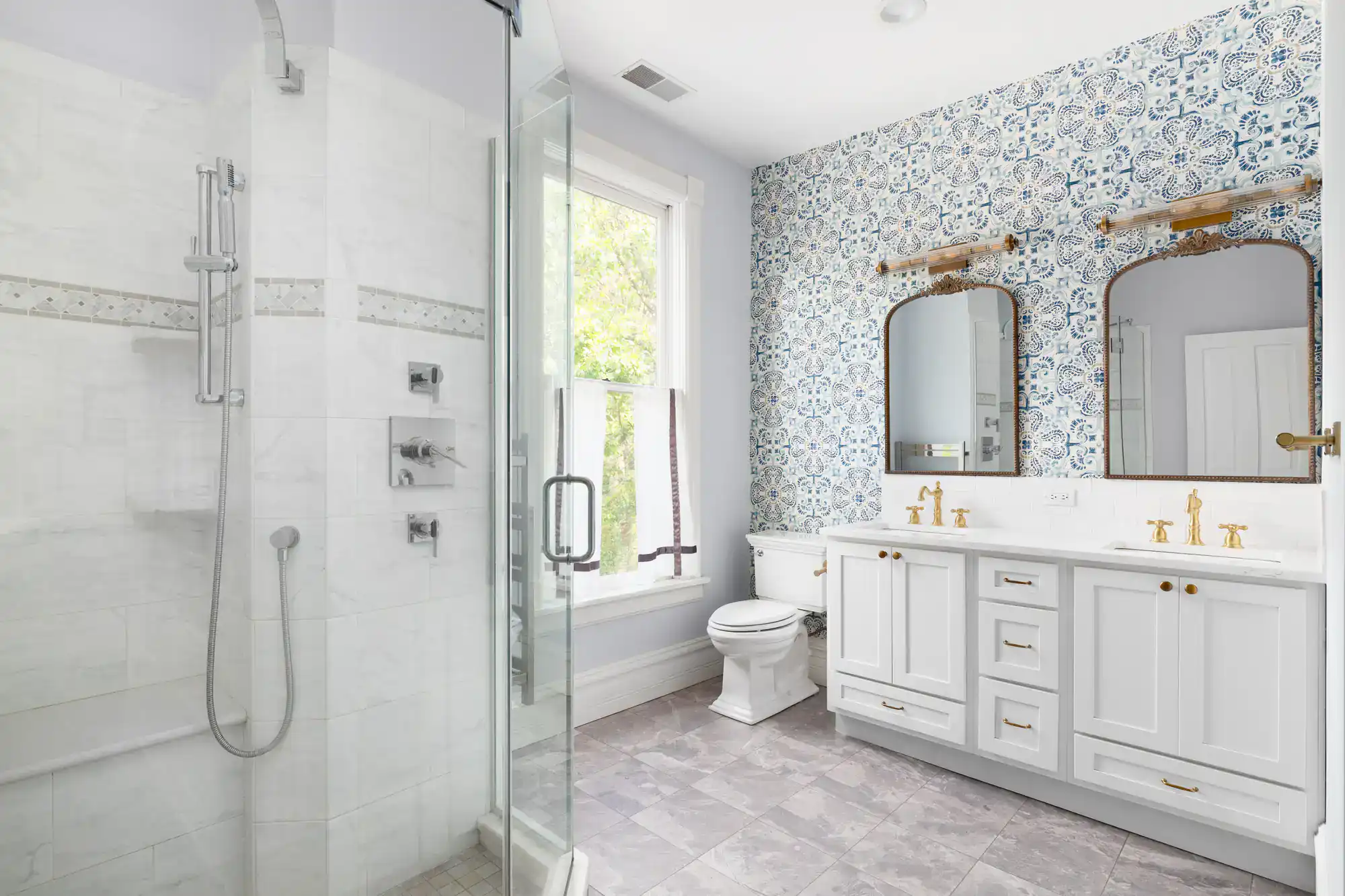
A lot of Bethesda’s most desirable neighborhoods Edgemoor, Battery Park, Kenwood Park, Chevy Chase Terrace were built out in the 1940s and 1950s. The homes have aged beautifully. The bathrooms, in many cases, haven’t. Small footprints, outdated layouts, single-sink vanities designed for a different era of living these are the bathrooms that physicians, researchers, and executives come home to after long days at NIH or Walter Reed.
That disconnect is exactly what a well-executed bathroom renovation fixes. When the work is done right, you get a bathroom that functions the way your life actually works. More space, better light, a shower that doesn’t feel like an afterthought.
In Bethesda’s market, there’s a financial dimension too. A midrange bathroom remodel recoups approximately 80% of its cost at resale in 2025 the highest return since 2007. In a market where homes sell in roughly 25 days and buyers come in with detailed inspection reports, a dated or moisture-damaged bathroom doesn’t just look bad. It becomes a negotiating chip that can cost you far more than the remodel would have.
Bethesda’s climate adds another layer. With average humidity sitting around 64% annually and peaking near 70% in the summer months, bathrooms in older homes especially those with below-grade spaces and limited ventilation face real, persistent moisture stress. A bathroom renovation done with proper waterproofing isn’t a luxury here. It’s what keeps a $1.1 million home from developing a $10,000 mold problem behind the tile.
We were founded in 1973 which means when the brick colonials in Edgemoor and the split-levels near Old Georgetown Road were 25 years old and first coming up for serious renovation, we were already there doing the work. That kind of history in a single market isn’t something you replicate with a good website.
We’re headquartered right here in Bethesda at 10319 Westlake Drive. This isn’t a regional chain with a Bethesda service territory we’re a local business that built our reputation one bathroom at a time in the same neighborhoods you live in. We hold Maryland MHIC License #28145, which is the specific credential required to pull permits in Montgomery County. We’re also licensed in DC and Virginia, bonded, and insured. Our BuildZoom score of 91 places us in the top 37% of over 58,000 licensed Maryland contractors a third-party number you can verify yourself.
Beyond credentials, what reviewers consistently come back to is the work itself: thorough preparation, reliable crew, and a job that holds up. That’s what 50 years of doing this in one market looks like.
It starts with a conversation about what you want and what your bathroom currently has to work with. We’ll walk through the space, assess the existing conditions including what’s likely behind the walls in an older Bethesda home and give you a clear, written estimate before anything else happens. No vague ballpark, no surprises added mid-project.
Once you’re ready to move forward, permits get handled before work begins. In Bethesda, that means navigating two separate agencies: Montgomery County’s Department of Permitting Services for the alteration permit, and WSSC the Washington Suburban Sanitary Commission for plumbing approval. These run on separate tracks and require separate reviews. A contractor who doesn’t know this process will cause delays or, worse, pull the wrong permits and create problems you’ll find out about when you try to sell the house. We’ve been working through this exact process in Montgomery County for decades.
Once permits are in hand, the physical work follows a clear sequence: demolition, substrate preparation, waterproofing, tile installation, fixture work, and finish details. Surface prep gets real attention here it’s not rushed to get to the visible work faster. That preparation is what determines whether your tile still looks right in ten years or starts failing in three.
For most bathroom remodels in Bethesda, you’re looking at a timeline of roughly three to six weeks depending on the scope, with active construction typically running two to three weeks for smaller bathrooms.
Ready to get started?
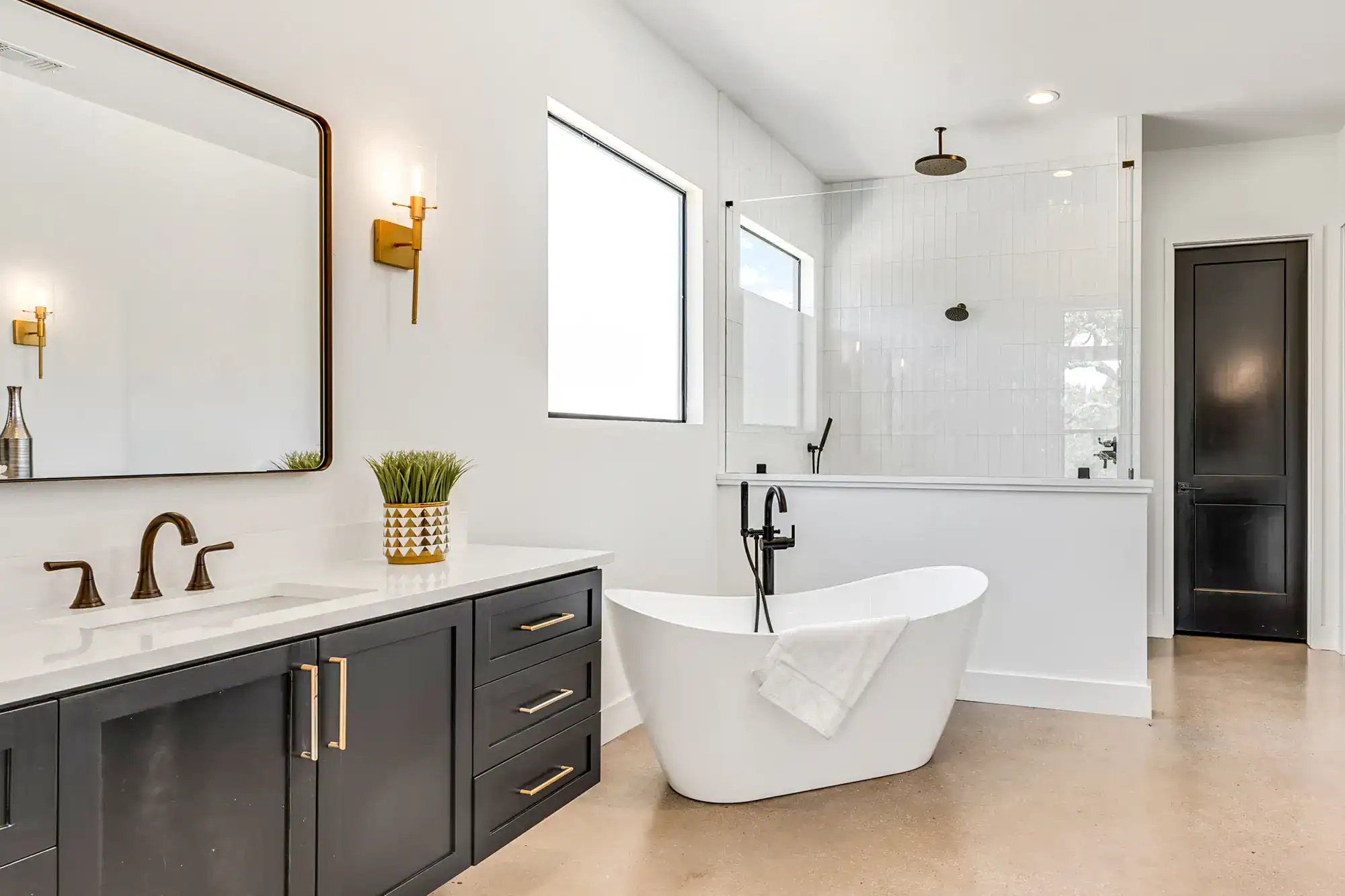
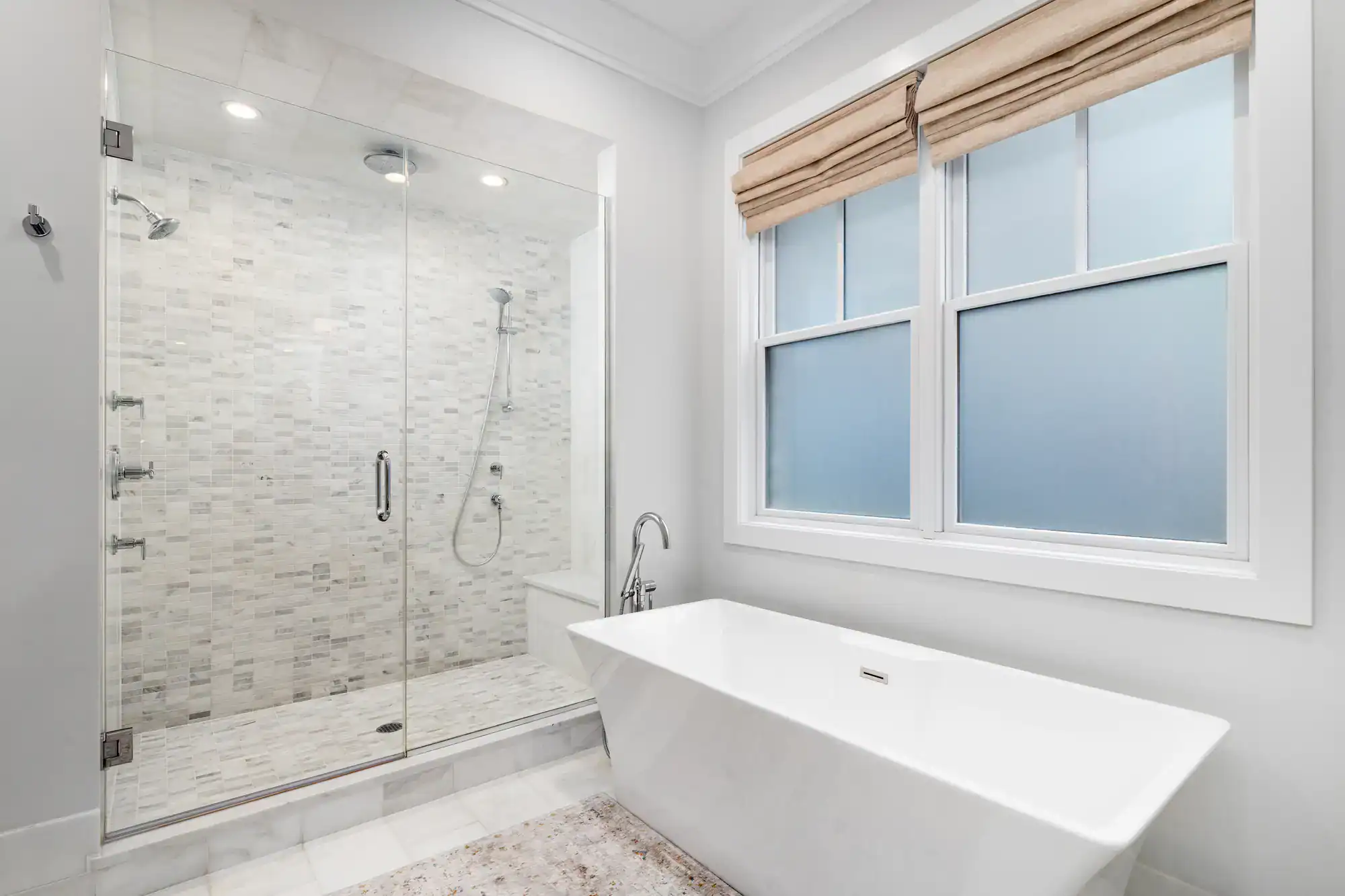
We handle the full scope of bathroom renovation not just the visible finishes. That includes shower reconstruction with custom configurations like built-in benches, half walls, and integrated shelving, as well as floor and wall tiling, cabinet replacement, vanity upgrades, and full repaints.
Walk-in shower installation is one of the most common requests in Bethesda’s older neighborhoods, where the original tub-and-shower combos no longer match how residents want to use the space and where a well-designed curbless entry can make a compact bathroom feel noticeably more open.
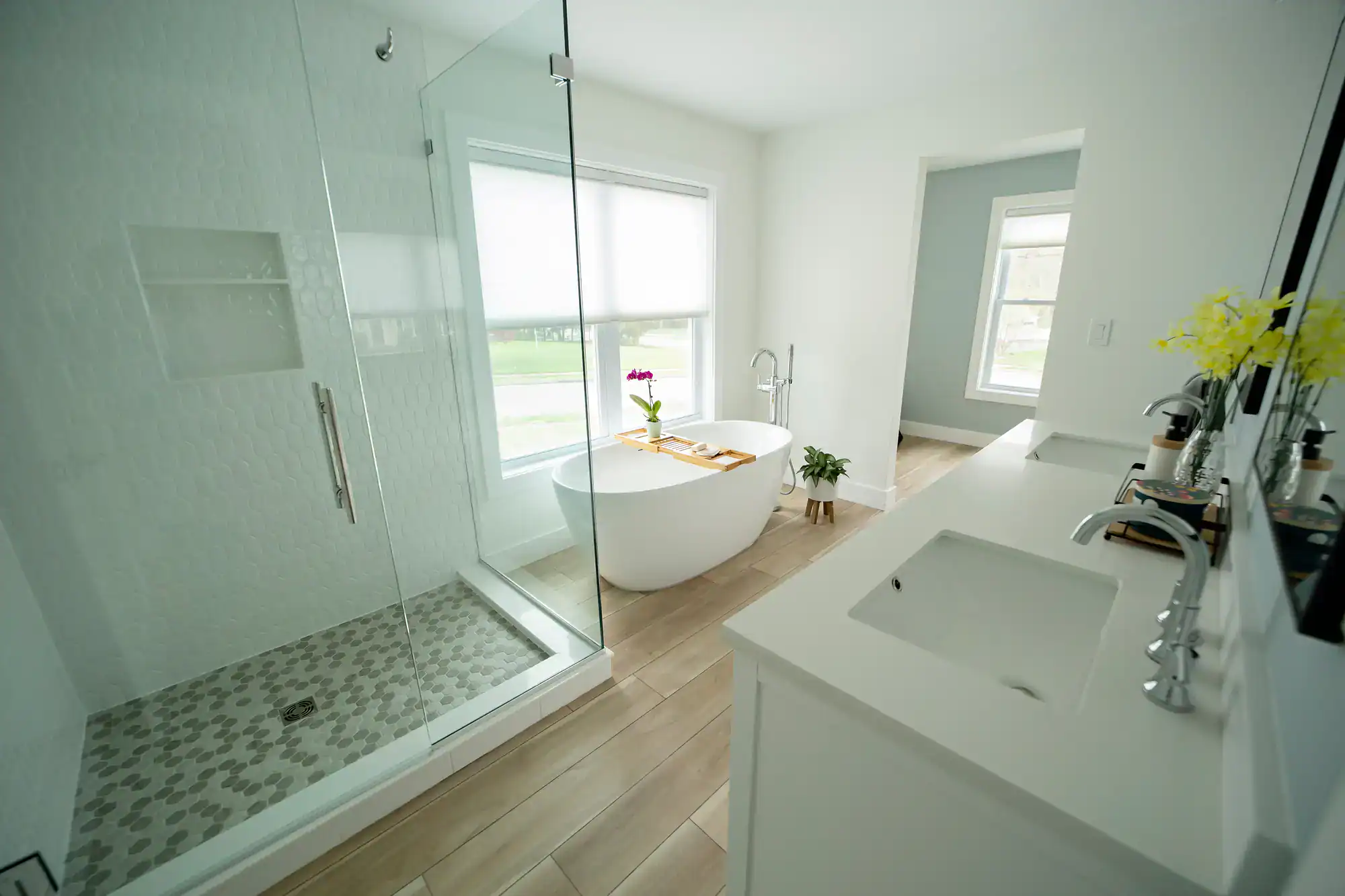
For homes in Edgemoor, Woodmont, or Chevy Chase Terrace where bathrooms were sized for the 1950s, our experience with small bathroom remodeling is directly relevant. These aren’t large footprints, but they don’t need to be. A thoughtfully designed walk-in shower with frameless glass, proper tile work, and smart storage can transform a constrained space without requiring a structural overhaul.
Every project includes permit coordination, which in Montgomery County means managing both the DPS process and the WSSC plumbing review. It also includes lead-safe renovation practices where required a real consideration for the significant share of Bethesda homes built before 1978. We’re a full-service general contractor, so tile, painting, carpentry, and installation stay under one team. For busy professionals who can’t afford to manage three separate vendors on a rotating schedule, that matters more than most people realize until they’ve tried the alternative.
Yes, and the permit process in Bethesda is more involved than most homeowners expect. Montgomery County requires an alteration permit through the Department of Permitting Services for most bathroom remodeling work. But if your project includes any plumbing changes moving a drain, adding a fixture, replacing supply lines you’ll also need a separate approval from WSSC, the Washington Suburban Sanitary Commission.
These two agencies operate independently, and WSSC’s review has to be completed before the county can finalize its sign-off. WSSC also has specific rules about the ratio of incoming water pipe size to the number of plumbing fixtures, which can catch contractors off guard if they’re not familiar with the jurisdiction.
On top of that, any electrical work GFCI outlets, exhaust fan upgrades, lighting changes requires its own trade permit. For a full bathroom renovation in Bethesda, you could be looking at three to five separate permit touchpoints across multiple agencies. Skipping any of them can create real problems when you refinance or sell. A contractor with an active Maryland MHIC license, like we hold under MHIC #28145, is the only type of contractor legally authorized to pull these permits on your behalf in Montgomery County.
Bathroom remodeling in Bethesda runs higher than national averages, which reflects the premium labor market, the complexity of older housing stock, and the material expectations of the local market. Contractors working in Bethesda typically quote bathroom remodels in the range of $15,000 to $35,000 depending on scope, size, and finishes.
The national median for a primary bathroom remodel sits around $15,000 in 2025, but that figure doesn’t account for the realities of a 1950s or 1960s Bethesda home, where you’re more likely to encounter surprises behind the walls outdated plumbing, inadequate waterproofing, or subfloor issues that need to be addressed before the visible work can begin.
Budget overruns are common in bathroom renovation industry-wide, affecting nearly half of all projects with overages averaging 23 to 35 percent above the original estimate. The best way to protect yourself is a detailed written scope before work begins one that accounts for what’s known and sets clear expectations around what could be discovered once demolition starts. A contractor who can walk through your specific Bethesda home and give you a realistic number, not just a low bid to win the job, is worth the time it takes to find.
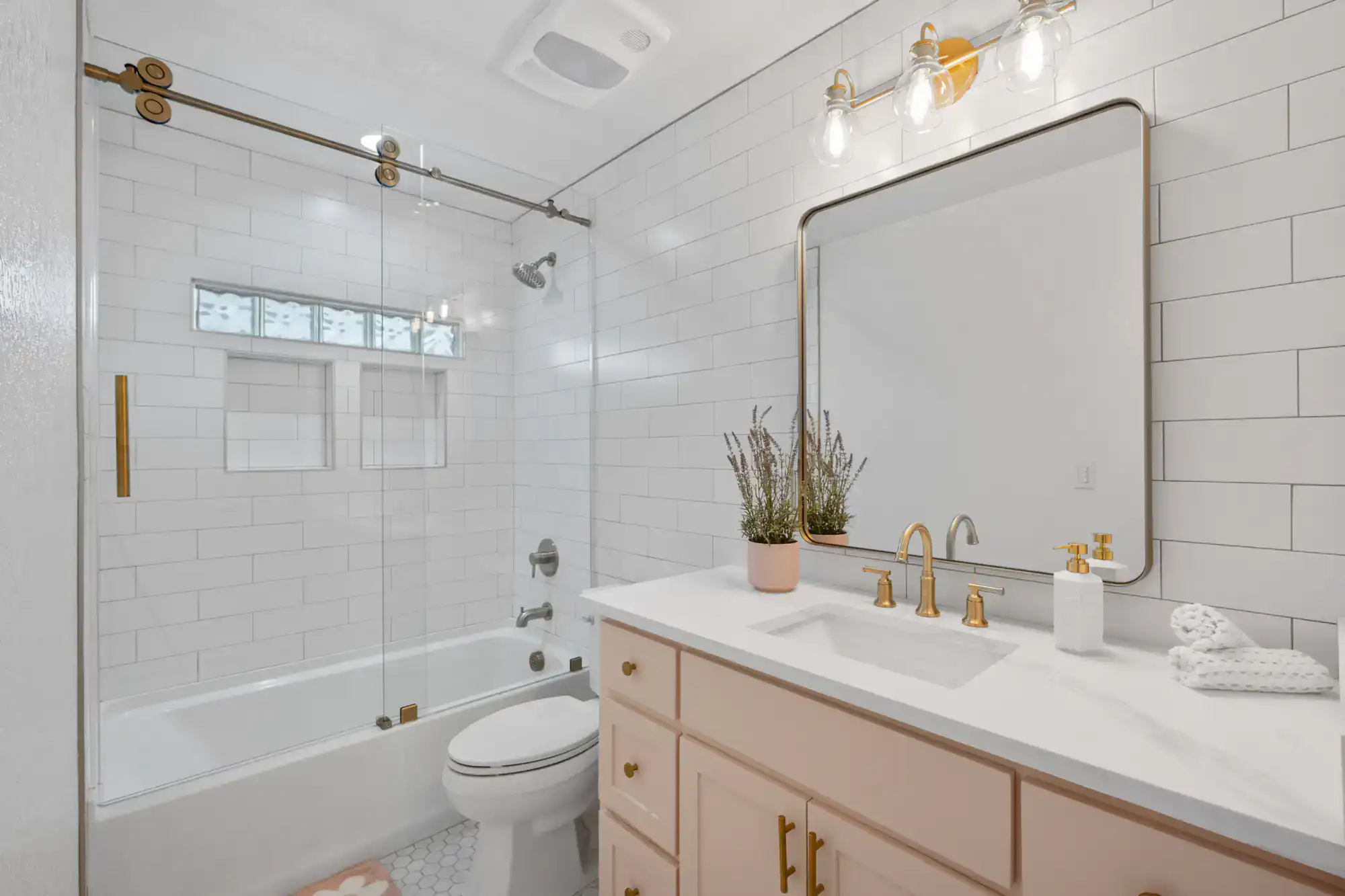
Tub-to-shower conversions are one of the most requested projects in Bethesda’s established neighborhoods, and for good reason. More than 60% of homebuyers now prefer a shower over a tub in the primary bathroom, and in homes where the existing bathroom is already compact, removing the tub and installing a well-designed walk-in shower often makes the space feel significantly larger and more functional.
In an older Bethesda home particularly the brick colonials and split-levels common in neighborhoods like Edgemoor and Chevy Chase Terrace a tub-to-shower conversion typically involves removing the existing tub, reworking the drain location, installing a proper waterproofing membrane across the shower floor and walls, and then building out the tile work, glass enclosure, and fixtures. If you’re adding a curbless entry, there’s additional subfloor work to create the correct slope toward the drain.
The plumbing changes will require a WSSC permit in Montgomery County, so that needs to be factored into your timeline. For homes built before 1978, lead-safe renovation practices are required during demolition. Done correctly, a walk-in shower installation in a smaller Bethesda bathroom can be one of the highest-impact improvements you make to the space.
This is one of the most practical concerns homeowners bring up, and it deserves a straight answer. For a smaller bathroom remodel say, a tub-to-shower conversion with new tile and updated fixtures active construction typically runs two to three weeks. A more comprehensive renovation of a full bathroom can run three to four weeks of actual work on site.
When you factor in the Montgomery County and WSSC permit process, total project timeline from signed contract to finished bathroom is generally four to six weeks for a smaller scope, longer for a larger one.
If the bathroom being renovated is your only full bathroom, that’s a real logistical challenge and worth discussing explicitly with us before work begins. A well-organized crew will sequence the work to minimize the window where plumbing is fully offline, and we should be able to give you a realistic estimate of how many days you’ll be without a functioning shower or toilet not a vague “a few days.” Clear communication about that specific window is something you should ask about during the estimate process, not something you want to find out about after demolition has already started.
In most cases, yes particularly for a midrange renovation. A midrange bathroom remodel recoups approximately 80% of its cost at resale in 2025, which is the highest return this category has seen since 2007. In Bethesda, where the typical home sells for over $1 million and buyers arrive with detailed inspection reports and experienced agents, a bathroom in poor condition doesn’t just affect aesthetics.
It shows up in the inspection, it becomes a negotiating point, and in a market where homes move in roughly 25 days with multiple offers, a dated or visibly deteriorating bathroom can push buyers toward competing listings.
The calculation is different for every home, but the general principle holds: a bathroom that shows moisture damage, failing grout, or outdated fixtures signals deferred maintenance to buyers who are spending $1 million or more. Fixing it before listing typically costs less than the price reduction you’d negotiate otherwise. The key is doing a renovation that’s well-executed and properly permitted unpermitted work in Montgomery County can complicate a sale or refinancing, so it’s worth making sure the project is documented correctly from the start.
Absolutely, and it’s a growing part of what Bethesda homeowners are asking for. About 68% of bathroom remodels in 2025 now incorporate some kind of accessibility feature grab bars, curbless entries, bench seating, non-slip tile and that number has been climbing year over year. In a community like Bethesda, where a significant share of residents work in healthcare and biomedical research, the conversation around aging-in-place tends to be more informed and more proactive than in most markets.
Homeowners here aren’t waiting until a fall or a mobility issue forces the issue they’re building these features in now, while the bathroom is already being renovated. Curbless shower entries are one of the most common requests. They remove the step-over threshold that creates a fall risk, and when designed with frameless glass, they actually make a smaller bathroom feel more open rather than institutional.
Built-in bench seating, grab bar blocking inside the wall, and wider entry clearances are other features that can be incorporated into a standard renovation without significantly changing the overall design aesthetic. Universal-design bathroom remodels recouped 61% of their cost at resale in 2025 up 12 points in a single year so there’s a financial case for these features alongside the practical one. We have documented experience with custom shower builds that include bench seating and half walls, which are the same structural elements that support a well-executed accessible design.
Other Services we provide in Bethesda