“
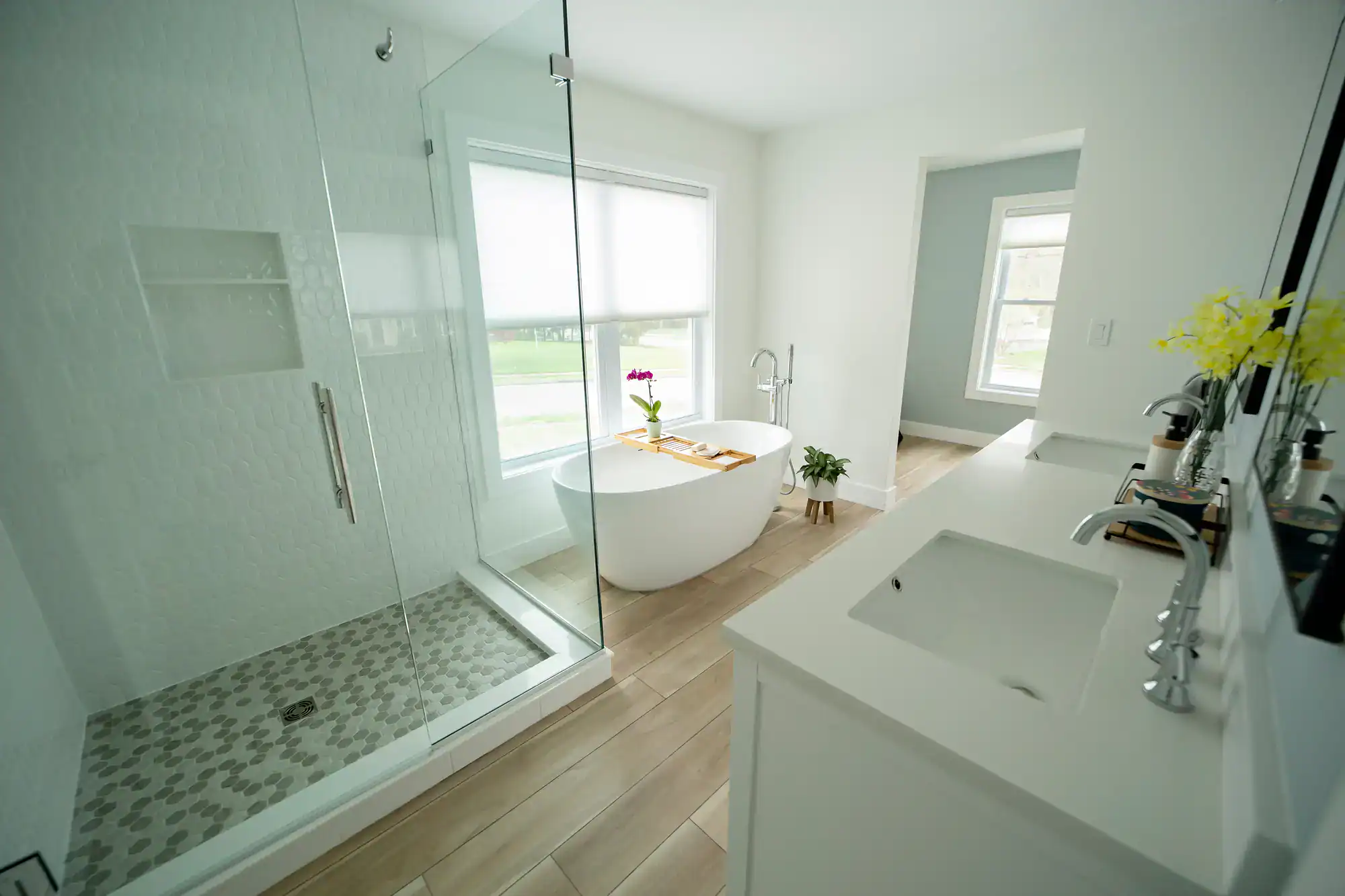
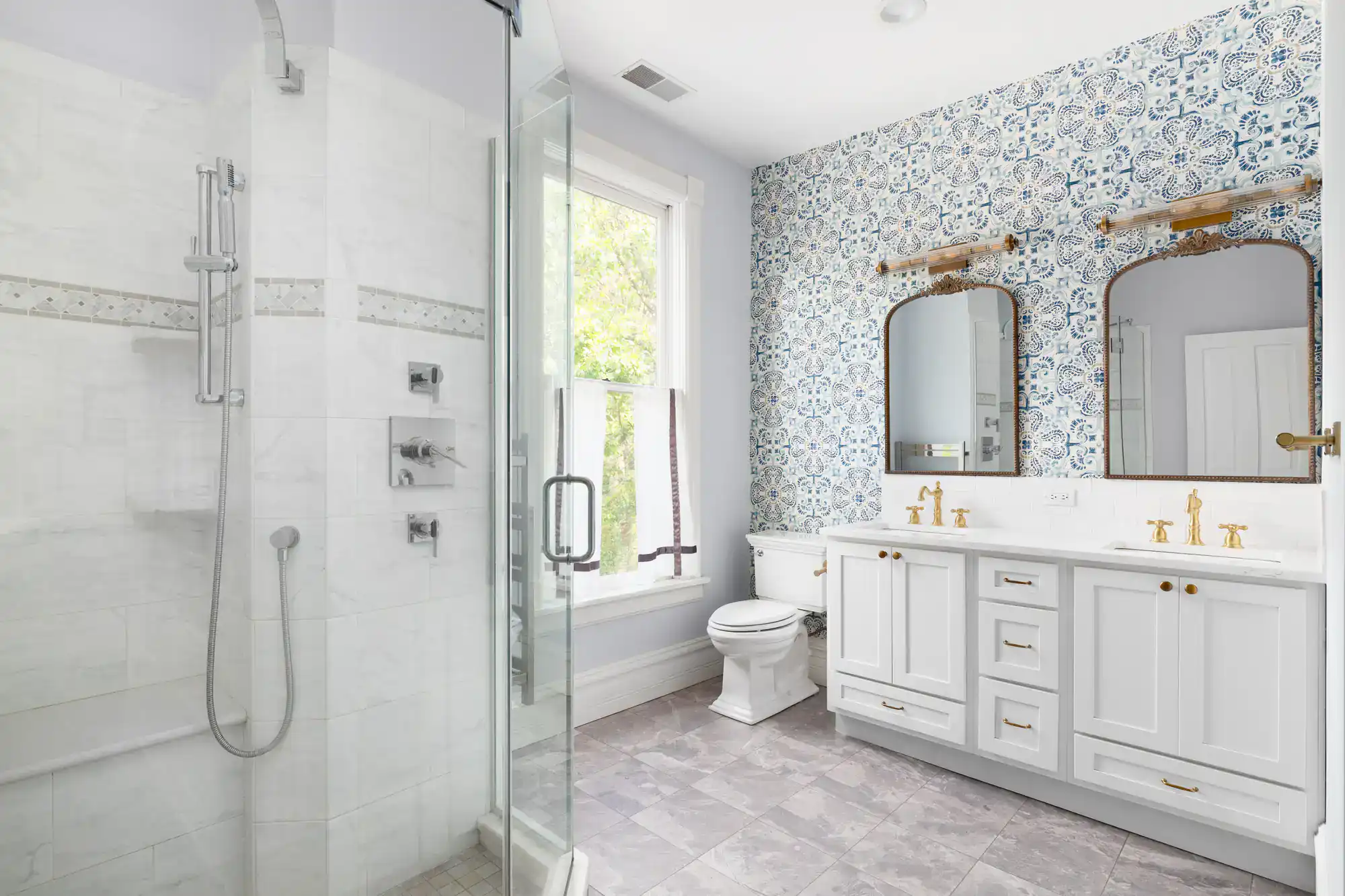
When you gut a 1980s bathroom and replace it properly, the difference isn’t subtle. The grout that was staining no matter how hard you scrubbed is gone. The shower that always felt cramped or the tub you stopped using years ago gets replaced with something that actually fits how you live now. The space stops being a source of low-grade frustration every single morning.
For Flower Hill homeowners specifically, the timing matters. The housing stock here was built almost entirely in the 1980s and early 1990s, which means original builder-grade tile, shower pans, and caulking are now 35 to 45 years old. That’s past the typical lifespan of a professionally installed bathroom, and it shows. High summer humidity in the Mid-Atlantic accelerates grout deterioration and caulk failure, and the original exhaust fans in most Flower Hill homes were undersized even when they were new. Mold doesn’t always announce itself it builds quietly behind tile that looks fine from the outside.
A well-executed bathroom renovation in Flower Hill also makes financial sense. A midrange bathroom remodel recoups approximately 80% of its cost at resale in 2025 the highest return since 2007. In a community where home values range from the mid-$300s for townhouses to the upper $600s for single-family homes, that’s real money. And with most existing mortgages locked in at rates well below what’s available today, staying put and investing in the home you have is exactly what most Flower Hill residents are choosing to do.
We were founded in 1973 before Flower Hill was even built. For over five decades, we’ve been doing bathroom renovation, shower remodeling, and full remodels across Montgomery County and the broader DMV area, including communities along the I-270 corridor with housing stock nearly identical to what you’ll find in Flower Hill.
What that history means practically: when we open up a 1980s bathroom in a Flower Hill townhouse or single-family home, we are not guessing at what we’ll find. We’ve seen it before. We know how to estimate it accurately, how to handle what comes out of the walls, and how to do the work in a way that holds up not just for the first year, but for the next few decades.
We hold an active Maryland MHIC license (#28145), which is the specific credential required to pull permits in Montgomery County. We’re also licensed in DC and Virginia, bonded, and fully insured. Reviews from past clients call out individual crew members by name and specifically praise the preparation work the kind of detail that separates a bathroom that lasts from one that doesn’t.
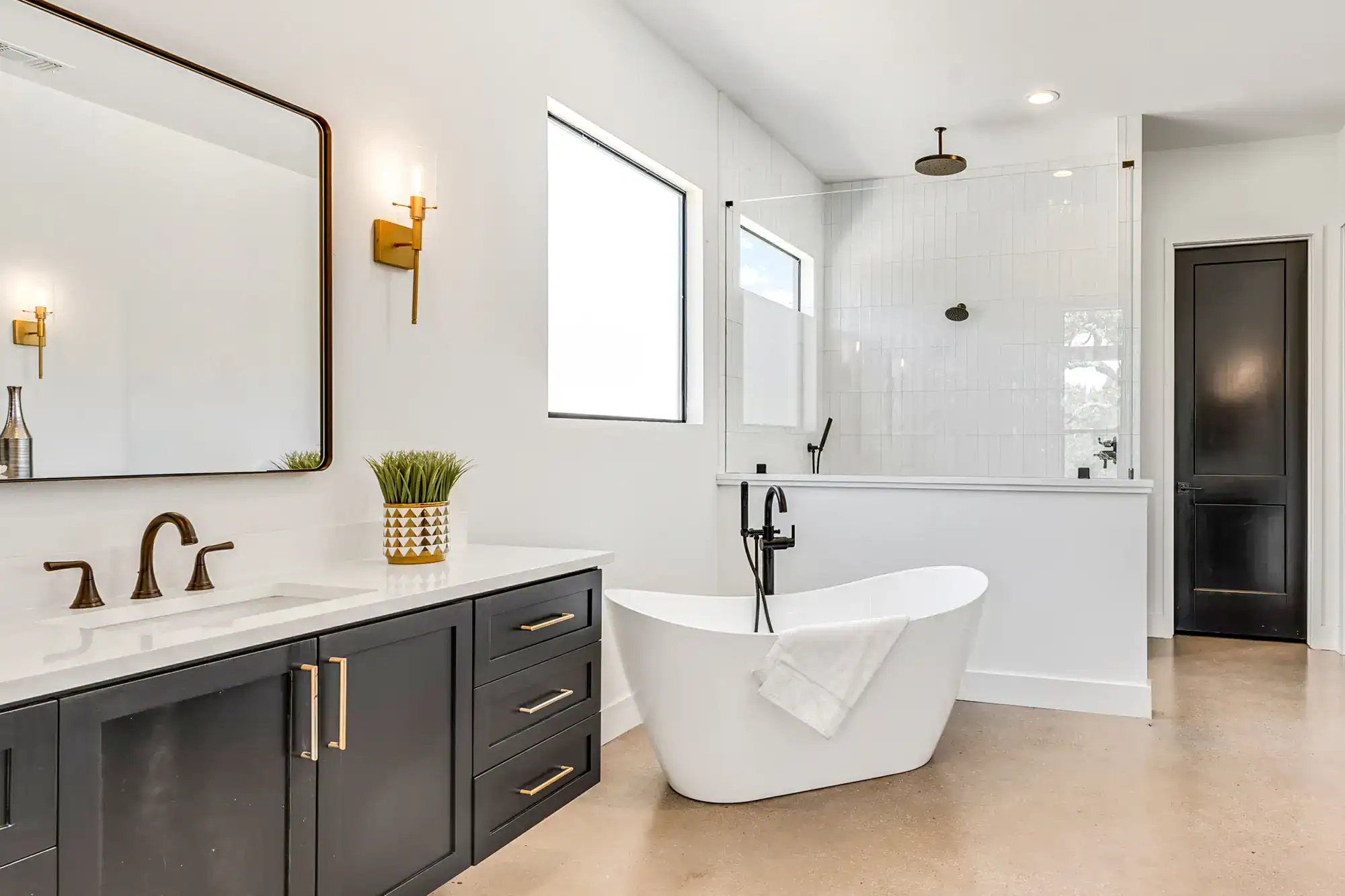
It starts with a free estimate. Someone from our team comes to your Flower Hill home, looks at the actual space, and gives you a written scope of work with real numbers not a ballpark range designed to get you to say yes and expand later. If you have a 1980s tub-and-tile combo you want converted to a walk-in shower, or a full bathroom gut you’ve been putting off, that estimate will reflect exactly what the project involves.
Once the project is scheduled, we handle the Montgomery County permit process. In Montgomery County, plumbing and electrical work in a bathroom remodel require permits, and only a contractor with an active MHIC license can pull them on your behalf. Skipping that step creates problems when you sell or refinance we don’t skip it. Montgomery County’s Department of Permitting Services also requires WSSC Water sign-off on any underground plumbing work, and we manage that coordination so you don’t have to.
From there, the work moves in a logical sequence: demolition, waterproofing, tile and shower installation, carpentry, painting, and final fixtures. A small bathroom remodel in Flower Hill typically takes two to three weeks of active construction, with the full timeline including permits running four to six weeks. Our crew works consistently, cleans up at the end of each day, and communicates when something comes up. Most homeowners say the process was less disruptive than they expected.
Ready to get started?
Flower Hill isn’t a single housing type it’s a mix of single-family homes, townhouses, and condominiums, all built around the same era and all carrying the same aging bathroom stock. We work across all three. For single-family homeowners, that might mean a full primary bathroom renovation with a custom walk-in shower, new tile throughout, a vanity replacement, and updated fixtures. For townhouse and condo owners working with tighter square footage, it often means a targeted shower remodeling project or a compact bathroom overhaul that makes a small space feel noticeably larger.
The condo and townhouse segment in Flower Hill deserves specific attention. Original bathrooms in these units were built to minimum specifications a basic tub-shower combo, a simple vanity, and almost no storage. In 2025, that same footprint can be transformed with a curbless walk-in shower, frameless glass, a floating vanity, and recessed shelving. The square footage stays the same. The way it functions and feels does not. If you’ve assumed your bathroom is too small to do anything meaningful with, that assumption is worth revisiting.
Every project regardless of size includes professional-grade waterproofing, proper surface preparation, and permit compliance through Montgomery County’s Department of Permitting Services. We handle painting, carpentry, and tile work in-house, which means one team manages the full scope from start to finish. No rotating subcontractors, no gaps in accountability, and no situations where two vendors are pointing at each other over an unfinished detail.
Yes, and it matters more than most people realize. In Montgomery County which covers Flower Hill any bathroom remodel that involves plumbing changes, electrical work, or ventilation modifications requires a permit through the Montgomery County Department of Permitting Services. That includes things like moving a drain for a new shower layout, adding a circuit for a heated floor, or upgrading an exhaust fan to current capacity.
The contractor you hire must hold an active Maryland MHIC license to pull those permits on your behalf. We hold MHIC #28145, which satisfies that requirement. Working with an unlicensed contractor or skipping permits altogether creates real liability for you as the homeowner. Unpermitted work can trigger fines, complicate your home sale, and in some cases require the work to be torn out and redone. The permit process in Montgomery County typically moves quickly for qualifying projects, and we handle the coordination so it doesn’t fall on you.
The honest answer depends on the scope, but here’s a realistic breakdown. Active construction on a small bathroom the kind found in most Flower Hill townhouses and condos typically takes two to three weeks. A more involved project in a single-family home’s primary bathroom can run three to five weeks of hands-on work. When you add in the permit timeline through Montgomery County’s Department of Permitting Services, the full window from project start to final inspection is usually four to six weeks for a smaller bathroom and potentially longer for a full renovation.
The bigger source of delay isn’t usually the construction itself it’s material lead times and the scheduling gap between your estimate and your project start date. We walk you through a realistic timeline during the estimate process, so you’re not planning around a number that turns out to be optimistic. If you’re working with one bathroom in your home, that conversation about timing is especially important, and it’s one we take seriously.
Converting a tub-shower combo to a walk-in shower which is one of the most common requests in Flower Hill’s 1980s housing stock involves more than pulling out the tub and putting in a new fixture. The process starts with full demolition of the existing surround, followed by inspection of the substrate and framing behind it. In homes built in the 1980s, it’s not uncommon to find moisture damage, outdated waterproofing materials, or framing that needs reinforcement before anything new goes in.
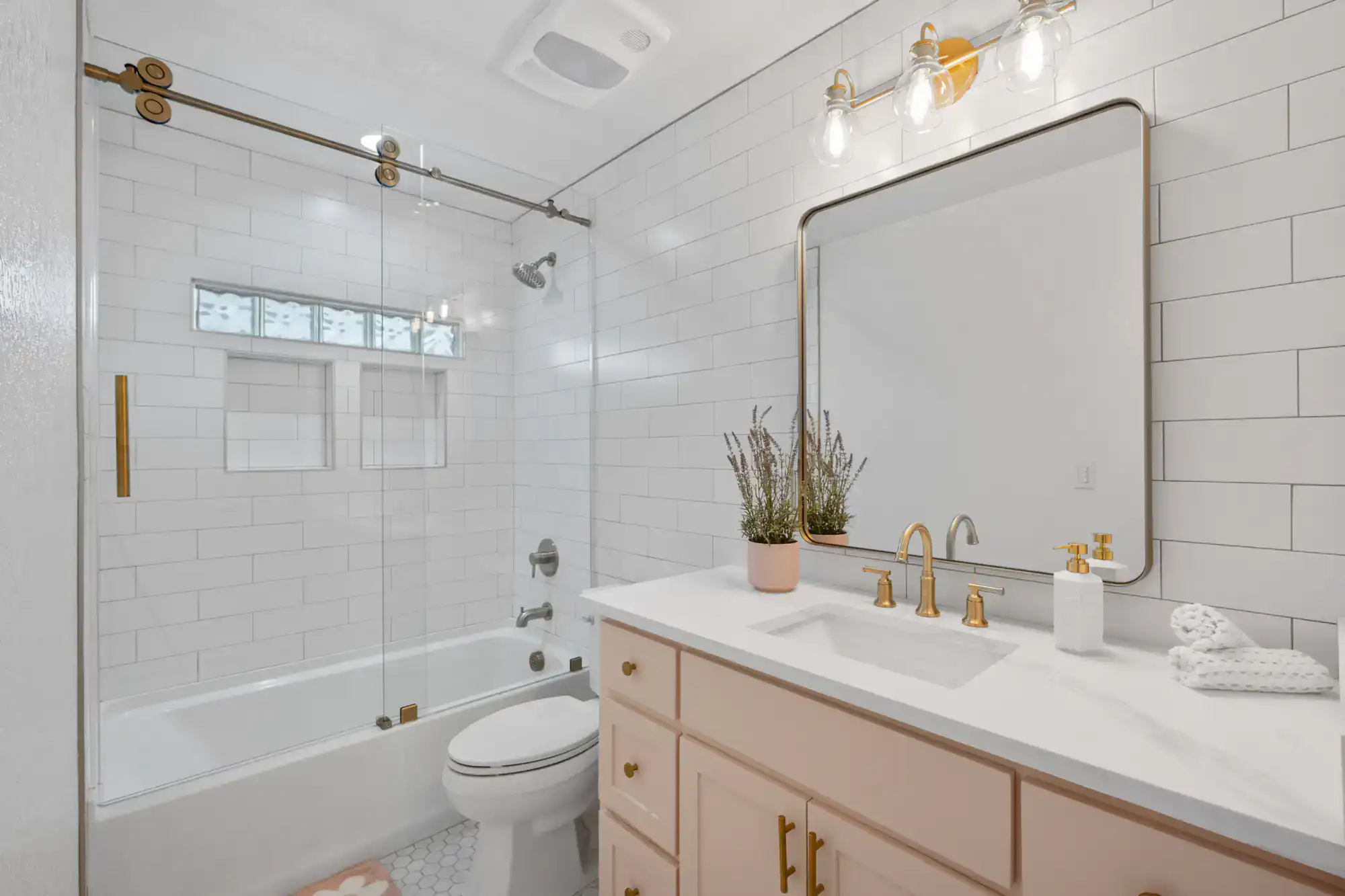
Once the structure is sound, the installation sequence includes a multi-layer waterproofing membrane, a new shower pan or curbless base depending on the design, tile work on the walls and floor, any custom features like a built-in bench or recessed shelving, and finally the glass enclosure and fixtures. The entire wet area is waterproofed as a system not just the visible surfaces. This is the step that determines whether your new shower looks the same in ten years as it does on day one, and it’s where cutting corners creates the expensive failures that require tearing everything out and starting over.
There’s a practical way to think about this. If the tile, grout, and caulking are the main issue surface-level deterioration without underlying moisture damage targeted updates can extend the life of the bathroom meaningfully. Regrout, recaulk, replace fixtures, and refinish the vanity. That’s a different scope than a full renovation and costs significantly less.
But if you’re seeing grout that keeps staining no matter how clean you keep it, caulk lines that crack or separate repeatedly, tile that feels soft or hollow when you tap it, or any visible mold that returns after cleaning, those are signs of moisture infiltration behind the surface. In a Flower Hill home built in the 1980s, where original waterproofing standards were considerably lower than what’s required today, that pattern is common. At that point, surface updates are a temporary fix on a structural problem. A proper assessment which we provide during the estimate visit will tell you which situation you’re actually in, so you’re not spending money on a solution that doesn’t match the problem.
Generally, yes but the type of remodel matters. A midrange bathroom renovation recoups approximately 80% of its cost at resale in 2025, which is the highest return in nearly two decades. In Flower Hill, where the market is actively growing and buyers entering the community are increasingly sophisticated about what they want, an updated bathroom can be a meaningful differentiator.
That said, the goal before a sale isn’t to create your dream bathroom it’s to remove the objection. Buyers walking through a Flower Hill home with original 1980s tile, a dated tub-shower combo, and visibly aging grout will either discount their offer or walk away. A clean, functional, well-executed bathroom renovation eliminates that friction. The projects that make the most sense pre-sale are typically a tub-to-shower conversion, a full tile replacement, and updated fixtures work that modernizes the space without over-investing in finishes that won’t return their full cost. We can help you think through the right scope for your specific situation.
Budget overruns hit nearly half of all bathroom renovations, averaging 23 to 35% above the original estimate. The most common reason isn’t that remodeling is inherently unpredictable it’s that the original estimate wasn’t honest about what the project actually involved. Vague bids that don’t account for permit costs, waterproofing, surface preparation, or the realistic likelihood of finding moisture damage behind 1980s tile are the norm, not the exception. You say yes to a number that was never real.
The way to protect yourself is straightforward: get a written, itemized estimate that specifies the full scope of work, the materials being used, the permit costs, and what happens if something unexpected comes up behind the walls. Ask directly whether the bid includes demolition, waterproofing, permits, and cleanup or whether those are add-ons. In Flower Hill’s aging housing stock, the chance of finding something behind a 1980s shower surround is real enough that it should be part of the conversation upfront, not a surprise mid-project. We walk through that conversation during the estimate visit, so the number you agree to reflects what the job actually costs.
Other Services we provide in Flower Hill