“
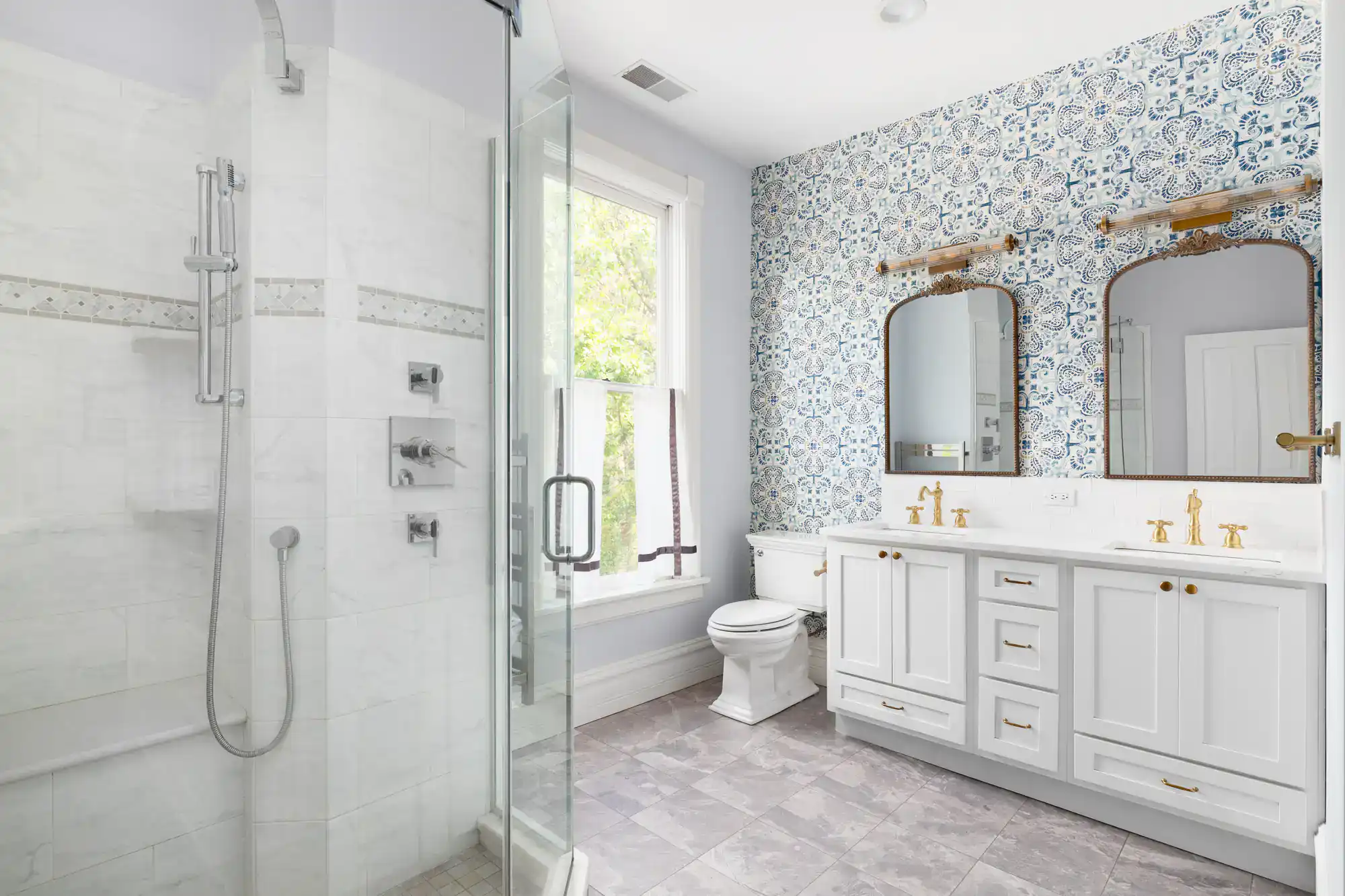
Most Kensington homes were built for a different era. The Victorian and Craftsman houses in the historic core are stunning and their bathrooms are often the one room that never got the attention the rest of the house did. The postwar Cape Cods and colonials throughout North and South Kensington have the same issue from a different direction: builder-grade everything, a single full bathroom, and fixtures that have been quietly failing for decades.
When the grout cracks and the tile starts lifting, it’s not just cosmetic. Water is getting behind the walls, and in a home that’s 60 or 70 years old, that’s a problem that compounds fast. A well-executed bathroom renovation changes the daily experience of your home in ways that are hard to overstate. You stop working around the space and start actually using it.
For households with one bathroom which describes a lot of Kensington’s postwar housing stock that shift is significant. You’re also protecting the long-term value of a home that, in this market, is likely worth close to a million dollars. A midrange bathroom remodel recoups approximately 80% of its cost at resale in 2025, the highest return since 2007. In a home at Kensington’s price point, that’s not a small number.
Kensington’s summer humidity is no joke. Bathrooms in older homes with undersized exhaust fans or no real ventilation are mold waiting to happen. Getting the moisture management right not just the tile and fixtures is what separates a renovation that holds up from one that starts failing in year three.
We’ve been operating out of Bethesda since 1973 which means we’ve been remodeling bathrooms in Kensington and throughout Montgomery County since before most of the postwar ramblers needed their first major renovation. That’s not a stat to fill space. It means we’ve seen what happens behind the walls of a 1952 Cape Cod, know what original subfloor conditions look like, and have dealt with galvanized supply lines more times than we can count.
We’re licensed in Maryland (MHIC #28145), DC, and Virginia and fully familiar with the Montgomery County Department of Permitting Services process, including the WSSC coordination that plumbing work requires in this county. Every project is permitted and inspected. That matters when your home is worth what homes in Kensington are worth and you eventually want to sell it without complications.
Our crew is consistent. Reviews name the same people by name Roger, Edgar, Luis and describe projects completed without a single complaint. In a tight-knit community like Kensington, that kind of accountability travels.
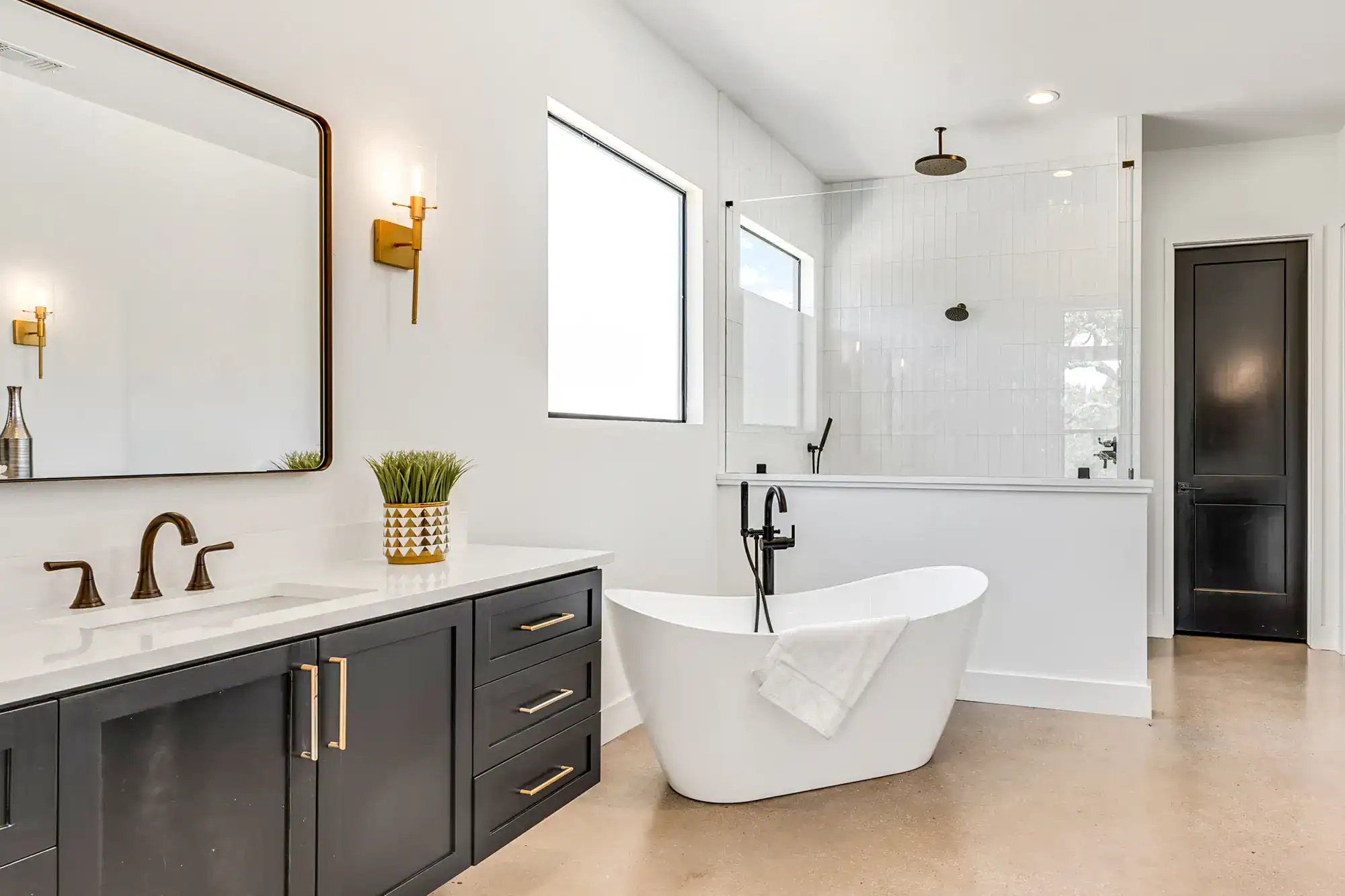
It starts with a conversation, not a sales pitch. You describe what you’re working with the layout, what’s not functioning, what you want to change and we come out to take a look. For older Kensington homes, that initial walkthrough matters more than it does in newer construction. A bathroom that looks like a straightforward tile replacement sometimes has a softened subfloor underneath, or plumbing that hasn’t been touched since the Eisenhower administration.
Knowing what you’re actually dealing with before the estimate is how you avoid the budget surprises that hit nearly half of all bathroom renovations. Once the scope is clear, you get a written estimate that spells out exactly what’s included. We handle the Montgomery County DPS permit application you don’t have to navigate that yourself.
For a straightforward bathroom remodel, the county’s Fast Track program can turn permits around in three to five business days, which keeps the project moving. Active construction on a small bathroom typically runs two to three weeks. If your home is one of the many in Kensington with a single full bathroom, that timeline gets communicated clearly upfront, not vaguely.
The work itself covers everything under one roof: tile, waterproofing, carpentry, plumbing coordination, and painting. You’re not managing four separate contractors who’ve never worked together. One team, one point of contact, one schedule. When the job is done, it’s cleaned up that’s not an afterthought, it’s part of how we operate.
Ready to get started?
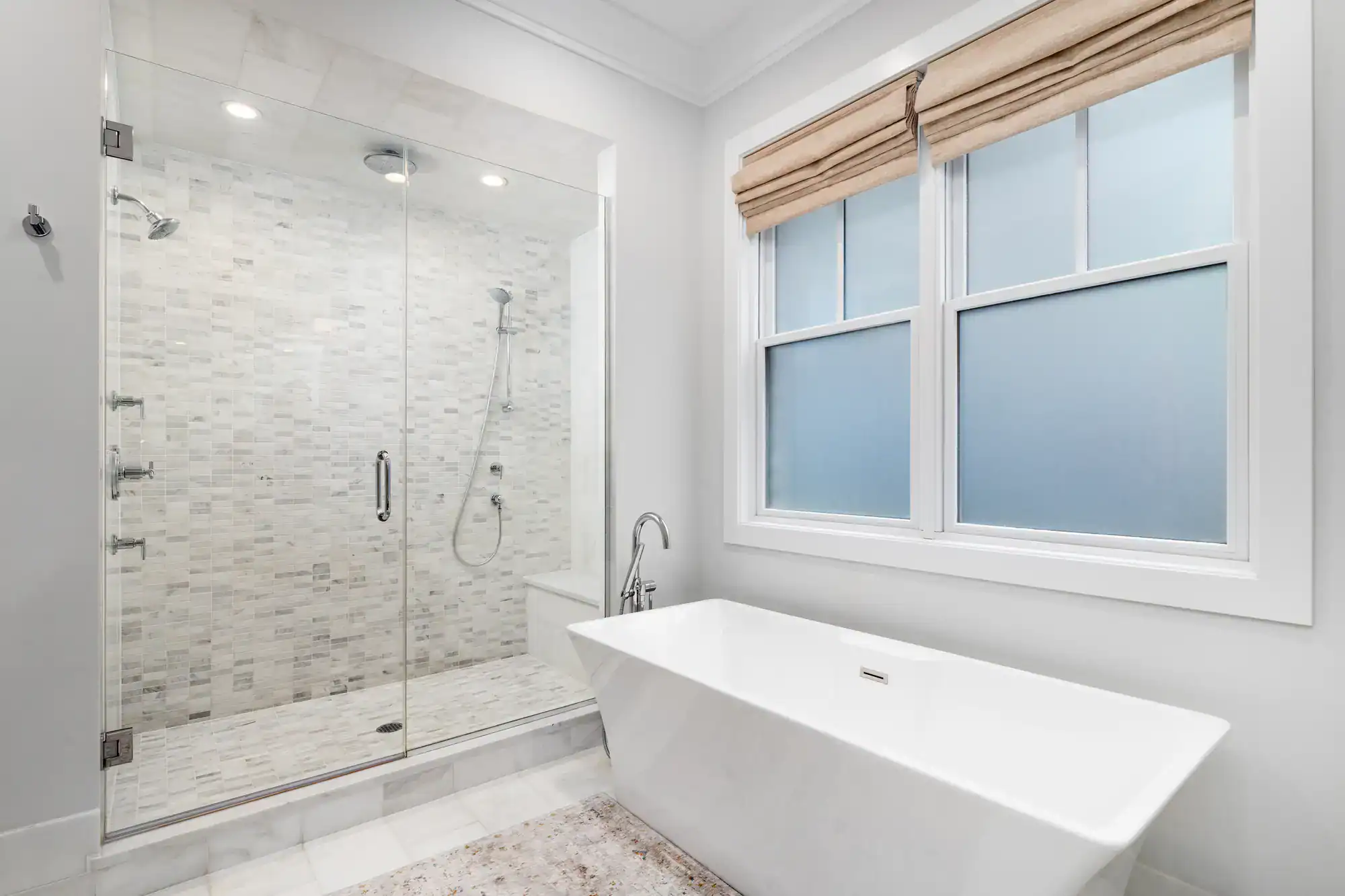
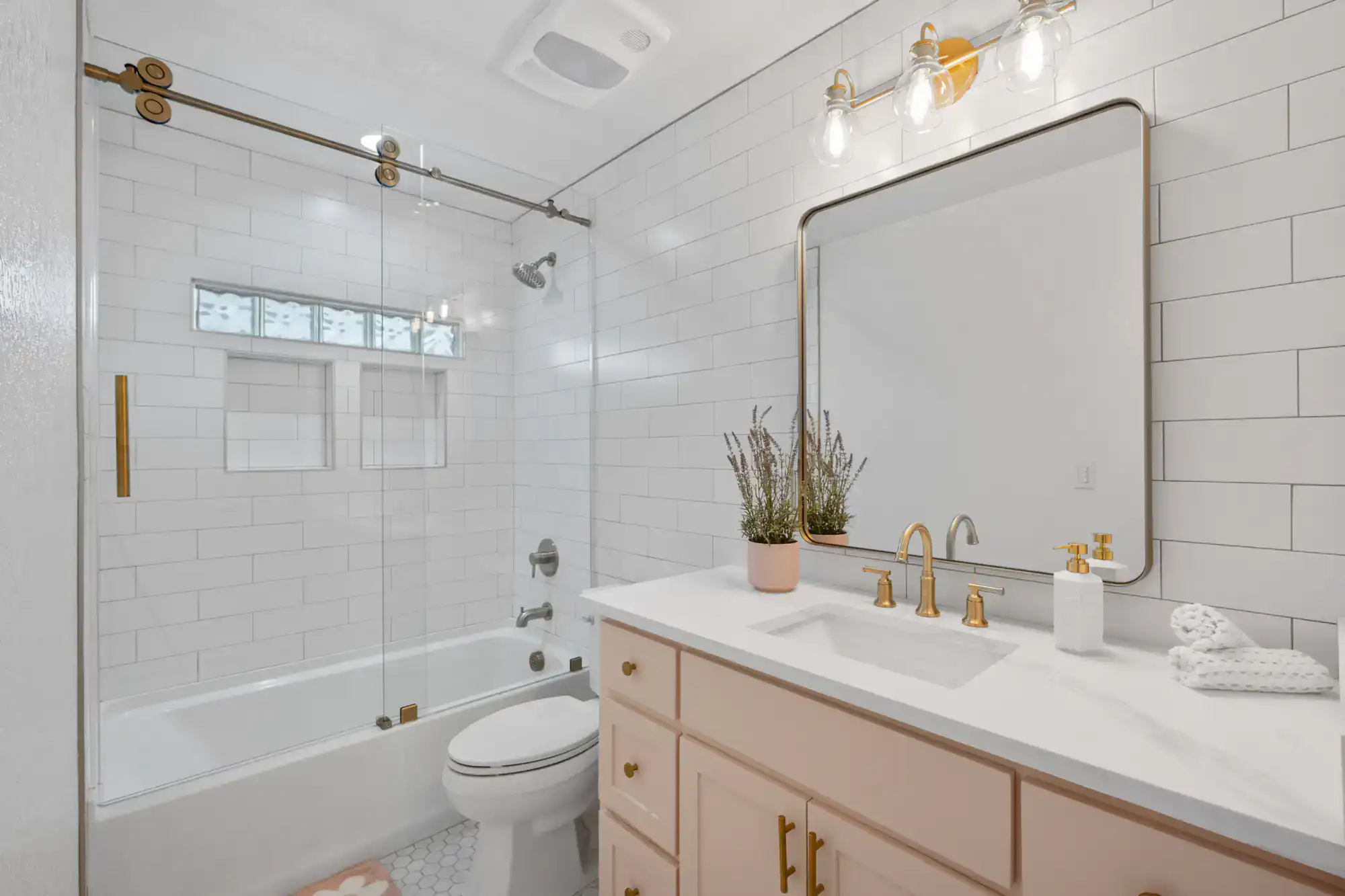
The most common project in Kensington’s postwar housing stock is converting a cramped tub-shower combination into a functional walk-in shower. More than 60% of homebuyers now prefer a shower over a tub in the primary bathroom, and in homes where the tub hasn’t been used in years, the conversion makes the space feel noticeably larger especially with frameless glass.
We handle the full scope: custom shower construction with built-in benches, half walls, integrated shelving, and tile work throughout. The waterproofing layer is not treated as a checkbox. It’s the part of the job that determines whether your renovation holds up for 20 years or starts failing in three and in a home with Kensington’s humidity exposure and older wall assemblies, that layer gets done right.
For homes in the Historic District or the older sections of Kensington, the work is approached with an awareness of what makes the home worth preserving. Modern waterproofing, updated plumbing, and a walk-in shower don’t have to erase the character of a Victorian-era bathroom they just have to be executed by someone who’s done it before.
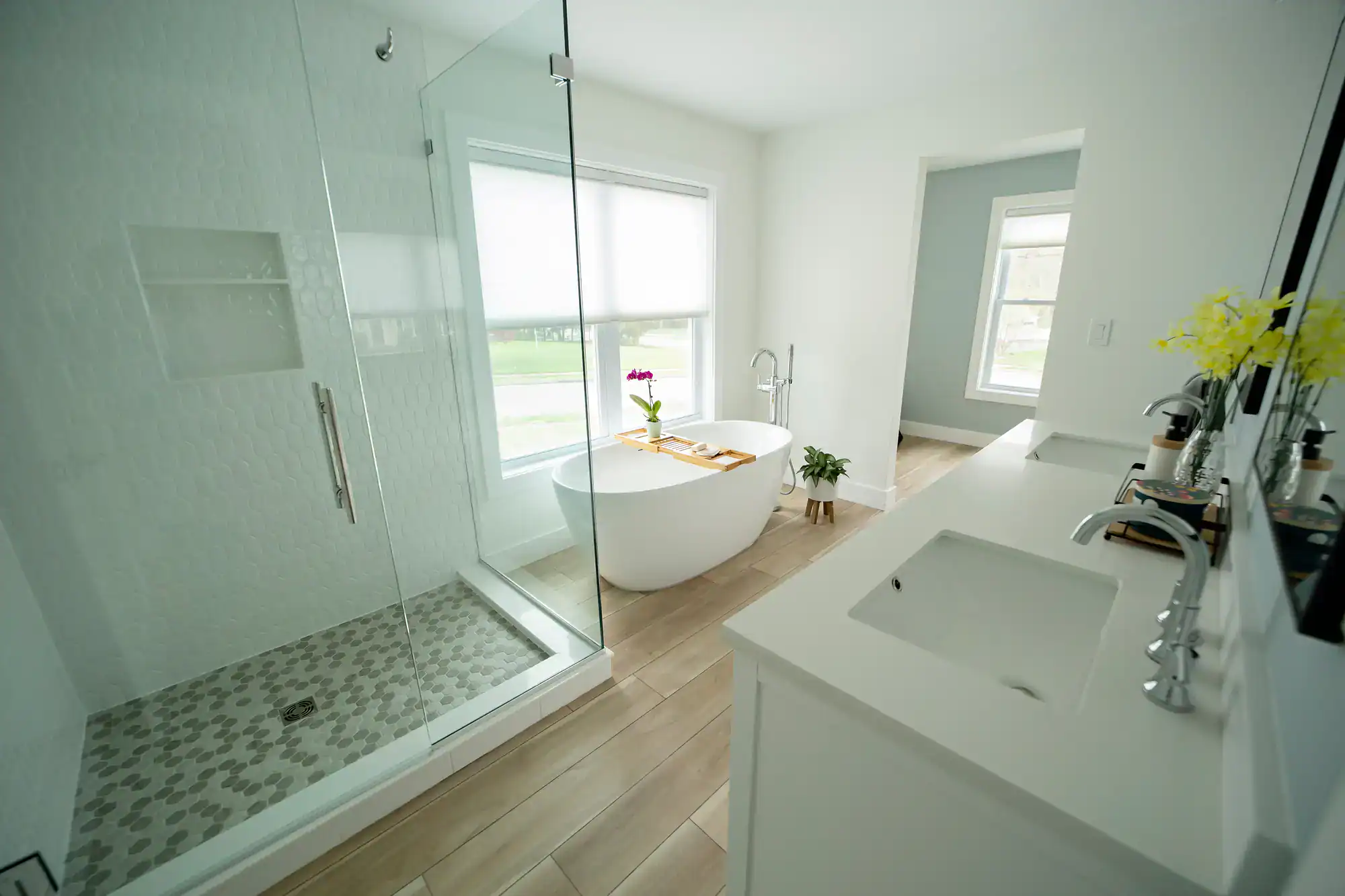
Small bathroom remodeling is also well within scope. Kensington’s postwar homes weren’t built with large bathrooms, and maximizing a compact footprint requires a different kind of planning than a master bath gut renovation. Accessibility features curbless shower entries, built-in bench seating, grab bar installation, non-slip flooring are increasingly part of these projects, and for long-term Kensington homeowners who plan to stay, they’re worth building in from the start.
Yes and in Montgomery County, this applies to virtually all substantive bathroom remodeling work, not just major structural changes. Whether you’re relocating plumbing, updating electrical, or doing what might seem like a straightforward pull-and-replace renovation, the county’s Department of Permitting Services wants a permit on file. That requirement also includes WSSC coordination for any plumbing work, which is specific to Montgomery County and something contractors who primarily work in other jurisdictions sometimes aren’t set up to handle.
Skipping the permit isn’t just a rules issue. If an inspector discovers unpermitted construction, the county can issue a Stop-Work Order immediately, and worst-case outcomes include double permit fees, retroactive plan review, and required demolition of completed work so inspectors can access what’s behind the walls. For a home in Kensington worth close to a million dollars, that’s a risk that doesn’t make sense. We handle the permit application and inspection coordination as part of the project you don’t have to figure that out yourself.
Active construction on a small bathroom typically runs two to three weeks. When you factor in the permit process through Montgomery County DPS which can move in three to five business days through the Fast Track program for straightforward projects you’re looking at a total timeline of roughly four to six weeks from permit submission to finished bathroom. Larger or more complex projects take longer, and that gets communicated clearly in the scope conversation before any work begins.
For households with one bathroom which is a real and common situation in Kensington’s postwar housing stock the disruption question is legitimate and worth asking directly. A contractor who gives you a vague “a few weeks” answer isn’t being helpful. What you want is a specific start date, a realistic completion window, and a clear understanding of which phases of the project leave the bathroom fully non-functional versus partially usable. That’s the kind of timeline conversation we have upfront, not after demo has already started.
A mid-range walk-in shower installation porcelain tile, frameless glass enclosure, standard plumbing work typically runs between $8,000 and $10,000 based on real homeowner quotes in the current market. The broader range for walk-in shower installation is $6,000 to $12,000 depending on size, materials, and the complexity of the existing plumbing configuration. Custom features like built-in benches, integrated shelving, or a curbless entry that requires subfloor modification will move the number toward the higher end.
In Kensington specifically, older homes sometimes have plumbing configurations or subfloor conditions that add scope to what looks like a straightforward conversion. That’s why the initial walkthrough matters it’s how you get an estimate that reflects what the project actually involves, not a low number that grows after demo. Getting that clarity upfront is the difference between a renovation that stays on budget and one that doesn’t.
In most cases, yes particularly in a market like Kensington where median home values are approaching $950,000 to $975,000. A midrange bathroom remodel recoups approximately 80% of its cost at resale in 2025, which is the highest return since 2007. At Kensington’s price point, that percentage translates to a meaningful dollar figure.
A dated bathroom with cracked tile, failing grout, and a tub-shower combo that no one uses is also one of the things buyers notice immediately and it gives them a reason to negotiate the price down. The more relevant question for most Kensington homeowners right now is actually the opposite: with more than 85% of existing mortgages locked in at 5% or below, most people aren’t selling. They’re staying. Which means the return on a bathroom renovation isn’t just a future resale calculation it’s also years of daily improvement to a space you use every single day.
Yes, and it’s a reasonable thing to ask about specifically. Homes in the Kensington Historic District and throughout the older sections of town have architectural details that took a century to accumulate and can’t be replicated. The goal of a bathroom renovation in one of these homes isn’t to install a generic modern bathroom; it’s to deliver modern function, proper waterproofing, and updated plumbing in a way that fits the home rather than fighting it.
Interior bathroom remodeling in Kensington’s Historic District is generally not restricted by the National Register designation historic preservation guidelines in Montgomery County primarily govern exterior alterations. That said, working in a home built in 1910 or 1925 is a different job than working in a 1985 colonial. The framing conditions, original plumbing configurations, and wall assemblies are different, and a contractor who hasn’t encountered them before will discover that mid-project. We’ve been working in homes of exactly this era throughout Montgomery County for over 50 years. That experience is the relevant qualification here.
The Maryland Home Improvement Commission maintains a public database where you can look up any contractor’s MHIC license by name or license number. It takes about two minutes and tells you whether the license is active, when it was issued, and whether there are any complaints on record. For work in Montgomery County, that’s the baseline credential any contractor doing home improvement work in Maryland is required to hold an active MHIC license. We hold MHIC license #28145, which you can verify directly.
Beyond the license itself, bonding and insurance matter separately. General liability coverage protects your home if something is damaged during the project. Workers’ compensation coverage protects you from liability if someone is injured on your property. These aren’t things to assume ask for proof of both before any work begins. In a county where the permit process requires contractor credentials to be on file with DPS anyway, a licensed, insured contractor isn’t a premium option. It’s the standard you should expect.
Other Services we provide in Kensington