“
Most homeowners in Layhill aren’t looking to impress anyone. They want a bathroom that works one that doesn’t have soft spots behind the tile, grout that’s been losing the fight against moisture for decades, or a tub-and-shower combo that made sense in 1965 but doesn’t anymore. When the renovation is done right, you stop noticing the bathroom because there’s nothing left to notice. It just works.
For homes in Layhill South, Layhill Village, and the surrounding subdivisions most of which were built between 1963 and 1969 the bigger concern isn’t always how the bathroom looks. It’s what’s happening behind the tile. Montgomery County’s humid summers push heat indices past 95°F for weeks at a time, and that sustained moisture does real damage to waterproofing systems that were already marginal when they were installed. A professionally remodeled bathroom with modern waterproofing doesn’t just look better it stops the slow damage that’s been building up inside your walls for years.
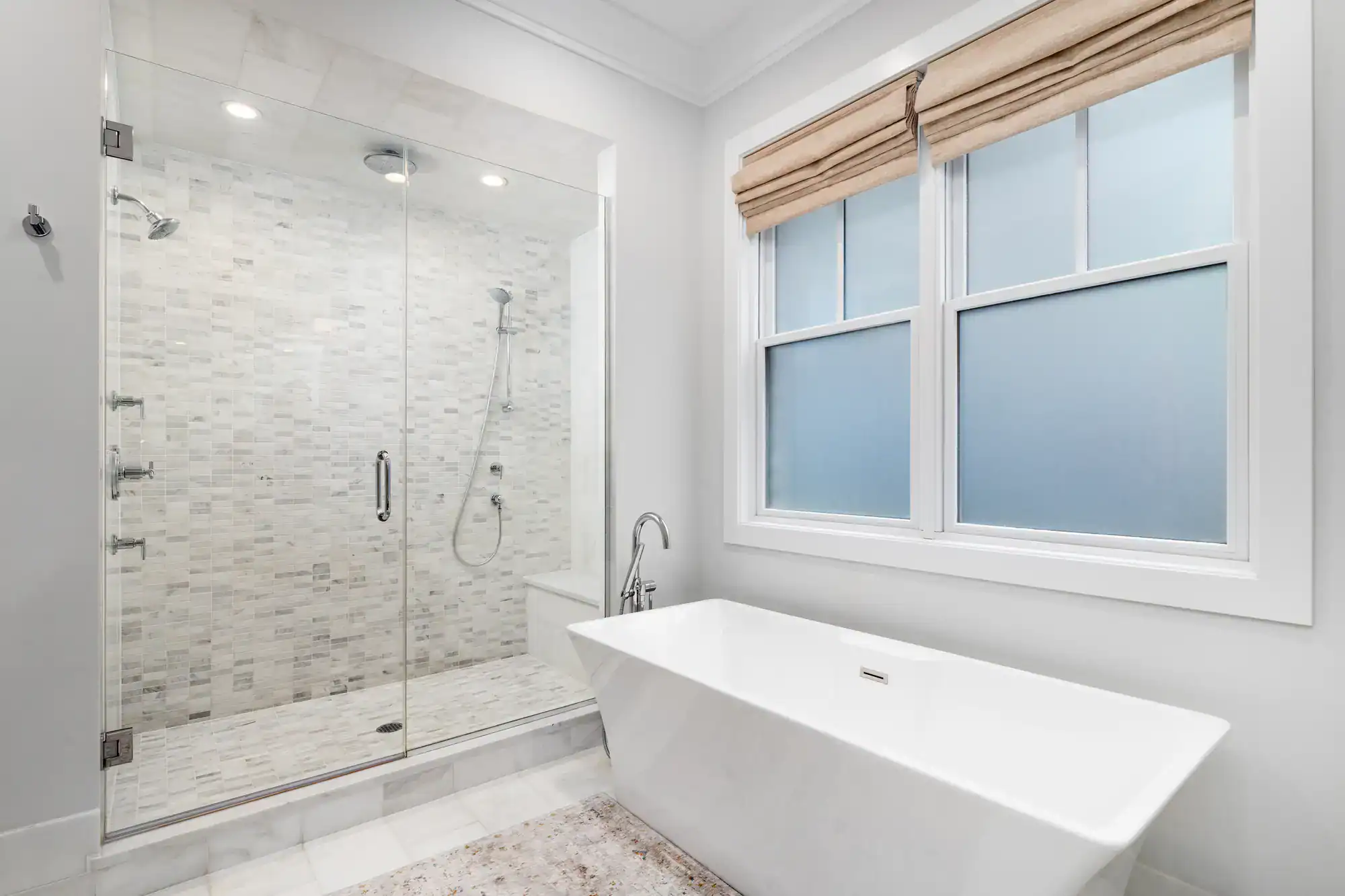
If your household includes older family members, there’s another layer to this. Layhill is one of the most diverse communities in Montgomery County, with a significant share of multigenerational households. A walk-in shower installation with a curbless entry, built-in bench, and non-slip tile isn’t a luxury upgrade in that context it’s a practical change that makes the bathroom safer for everyone who uses it.
We were founded in 1973 just a few years after Layhill’s core subdivisions were completed. That’s not a coincidence worth ignoring. The construction methods, the tile systems, the plumbing configurations, and the substrate conditions common to 1960s Montgomery County homes are not a mystery to us. When a wall opens up in a Layhill bathroom, we’ve seen it before many times.
We hold an active Maryland MHIC license (#28145), are bonded and insured, and carry a BuildZoom score of 91, placing us in the top 37% of 58,058 licensed Maryland contractors. These aren’t self-reported claims they’re verifiable through the Maryland Home Improvement Commission and BuildZoom’s public records.
We’re a full-service general contractor, which means tiling, painting, carpentry, and installation all happen under one roof with one consistent crew. For homeowners in Layhill Village or Layhill South, that means one point of contact, one schedule, and one team that’s accountable from start to finish not a rotating cast of subcontractors who’ve never worked together.
It starts with an in-home estimate. Someone from our team comes to your home, looks at the actual bathroom not photos, not a description over the phone and puts together a written scope of work that covers what’s being done, what materials are being used, and what the timeline looks like. That estimate is the contract. There’s no scope creep built in, and no line items that appear after the work starts.
Once the project is confirmed, permits get handled before anyone picks up a tool. In Layhill, that means two separate tracks: a building alteration permit through Montgomery County’s Department of Permitting Services and, for any plumbing work, a separate permit through the Washington Suburban Sanitary Commission. WSSC operates independently from the county and enforces its own plumbing code and inspection sequence. A contractor who doesn’t know this system or who skips permits entirely is a liability risk for you as the homeowner, especially when it comes time to sell. We’ve been navigating this dual-permit process in Montgomery County for over 50 years.
Once permits are in hand, demolition begins. We assess what’s actually behind the tile because in homes of this age, what you find isn’t always what you expected. Waterproofing goes in before anything else, applied in layers, not as an afterthought. Tile work, installation, painting, and finish work follow in sequence. A small bathroom remodel typically runs three to eight weeks from start to finish depending on scope, with most of the active construction happening in the first two to three weeks.
Ready to get started?
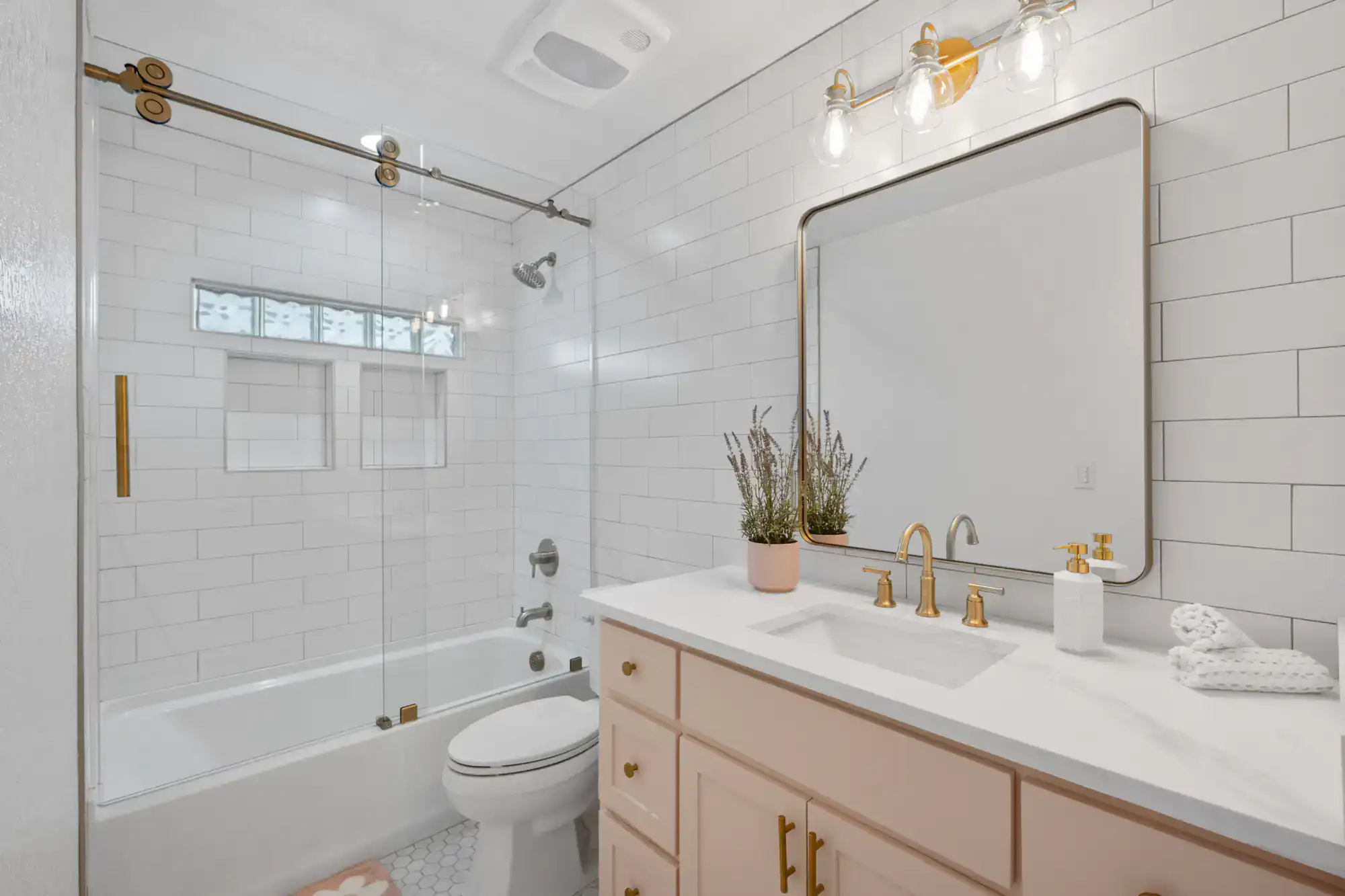
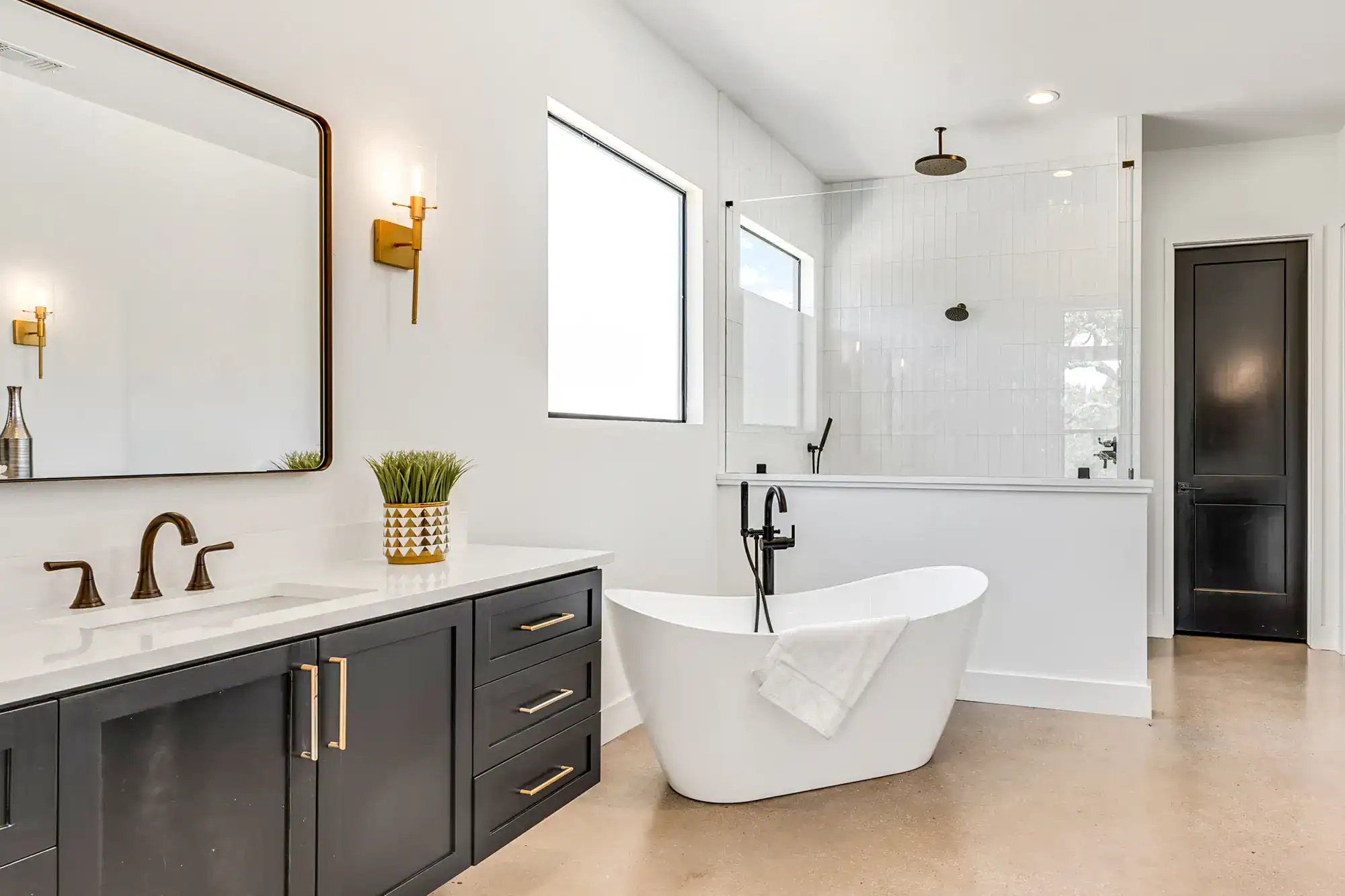
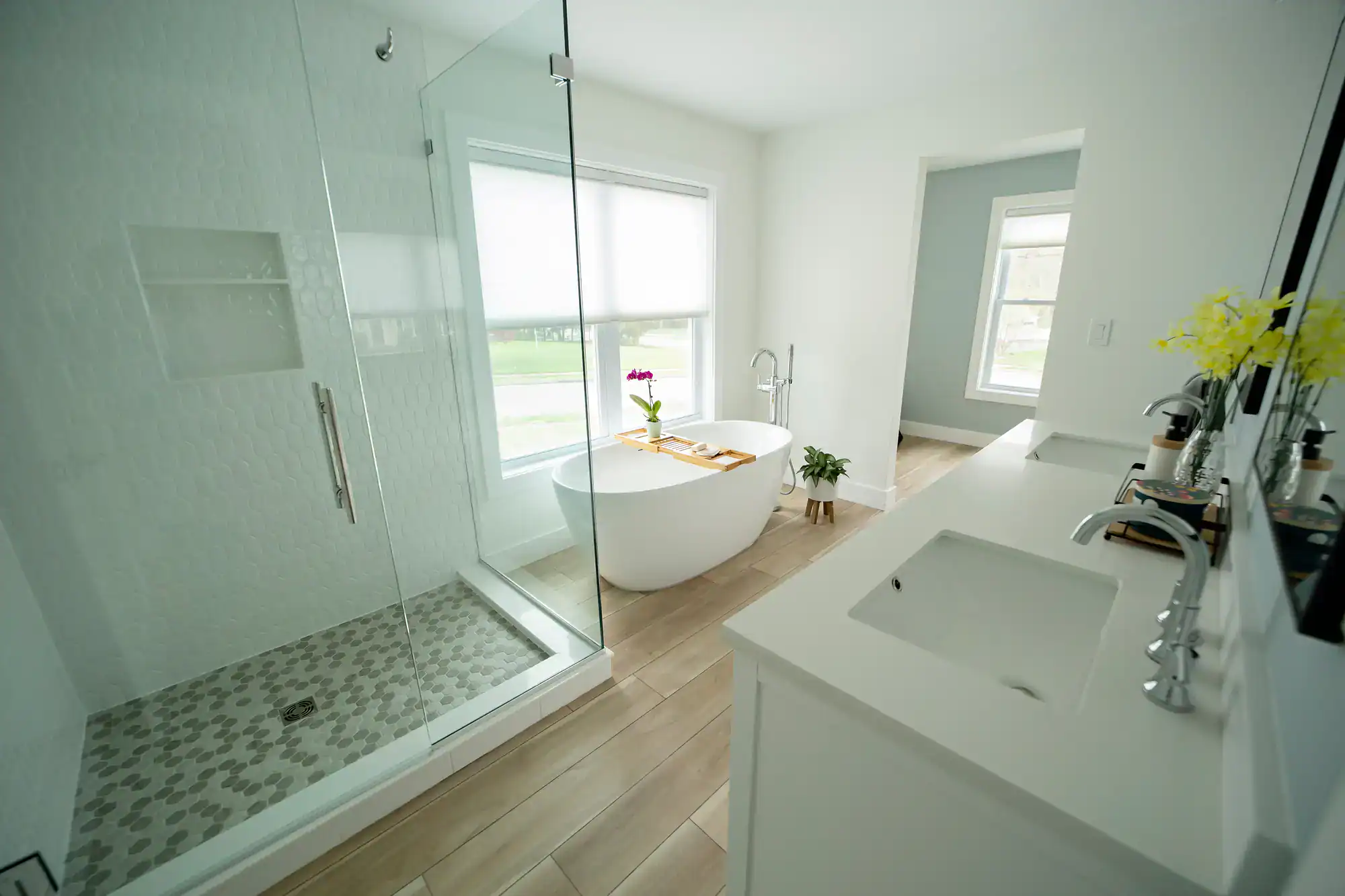
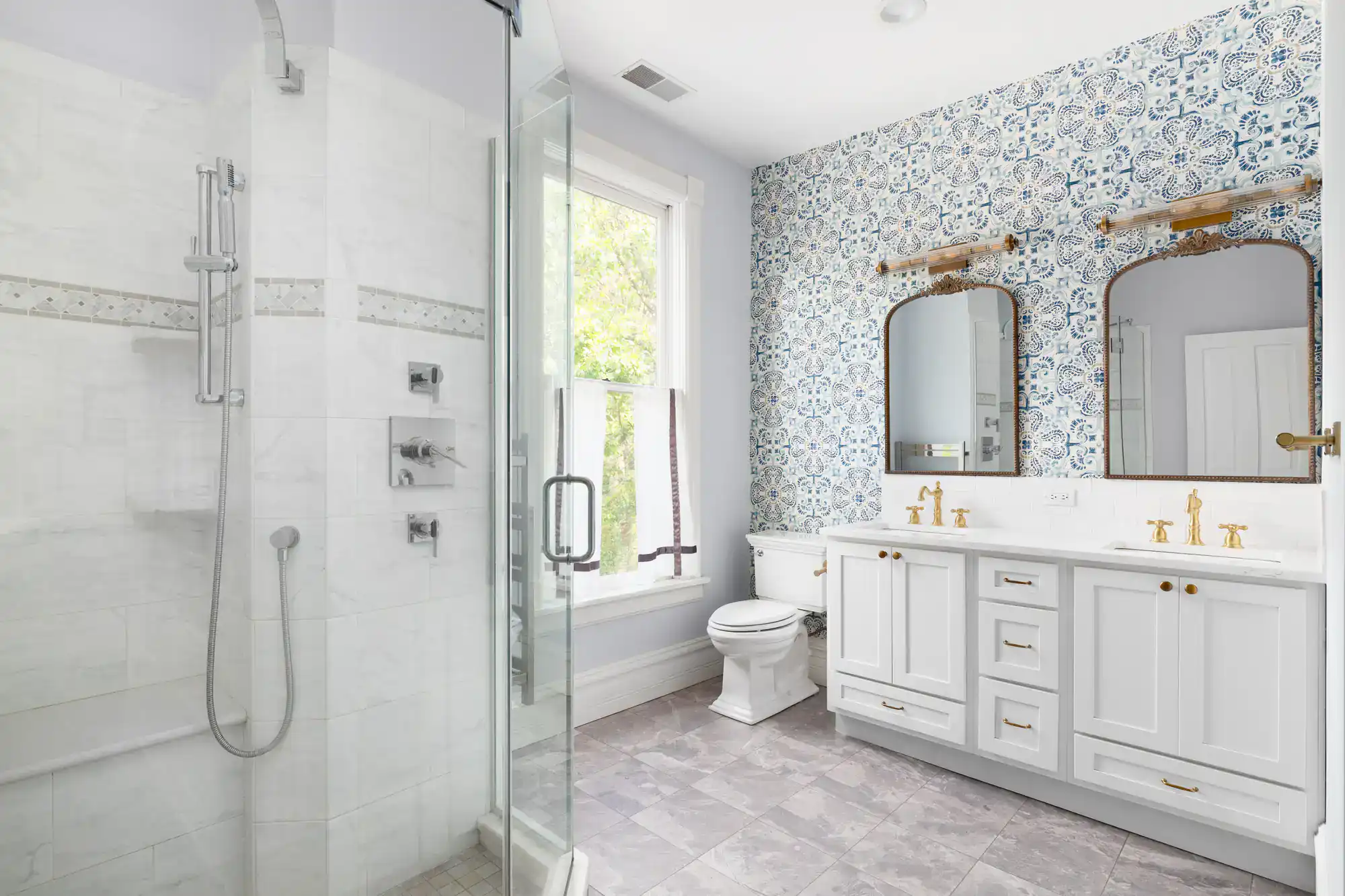
Bathroom remodeling in Layhill covers a wide range of scope depending on what the home needs. On the shower side, we handle full shower reconstruction including custom benches, half walls, built-in shelving, and tile work as well as walk-in shower installation and tub-to-shower conversions. For homeowners in multigenerational households, curbless entry designs and grab bar installation are part of that conversation, not an add-on.
Beyond the shower, we handle floor tiling, wall tiling, cabinet replacement, vanity work, floor replacement, and interior painting. Because we’re a general contractor and not a bathroom-only specialist, all of this stays under one roof. You’re not managing a tile subcontractor and a separate painter on two different schedules it’s one team, one timeline.
For Layhill homes specifically, a few things are worth knowing before you start. WSSC’s pipe-sizing rules can require a mandatory pipe upgrade if previous work was done without proper compliance this is a real cost that surfaces during plumbing work in older homes and one that a thorough estimate should account for upfront. We also factor in Montgomery County’s humidity when selecting materials and waterproofing systems, because what performs well in a dry climate doesn’t necessarily hold up through a Maryland summer. Small bathroom remodeling is handled with the same process discipline as larger projects the scope is smaller, but the standards aren’t.
Yes, and in Layhill specifically, the permitting process involves two separate agencies not one. Montgomery County’s Department of Permitting Services issues the building alteration permit that covers structural, electrical, and mechanical work. But any plumbing changes moving a drain, replacing supply lines, adding fixtures require a separate permit from the Washington Suburban Sanitary Commission, which operates independently from the county and runs its own inspection sequence under its own plumbing code.
This dual-permit system catches a lot of homeowners in Layhill off guard, and it catches some contractors off guard too. If a contractor pulls only the county permit and skips the WSSC permit, the plumbing work is technically unpermitted which can create real problems when you refinance or sell your home. We’ve been working within this system in Montgomery County for over 50 years and handle both permit tracks as a standard part of every project.
A mid-range walk-in shower installation generally runs between $8,000 and $10,000 for a standard build with porcelain tile and frameless glass. The broader range across project types runs from roughly $6,000 on the lower end to $12,000 or more depending on the complexity of the design, the materials selected, and whether any plumbing relocation is involved.
In Layhill specifically, homes built in the 1960s and 1970s sometimes carry additional costs that don’t show up until demolition begins deteriorated substrate behind the tile, outdated plumbing configurations, or WSSC pipe-sizing issues that require an upgrade before new fixtures can be installed. A thorough estimate accounts for these possibilities upfront rather than surfacing them as change orders mid-project. The written scope you receive before work begins should reflect the full picture, not a low number designed to get you to sign.
For a small bathroom remodel, active construction typically runs two to three weeks. When you factor in the permit process which in Montgomery County involves both DPS and WSSC the full timeline from signed contract to completed project is more realistically four to six weeks for a straightforward job. Larger or more complex projects can run longer.
The practical impact depends on how many bathrooms your home has. If the bathroom being remodeled is your only one, that’s a real logistical consideration that should be part of the planning conversation before work starts not something you figure out on day one of demolition. We sequence the work to minimize the period when the bathroom is fully out of service, and we communicate the schedule clearly so you know what to expect at each stage. With an average commute of nearly 40 minutes each way for most Layhill households, the last thing you need is a project timeline that keeps shifting without explanation.
The most common signs are soft or spongy tile especially near the base of the shower grout that keeps cracking no matter how many times you regrout it, a musty smell that doesn’t go away after ventilating the room, and paint or drywall near the shower that’s bubbling, staining, or peeling. In some cases, you’ll notice the floor flex slightly when you step near the tub or shower base.
In Layhill’s housing stock, where most bathrooms were installed in the 1960s and 1970s, the waterproofing behind the tile was either minimal by today’s standards or has simply reached end-of-life after 50-plus years of use. Montgomery County’s humid summers with heat indices regularly exceeding 95°F accelerate moisture intrusion in bathrooms that don’t have proper ventilation and waterproofing. By the time visible signs appear, the damage behind the tile is usually more extensive than it looks from the surface. A full tear-out during remodeling is often the only way to assess the true condition of the substrate and address it properly.
In most cases, yes especially in a market where the median home value has reached $608,000 and is still climbing. A midrange bathroom remodel recoups approximately 80% of its cost at resale in 2025, which is the highest return on that project category since 2007. More than 60% of homebuyers prefer a shower over a tub in the primary bathroom, so a tub-to-shower conversion specifically can make the home more competitive with buyers who are actively filtering for that feature.
There’s also a practical consideration that doesn’t show up in ROI calculations: unpermitted work creates real complications at closing. If previous bathroom work was done without the proper Montgomery County DPS and WSSC permits, a buyer’s inspector or lender may flag it and resolving it after the fact is more expensive and disruptive than doing it correctly the first time. A properly permitted, professionally executed bathroom renovation by a licensed contractor protects the value you’re trying to realize at sale.
For any home improvement work in Maryland including bathroom remodeling in Layhill the credential to verify first is the Maryland Home Improvement Commission license, commonly called the MHIC license. You can look up any contractor’s MHIC number directly through the Maryland MHIC database online. An active license means the contractor has met the state’s requirements and is accountable to the commission if something goes wrong. We hold MHIC license #28145, which is verifiable through that database.
Beyond the MHIC license, confirm that the contractor carries general liability insurance and workers’ compensation coverage. General liability protects your home if something is damaged during the project. Workers’ compensation protects you from being held liable if a worker is injured on your property a real exposure in Maryland, where homeowners can face legal liability for on-site injuries if the contractor doesn’t carry proper coverage. Layhill falls entirely under Montgomery County jurisdiction, so there’s no city-level licensing layer to navigate but the MHIC, liability, and workers’ comp combination is the baseline you should confirm before signing anything.
Other Services we provide in Layhill