“
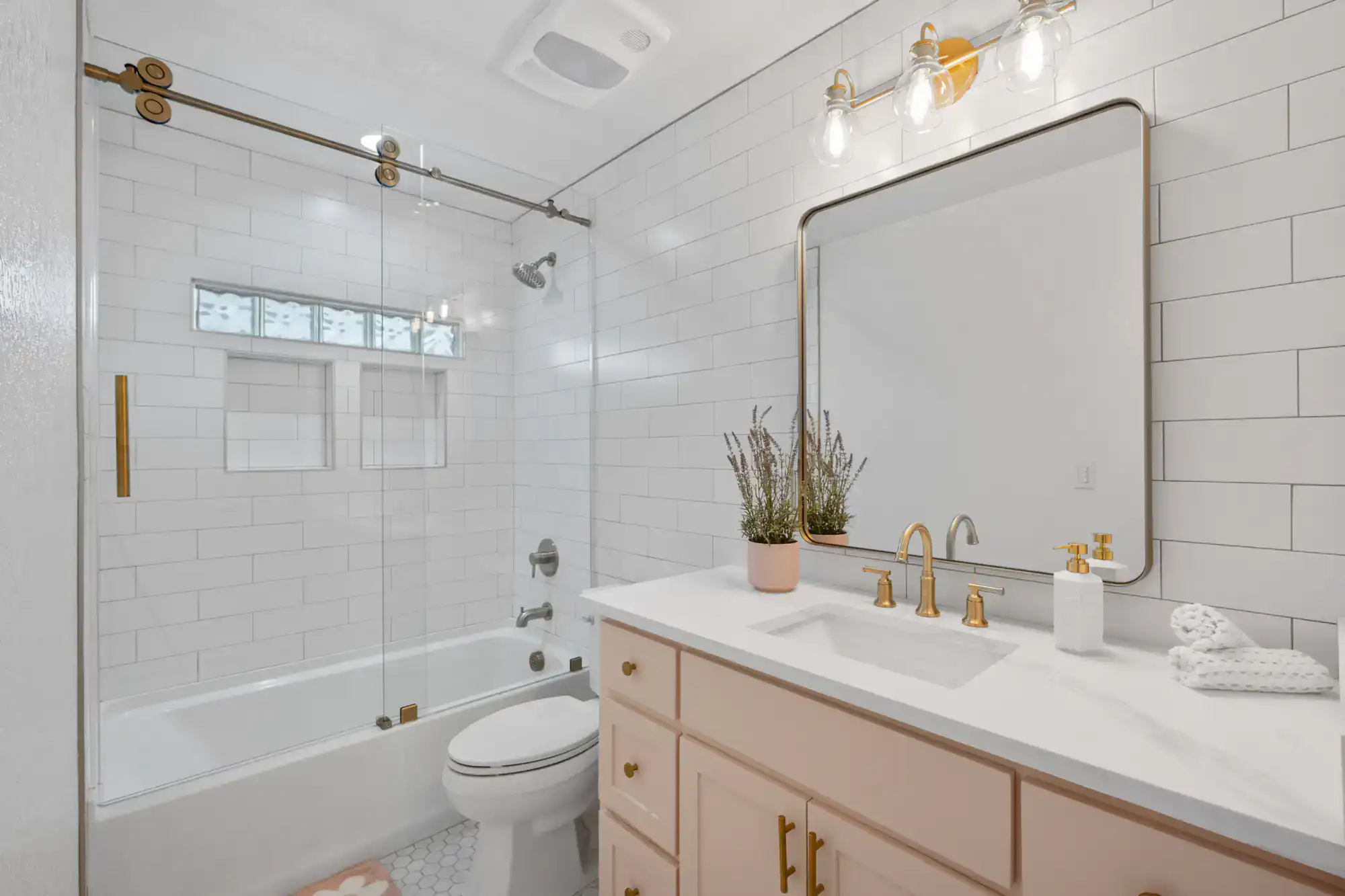
Most South Kensington homeowners aren’t remodeling because they saw something on a design show. They’re remodeling because the original tile work in their Parkwood Cape Cod or Rock Creek Hills rambler is somewhere between 60 and 75 years old and it’s starting to show it. Grout that no longer seals, caulk lines that have given up, and original waterproofing that was minimal to begin with. These aren’t cosmetic problems. They’re moisture problems, and in a neighborhood this close to the Rock Creek corridor, moisture doesn’t stay polite for long.
When the bathroom is done correctly, you stop managing a slow-motion problem and start using a space that actually works. No more wiping down walls after every shower. No more wondering what’s happening behind the tile. A well-executed bathroom renovation one where the waterproofing is done in layers, the substrate is properly prepared, and the work is permitted through Montgomery County’s Department of Permitting Services holds up. That matters especially in South Kensington, where median home values sit close to $936,000. Getting it done right the first time isn’t a luxury. It’s the only version that makes sense at this price point.
There’s also a forward-looking reason to move on this now. South Kensington has a dedicated Purple Line station in the works, with revenue service anticipated around mid-2027. Transit-adjacent neighborhoods historically see home values shift upward in the years leading into a new line’s opening. A bathroom renovation completed before that curve hits positions your home ahead of it not scrambling to catch up when you’re ready to sell or refinance.
We’ve been doing this work in the DC metro area since 1973. That’s relevant because the homes in South Kensington’s neighborhoods like Parkwood, Homewood, and Rock Creek Hills were built in the same era we were getting started. We know what mid-century construction looks like from the inside. We know what the original tile beds were set in, what the plumbing configurations typically look like, and what surprises tend to come up when you open a wall in a 1960s rambler. That experience changes how we plan and price a project.
We hold an active Maryland Home Improvement Commission license MHIC #28145 which is the specific credential Montgomery County requires before a contractor can pull permits through the Department of Permitting Services. We’re also licensed in DC and Virginia simultaneously, bonded, and insured. For a homeowner with a home worth close to a million dollars, that’s not a checkbox it’s the baseline of what you should expect from anyone working in your house.
It starts with a real conversation about what you have and what you want. For most South Kensington homes, that means understanding the existing layout whether you’re working with an original single-bath floor plan in a Homewood ranch or a larger configuration in a Rock Creek Hills split-level and being honest about what the scope actually involves. That includes flagging potential substrate issues before demolition, not after.
Once the scope is clear, we manage the full permitting process through Montgomery County DPS. For any plumbing work relocating a drain, roughing in a new shower, or adding fixtures we also coordinate with the Washington Suburban Sanitary Commission for inspection. This isn’t something you should have to navigate yourself, and it’s not something a licensed contractor should treat as optional. Unpermitted plumbing work in Montgomery County creates real problems when you sell or refinance, and in South Kensington’s market, that’s a risk that isn’t worth taking.
From there, the work moves through demolition, substrate preparation, waterproofing, tile installation, fixture installation, and finishing. Surface prep gets the attention it deserves it’s the step most contractors rush, and it’s the one that determines whether the work holds up in five years or starts failing in two. You’ll have a consistent crew throughout, not a rotating cast of subcontractors. The job site gets cleaned up at the end of each day. And you’ll know what’s happening at each stage without having to chase anyone for an update.
Ready to get started?
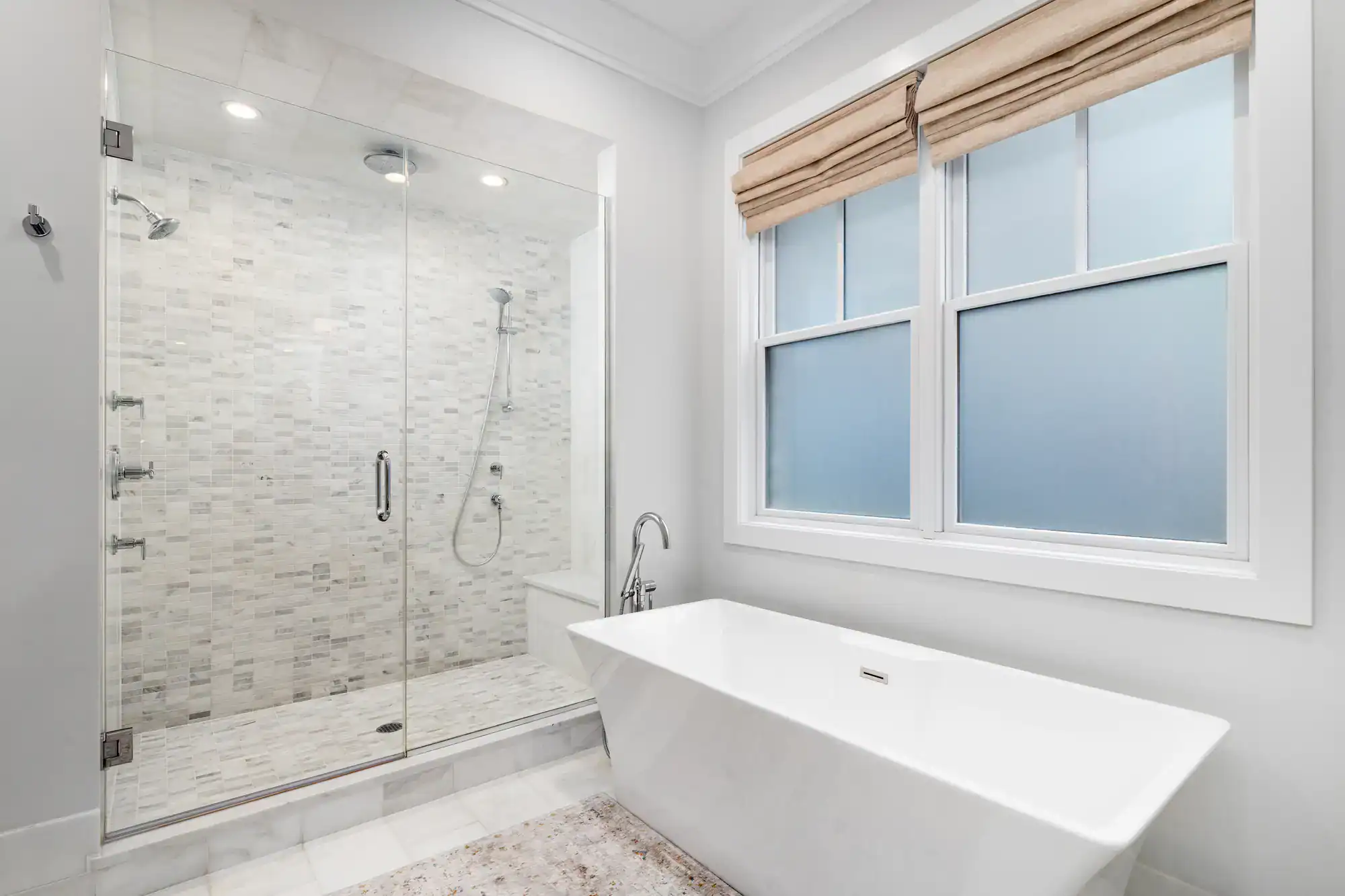
Our scope of bathroom renovation covers everything from full shower reconstruction to floor and wall tiling, cabinet replacement, and interior painting all handled by the same team under one roof. For South Kensington homeowners converting an original tub surround to a walk-in shower, that means custom work: built-in benches, half walls, integrated shelving, frameless glass, and multi-layer waterproofing installed where, in many cases, no real waterproofing membrane has existed since the home was built. Walk-in shower installation in this area typically runs between $6,000 and $12,000 depending on scope and materials, with mid-range projects landing in the $8,000 to $10,000 range.
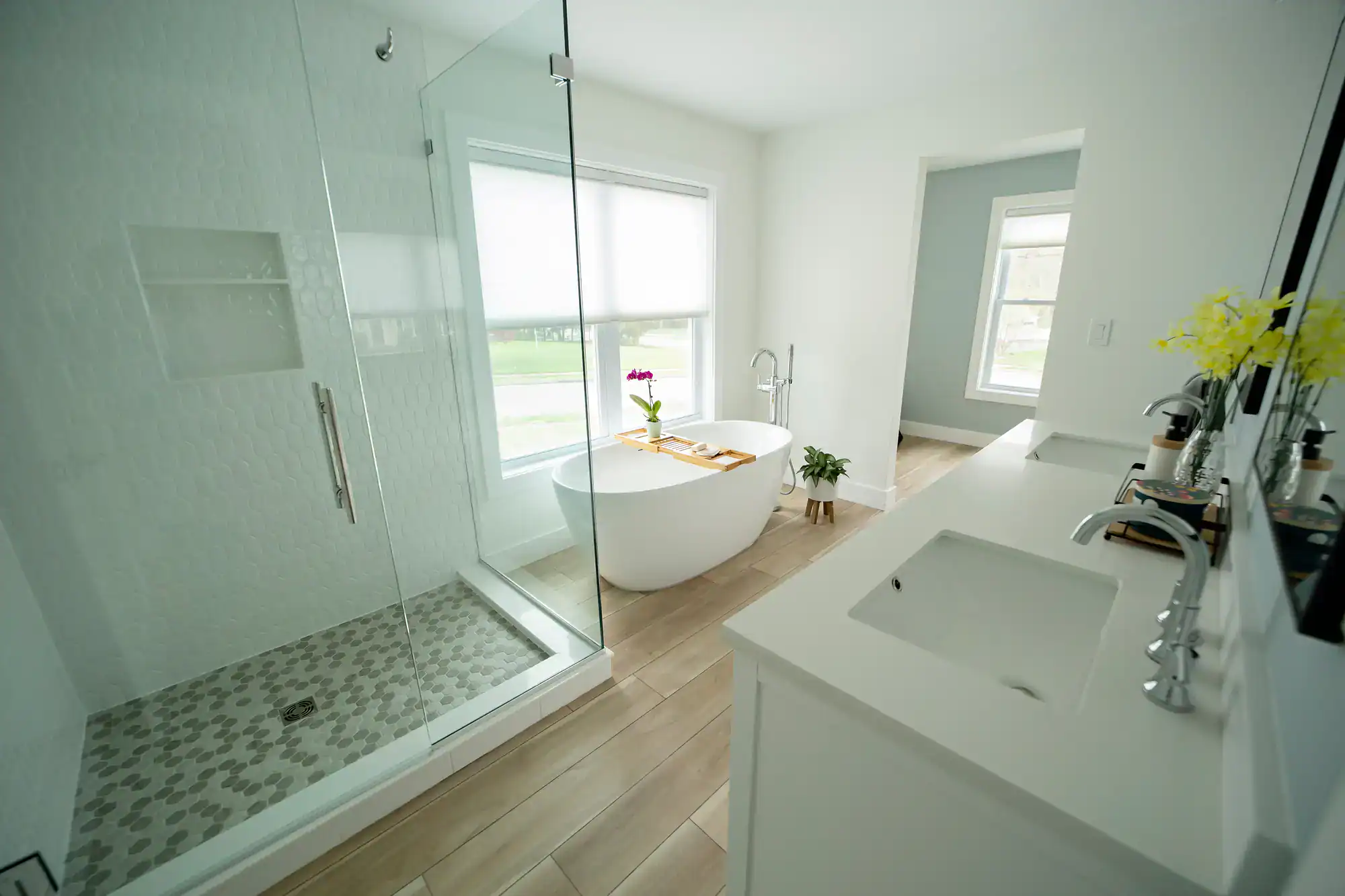
Small bathroom remodeling is also a real specialty for us, not a simplified version of a bigger job. Many of the original bathrooms in Parkwood Cape Cods and Homewood ramblers are compact by today’s standards. Done well, a small bathroom renovation with smart layout choices, vertical tile work, and a curbless shower entry can make a tight space feel intentional and open rather than cramped. These are the kinds of design decisions that matter in a home where every square foot carries weight in the listing price.
For homeowners thinking about the longer term, aging-in-place features are increasingly part of the conversation. Curbless shower entries, built-in bench seating, and grab bar installation aren’t just accessibility features they’re practical investments for homeowners who plan to stay in South Kensington for the next decade or two. With 42 independent living communities in or near the area, this is a community that takes aging in place seriously, and the bathroom is where that planning usually starts.
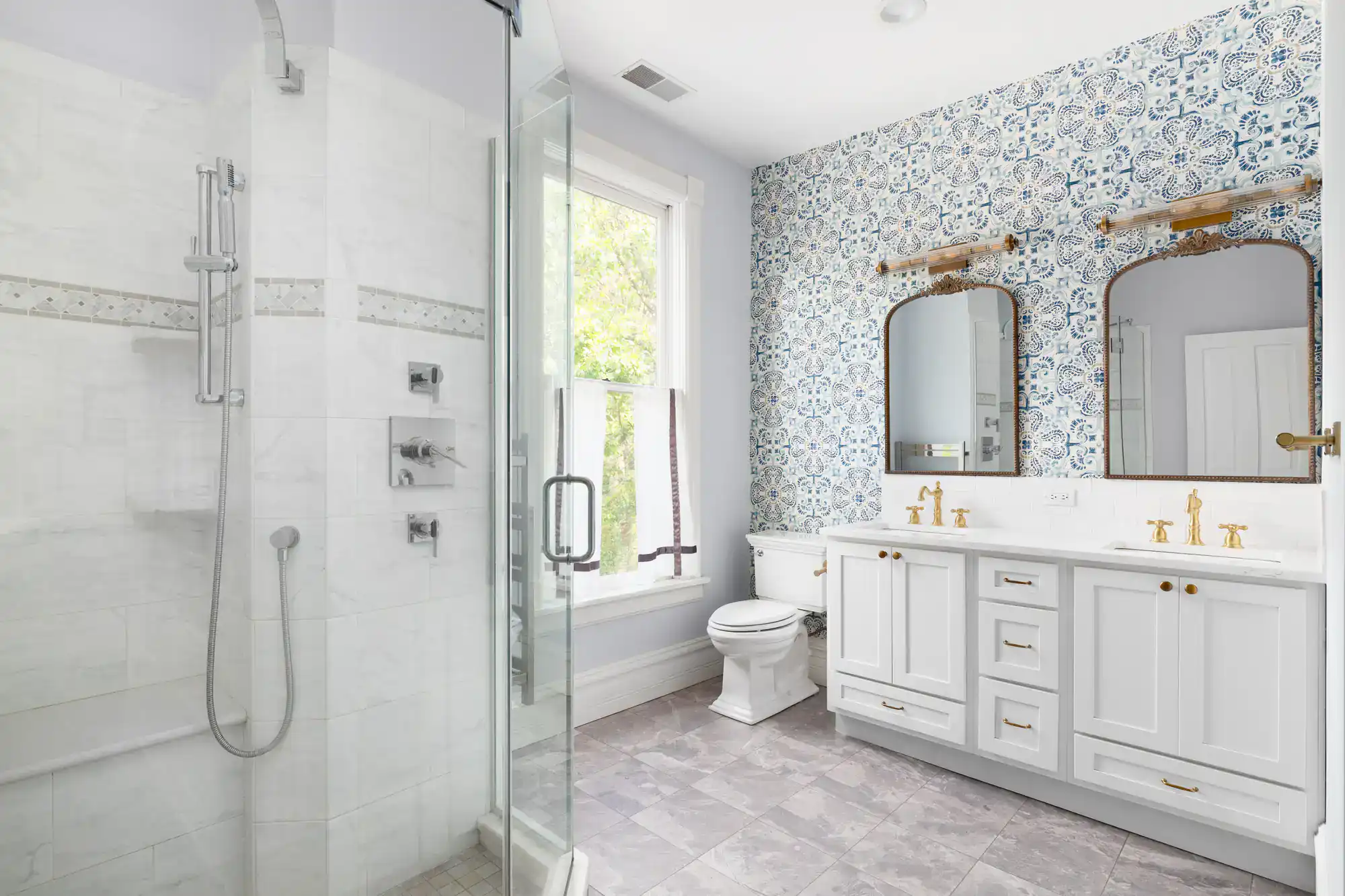
Yes, and it’s not a technicality worth skipping. South Kensington is unincorporated, which means it falls entirely under Montgomery County jurisdiction there’s no separate town government adding another layer, but Montgomery County’s Department of Permitting Services does require an alteration permit for most bathroom remodeling work. If your project involves any plumbing changes relocating a drain, roughing in a new shower, adding or moving fixtures you’ll also need a trade permit, and that work has to be coordinated with the Washington Suburban Sanitary Commission for inspection before anything gets closed up behind a wall or under a floor.
A contractor who tells you permits aren’t necessary for a bathroom remodel in Montgomery County is either uninformed or cutting corners on your behalf. Either way, it’s your home that carries the risk. Unpermitted work can come up during a home sale, a refinancing appraisal, or a future renovation and in a market where South Kensington homes are selling close to and above $900,000, that’s not a problem you want to inherit. We hold MHIC License #28145, which is the specific Maryland Home Improvement Commission credential Montgomery County requires before a contractor can pull permits. We manage the full DPS and WSSC process as part of the job.
For a small to mid-size bathroom, you’re generally looking at three to six weeks from the start of active construction to final walkthrough. That range accounts for the permitting timeline Montgomery County DPS has a standard review commitment of 17 business days, though qualifying projects can move through the Fast Track program in three to five days. Planning for the permit process upfront is the difference between a project that flows on schedule and one that stalls unexpectedly mid-demo.
The construction phase itself demolition, substrate prep, waterproofing, tile work, fixture installation, and finishing typically runs two to three weeks for a compact bathroom and longer for a larger or more complex scope. In older South Kensington homes, the timeline can shift slightly if there are substrate surprises behind original tile or if plumbing configurations require adjustment. A contractor who has worked in mid-century DMV homes regularly will flag those possibilities during the estimate phase rather than discovering them on day three of demolition. That’s where experience in this specific housing stock makes a practical difference in how smoothly a project runs.
Converting a tub surround to a walk-in shower in a home built in the 1950s or 1960s is not a straightforward swap. In most original South Kensington bathrooms whether it’s a Parkwood Cape Cod or a Rock Creek Hills rambler the existing tub surround was set in a mud bed, which means demolition involves removing material that’s been in place for decades. Once that’s out, you’re often looking at a substrate that has no modern waterproofing membrane, and in some cases, has absorbed moisture over the years without anyone realizing it.
The right approach starts with assessing the condition of the substrate before anything new goes in. From there, a proper walk-in shower installation involves a multi-layer waterproofing system not a consumer-grade product applied in one coat followed by tile work, custom features like built-in benches or integrated shelving if that’s part of the scope, and a frameless glass enclosure if desired. The drain location may also need to shift depending on the original plumbing configuration, which is another reason this work requires a licensed contractor pulling the appropriate WSSC plumbing permits. Done correctly, the result holds up for decades. Done quickly, it’s a moisture problem waiting to surface.
In most cases, yes particularly in South Kensington’s price bracket. A midrange bathroom remodel nationally recoups approximately 80% of its cost at resale in 2025, which is the highest return rate since 2007. In a market where homes are selling close to and above $900,000, buyers at that price point have high expectations for the condition of bathrooms. An original 1960s bathroom even a functional one reads as deferred maintenance to a buyer who’s paying close to a million dollars for a home.
There’s also a timing consideration specific to South Kensington right now. The planned Purple Line light rail station for this area is anticipated to open around mid-2027, and transit-adjacent neighborhoods typically see home value appreciation in the years leading into a new line’s opening. Homeowners who renovate before that shift happens are positioned better than those who renovate reactively. If you’ve been putting off a bathroom update and you’re thinking about selling in the next few years, the window to renovate ahead of the curve is narrowing.
Some signs are obvious: visible mold or mildew on grout lines, tile that’s starting to pop or feel hollow when you press on it, caulk that’s cracked or pulling away from the wall. Others are subtler a musty smell that lingers after the bathroom airs out, paint on adjacent walls that bubbles or peels without an obvious cause, or a floor that feels slightly soft near the base of the shower or tub.
In South Kensington’s mid-century homes, the risk is compounded by the age of the original construction. Homes built in the 1940s through the 1960s were not built with modern waterproofing membranes behind tile. Over time, even small gaps in grout or caulk allow moisture to work its way into the substrate, and the proximity to the Rock Creek corridor means ambient humidity in the area is higher than in drier suburban locations. The DMV’s hot, humid summers accelerate the process moisture that gets in during summer doesn’t always make itself visible until fall or winter. Waterproofing failures cost between $2,000 and $12,000 to repair once they’ve progressed, and they’re the leading cause of post-renovation insurance claims in the remodeling industry. Catching the problem during a planned renovation is always less expensive than addressing it after it’s caused structural damage.
Start with licensing. In Maryland, any contractor doing home improvement work must hold an active MHIC license you can verify this on the Maryland Home Improvement Commission’s public database before you sign anything. In Montgomery County specifically, that license is also what allows a contractor to pull permits through DPS, so if a contractor can’t produce an MHIC number, they can’t legally permit your project. We hold MHIC #28145 and are also licensed in DC and Virginia, bonded, and insured.
Beyond licensing, look at how specific the estimate is. A detailed, itemized written estimate one that breaks down labor, materials, waterproofing, and permit costs separately signals that the contractor has actually thought through your project. A vague bid that gives you one lump number is a red flag, because it usually means the details that protect you (permit management, proper substrate prep, multi-layer waterproofing) haven’t been priced in. Also ask directly whether we use our own crew or subcontractors. In a tight-knit community like South Kensington, where neighbors talk and word-of-mouth travels fast, a contractor who sends a consistent, named team to your home is a different experience than one who rotates unknown subcontractors through your house. The reviews that mention crew members by name are worth paying attention to they’re the clearest signal that the team showing up on day one is the same team finishing the job.
Other Services we provide in South Kensington