“
Most White Oak homeowners aren’t looking for a flashy overhaul. They want a bathroom that functions properly, holds up over time, and doesn’t become a problem down the road. That’s a reasonable expectation and it’s exactly what a well-executed bathroom remodel delivers when it’s done correctly from the start.
The homes in Quaint Acres, Meadowood, and Springbrook were largely built in the 1950s through 1970s. Those original bathrooms were installed without modern waterproofing membranes, with plumbing systems now pushing 50 to 70 years old, and with ventilation that was never designed to handle the DC metro area’s summer humidity loads. When relative humidity regularly exceeds 75 to 80 percent from June through August, older tile adhesion fails, grout cracks, moisture migrates behind walls, and subfloors quietly soften.
A bathroom remodel in a home like this isn’t cosmetic it’s structural protection for your biggest asset. When the work is done right, you get a bathroom that manages moisture properly, meets current code, and doesn’t require a follow-up call in three years. You also get a meaningful return: a midrange bathroom remodel recoups approximately 80 percent of its cost at resale in 2025, the highest ROI since 2007. In a neighborhood where property values are being driven upward by the Viva White Oak development, that number carries real weight.
We’ve been remodeling bathrooms in the DC metro area since 1973. That means we’ve been navigating Montgomery County’s permitting system, working with WSSC Water on plumbing compliance, and doing bathroom renovations in homes exactly like the ones in White Oak for over five decades.
What that history means for you: we know what’s behind the tile in a 1960s Springbrook Colonial before the demo begins. We understand that bathroom remodels in Montgomery County require both a Department of Permitting Services building permit and a separate WSSC Water plumbing permit a dual-agency process that catches unprepared contractors off guard and creates delays. We hold an active Maryland MHIC license (#28145), the specific credential required to pull permits in this county.
We’re also bonded and insured, licensed in all three DMV jurisdictions, and carry a BuildZoom score of 91 placing us in the top 37 percent of over 58,000 licensed Maryland contractors. One team, one point of contact, and no subcontractor chaos.
It starts with a free estimate. Someone from our team comes to your White Oak home, looks at the actual bathroom not a photo you emailed and gives you a detailed written scope before any work is agreed to. That estimate covers materials, labor, timeline, and the permit process. No vague ballpark numbers, no surprises mid-project.
Once the scope is agreed to, we pull permits through Montgomery County’s Department of Permitting Services and, where plumbing work is involved, through WSSC Water. If your project qualifies for the county’s Fast Track program, that permit can come through in as few as three to five days. We manage all of it you don’t have to navigate two separate agencies or figure out which work triggers which permit.
Construction typically runs two to three weeks for a small bathroom remodel, and four to six weeks when you factor in the full permitting and planning cycle. For larger projects, timelines extend accordingly. Throughout the process, you have a consistent crew not a rotating cast of subcontractors and a single point of contact who can tell you exactly where the project stands on any given day. When the work is done, there’s a final walkthrough to make sure everything meets the scope you agreed to before anyone considers the job closed.
Ready to get started?
We handle the full range of bathroom renovation work from complete gut-and-rebuild projects to targeted upgrades like walk-in shower installation, floor and wall tiling, cabinet replacement, and vanity work. We also handle interior and exterior painting as part of the same project, which means you’re not coordinating a separate painter after the tile crew leaves.
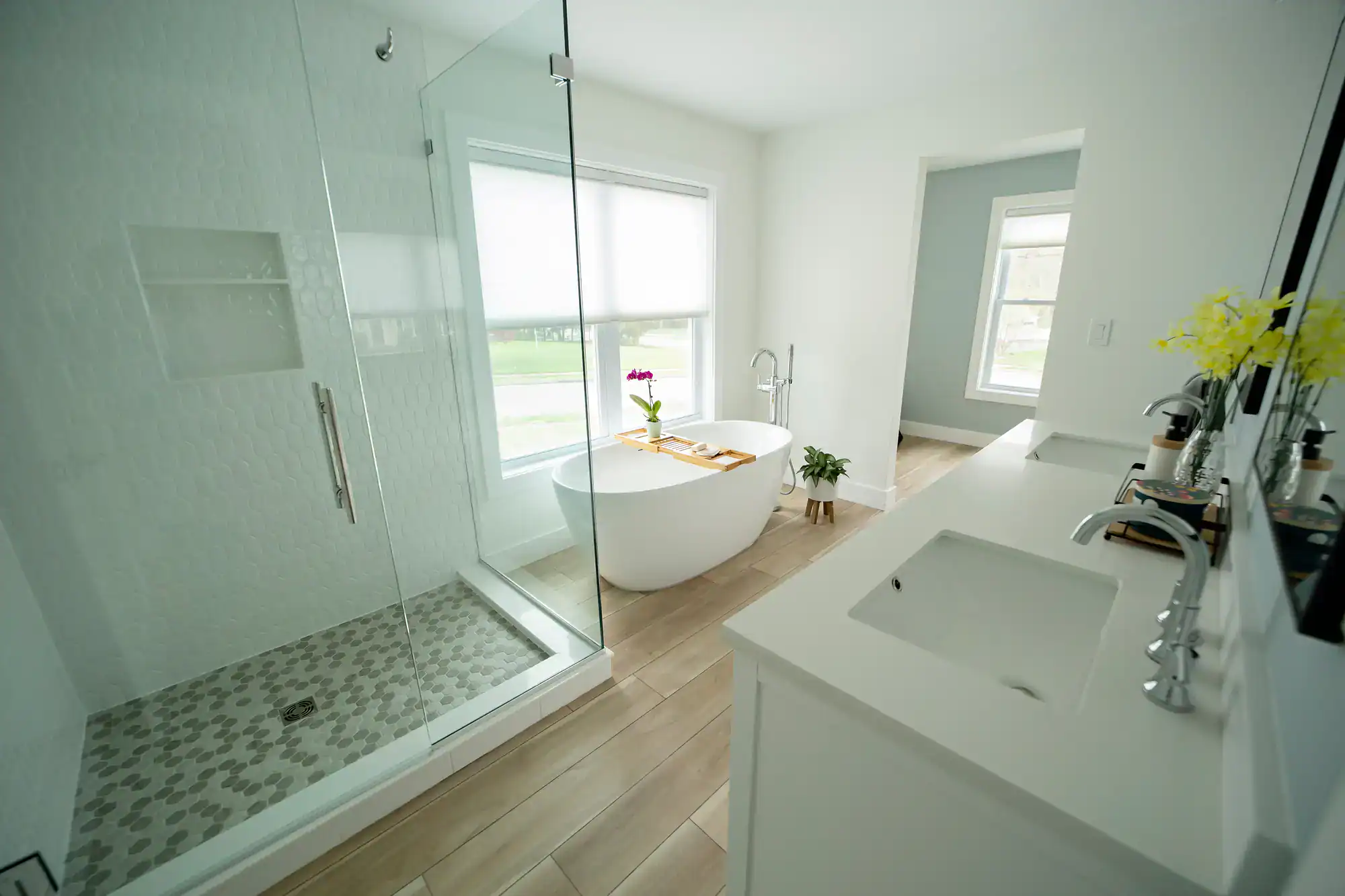
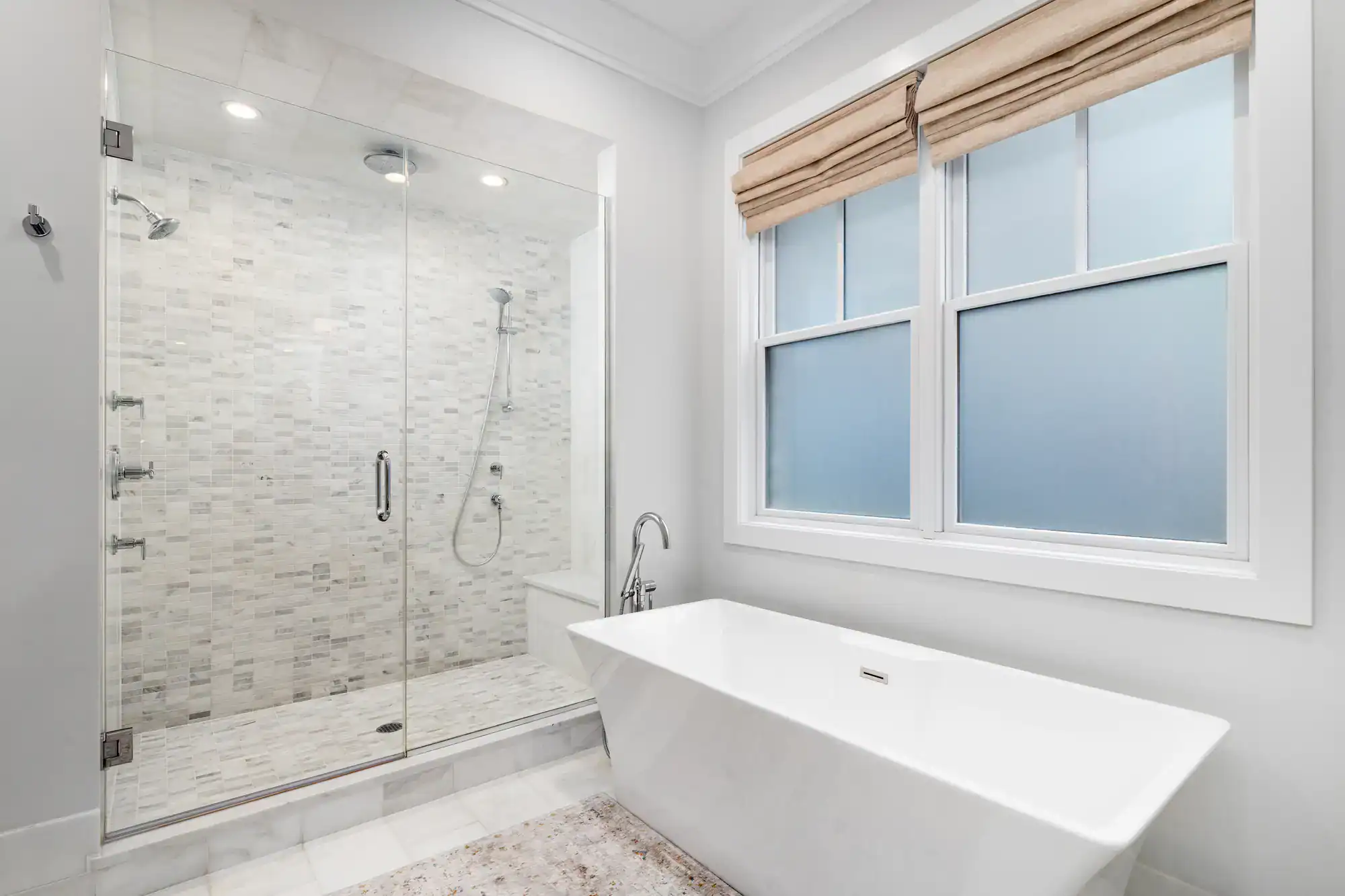
For White Oak homeowners, walk-in shower installation is one of the most requested services and for good reason. Many of the ranch-style and split-level homes in Quaint Acres and Springbrook were built with compact, single-bathroom floor plans that no longer serve modern households. A well-designed walk-in shower with frameless glass, a built-in bench, and integrated shelving can make a small bathroom feel significantly more open and functional without expanding the footprint. Curbless shower entries are also increasingly common for homeowners planning to age in place a relevant consideration given that 75 percent of adults over 50 nationally want to remain in their current homes, and accessible bathroom features now recoup 61 percent of their cost at resale.
Small bathroom remodeling in older White Oak homes also means addressing what’s underneath the surface. Professional-grade waterproofing membranes, proper substrate preparation, and correctly sized exhaust ventilation are not optional in a climate where summer humidity is relentless. These are the details that determine whether your bathroom holds up for 20 years or starts showing problems in three.
Yes and in Montgomery County, the permit process is more involved than most homeowners expect. Bathroom remodels that include plumbing or electrical work require two separate permits: a building permit through Montgomery County’s Department of Permitting Services (DPS) and a plumbing permit through WSSC Water (Washington Suburban Sanitary Commission). These are two distinct agencies, and not every contractor knows to coordinate both. Skipping either one can result in fines, failed inspections, and complications when you go to sell or refinance your home.
We hold an active Maryland MHIC license (#28145), which is the specific credential required to pull permits through Montgomery County’s DPS. We manage the full permit process including WSSC Water coordination so you don’t have to figure out which agency handles what. For straightforward projects, Montgomery County’s Fast Track program can deliver a permit in as few as three to five days, which helps keep the overall project timeline on track.
Costs vary depending on scope, materials, and what’s discovered once demolition begins. Nationally, the median spend for a primary bathroom remodel is around $15,000 in 2025. Walk-in shower installation typically runs between $6,000 and $12,000, with mid-range installations landing in the $8,000 to $10,000 range for porcelain tile and frameless glass. Full bathroom renovations in the DMV area can go higher depending on the condition of the existing plumbing and waterproofing systems.
Budget overruns affect nearly half of all bathroom renovations, averaging 23 to 35 percent over the original estimate. This usually happens when contractors underbid to win the job and then surface “surprises” mid-project. A detailed, itemized written estimate before work begins is the single best protection against that scenario. We provide that estimate after an in-person visit to your White Oak home not a rough number based on square footage alone.
For a small bathroom remodel, active construction typically runs two to three weeks. When you include the permitting and planning phase which in Montgomery County involves both DPS and WSSC Water the full project cycle is generally four to six weeks from start to finish. Larger or more complex projects take longer, and the timeline can extend if unexpected issues are found behind walls, which is more common in older homes.
For White Oak homeowners in single-bathroom houses particularly the ranch-style homes in Quaint Acres and Springbrook this is a real practical concern. The best way to manage it is to get a clear, specific timeline in writing before work starts, confirm that your contractor has a consistent crew (not rotating subcontractors who create scheduling gaps), and understand exactly which phases of work will render the bathroom unusable. We communicate the project schedule clearly from the start so you can plan around it.
The biggest factor is the age of the housing stock. Quaint Acres, Meadowood, and Springbrook contain a significant number of homes built in the 1950s through 1970s. These homes were not built with modern waterproofing systems original shower pans from that era relied on hot-mopped lead or copper pans that are now 50 to 70 years old and well past their service life. When a walk-in shower is installed in a home like this, the substrate work underneath the tile is just as important as the tile itself.
The DC metro area’s climate adds another layer of complexity. Summer humidity in the White Oak area regularly exceeds 75 to 80 percent, which puts constant pressure on grout lines, caulk seams, and any gaps in the waterproofing system. A walk-in shower installed without a professional-grade membrane waterproofing system in this climate will fail it’s a question of when, not if. Our approach to walk-in shower installation addresses the substrate and waterproofing first, because that’s what determines whether the finished product holds up long-term.
In most cases, yes particularly right now. A midrange bathroom remodel recoups approximately 80 percent of its cost at resale in 2025, which is the highest return on investment for this project category since 2007. For White Oak specifically, the Viva White Oak development a $2.8 billion mixed-use project that will bring nearly 5,000 new residential units and 9,000 permanent jobs to the area is already creating upward pressure on surrounding property values. Buyers comparing existing homes against new construction with modern finishes will notice an outdated bathroom.
That said, the ROI calculation depends on what you spend and what you update. A targeted renovation new walk-in shower, updated tile, fresh vanity in the $12,000 to $20,000 range typically delivers a stronger return than an over-built master bath renovation in a neighborhood where the market doesn’t support the premium. The right move is to match the scope of the remodel to what comparable homes in the White Oak area are showing, not to over-invest relative to the neighborhood ceiling.
White Oak falls under Montgomery County jurisdiction, which means any contractor pulling permits for your bathroom remodel needs an active Maryland Home Improvement Commission (MHIC) license. This is a state-level credential not a general business license and it’s the specific requirement for obtaining a building permit through Montgomery County’s Department of Permitting Services. You can verify any contractor’s MHIC license through the Maryland Department of Labor’s online lookup tool. We hold MHIC #28145, which is publicly verifiable.
Beyond the MHIC license, you want to confirm that the contractor carries general liability insurance and workers’ compensation coverage. This protects you from liability if someone is injured on your property during the project, and it protects your home if something is damaged in the process. Given that White Oak home values average well over $500,000 with detached homes averaging closer to $885,000 working with an uninsured contractor is a financial risk that simply isn’t worth taking. Ask for the license number and certificate of insurance before signing anything, and verify both independently.
Other Services we provide in White Oak