“
Most Germantown homeowners don’t realize how much their windows are costing them until they start tracking the pattern. The heat runs longer than it should in February. The upstairs bedrooms are stuffy in August even with the AC on. The draft near the kitchen window has been there so long it feels normal.
None of that is normal. It’s what happens when windows from the 1970s, 80s, or 90s are still bearing the load.
Germantown’s climate doesn’t give you a break. Hot, humid summers push solar heat gain through south- and west-facing glass, driving up cooling costs. Cold Mid-Atlantic winters let air seep in through deteriorated seals and aging frames, driving up heating costs. The U.S. Department of Energy puts it plainly: windows account for 25 to 30 percent of residential heating and cooling energy use. For a Germantown home that still has its original double-hung units, that number shows up every month on your utility bill.
New energy-efficient windows change the equation on both sides. Homeowners who replace old, inefficient windows with ENERGY STAR-certified units save an average of $42.50 per month on utilities roughly $510 a year according to a 2025 This Old House survey. Add the federal tax credit available through 2032 (up to $600 per year on qualifying materials under IRS Section 25C), and the financial case for window replacement in Germantown becomes easier to make than most people expect.
Optima Design Group was founded in 1973 by Gordon Arthur Franks the same year Germantown’s master-planned villages were just beginning to take shape. We’ve been working across Montgomery County ever since, and Gordon remains personally involved in every project: responding to inquiries, writing contracts, and ensuring the work is done right.
Our credentials are verifiable, not marketing language. Optima Design Group holds active contractor licenses in Maryland (MHIC #28145), Washington D.C. (#39937921), and Virginia (#2705077763) all publicly verifiable through each state’s licensing database. You can look those numbers up before you sign anything.
The 300-plus recommendations on Washington D.C. Consumers’ Checkbook aren’t from a free review platform. Consumers’ Checkbook is subscription-based and editorially independent the kind of source that Montgomery County homeowners have trusted since 1974. That track record wasn’t built on one good season. It was built over five decades of showing up, doing the work, and being reachable when something needs attention.
It starts with a conversation. Gordon Franks personally responds to inquiries typically same day or next day to understand what you’re dealing with and schedule an in-home estimate. He’ll assess your existing windows, evaluate the frames and rough openings, and provide a clear, itemized quote with no vague ranges or pressure.
From there, window selection is straightforward. You’ll choose the style, frame material, and glass package that fits your Germantown home and your goals whether that’s maximum energy efficiency, a specific look for your townhome, or compliance with HOA exterior guidelines. For most Germantown homes, insert replacement is the right approach: the new window fits into the existing rough opening, which means no structural changes and, under Montgomery County’s permitting rules, typically no permit required.
If your project involves changing the opening size or adding an egress window, that does require a Montgomery County DPS permit and we handle that process with you.
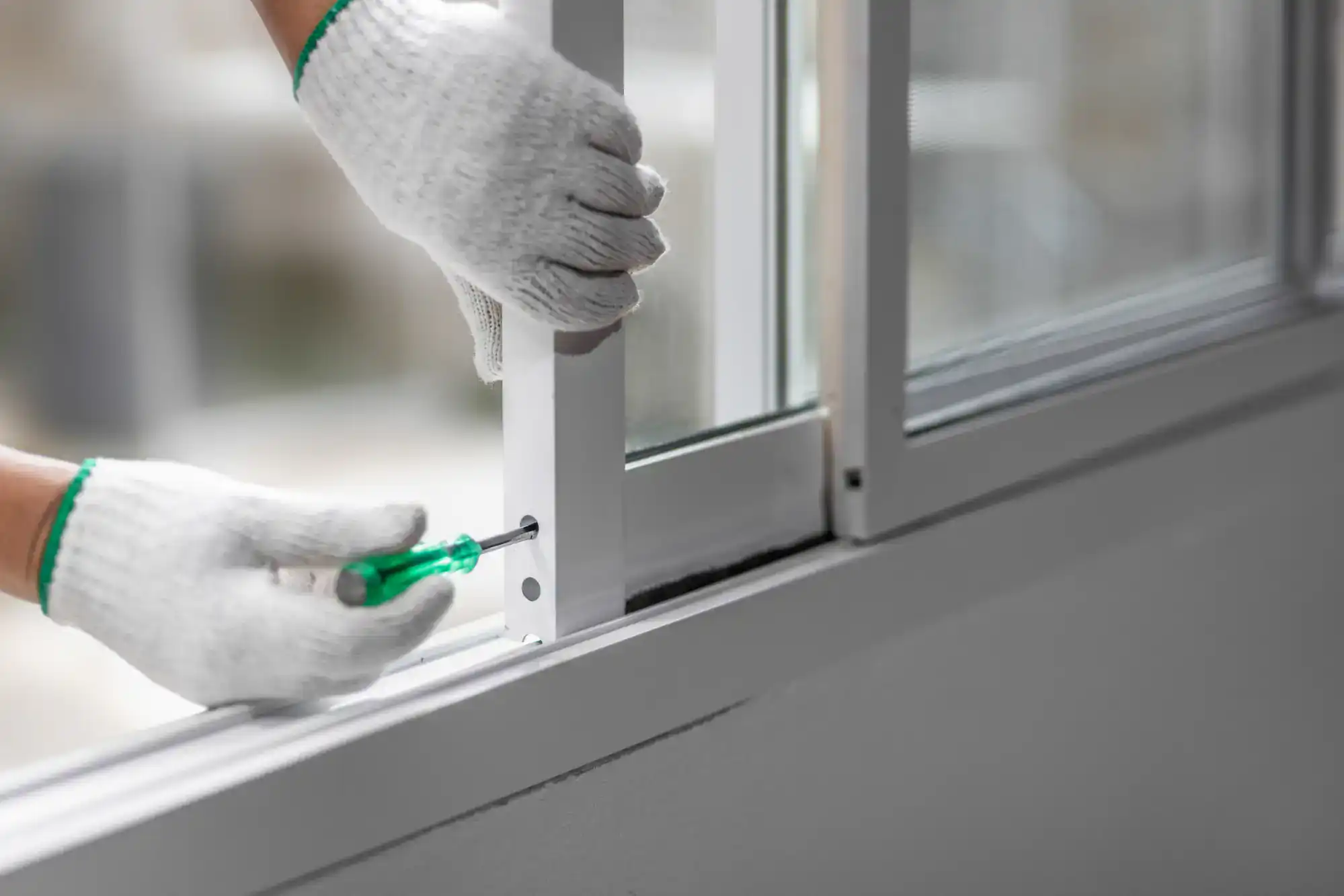
On installation day, our professional crew arrives on time and gets to work. A typical crew can install 8 to 12 insert replacement windows in a single day, which means most Germantown homes are done in one visit. We clean up before we leave. If the installation reveals adjacent trim damage, rotted framing, or drywall that needs attention common in homes built 30 to 50 years ago we can handle that too, since we’re a full-service general contractor, not a window-only shop.

Ready to get started?
Window replacement in Germantown covers a lot of ground depending on your home’s age, style, and condition. The most common project involves double-hung window replacement the standard style found throughout Germantown’s six villages using vinyl frames with insulated glass packages that meet Montgomery County’s 2021 IECC energy code requirements for U-factor and solar heat gain coefficient.
Vinyl covers roughly 70 percent of all U.S. window replacements for good reason: it’s durable, low-maintenance, and performs well in Maryland’s dual-season climate.
For homeowners focused on energy performance, ENERGY STAR Most Efficient certified windows are the right call. These qualify for the federal Section 25C tax credit 30 percent of material costs, up to $600 per year through 2032 and deliver measurable reductions in heating and cooling costs year-round. Low-E glass coatings and argon gas fills are standard features in this category, and they matter more in Germantown’s climate than in drier regions where thermal stress is one-directional.
What sets us apart from window-only specialists is the full-service scope. Older homes in Germantown often have wood framing around the rough opening that has absorbed decades of moisture. When that’s discovered during installation, a window-only contractor has to stop and refer you elsewhere. We handle the carpentry, the trim repair, the painting whatever the project needs to be complete. One contractor, one schedule, one point of contact.
For most window replacement projects in Germantown, the answer is no but it depends on what type of replacement you’re doing. Montgomery County’s Department of Permitting Services generally does not require a permit for insert replacement, which is when a new window is installed into the existing rough opening without changing the size or structural framing. This is the most common type of window replacement and the least disruptive for homeowners.
If you’re changing the size of the rough opening making a window larger or smaller that does require a building permit because it involves structural modification. The same applies if you’re converting a basement space to a bedroom and need a code-compliant egress window, which has specific size, sill height, and window well requirements under the 2021 International Residential Code that Montgomery County currently enforces. We’re familiar with the Montgomery County DPS process and can walk you through what your specific project requires before any work begins.
The clearest sign is fogged or hazy glass between the panes. That’s a failed seal the insulating gas between the glass layers has escaped, and the window can no longer perform at its rated efficiency. You cannot repair a failed seal; the entire window unit needs to be replaced.
If your Germantown home was built during the village development boom between 1970 and 1999, and you’ve never replaced the original windows, there’s a reasonable chance some are at or past the end of their useful life.
Other signs to look for: windows that are difficult to open or close, visible deterioration or rot in the frame, condensation forming on the interior glass surface during cold weather, or a noticeable draft when you hold your hand near the frame on a windy day. Single-pane glass common in the earliest Germantown builds simply cannot be upgraded to modern energy performance through repair. In those cases, replacement is the only path to meaningful efficiency improvement. A straightforward in-home assessment will tell you which windows are worth repairing and which ones are past that point.
For Germantown specifically, you’re dealing with two distinct seasonal challenges: summer heat and humidity driving solar heat gain through south- and west-facing windows, and cold winter temperatures causing heat loss through air infiltration and conduction. The window that handles both well is a double-pane unit with a Low-E glass coating and argon gas fill, installed in a vinyl or fiberglass frame.
Low-E coatings work by reflecting infrared radiation keeping heat out in summer and keeping it inside in winter without significantly reducing natural light. Argon gas between the panes slows heat transfer better than air does. Together, these features address Germantown’s dual-season energy drain more effectively than standard double-pane glass alone.
For maximum performance, look for windows with ENERGY STAR certification and NFRC ratings that meet or exceed Montgomery County’s 2021 IECC requirements. These also qualify for the federal Section 25C tax credit, which is worth up to $600 per year on qualifying material costs through 2032.
Yes, but you’ll want to check your HOA’s architectural guidelines before selecting a window style or frame color. In Germantown, where row houses and attached homes make up over 40 percent of the housing stock, many communities have exterior appearance standards that govern what replacement windows can look like from the street particularly frame color, grid pattern, and whether the window style needs to match the rest of the row.
The good news is that most HOA requirements in Germantown’s villages are compatible with standard vinyl double-hung replacement windows in white or beige frames, which are also the most energy-efficient and cost-effective options. If your HOA requires specific approval before exterior work begins, that process typically involves submitting a product spec sheet and a photo of the existing windows. We’ve worked throughout communities in Montgomery County and can advise on compliant options before you commit to a product. Getting that right upfront saves time and avoids the frustration of having to redo a submission.
For most Germantown homes, window replacement is a one-day project. Our professional crew can install 8 to 12 insert replacement windows in a single workday, which covers the typical 3 to 4 bedroom home found throughout Germantown’s villages. You don’t need to vacate the house, and the work doesn’t require tearing out walls or major construction.
Each window takes roughly 45 to 60 minutes to install using the insert method the old sash and hardware are removed, the new window unit is set into the existing frame, sealed, and secured. The crew works room by room and cleans up as they go. If your home has windows on upper floors or in tight configurations, that can add some time, but it doesn’t change the overall scope significantly.
Where things can get more involved is when the installation reveals deteriorated framing or trim that needs attention which is more common in Germantown’s older village homes. We handle that work directly rather than leaving it for you to coordinate separately, so the project stays on track and on schedule.
The financial case doesn’t depend on selling. The 2025 Zonda Cost vs. Value Report puts vinyl window replacement at a 67 to 76 percent return at resale but that’s only part of the picture for a homeowner planning to stay put.
The more immediate return comes from reduced utility costs and improved comfort, which you start experiencing the first winter after installation. For a Germantown homeowner who’s been in their home since the 1980s or 90s and is still running original windows, the monthly energy savings alone averaging around $42.50 per month based on 2025 survey data add up to real money over time.
Add the federal tax credit of up to $600 per year on qualifying materials, and the out-of-pocket cost of the project comes down meaningfully in year one. Beyond the numbers, there’s the comfort factor: no more cold spots in January, no more overheated upstairs in August, windows that open and close the way they’re supposed to. For a home you’ve lived in for decades and plan to keep, that quality-of-life improvement is worth accounting for alongside the financial return.
Other Services we provide in Germantown