A kitchen remodel is a big move. Before you swing that first sledgehammer in Montgomery County, here's what experienced contractors wish every homeowner knew.
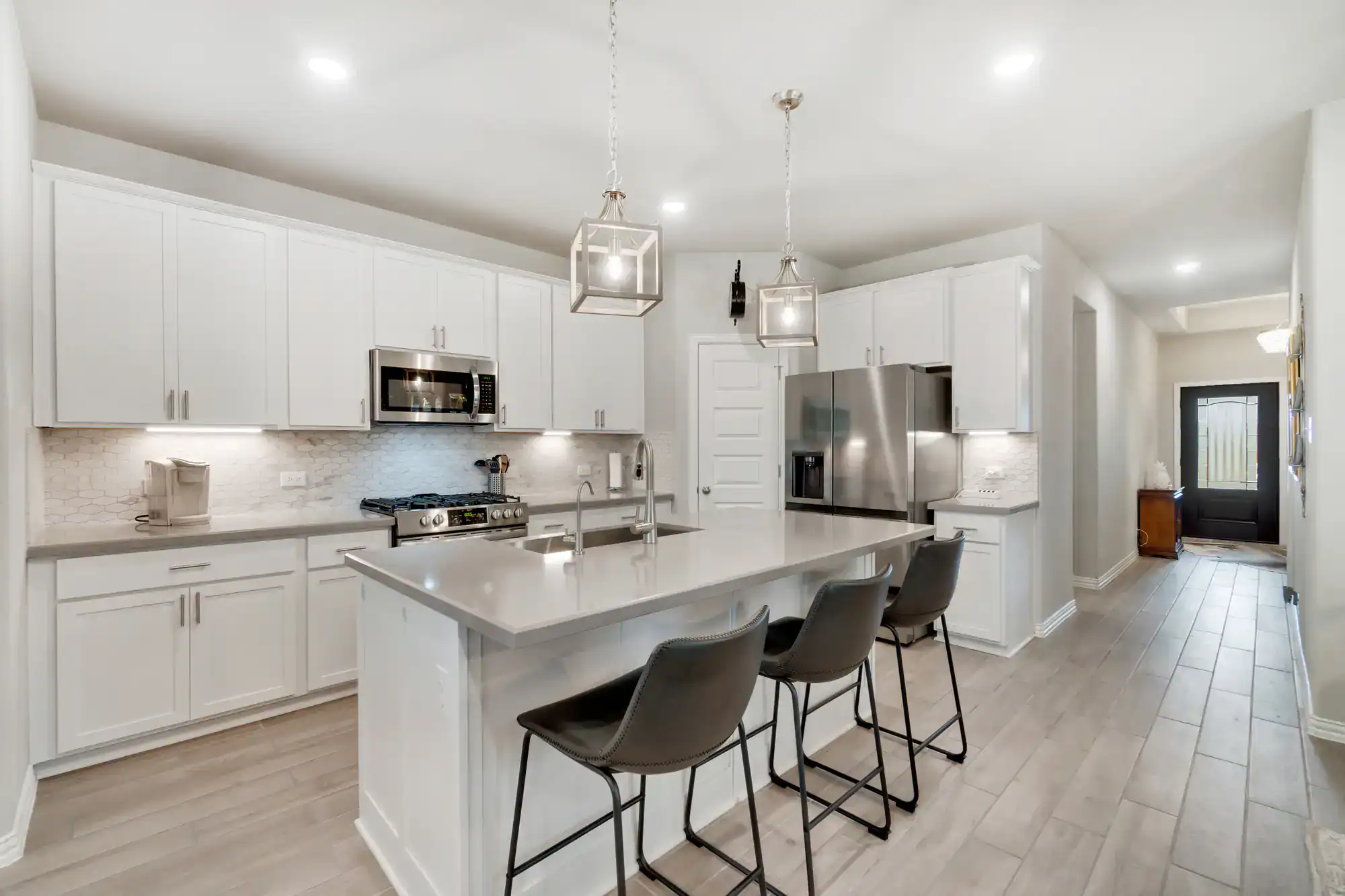
You’ve been thinking about this kitchen for a while. Maybe the layout hasn’t worked since you moved in. Maybe the cabinets are finally beyond saving. Maybe you’re just done cooking in a space that feels like it belongs to someone else’s house from 1987.
Whatever got you here, you’re now at the stage where remodeling feels real — and that’s exactly when the questions start piling up. What will it actually cost? How long will you be without a functional kitchen? What happens if something unexpected turns up behind the walls?
Those are the right questions. Here’s what you need to know before the demo crew shows up.
A kitchen remodel isn’t a single event — it’s a sequence of decisions, trades, and timelines that have to line up correctly or the whole thing stalls. In Montgomery County, that sequence typically starts weeks before anyone picks up a tool.
The design and planning phase alone usually takes three to six weeks. That’s the time you spend finalizing the layout, selecting materials, confirming measurements, and locking in the scope of work with your contractor. Once that’s done, permits enter the picture — and in Montgomery County, permits are not optional for most kitchen work.

Yes — for most of the work that actually matters. Montgomery County’s Department of Permitting Services requires permits for any electrical, plumbing, HVAC, or structural changes made during a kitchen remodel. That covers a lot of ground: upgrading your electrical panel, moving a gas line, relocating a sink, opening up a wall.
If your remodel touches any of those systems — and most meaningful kitchen remodels do — a permit is required by law. The work that doesn’t require a permit is largely cosmetic: painting, replacing countertops without structural changes, installing new flooring when no structural work is involved. So if you’re doing a full kitchen overhaul, you’re almost certainly in permit territory.
This matters for a few reasons. The most immediate one is accountability — permitted work gets inspected, which means someone with authority is verifying that the electrical and plumbing were done correctly. The less obvious reason is what happens when you sell. Unpermitted work can surface during a home inspection and create real problems at closing. In Montgomery County, where homes routinely sell in the $500,000-plus range, that’s not a risk worth taking to save a few weeks.
The good news is that Montgomery County’s permitting process is more manageable than most people expect. The Department of Permitting Services is committed to completing code reviews within 17 days for adequate submissions, and their Fast Track program can turn around a permit in as little as three to five days for qualifying projects. The key is working with a contractor who knows how to submit a complete application the first time — incomplete submissions restart the clock.
Any contractor you hire should be pulling the required permits as a matter of course. If they suggest skipping permits to speed things up or keep costs down, that’s a signal worth paying attention to.
Here’s the thing about older homes in Montgomery County: what’s behind the walls is often a surprise. Homes built in the 1950s, 1960s, and 1970s — which are common throughout Bethesda, Chevy Chase, Silver Spring, and Kensington — were built to the standards of their era. That means you might find outdated wiring, galvanized pipes, non-standard framing, or other conditions that weren’t visible during the estimate.
This is where the difference between an experienced contractor and an inexperienced one becomes very real, very fast. A contractor who hasn’t seen this before may either panic, use the discovery as justification for a dramatically higher bill, or both. A contractor who has been doing this work for decades has a different reaction — they’ve seen it before, they know how to handle it, and they communicate with you clearly about what it means and what it costs.
The question to ask any contractor before you hire them isn’t just “what does this cost?” It’s “what happens if you find something unexpected during demo?” The answer tells you a lot about how the rest of the project will go.
One thing our customers consistently mention in their reviews is that the final bill matched the estimate — even when the project involved complex work or older homes with a few surprises along the way. That doesn’t happen by accident. It happens because the estimate was thorough, the scope was clearly defined, and any changes were communicated before they were made. When you’re planning a kitchen remodel in a home that’s been around for forty or fifty years, that kind of predictability is worth more than a low opening number.
We’ve been doing this work since 1973 — which means we’ve remodeled kitchens in just about every era of Montgomery County housing. The surprises aren’t surprises to us anymore.
Want live answers?
Connect with a Optima Design Group expert for fast, friendly support.
There’s no shortage of contractors in the DC metro area willing to give you a quote. The harder part is figuring out which ones are actually worth hiring — and which ones look good on paper but fall apart mid-project.
In Maryland, the starting point is simple: any contractor performing home improvement work valued over $500 is required by law to hold a Maryland Home Improvement Commission license, known as an MHIC license. You can verify a license number directly on the Maryland Department of Labor website. It takes about two minutes. If a contractor can’t give you their MHIC number, that’s your answer.

The estimate conversation is one of the most useful tools you have. The way a contractor handles that meeting tells you a lot about how they’ll handle the project itself.
Ask them to walk you through the estimate line by line. A contractor who can explain every item — labor, materials, demolition, disposal, subcontracted work — is a contractor who has thought through your project carefully. One who gets vague or defensive when you ask questions is showing you something important.
Ask specifically about what happens if something unexpected comes up during demo. What’s the process for communicating that to you? How are change orders handled? Is anything in writing? These aren’t adversarial questions — they’re the questions any experienced contractor expects and welcomes, because they’ve seen what happens when those conversations don’t happen upfront.
Ask whether they’ll be pulling all required permits. Ask who will actually be on-site during the project, and whether the same crew will be there from start to finish. In our experience, the homeowners who are happiest at the end of a kitchen remodel are the ones who had consistent communication throughout — not just at the estimate and at the final walkthrough, but every day in between.
It’s also worth asking how they handle the full scope of finish work. A kitchen remodel that ends with new cabinets and countertops but mismatched paint on the walls, or flooring that wasn’t quite finished around the edges, isn’t really done. The best remodels are ones where every trade — carpentry, tile, painting, flooring — was coordinated from the beginning, not patched together at the end.
If you’ve lived in the DC metro area for any length of time, you’ve probably heard of Washington D.C. Consumers’ Checkbook. It’s a nonprofit consumer advocacy organization — meaning it doesn’t accept advertising, doesn’t take referral fees, and isn’t in the business of promoting anyone. It surveys actual customers and publishes the results.
For contractors, a strong Consumers’ Checkbook rating is one of the harder things to fake. You can’t buy your way onto the list. You earn it by doing good work for real people who then take the time to recommend you.
We’ve earned over 300 recommendations on Washington D.C. Consumers’ Checkbook — a number that reflects five decades of work across Bethesda, Potomac, Gaithersburg, Kensington, North Bethesda, and communities throughout Montgomery County and the broader DC area. One of the things those reviews mention repeatedly is something that sounds simple but is genuinely rare in this industry: the final bill matched the estimate. Not approximately. Not “within a reasonable range.” It matched.
That’s the result of a process that starts with an honest, thorough estimate — one that Gordon Franks, our founder and owner, handles personally for every project. Gordon has been doing this work since 1973, when he started the company while attending the University of Maryland. He still provides every estimate himself, which means the person who tells you what a project will cost is the same person accountable for the outcome.
If you’re comparing contractors for a kitchen remodel in Montgomery County, Consumers’ Checkbook is a good place to start your research. So is asking any contractor you’re considering for their MHIC license number and their DC and Virginia license numbers if they work across the tri-state area. Ours are on our website — MHIC #28145 for Maryland, #39937921 for DC, and #2705077763 for Virginia — because we think homeowners should be able to verify who they’re hiring before anyone sets foot in their kitchen.
A kitchen remodel is one of the more significant projects you’ll take on as a homeowner — and in Montgomery County, where homes are older and the permitting process has its own specific requirements, the details matter more than most people realize going in.
The five things worth knowing before demo starts come down to this: understand the permit requirements, ask the right questions before you sign anything, know who will actually be on-site and accountable, make sure the estimate is detailed enough to hold up, and hire someone with enough experience to handle what’s behind your walls — not just what’s in front of them.
If you’re at the point where you’re ready to talk through what a kitchen remodel would actually look like for your home, reach out to Optima Design Group. We’ve been doing this work in Montgomery County and the surrounding area for over 50 years, and we’re glad to walk you through the process from the first conversation forward.
Summary:
Article details:
Share: