If your windows are 20-plus years old, they may be costing you more than you realize. Here's what Montgomery County homeowners need to know before replacing them.

There’s a particular kind of frustration that comes with a home that’s hard to keep comfortable. The heat runs longer than it should. The upstairs bedroom feels drafty in January. You wipe condensation off the glass and notice it’s actually coming from inside the panes — not outside. If any of that sounds familiar, your windows are probably overdue.
Montgomery County’s housing stock is full of homes built between the 1940s and 1970s — beautiful, well-kept properties in neighborhoods like Chevy Chase, Kensington, Potomac, and Rockville that were never designed for today’s energy costs. Here’s what you need to know before you start making calls.
Not every window problem is a replacement problem. A broken latch, a damaged screen, or a drafty gap around the frame can sometimes be addressed without pulling the whole unit. But there are a few signs that point clearly toward replacement rather than repair.
Failed seals are the most common. If you have double-pane windows and you can see fog, haze, or moisture trapped between the panes, the insulating seal has broken down. There’s no fix for that — the unit needs to come out. Similarly, if your frames are visibly warped, soft to the touch, or showing signs of rot, caulk and weatherstripping won’t solve the underlying problem.
Operational failure matters too. Windows that are painted shut, won’t lock properly, or require significant force to open and close aren’t just inconvenient — in a bedroom, they’re a safety issue. And if you’re noticing outside noise more than you used to, that’s often a sign the insulating layer between panes has degraded.

Maryland’s climate is genuinely hard on windows. Montgomery County sits in a transitional zone — hot, humid summers where temperatures push into the upper 80s, followed by cold winters where overnight lows regularly drop into the 20s. That swing, repeated year after year, puts real stress on window seals, frames, and glazing.
Wood frames absorb moisture during the county’s humid summers and contract during dry winter months. Over time, that cycling causes warping, cracking, and eventually rot — especially in homes that don’t have adequate exterior paint protection. It’s one reason we often find, when we start a window replacement project in an older Bethesda or Silver Spring home, that the surrounding trim needs attention too.
Double-pane windows are particularly vulnerable to seal failure in this climate. The argon or krypton gas fill that provides insulation between the panes gradually escapes as seals age, and thermal cycling speeds that process up. Once the gas is gone, you’re left with an air gap that conducts heat and cold far more efficiently than the original sealed unit — which means your HVAC system works harder and your utility bills reflect it.
The U.S. Department of Energy estimates that replacing older single-pane windows can save homeowners between $126 and $465 per year on energy costs. In a Montgomery County home served by BGE or Pepco, where summer cooling loads and winter heating bills are both significant, that range is very real. It’s not a marketing number — it’s a function of how much energy older windows allow to escape and how much your system has to compensate.
There’s also the question of solar heat gain. Maryland summers are intense, and windows with outdated glazing allow radiant heat to pass through freely. Modern windows with Low-E coatings and appropriate Solar Heat Gain Coefficient ratings can significantly reduce the cooling load on a home — which matters a lot if your upstairs rooms are noticeably hotter than the rest of the house during July and August.
ENERGY STAR is a certification program run by the EPA, and it means something specific — it’s not just a sticker manufacturers put on products to make them sound efficient. To qualify, a window has to meet independently verified performance thresholds for U-factor (how much heat passes through the glass) and Solar Heat Gain Coefficient (how much solar radiation enters the home). Those ratings are tested and certified by the National Fenestration Rating Council, which is the independent body that sets the standard.
For Maryland, which falls in the North-Central climate zone, ENERGY STAR windows must meet specific U-factor and SHGC thresholds that account for both heating and cooling demands. A window that qualifies in Florida won’t necessarily qualify in Maryland — the requirements differ by region, which is why it matters to work with someone who understands what the certification actually requires here.
Why does this matter beyond performance? Because ENERGY STAR certified replacement windows qualify for the federal Section 25C tax credit under the Inflation Reduction Act. As of 2025, that credit covers up to 30% of qualifying costs, capped at $600 for windows per tax year. That’s not a loan or a rebate you have to apply for separately — it’s a credit that comes directly off your federal tax bill. Montgomery County homeowners can also access the BeSMART Home Loan Program, which covers ENERGY STAR certified window and door replacements and allows you to spread the cost over time while your energy savings start immediately.
In a 2022 survey of homeowners, 91.7% said ENERGY STAR certification was important to them when selecting windows. That tracks with what we see in practice — buyers in Montgomery County are research-driven and skeptical of vague quality claims. The certification gives you something concrete to point to, and the NFRC label on every certified window gives you the actual performance numbers so you can compare products across brands rather than relying on marketing language.
One thing worth knowing: the tax credit applies per tax year, so if you’re replacing a large number of windows, there may be a strategic reason to phase the project across two calendar years depending on your situation. That’s worth a conversation with your tax advisor before you finalize scope.
Want live answers?
Connect with a Optima Design Group expert for fast, friendly support.
This doesn’t get said enough in the window industry, but it’s true: a premium window installed incorrectly will underperform a mid-grade window installed well. The product is only half the equation. How it goes in — how the old unit is removed, how the frame is inspected and prepared, how the new unit is sealed and finished — determines whether you get 25 years of performance or 25 months of problems.
In older Montgomery County homes, this is especially important. Houses built in the 1950s and 1960s have often settled over the decades, and frames that look square from the outside may not be. A contractor who doesn’t assess the rough opening carefully before ordering windows can end up with units that don’t fit correctly — or worse, units that fit but aren’t properly sealed against air and water infiltration.
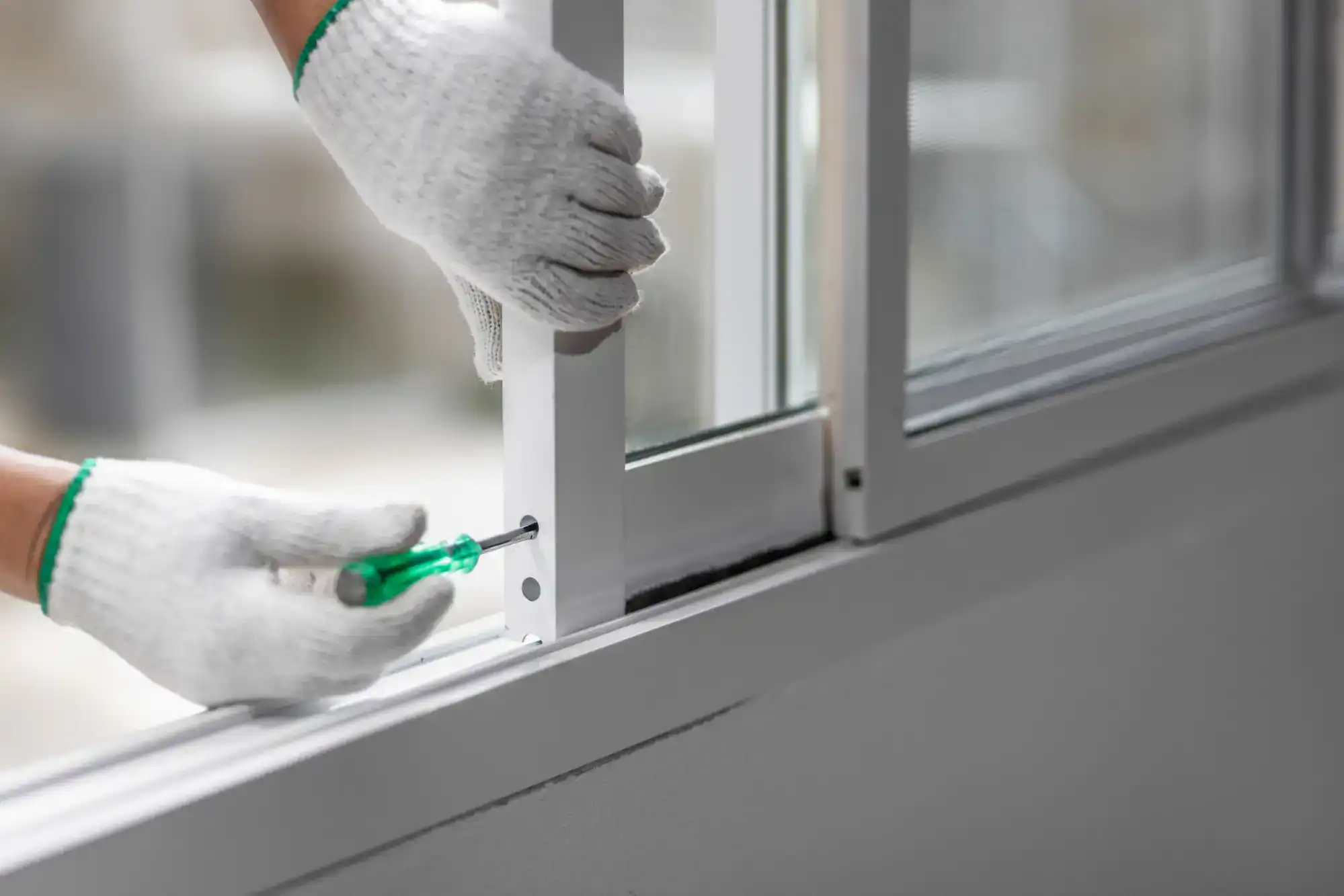
There are a few things that separate a contractor worth hiring from one who will leave you chasing callbacks six months later. The first is accountability — specifically, whether you know who is actually showing up to do the work. National chains frequently use subcontractors for installation, which creates a gap in accountability. If something goes wrong, you’re dealing with two parties who each believe the problem is the other one’s responsibility.
A locally owned contractor with a stable, named crew doesn’t have that problem. When we do a window replacement project, the same people who give you the estimate are connected to the team doing the installation. That matters when you’re talking about work that affects the weatherproofing and structural integrity of your home.
Licensing is non-negotiable. In Maryland, any contractor performing home improvement work must hold a valid Maryland Home Improvement Commission (MHIC) license. Ask for it before anyone starts work. A reputable contractor will provide proof of licensing and insurance without hesitation — it’s a basic expectation, not a special request.
Look at the review profile carefully, and not just the star rating. Volume matters. A contractor with 300 verified reviews spanning 10 or more years tells a different story than one with 40 reviews from the past 18 months. Pay attention to whether reviewers mention specific crew members by name — that’s a reliable indicator of a stable workforce and personal accountability, not a revolving door of subcontractors. Also look for reviews that describe how the contractor handled a problem, not just how things went when everything was smooth. That’s where you learn the most.
We’ve been working in Montgomery County and the broader DC metro area for over 50 years. We’re based in Bethesda — not a regional call center, not a franchise operation. Washington Consumers’ Checkbook, which is an independent, subscription-funded consumer organization that Montgomery County homeowners have trusted for decades, has rated us the #1 home improvement contractor in the DC area. Our reviewers name our crew members specifically — Antonio, Edgar, Victor, Jose — because they show up consistently and do the work themselves. That kind of track record doesn’t happen by accident.
Window replacement rarely happens in a vacuum. When we pull an old window out of a 1960s colonial in Rockville or a Tudor in Bethesda, we often find things that need attention — trim that’s soft from moisture, exterior paint that’s peeling around the frame, or interior drywall that shows evidence of long-term water infiltration. None of that is unusual in homes of that age, but it does mean the project scope can expand once work begins.
This is one of the practical advantages of working with a full-service general contractor rather than a window-only company. If we open up a wall during a window replacement and find rot in the framing, we can address it. If the exterior trim around your new windows needs to be repainted to match, we handle that too. If the project reveals that your bathroom window — the one that’s been painted shut for 15 years — is actually a code-required egress window that needs to be functional, we can assess and replace it as part of the same project visit.
Beyond what gets discovered during installation, there’s also the natural momentum of a home improvement project. Homeowners who replace their windows often find themselves looking at the rest of the exterior with fresh eyes. The deck boards that have been on the list for two years. The kitchen that feels dated compared to the new windows in the breakfast nook. The interior painting that would make the whole renovation feel complete. We do all of it — painting, deck repair, kitchen remodeling, bathroom remodeling, flooring — which means you’re not starting over with a new contractor every time you’re ready for the next project.
For Montgomery County homeowners who want to work with one trusted team over time rather than managing a roster of vendors, that continuity has real value. Several of our customers have been working with us for over a decade across multiple major projects. That kind of relationship is built on consistent results — and it starts with the first job going the way it should.
If your windows are showing signs of seal failure, operational problems, or visible frame damage, the cost of waiting is real — both in energy dollars and in the compounding damage that moisture and drafts cause over time. The good news is that between federal tax credits, Maryland financing programs, and long-term energy savings, the financial picture for replacement is better than most homeowners expect going in.
The most important decision you’ll make isn’t which window brand to buy — it’s who installs them. Get quotes from contractors who can show you their MHIC license, explain the NFRC ratings on the windows they’re recommending, and give you a detailed breakdown of what the work actually involves. Ask how they handle older homes. Ask who specifically will be on-site.
If you’re in Montgomery County and want to talk through your situation with a team that’s been doing this work in these neighborhoods for over 50 years, reach out to Optima Design Group. We’ll take a look at what you’re dealing with and give you a straight answer about what makes sense.
Summary:

Article details:
Share: