The design world has shifted toward warm, natural interiors — and Montgomery County homes are a perfect fit. Here's what's trending and why it works.
You’ve probably seen it on Houzz or a neighbor’s recent renovation — something warmer, richer, more grounded than the cool grays and stark whites that dominated interiors for the past decade. Maybe you’ve been scrolling inspiration photos for months, saving images of walnut floors, terracotta walls, and rooms that feel genuinely cozy rather than clinically clean.
It’s a fair question to wonder whether this is actually the direction things are going, or just another trend that’ll look dated in three years. Here’s what we’re seeing on the ground in Montgomery County homes — and what it means for yours.
The clearest signal came from Pantone, which named Mocha Mousse — a warm, chocolatey brown — as its 2025 Color of the Year. That choice reflected something we’ve already been noticing in our work across Montgomery County: homeowners are moving away from the cool, minimal palette that defined interiors through the late 2010s and into something warmer, more textured, and more personal.
Earth tones are leading the shift. Terracotta, ochre, olive green, clay pink, and deep mocha are replacing the cool grays and bright whites that once felt safe and modern. Alongside the color change, natural materials — walnut, white oak, travertine, quartzite, linen, wool — are taking center stage in kitchens, living rooms, and bathrooms alike.
The overall direction has a name in design circles: Organic Modern. Think warm neutrals, natural wood grain, curved edges, and rooms that feel considered without feeling fussy.

Here’s the objection we hear most often: “I don’t want to spend money on something that’ll look dated in five years.” It’s a completely reasonable concern, especially if you lived through the all-white kitchen phase or spent money on cool gray walls that now feel tired.
The difference with this shift is that warm earth tones and natural materials aren’t new. They’re a return. Terracotta, walnut, linen, stone — these have been design staples across centuries and cultures. What’s actually new is the cool-gray minimalist era that preceded this moment. That was the trend. The warm, organic palette we’re moving into now is closer to a correction than a fad.
A walnut floor refinished to a warm, medium tone doesn’t read as “2025 design.” It reads as a well-maintained home with good bones. A limewash finish on a dining room wall adds texture and depth that photographs well and ages gracefully. These are choices that tend to feel more and more right as a home settles into them.
There’s also something worth acknowledging about how Montgomery County residents actually live. Winters here are gray and cold, and most households spend a significant portion of the year indoors. The appeal of a warm, nature-connected interior isn’t just aesthetic — it’s psychological. Rooms built around warm tones and natural materials consistently feel more calming and restorative than their cooler counterparts.
The Japandi movement — a blend of Japanese minimalism and Scandinavian functionality — has been building for a few years now and shows no sign of fading. It emphasizes exactly these qualities: warm beiges, muted earth tones, natural woods, and a quiet sense of calm. In a market like Montgomery County, where homeowners are educated, design-aware, and have often traveled enough to know what thoughtful interiors look and feel like, it resonates.
The inspiration is easy to find. The translation — from a beautiful room on a design website to a specific decision about your 1978 colonial in Kensington — is harder.
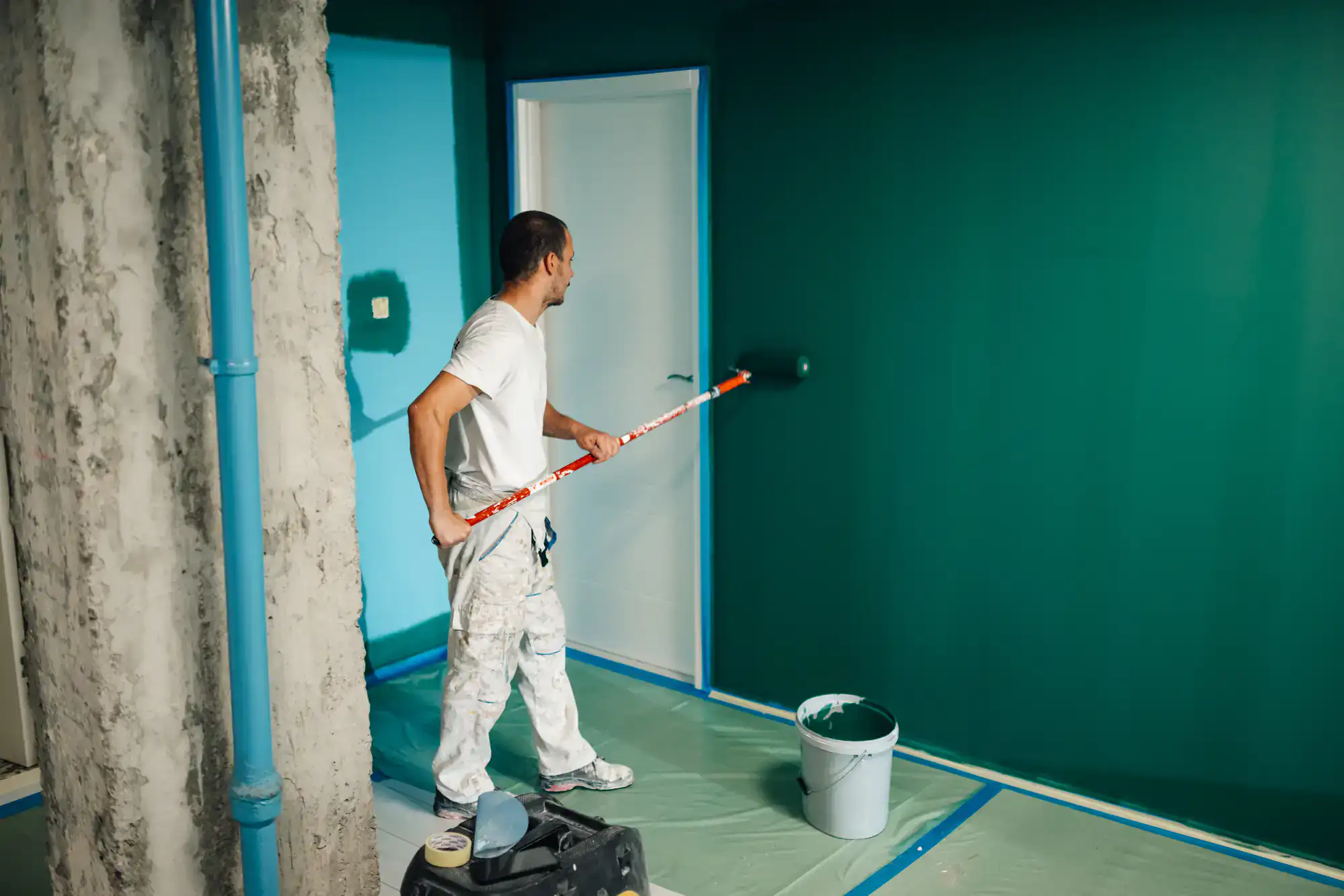
The good news is that you don’t need a full renovation to feel the difference. Interior painting is the single highest-leverage change most homes can make. The right warm color on the right walls — a soft mocha in a living room, a muted terracotta in a dining space, a warm cream in a hallway — can shift the entire emotional character of a home in a weekend.
The complexity is in the color selection itself: getting the undertones right for your home’s natural light, existing trim color, and flooring. That’s where a proper color consultation makes all the difference. It’s not just picking a paint chip you like — it’s understanding how that color will behave in your specific space at different times of day. We offer color consulting as part of our process for exactly this reason. Homeowners who skip this step often end up with a color they loved on the card but don’t love on the wall.
For homeowners ready to go further, hardwood flooring is the natural next step. Many Montgomery County homes built between the 1950s and 1980s have original hardwood floors under their carpeting — sometimes in excellent condition, waiting to be refinished. A warm walnut stain on those floors does more for the feel of a home than almost any other single change. Paired with warm walls, the effect is transformative.
Kitchen and bathroom updates follow a similar logic. Warm cabinetry in walnut or white oak, natural stone countertops in quartzite or travertine, hardware in brushed brass or oil-rubbed bronze — these are the material choices that align with where design is right now and that photograph well for resale. With Montgomery County’s median home sale price sitting at $630,000 as of late 2025, the investment case for a well-executed kitchen refresh is real.
Want live answers?
Connect with a Optima Design Group expert for fast, friendly support.
There’s something specific about the housing stock in this county that makes the warm and natural trend a particularly natural fit. A significant share of homes in Bethesda, Chevy Chase, Rockville, and Kensington were built between the 1950s and 1990s — colonials, split-levels, craftsman bungalows, and ranchers with classic proportions, solid wood trim, and the kind of architectural bones that respond beautifully to warm, organic updates.
These homes weren’t designed for the cool-gray era. They were designed for exactly the kind of warm, material-rich interiors that are trending now. When you refinish the original hardwood floors, warm up the walls, and update the kitchen with natural stone and wood-toned cabinetry, you’re not fighting the architecture — you’re working with it.

**Will warm colors make my rooms feel smaller?**
This is one of the most common concerns, and it’s based on a half-truth. Dark, saturated colors can make a space feel more enclosed — but warm earth tones in the right value range do the opposite. A soft terracotta or warm cream reads as inviting and expansive, not heavy. In many Montgomery County homes — particularly the colonials and ranchers with good natural light from large windows — warm colors open up beautifully. The key is choosing the right shade for your specific room, which depends on ceiling height, natural light, and what you’re working with on the floors and trim.
**Are natural materials hard to maintain?**
Not as much as people assume. Hardwood floors can be refinished multiple times over the life of a home, which means a floor installed in a Chevy Chase colonial in the 1960s can look current again today with the right refinishing treatment. Natural stone develops a patina over time that adds character rather than looking worn. Linen and wool textiles are durable and age gracefully. These materials have lasted in Montgomery County homes for generations because they’re built to last.
**Does following a trend mean my home will look like everyone else’s?**
No — and this is worth saying clearly. Warm earth tones and natural materials are a palette and a direction, not a single prescribed look. Walnut floors in a mid-century split-level in Rockville look completely different from walnut floors in a Potomac estate. The trend gives you a starting point; your home’s architecture, light, and layout determine the outcome. The goal is a home that feels current and personal, not a showroom replica of something you saw online.
Knowing what you want is only half the equation. Who executes it determines whether the result looks polished or disappointing.
In Maryland, any contractor performing interior painting, flooring, kitchen or bathroom remodeling, or other residential home improvement work is required by law to hold an active MHIC license — issued by the Maryland Home Improvement Commission. The license requires documented experience, is valid for two years, and is tied to general liability insurance and bonding requirements. Montgomery County’s Office of Consumer Protection specifically advises homeowners to verify MHIC status before signing any contract.
Beyond licensing, the quality of any interior update comes down to preparation. In painting, this means proper scraping, sanding, caulking, and priming before a brush touches the wall. Contractors who skip prep to move faster produce results that look fine at first and start showing problems within a year. The same principle applies to flooring and remodeling work — the details in transitions, grout lines, and finishing work are where quality shows.
A few other things worth verifying before you hire anyone: Does the contractor carry proof of insurance readily and share it without hesitation? Does the estimate you receive match what you actually pay at the end? Is the owner personally involved in the work, or does a project manager hand things off to a rotating crew?
We’ve been working in Montgomery County homes since 1973 — through every design era, every trend cycle, and every type of project from a single-room paint job to a full kitchen reconstruction. We hold active licenses in Maryland, D.C., and Virginia, and Gordon personally supervises every crew we put on a job. That’s how we’ve earned more than 300 recommendations on D.C. Consumers’ Checkbook, which is the resource most Montgomery County homeowners rely on when they’re vetting contractors seriously.
The shift toward warm colors and natural materials isn’t a trend you need to chase — it’s a direction that makes genuine sense for the homes, the climate, and the way people actually live in Montgomery County. Whether your house is a 1960s colonial in Chevy Chase that’s ready for its original hardwood floors to see daylight again, or a newer home in Rockville that needs a warmer palette to feel like yours, the changes that matter most are often more accessible than homeowners expect.
The hard part isn’t knowing what you want. It’s finding someone who can translate that into a finished result that holds up — in quality, in durability, and over time. If you’re thinking about an interior refresh this year, we’d be glad to talk through what makes sense for your specific home. Reach out to Optima Design Group and let’s start there.
Summary:

Article details:
Share: