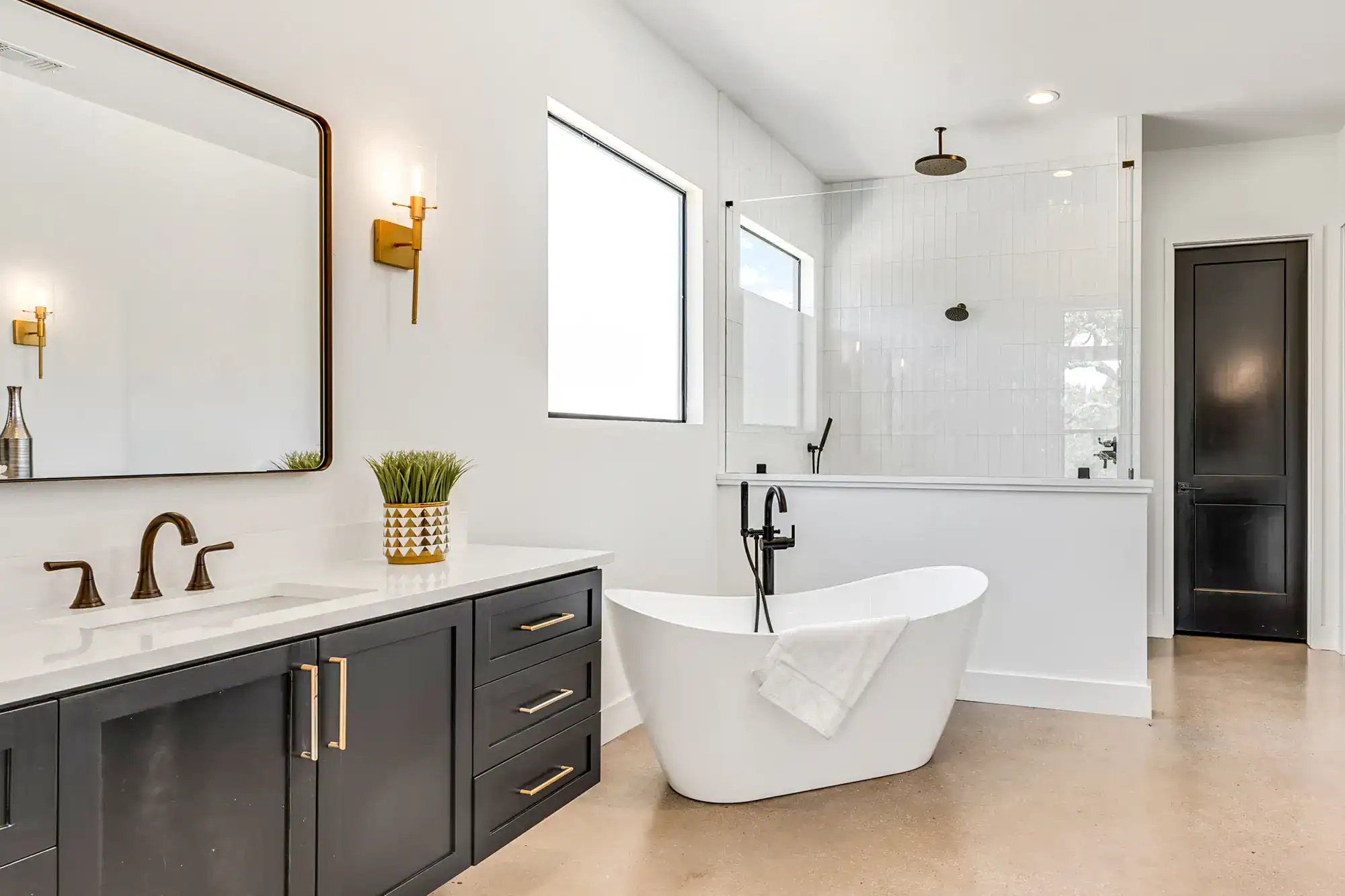
“
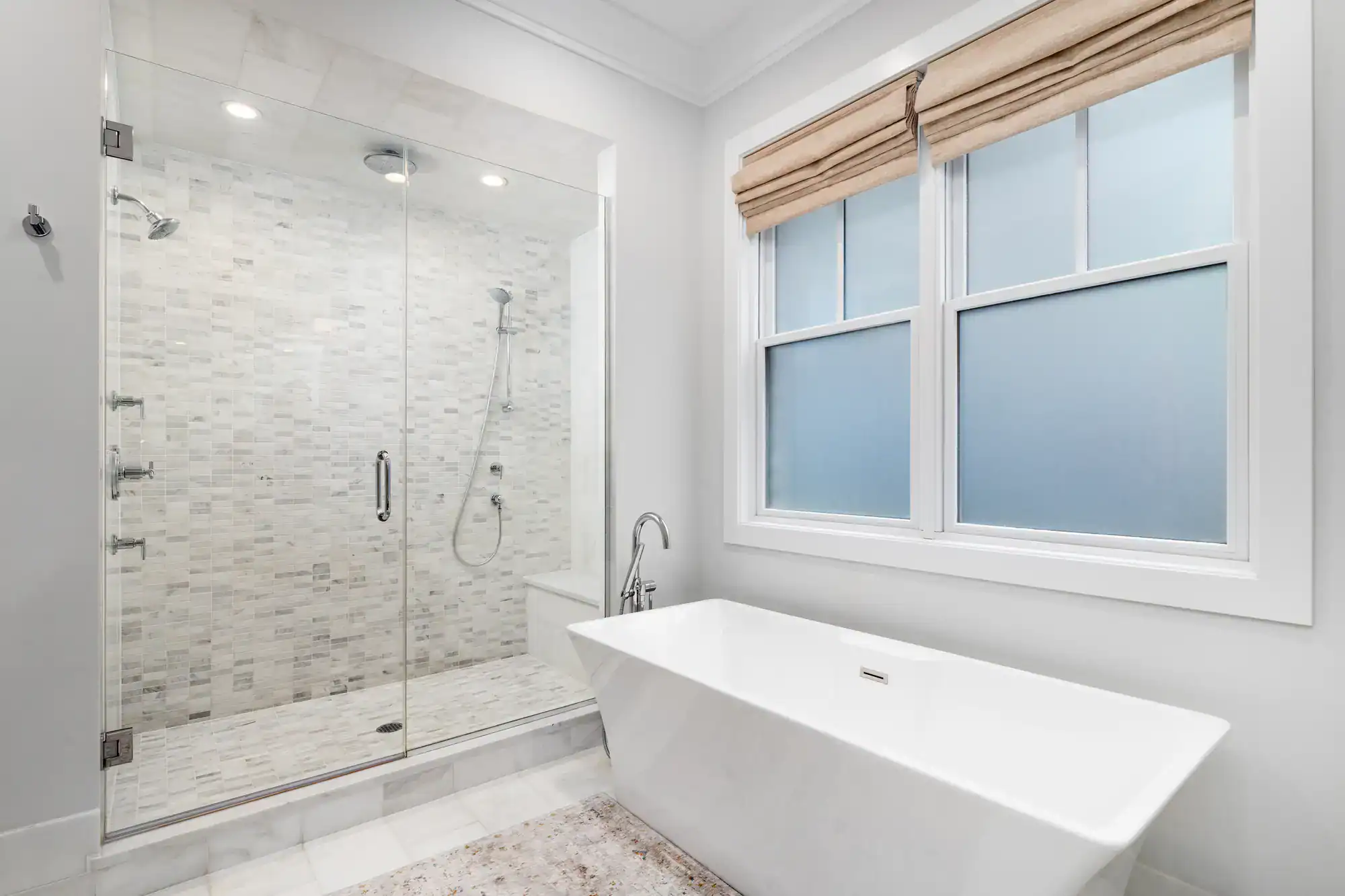
The most immediate thing you notice after a real bathroom remodel isn’t the new tile it’s that the space finally works the way you need it to. No more grout that won’t stay clean, no more caulk that’s been patched so many times it’s stopped doing its job, no more layout that made sense in 1985 but doesn’t fit how your household actually lives now.
For Derwood homeowners specifically, there’s a layer to this that goes beyond aesthetics. The DMV’s summer humidity regularly tops 70 to 80 percent from June through September, and in a bathroom where the original waterproofing membrane is 35 to 40 years old, that moisture doesn’t stay on the surface. It works its way into the wall cavity behind the tile, quietly doing damage that doesn’t announce itself until you’ve got a soft floor or a smell that won’t leave. A proper remodel addresses that at the foundation, not just the finish.
There’s also the financial side. Detached single-family homes in Derwood average over $700,000. Buyers priced out of Bethesda are actively shopping this area now, and a bathroom that looks and functions like the original build is a real liability in that market. A midrange bathroom remodel recoups approximately 80 percent of its cost at resale the highest return since 2007. In a neighborhood where home values are this high, that math matters.
Optima Design Group was founded in 1973 which means we were already working in Montgomery County when most of Derwood’s current neighborhoods were being built. Muncaster Manor, Mill Creek Towne, Needwood Estates, Candlewood Park we’ve been in and around these Derwood communities for decades. That’s not a marketing line. It means we understand the housing stock, the permit process, and what these homes actually need at this stage of their life.
We’re a full-service general contractor, which matters more than it might sound. When you hire us for a bathroom remodel in Derwood, the tile work, painting, carpentry, and fixture installation all stay under one roof. One team, one point of contact, one schedule. No coordinating between a tile sub and a plumber who’ve never spoken to each other.
We hold an active Maryland MHIC license (#28145), and we’re bonded and insured. Our completed projects span Rockville, Bethesda, Potomac, and McLean communities that Derwood homeowners will recognize as geographically and demographically close to their own.
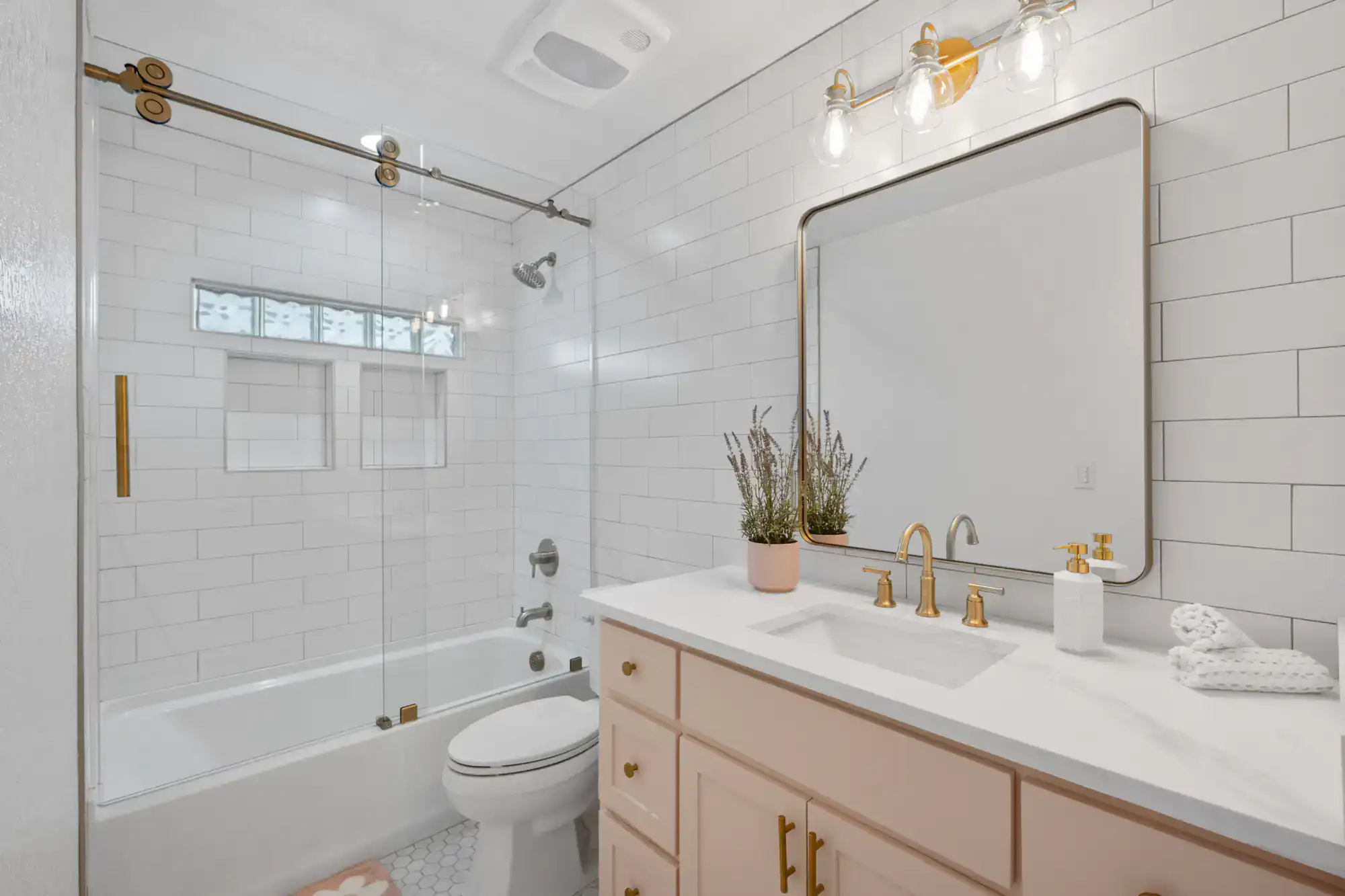
It starts with a conversation. We come to your Derwood home, look at the space, listen to what you want, and give you a clear written estimate before anything else happens. No vague ballpark, no pressure just a specific scope of work so you know what you’re agreeing to.
Once you’re ready to move forward, we handle the permit process through Montgomery County’s Department of Permitting Services. This is not optional in Derwood DPS requires permits for virtually all bathroom remodels, including plumbing and electrical work, and coordinates inspections with WSSC for any underground piping. We manage all of that. If you’re planning to sell your home down the road, unpermitted bathroom work creates real problems at closing, and we’re not going to put you in that position.
Construction typically runs three to eight weeks depending on the scope of the project, with smaller bathrooms often wrapping up faster. During that time, our crew shows up when they say they will, works a full day, and cleans up before they leave. You’ll know what’s happening and when. If something comes up an old moisture issue behind the tile, a plumbing discovery during demo we tell you immediately and talk through the options before we do anything. No surprises added to the bill without your sign-off first.
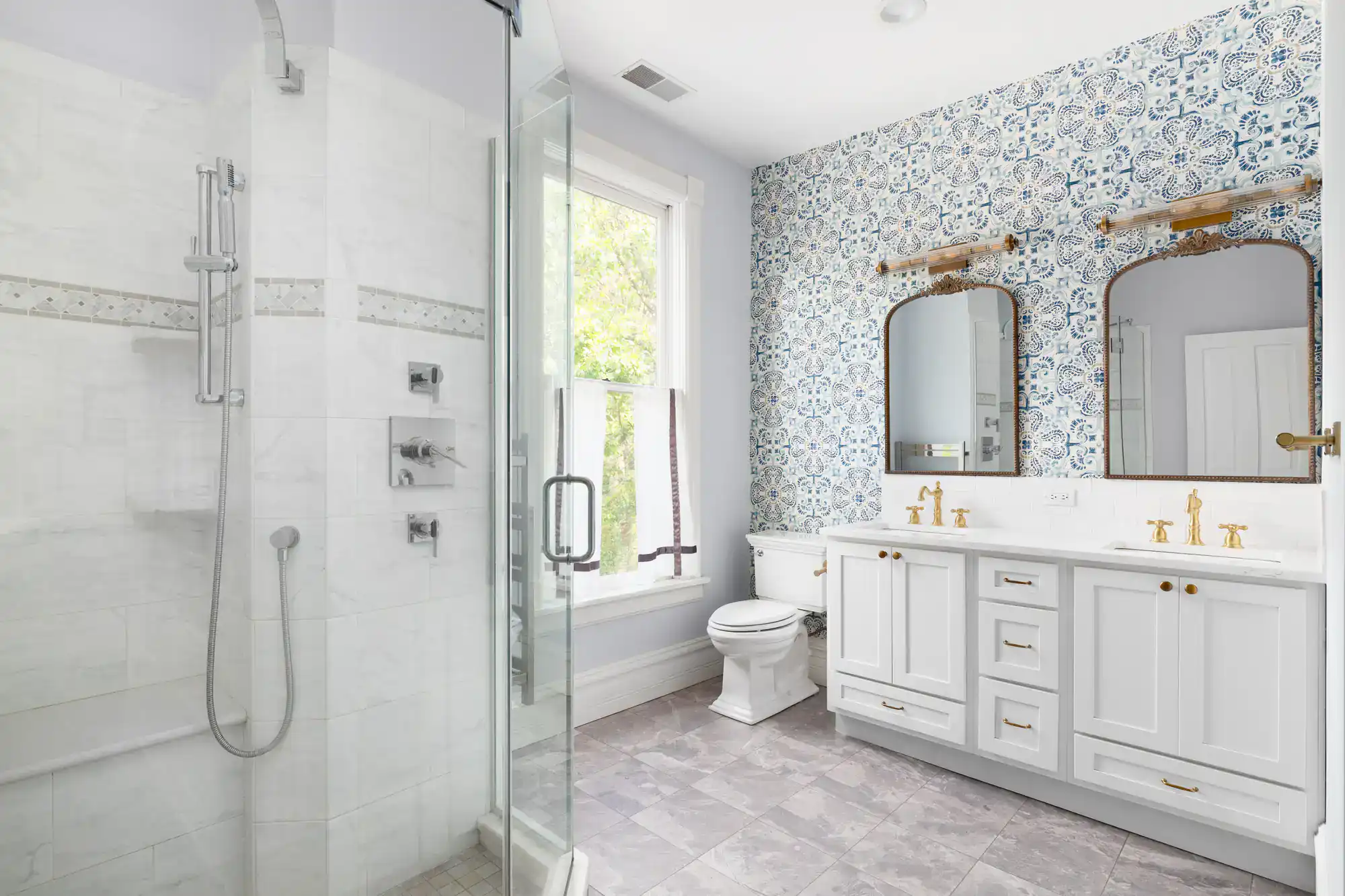
Ready to get started?
A full bathroom remodel with Optima Design Group covers the complete scope: shower reconstruction, floor and wall tiling, cabinet replacement, vanity installation, fixture work, and painting. If you’re converting a tub to a walk-in shower one of the most common requests we get from Derwood homeowners we handle the full build, including custom benches, half walls, built-in shelving, and tile throughout.
Walk-in shower installation is particularly relevant for the significant number of Derwood residents who are planning to stay in their homes long-term. Curbless entries, built-in grab bars, bench seating, and non-slip tile aren’t just accessibility features they’re practical upgrades that make a bathroom genuinely easier to use every day, at any age. About 20 percent of Derwood residents are 65 or older, and we regularly work with homeowners who want to get this right now rather than deal with it later.
For Derwood’s townhouse communities roughly 27 percent of the housing stock small bathroom remodeling is a specialty of its own. Tight layouts, limited natural light, and the need to maximize every square foot require a different approach than a master bath gut renovation. Frameless glass, thoughtful tile selection, and smart fixture placement can make a compact bathroom feel significantly more open without changing the footprint. We’ve done this work in homes throughout the 20855 zip code, and we know what works in these spaces.
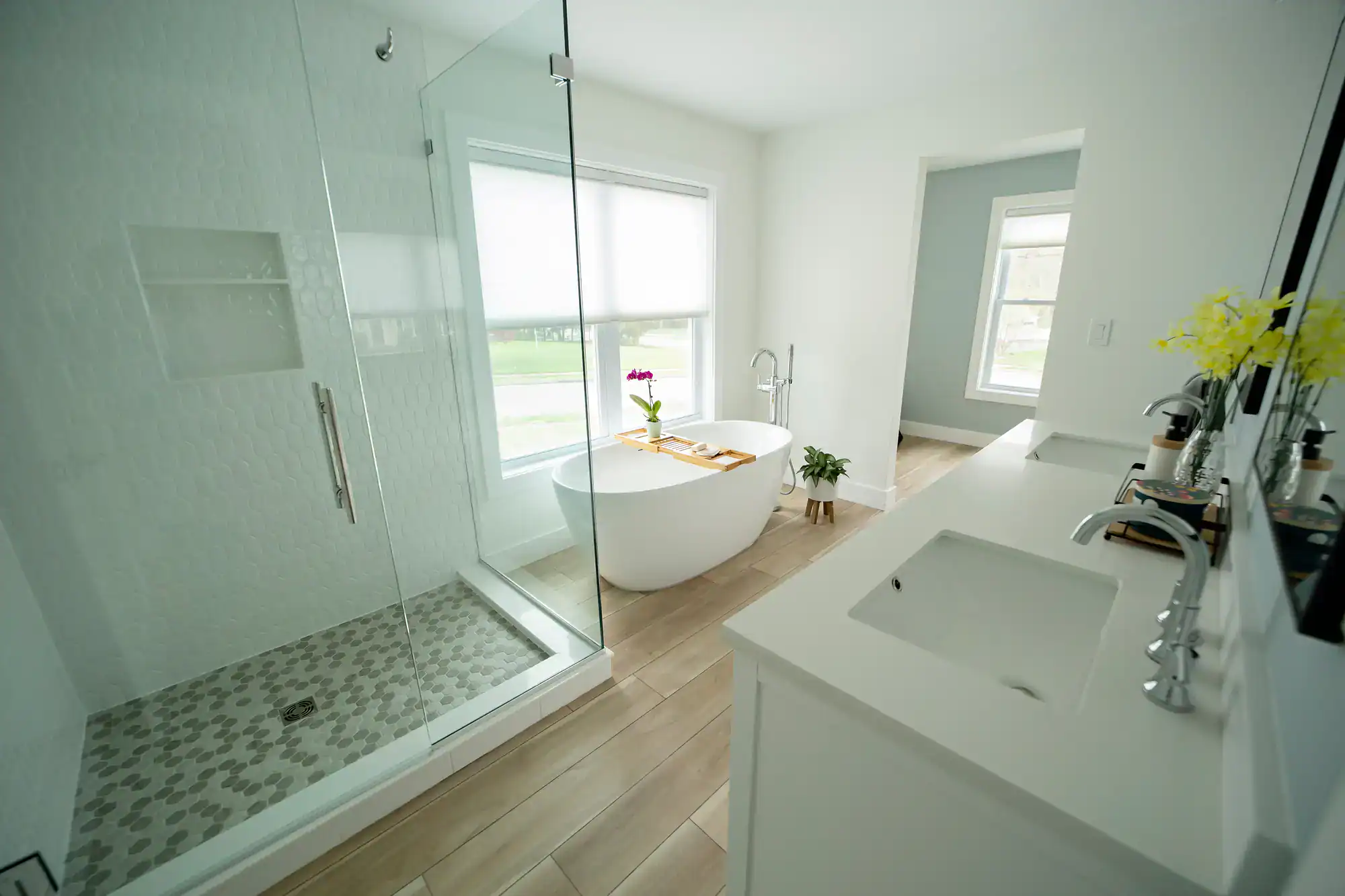
Yes and this is one area where Derwood homeowners sometimes get caught off guard. Because Derwood is unincorporated Montgomery County, all permits go through the Montgomery County Department of Permitting Services, not a separate municipal office. DPS requires permits for virtually all bathroom remodels, including what might seem like straightforward work. If your project involves a new shower, a relocated toilet, a new vanity with plumbing changes, or any electrical work like a new exhaust fan or GFCI updates, you need permits and separate inspections for each trade.
There’s also a WSSC coordination requirement if your project involves new drain lines or plumbing rough-in. WSSC has to inspect and pass the underground piping before any slab work proceeds. Skipping that step can mean jackhammering a finished floor later to make it right.
We handle the full permit process as part of every project. Montgomery County does offer a Fast Track review program that can get qualifying permits approved in three to five days, which helps keep timelines reasonable. Unpermitted bathroom work creates real complications when you sell or refinance, and DPS issues Stop-Work Orders when unpermitted construction is discovered. It’s not worth the risk on a Derwood home worth what yours is worth.
For a small to mid-size bathroom, active construction typically runs two to four weeks once work begins. A full master bath gut renovation with significant plumbing or layout changes can run longer up to six to eight weeks in some cases. The total timeline from your first call to a finished bathroom is longer than just the construction phase, because permitting, material ordering, and scheduling all happen before the first tile goes up.
In Montgomery County, the permit review process adds time to the front end of any project. That’s why we recommend starting the conversation earlier than you think you need to especially if you’re hoping to have the project done before summer. The DMV’s peak humidity season runs June through September, and that’s also when permit applications are heaviest at DPS. Getting your permit application in during late winter or early spring puts you in a much better position.
We’ll give you a realistic timeline at the estimate stage, not a number designed to get you to sign and then stretch. If you have a specific date you’re working toward a family event, a home listing, a school-year schedule tell us upfront and we’ll plan around it honestly.
A walk-in shower installation is more involved than most homeowners expect going in, which is worth understanding before you get your first quote. It starts with full demolition of the existing tub or shower enclosure, removal of the surrounding tile or surround material, and inspection of the substrate and framing underneath. In a Derwood home built in the 1970s, 1980s, or 1990s, it’s not uncommon to find moisture damage or deteriorated substrate behind the original tile especially in bathrooms that haven’t been touched since they were built.
After demo and any necessary repairs, the process moves to waterproofing. This is where the quality difference between contractors becomes most visible, even though you’ll never see it once the tile is up. Professional-grade waterproofing uses a multi-layer membrane system applied to the shower pan, walls, and any seams or penetrations. This is not the same as consumer-grade products, and it’s the single biggest factor in whether your new shower holds up for 20 years or starts showing problems in five.
From there, it’s tile installation, fixture rough-in, glass enclosure if applicable, and finish work. Custom features like built-in benches, half walls, and integrated shelving are built during the tile phase. The full process for a standard walk-in shower conversion typically runs two to three weeks of active construction.
The honest answer is that the line between “needs repairs” and “needs a remodel” often comes down to what’s happening behind the surface, not just what you can see. Grout that keeps cracking, caulk that peels no matter how many times you replace it, tile that sounds hollow when you tap it, or a persistent musty smell that ventilation doesn’t fix these are signs that the waterproofing layer has failed, and patching the surface doesn’t solve that.
In Derwood’s housing stock, where the median construction year is 1985, a lot of original bathrooms are at or past the point where surface repairs stop making financial sense. The DMV’s summer humidity regularly above 70 percent from June through September accelerates the deterioration of aging grout, caulk, and waterproofing membranes. What looks like a cosmetic issue on the surface has often been a slow moisture problem for years.
The best way to know for certain is to have someone look at it. We can assess the condition of your existing bathroom during the estimate visit and give you a straight answer about whether targeted repairs make sense or whether you’re better off addressing it properly now. We’re not going to recommend a full remodel if it isn’t warranted that’s not a conversation that benefits anyone.
In most cases, yes but the specifics matter. A midrange bathroom remodel currently recoups approximately 80 percent of its cost at resale, which is the highest return on that investment since 2007. In Derwood, where detached single-family homes average over $700,000, even a modest improvement in buyer appeal can translate to a meaningful dollar difference in your final sale price or how quickly the home moves.
The current buyer pool in Derwood is also worth understanding. Buyers priced out of Bethesda have been actively moving north to Derwood for larger lots and better value, and those buyers are sophisticated. They know the difference between a bathroom that was properly remodeled and one that was patched up for the listing. A bathroom that still looks like 1985 even if it’s technically functional gives buyers a negotiating point and can slow down an otherwise competitive offer.
That said, not every remodel makes sense before a sale. If you’re doing a full gut renovation on a bathroom that’s already serviceable, the ROI math may not work in your favor. The projects that tend to pay off most reliably are tub-to-shower conversions, updated tile and fixtures, and vanity replacements improvements that buyers notice immediately without requiring a complete overhaul. We can walk you through what makes sense for your specific situation during the estimate.
In Maryland, home improvement contractors are required to hold a Maryland Home Improvement Commission license commonly called an MHIC license. You can verify any contractor’s license status directly on the Maryland Department of Labor website by searching their name or license number. Optima Design Group holds MHIC #28145, which you’re welcome to look up. This license is specific to Maryland home improvement work and is separate from a general business license a contractor operating without it in Derwood is doing so illegally, and any contract you sign with an unlicensed contractor is unenforceable under Maryland law.
Beyond the MHIC license, you want to confirm that the contractor carries general liability insurance and workers’ compensation coverage. General liability protects your home if something is damaged during the project. Workers’ comp protects you from liability if a crew member is injured on your property without it, that liability can fall on the homeowner. Ask for certificates of insurance before any work begins, and make sure the coverage is current.
For bathroom work specifically in Montgomery County, also confirm that the contractor is familiar with DPS permit requirements and WSSC coordination. A contractor who suggests skipping permits to save time or money is not someone you want working on a home that’s worth what Derwood homes are worth. The permit process exists to protect you, and a licensed contractor should handle it without hesitation.
Other Services we provide in Derwood