“
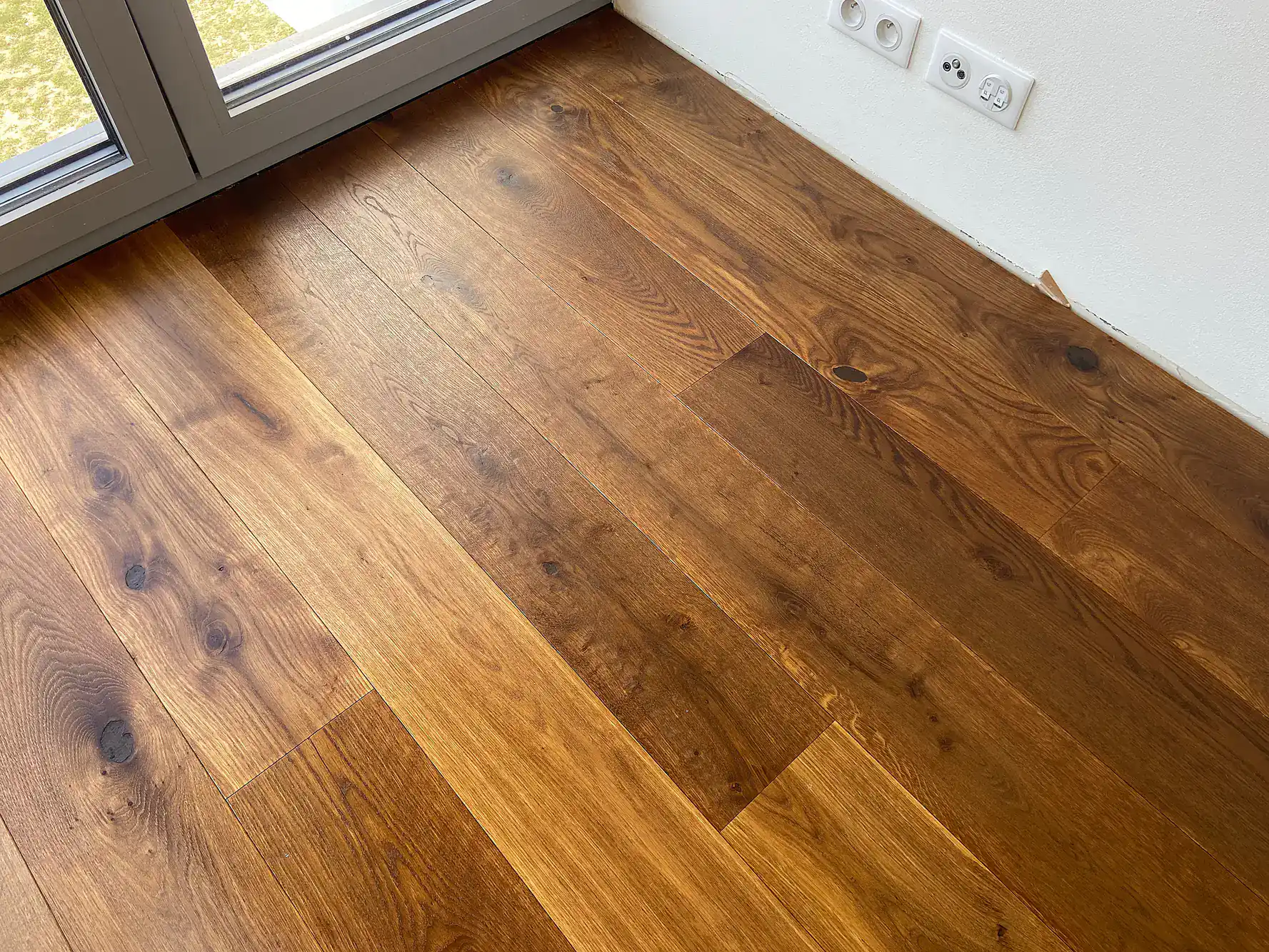
There’s a specific kind of satisfaction that comes from walking across a floor that looks the way it did when the house was new clean, even, smooth underfoot, without the dull patches or surface scratches that have been quietly bothering you for years. That’s what a proper refinishing job delivers. Not a cover-up. An actual restoration.
For Derwood homeowners, this matters more than it might in other parts of Montgomery County. The housing stock here neighborhoods like Mill Creek Towne, Needwood Estates, and Muncaster Manor was built primarily in the 1970s. Those original solid hardwood floors have spent 40 to 50 years cycling through Derwood’s humid summers and dry, heated winters. Every year, the wood absorbs moisture and swells, then contracts again when the heat kicks on in January. That cycle leaves its mark: finish that’s cracked along board edges, boards that no longer sit perfectly flush, and surface wear that’s worked its way through a finish weakened by decades of seasonal stress.
The good news is that solid hardwood from this era was built to last. Most of those floors still have one or two full refinishing cycles left in them. Professional refinishing doesn’t just make them look better it resets the clock on a floor that was designed to outlast the house around it.
We’ve been working in the DC metro area for over 50 years. That means we were operating in Montgomery County before most of Derwood’s current housing stock was built. We know what floors from this era look like, how they were installed, and what they need now.
Our work is owner-led. Gordon Franks personally supervises crews and stays in direct contact with clients from the first call through the final walkthrough. That’s not standard in this industry. Most companies hand you off after the estimate. Here, the person who gave you the estimate is the same person making sure the job meets our standard.
We hold Maryland MHIC License # 28145 the specific credential that Montgomery County requires for any contractor performing home improvement work. We’re also fully insured, with coverage that protects you, not just us. Over 300 recommendations on DC Consumers’ Checkbook and a 4.8 out of 5 rating on Houzz back up what the license and insurance confirm: we take the work seriously.
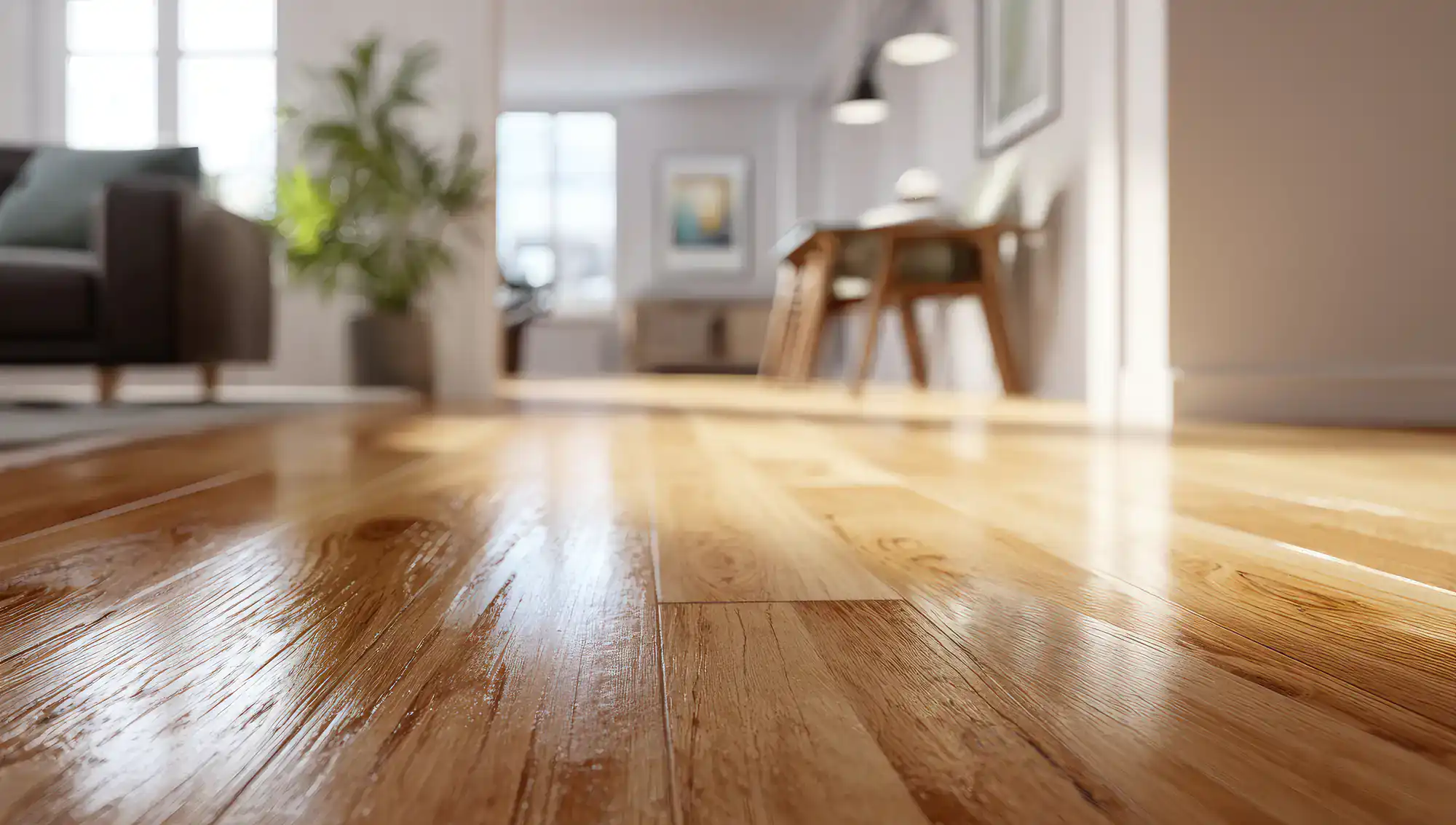
It starts with an honest assessment. Before anything else, the floor gets a real look checking board condition, wear layer depth if you have engineered hardwood, whether any boards need repair before sanding begins, and what the floor can realistically handle. If refinishing is the right call, you’ll know why. If repair or replacement makes more sense for certain sections, that gets explained too. You’re not being pushed toward the most expensive option.
Once the scope is clear, the work follows a specific sequence: damaged boards are addressed first, then sanding begins with progressively finer grits to level the surface without removing more wood than necessary. If you’re changing the stain color, water popping opens the grain to help the stain absorb evenly a step that separates a professional result from a blotchy one.
Finish coats are applied in stages, with humidity monitored between coats. In Derwood’s climate, this step matters. Applying finish over wood that hasn’t stabilized in the current humidity level leads to bubbling and uneven sheen problems that show up weeks later and are expensive to fix.
One thing worth knowing for Montgomery County homeowners: hardwood floor refinishing and installation don’t require a building permit when no structural changes are involved. What is required is that any contractor doing the work holds a valid MHIC license. We do and can show it.
Ready to get started?
We handle the full range of hardwood flooring situations in Derwood. Full hardwood floor refinishing for floors that have dulled, scratched, or lost their finish entirely. Hardwood floor sanding for surfaces that need a clean slate before new finish is applied. Targeted hardwood floor repair for boards that have warped, cracked, or been damaged by water a real concern in neighborhoods near the Rock Creek and Mill Creek corridors where baseline humidity runs higher than in more elevated parts of the county.
New hardwood floor installation for rooms where the original floor is beyond saving or was never hardwood to begin with. Engineered hardwood flooring assessment and service for homes that were renovated in the 1990s or 2000s and may have a mix of floor types.
The engineered hardwood question comes up often in Derwood. Many homeowners don’t know whether their floors can be refinished or whether they need to be replaced. The answer depends on the thickness of the wear layer generally, 3mm or more qualifies for full refinishing, while thinner wear layers may be candidates for recoating instead. We evaluate this before any sanding equipment comes through the door.
Because we also handle painting, tiling, and remodeling, Derwood homeowners doing a broader refresh don’t have to coordinate multiple contractors. That’s a practical advantage when you’re managing a renovation in a home you’re still living in.
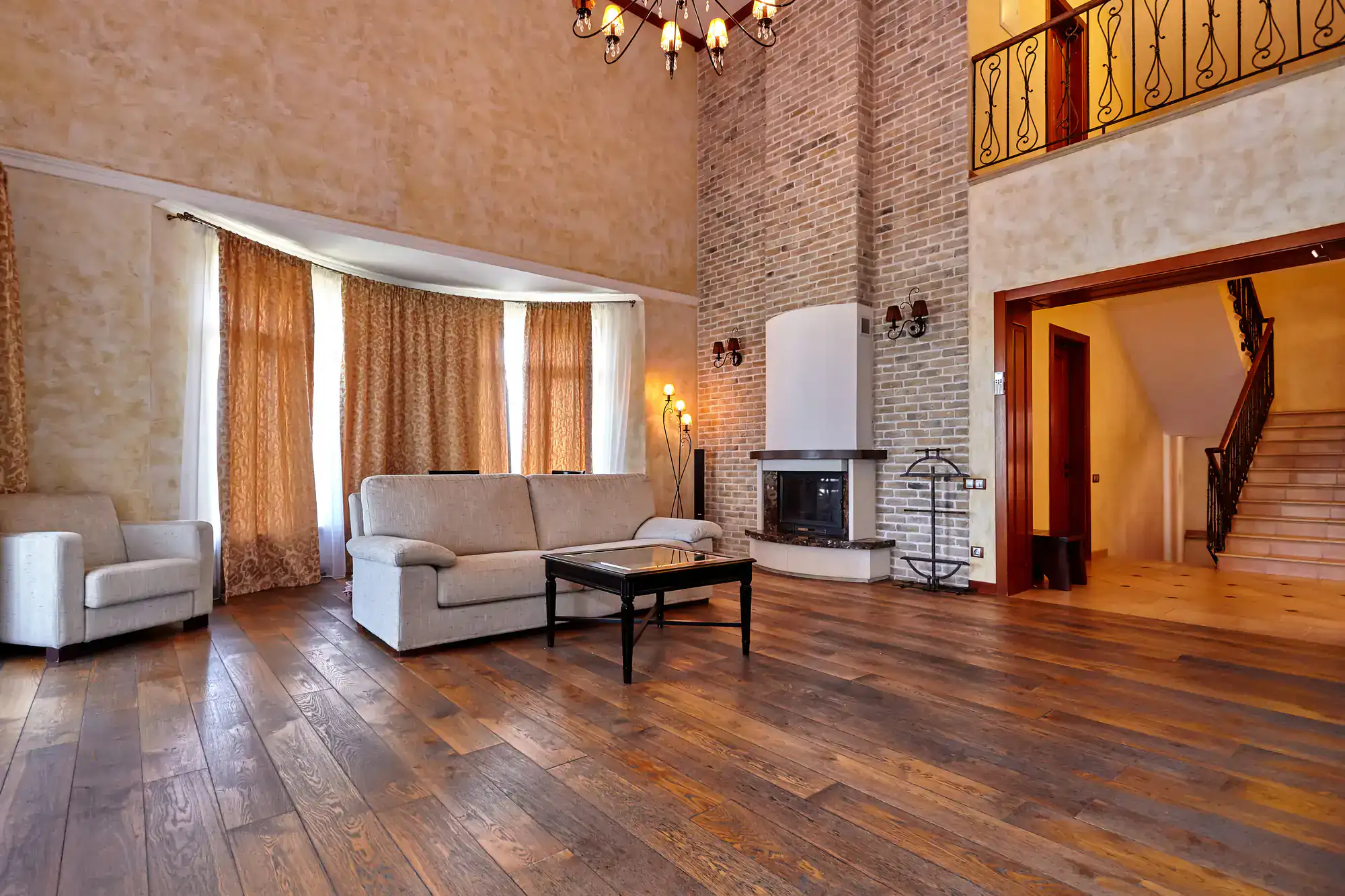
In most cases, yes and this is one of the most common questions from homeowners in neighborhoods like Mill Creek Towne, Needwood Estates, and Muncaster Manor. Solid hardwood floors installed in the 1970s and early 1980s were typically thicker than what’s used today, which means they have more material available for sanding. Solid hardwood can generally be sanded and refinished four to five times over its lifespan, so a floor that was installed in 1978 and refinished once in the late 1990s likely has at least one full refinishing cycle remaining.
The honest answer is that it depends on the specific floor. Some boards may have been replaced over the years with thinner stock. Others may have been sanded too aggressively in a previous job, leaving less material than expected. The only way to know for certain is a proper assessment before any work begins which is exactly how we start every job. No assumptions, no surprises.
The honest answer is that refinishing is disruptive, but it’s manageable and significantly less invasive than full floor replacement. For a typical refinishing project, you’ll need to clear furniture from the rooms being worked on and plan to stay off the floors while finish coats cure. Depending on the scope of the job and the number of finish coats applied, that’s generally a matter of days, not weeks.
Dust is a real concern, and it’s worth asking any contractor about their containment approach. Professional-grade vacuum-attached sanding systems capture the vast majority of airborne particulate, but no system is completely dust-free. You’ll want to protect HVAC vents and keep pets and young children out of the work area during sanding. The finish application phase produces fumes that require ventilation, so plan for some windows-open time even in colder months. Our crews work efficiently and communicate clearly about what each phase requires from you so you’re not caught off guard mid-project.
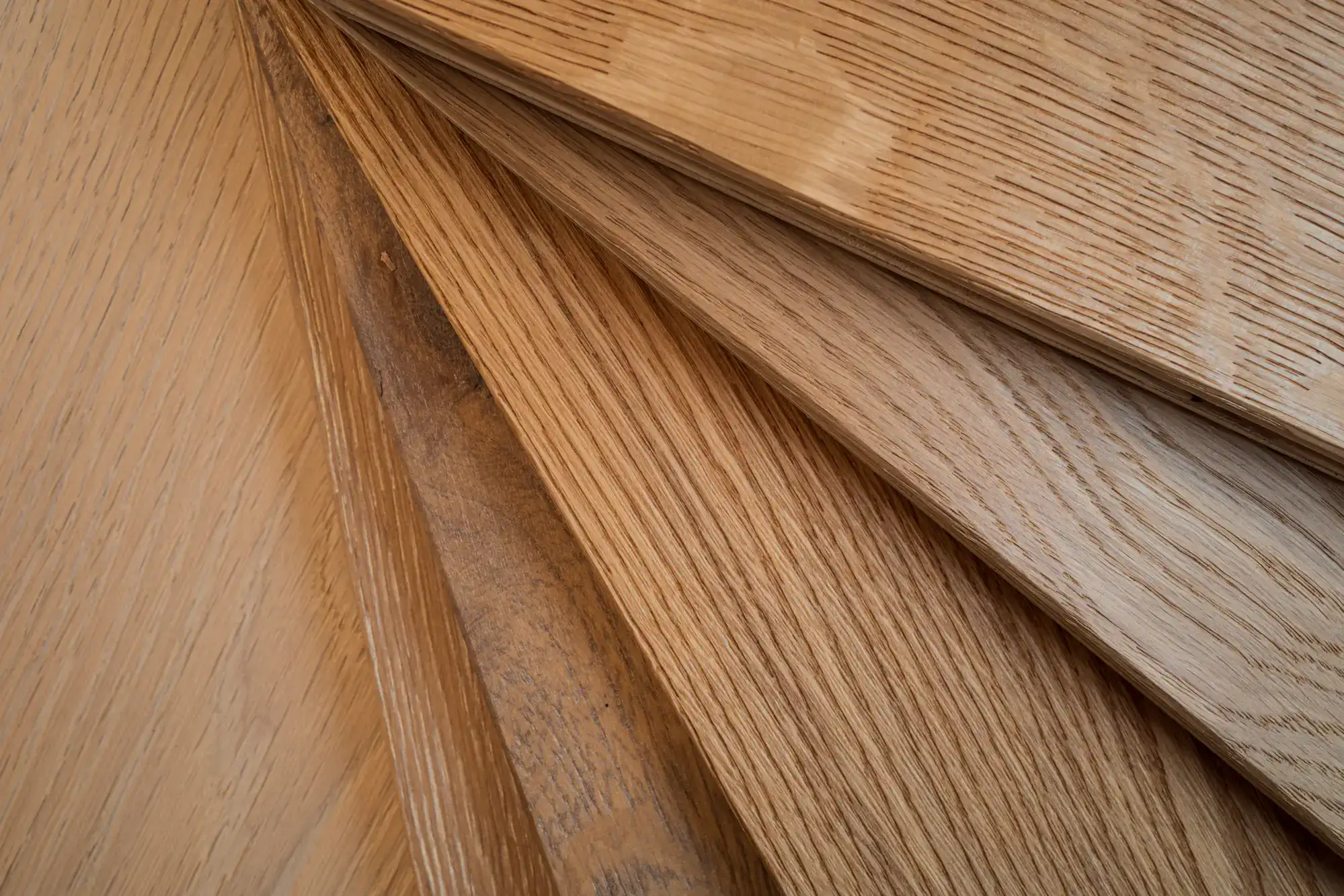
Sometimes, yes but it depends on the wear layer. Engineered hardwood has a real wood veneer on top of a plywood core, and the thickness of that veneer determines whether sanding is an option. As a general rule, a wear layer of 3mm or more can typically handle at least one full refinishing cycle. Thinner wear layers common in lower-cost engineered products are better candidates for recoating, which refreshes the finish without sanding down to bare wood.
This matters specifically for Derwood because a lot of homes here were renovated in the 1990s and 2000s, when engineered hardwood became popular as an alternative to solid wood. If your floors were updated during that period, there’s a real chance you have engineered hardwood in some rooms and original solid hardwood in others. We identify what you have and what it can handle before recommending any course of action. You won’t be pushed toward full refinishing if recoating is the smarter call for your specific floor.
No and this is one of the cleaner answers in the home improvement space. Montgomery County’s Department of Permitting Services explicitly exempts hardwood floor installation and refinishing from building permit requirements, as long as no structural changes are involved. That means you don’t need to file paperwork, wait for county approval, or manage any permit process before scheduling your project. The work can move forward as soon as you’re ready.
What Montgomery County does require is that any contractor performing home improvement work holds a valid Maryland Home Improvement Commission license. This is not optional, and it matters to you as the homeowner working with an unlicensed contractor in Montgomery County creates legal and financial exposure that falls on you, not just the contractor. We hold MHIC License # 28145, which is published on our website and available to verify independently through the Maryland Home Improvement Commission’s online lookup tool.
For most Derwood homeowners, yes and the math is straightforward. Research from the National Association of Realtors and the National Association of the Remodeling Industry puts the return on hardwood floor refinishing at approximately 147% at resale. In a market where Derwood homes are selling in the $600,000 to $850,000 range, that return on a professional refinishing project is meaningful in absolute dollar terms.
Beyond the numbers, buyer expectations in this market are high. The Shady Grove Metro connection and the proximity to the life sciences employment corridor along MD-355 attract buyers who are analytical, well-compensated, and paying close attention to condition. Scuffed, dull, or visibly worn floors in a home at this price point raise questions about what else hasn’t been maintained. Refinished floors don’t just look better they signal to a buyer that the home has been cared for. That impression is hard to put a number on, but it shows up in how quickly offers come in and how close they are to asking price.
Derwood has a humid subtropical climate hot, humid summers and cold, dry winters. That seasonal swing is one of the most consistent sources of wear on hardwood floors in this area. In summer, when outdoor humidity regularly exceeds 80%, wood boards absorb moisture from the air and expand. In winter, heating systems pull moisture out of the indoor air, and boards contract. This expansion-and-contraction cycle repeats every year, and over 40 or 50 years in a 1970s Derwood home, it accumulates into real, visible damage: finish that’s cracked along board edges, small gaps between boards, and surface wear that has worked through a finish weakened by repeated moisture stress.
Homes in lower-lying parts of Derwood particularly those near Rock Creek, Mill Creek, or Crabbs Branch can experience higher baseline humidity than homes on more elevated ground, which accelerates this process. Professional refinishing done with proper humidity monitoring between finish coats addresses the accumulated damage and applies a new finish that’s properly cured for the local conditions. That’s the difference between a refinishing job that holds up for 10 to 15 years and one that starts showing wear within a few seasons.
Other Services we provide in Derwood