“
There’s a version of your bathroom that doesn’t feel like a holdover from when the house was built. No cracked grout. No mildew smell creeping in after a humid July. No single-piece tub surround that looked dated fifteen years ago. That version exists and it starts with a contractor who understands what Gaithersburg homes actually face.
Gaithersburg summers are genuinely humid. Indoor humidity regularly climbs past the threshold where mold takes hold behind tile, and much of the housing stock here particularly in Montgomery Village, Washingtonian Woods, and the older Quince Orchard communities was built with waterproofing never designed to last fifty years. When that fails quietly behind the wall, you don’t find out until there’s real damage.
A properly executed bathroom renovation doesn’t just update how the room looks. It addresses the moisture management underneath, so the finished product actually holds up in Gaithersburg’s climate. For homeowners in Kentlands and Lakelands specifically, there’s another layer. Those communities were designed around walkable streets and community space not large bathrooms. The original builder-grade finishes in many of those townhomes are now twenty to thirty years old, and they’ve never matched the care those homeowners put into the rest of their homes.
A well-designed bathroom renovation one that makes a compact space feel intentional rather than cramped changes how the whole house feels to live in. That’s the difference between a surface-level update and work that actually lasts.
We were founded in 1973 by a University of Maryland student who started the business to pay his own way through school. That’s not a polished brand story it’s just what happened. More than fifty years later, we’re still here, still working in Gaithersburg and Montgomery County, and still holding a Maryland MHIC license (#28145) that lets us pull permits correctly through the City of Gaithersburg’s own permitting department not the county office, which handles unincorporated areas.
The work we do in Gaithersburg spans the full range of what bathroom remodeling actually involves: tile work, shower reconstruction, floor replacement, cabinet updates, painting, and the waterproofing and surface preparation that determines whether any of it lasts. That’s all handled by one team, under one roof. No subcontractor handoffs. No gaps in accountability.
Our documented project work in Rockville right down MD-355 reflects the same standard we bring to Gaithersburg. We’re licensed and insured in Maryland, bonded, and carry active credentials in DC and Virginia as well.
It starts with a free estimate. Someone from our team comes out, looks at the actual space, and gives you a written scope not a ballpark figure, but a detailed breakdown of what’s included. That matters because nearly half of all bathroom renovations end up over budget, and the gap almost always comes from things the original estimate left out: surface prep, waterproofing layers, permit costs.
We put those in the estimate upfront.
Speaking of permits in Gaithersburg, a bathroom remodel that touches plumbing or electrical requires a Residential Improvement Permit from the City of Gaithersburg’s own building department. This is separate from Montgomery County’s permitting process, which covers unincorporated areas. We hold the Maryland MHIC license required to pull that permit on your behalf and manage the inspection schedule so you don’t have to coordinate that yourself.
Once the project starts, the timeline for a small to mid-size bathroom typically runs three to six weeks depending on scope, material lead times, and whether any hidden moisture damage turns up during demolition which is more common in Gaithersburg’s older housing stock than most homeowners expect. Our team handles tile, paint, carpentry, and installation without rotating in outside vendors. When the job is done, it’s done not waiting on someone else’s schedule.
Ready to get started?
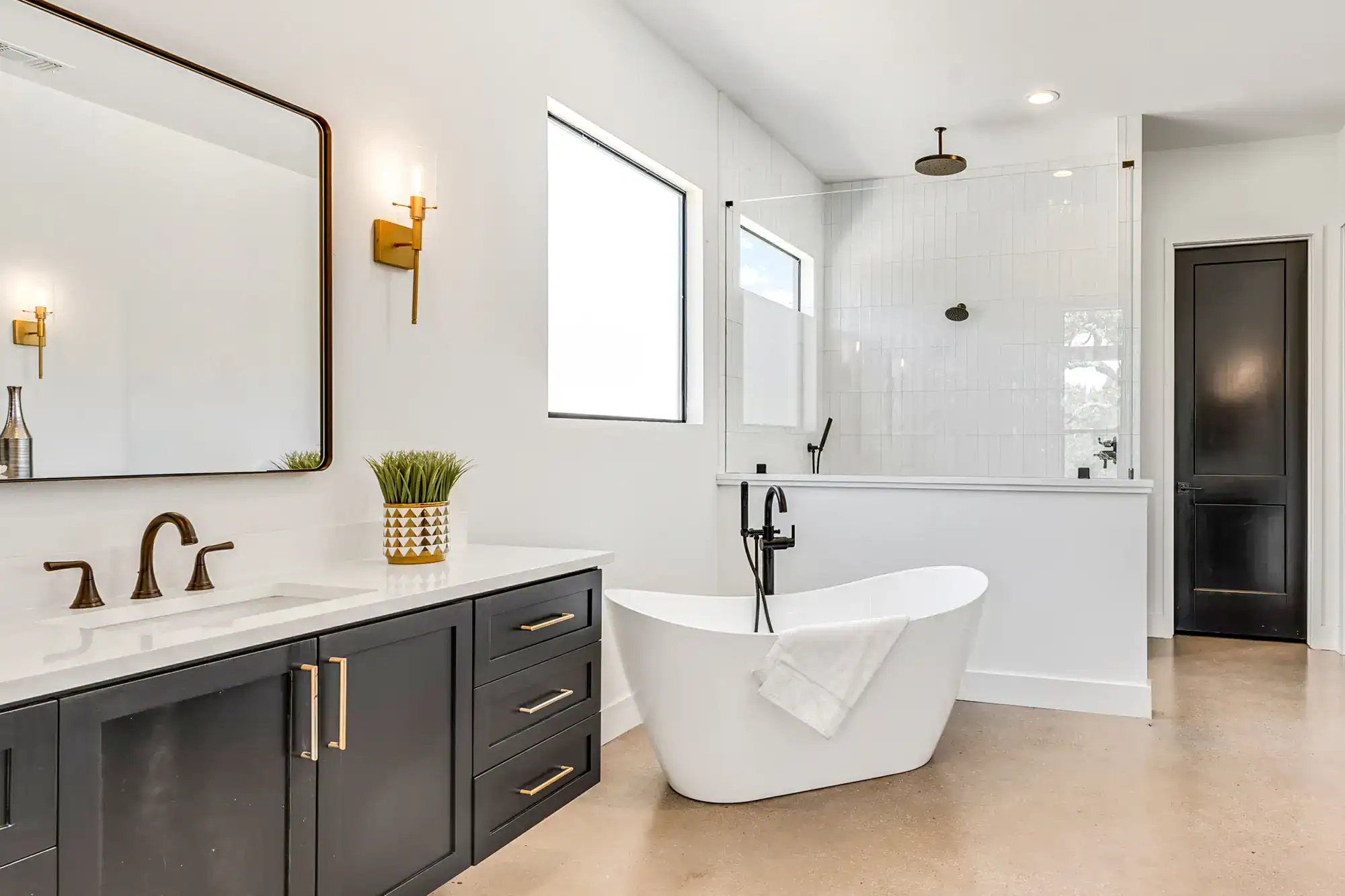
Our bathroom remodeling covers the full scope not just the surfaces you can see. That includes full shower reconstruction with custom benches, half walls, and built-in shelving; floor and wall tiling; walk-in shower installation; cabinet replacement; floor replacement; and interior painting. For Gaithersburg homeowners specifically, we account for the moisture conditions that come with this climate and the building characteristics of the local housing stock.
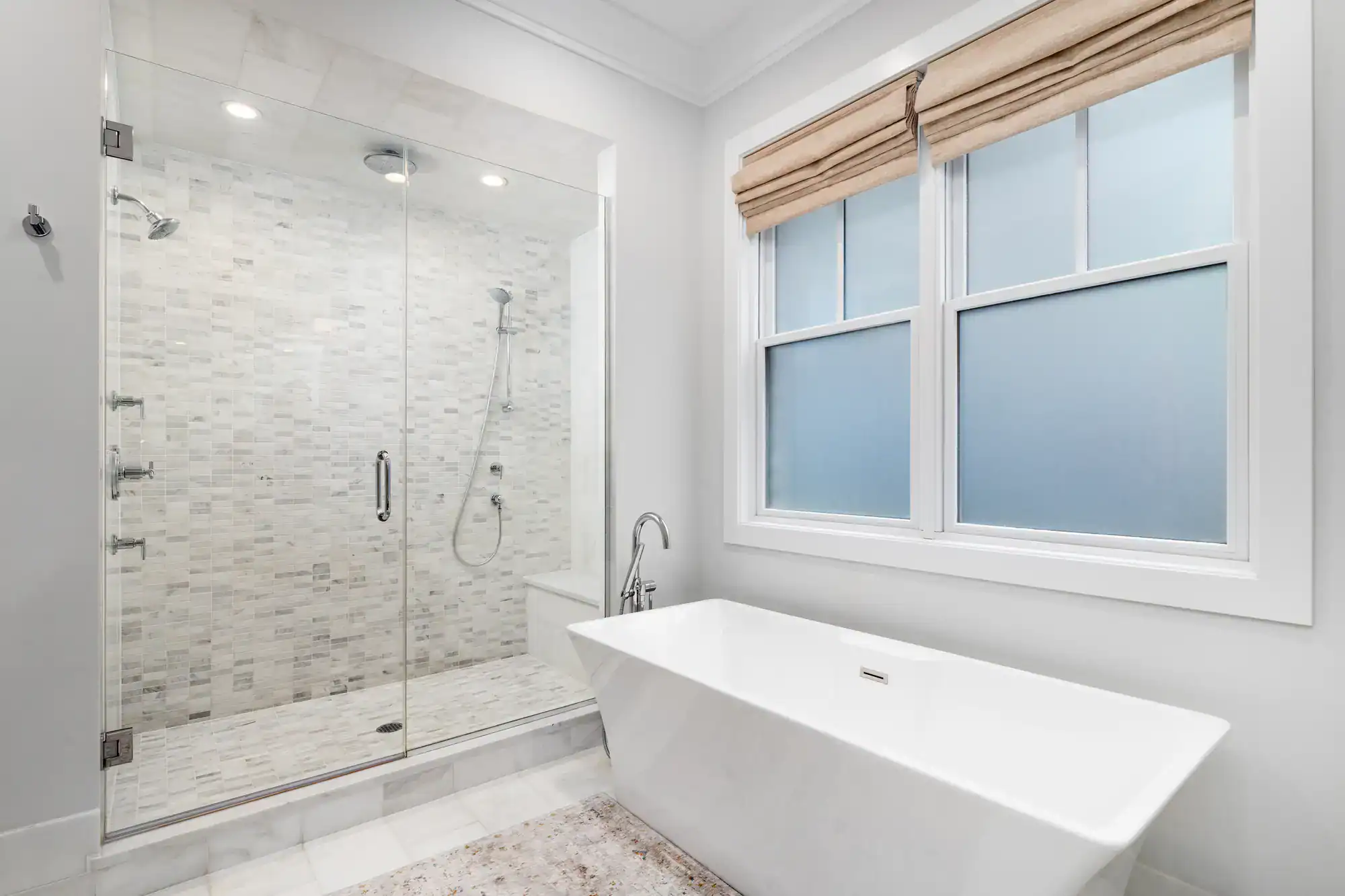
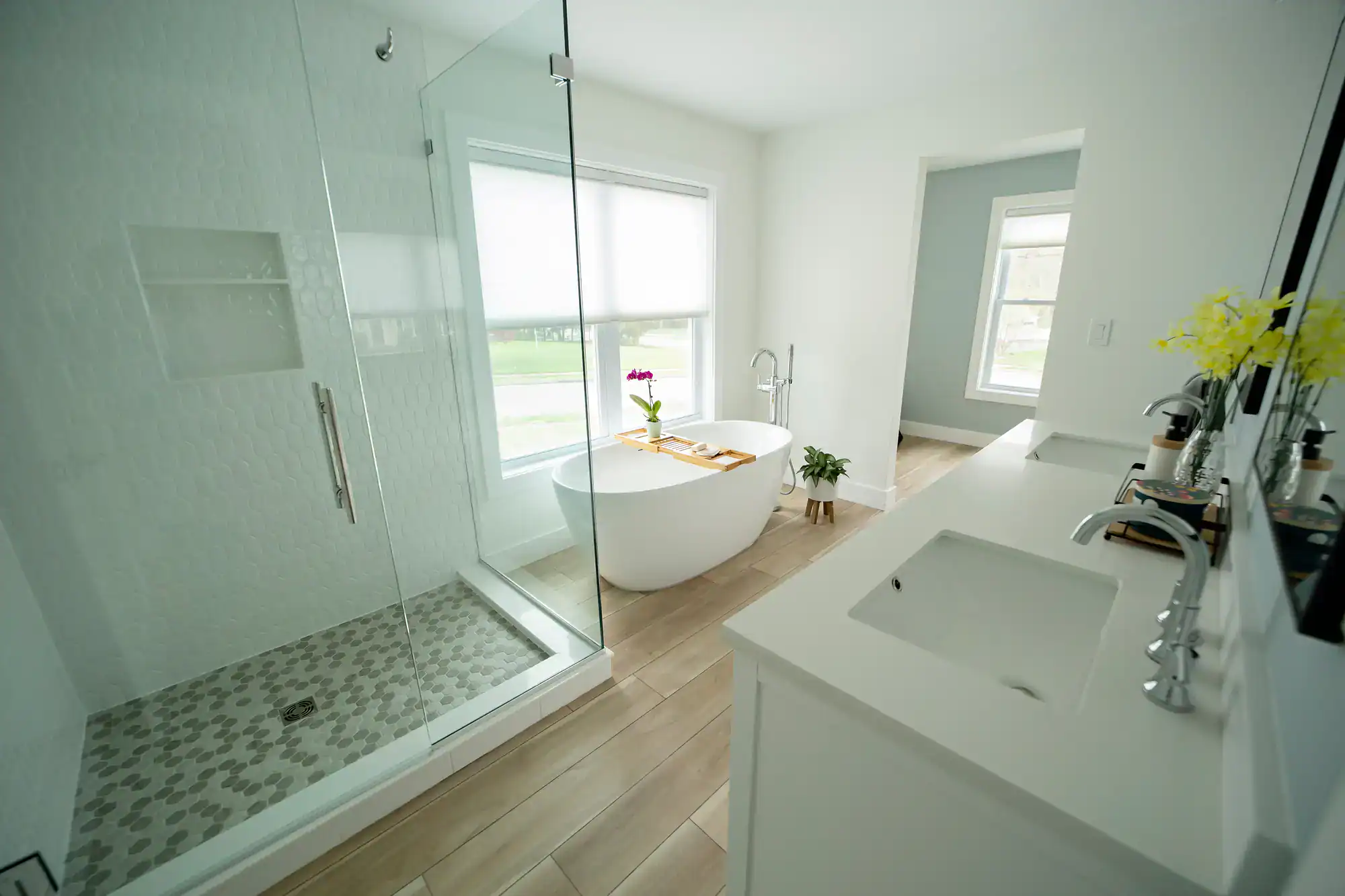
Walk-in shower installation is one of the most requested services in this area, and for good reason. Compact townhome bathrooms in Kentlands and Lakelands often have tub-and-surround setups that take up more floor space than a well-designed walk-in shower would. Frameless glass, curbless entries, and integrated bench seating can make a small primary bath feel significantly larger and more functional for the long term, particularly for homeowners planning to stay in their homes as they get older.
Small bathroom remodeling is not treated as a lesser project here. Whether the space is a tight secondary bath in a Montgomery Village townhome or a compact primary in a Quince Orchard Park single-family home, the process is the same: proper surface prep, professional-grade waterproofing, and finishes that hold up to Gaithersburg’s humidity rather than failing within a few years.
Yes and the permit process in Gaithersburg works differently than it does in most of Montgomery County. Because Gaithersburg is a fully incorporated city, it operates its own building and permitting department. That means your permit goes through the City of Gaithersburg’s office, not Montgomery County’s Department of Permitting Services, which handles unincorporated areas like Germantown or South Kensington.
For a bathroom remodel, a Residential Improvement Permit is required for any work that affects plumbing, electrical systems, or structural elements. That covers most real bathroom renovations moving a drain line, adding a walk-in shower where a tub existed, upgrading electrical for lighting or exhaust fans. Purely cosmetic work like swapping a faucet or painting walls typically doesn’t require a permit, but anything more involved does.
We hold the Maryland MHIC license required to pull that permit on your behalf, manage the inspection schedule, and make sure the work is done to code. Skipping permits can complicate a future home sale or refinancing, so it’s not a step worth cutting.
Bathroom remodeling costs vary based on scope, materials, and what’s found once demolition begins and that last part matters more in Gaithersburg’s older housing stock than people expect. Homes in Montgomery Village, Washingtonian Woods, and the Quince Orchard communities were built between the 1970s and 1990s, and it’s not uncommon to find moisture damage or failed waterproofing behind original tile once the walls come down. That can add to the scope.
As a general reference point, a walk-in shower installation typically runs between $6,000 and $12,000 depending on size, tile selection, and whether the layout requires any plumbing relocation. A full bathroom renovation including floor tile, wall tile, cabinet replacement, shower reconstruction, and painting will vary based on the specifics of your space.
What matters is that the estimate you receive accounts for everything: permit costs, surface preparation, waterproofing, and materials. Budget overruns that average 23 to 35 percent happen most often when those line items get left out of the initial quote. A detailed written estimate before any work begins is the clearest sign you’re working with a contractor who won’t surprise you midway through.
For a small to mid-size bathroom, active construction typically runs three to four weeks once work begins. A full gut remodel with plumbing relocation or structural changes can run closer to six to eight weeks. The permit and planning phase which includes pulling the City of Gaithersburg permit and scheduling inspections adds time before the first tool goes in, so the total calendar window from estimate to finished bathroom is usually four to six weeks for a smaller project.
If you have more than one bathroom in the home, the disruption is manageable. If you’re working with a single-bathroom home which is common in some of the older Olde Towne properties and smaller townhomes in Gaithersburg it’s worth discussing the sequencing of work upfront so you know exactly when the toilet and shower will be out of service and for how long.
We can give you a clear day-by-day breakdown of the demolition and rough-in phase so you understand the logistics before the project starts, not after.
A renovation typically means updating what’s already there replacing fixtures, re-tiling over an existing substrate, swapping out a vanity, repainting. It’s cosmetic improvement without changing the layout or touching the plumbing and electrical behind the walls. A full remodel goes deeper: demolishing down to the studs, replacing waterproofing membranes, potentially relocating drains or fixtures, and rebuilding the space from the substrate up.
For most Gaithersburg homeowners dealing with bathrooms that are thirty to fifty years old, the honest answer is that a renovation often reveals the need for a remodel. When you pull original tile in a 1980s Montgomery Village home or a 1990s Kentlands townhome, what’s behind it frequently shows moisture infiltration, deteriorated backer board, or waterproofing that was never installed correctly in the first place.
Addressing only the surface without fixing what’s underneath means the same problems return within a few years. The upfront conversation about what’s likely behind your walls based on the age and type of your home is one of the most useful things we can offer before you commit to a scope.
In most cases, yes and it often makes the bathroom feel larger, not smaller. The tub-and-surround configuration that came standard in most Kentlands and Lakelands townhomes from the 1990s and early 2000s takes up a significant footprint. A walk-in shower with frameless glass and a curbless entry uses the same floor area more efficiently and removes the visual barrier that makes small bathrooms feel closed in.
More than 60 percent of homebuyers today prefer a shower over a tub in the primary bathroom, so a tub-to-shower conversion also tends to hold up well at resale particularly in the Gaithersburg market where the median home value sits around $495,000 to $525,000 and buyers have strong expectations for primary bath quality.
For homeowners who want to stay in their homes long-term, a curbless walk-in shower with a built-in bench and grab bar blocking is also the most practical configuration for aging in place. It’s a design choice that works for where you are now and where you might be in twenty years.
In Maryland, any contractor performing home improvement work including bathroom remodeling is required to hold an active Maryland Home Improvement Commission (MHIC) license. That license is publicly verifiable through the Maryland MHIC database. It’s a straightforward search: you enter the contractor’s name or license number and confirm the license is current and in good standing. We hold MHIC #28145, which you can verify directly.
Beyond the MHIC license, a contractor working in Gaithersburg specifically should understand that permits are pulled through the City of Gaithersburg’s building department not Montgomery County. A contractor who assumes county DPS handles everything in this area hasn’t done much work inside city limits.
You can also ask whether the contractor carries general liability insurance and workers’ compensation coverage, and request the certificates before work begins. Those documents protect you not the contractor if something goes wrong on your property. A contractor who hesitates to provide any of this documentation is a contractor worth walking away from before the project starts.
Other Services we provide in Gaithersburg