“

Gaithersburg sits on the Pepco grid, where electricity runs about 22 cents per kilowatt-hour roughly 8% above the national average. That means every bit of heat or cool air leaking through an old window frame costs more here than it would in most U.S. cities. Replacing your windows with ENERGY STAR-certified units can cut heating and cooling losses by a meaningful margin, and the federal 30% tax credit on materials up to $600 per year through 2032 helps offset what you spend upfront.
For homes near MD-355 or I-270, there’s a second benefit that doesn’t show up on your utility bill: quiet. Modern laminated glass and upgraded glazing packages reduce the ambient noise from Frederick Avenue and the highway corridor in ways that single-pane or older double-pane windows simply can’t match. That’s a comfort improvement you’ll notice every day, not just when the bill arrives.
And for the older homes on Gaithersburg’s east side some of them pushing 80 or 100 years old the stakes are higher. Failing window seals and deteriorating frames in this climate, with 46 inches of annual precipitation and winters that dip below 15°F, don’t just hurt your energy efficiency. They let moisture into your walls. Replacing them before that happens is the kind of maintenance decision that protects the whole house, not just the glass.
We were founded in 1973 by Gordon Franks, who started painting homes to pay his way through the University of Maryland. That was two decades before Kentlands was platted, before the NIST campus fully developed, and before most of Gaithersburg’s west side existed. We’ve been operating in Montgomery County continuously ever since, and we hold an active Maryland MHIC license number 28145 which you can look up before you ever pick up the phone.
What sets us apart from the national chains and window-only specialists showing up in your search results is straightforward: Gordon Franks personally responds to inquiries, writes the contracts, and is reachable when something comes up. There’s no call center, no anonymous crew, no finger-pointing between a salesperson and an installer who’ve never met. We also hold active licenses in D.C. and Virginia useful if you have properties on either side of the state line and we’ve earned 300-plus recommendations on Washington D.C. Consumers’ Checkbook, a subscription-based consumer research service that doesn’t sell its ratings.
It starts with an estimate. Gordon Franks comes out, looks at what you have, and gives you a clear picture of what the work involves what type of replacement makes sense for your home, what the timeline looks like, and what it’s going to cost. No pressure, no vague ballpark over the phone.
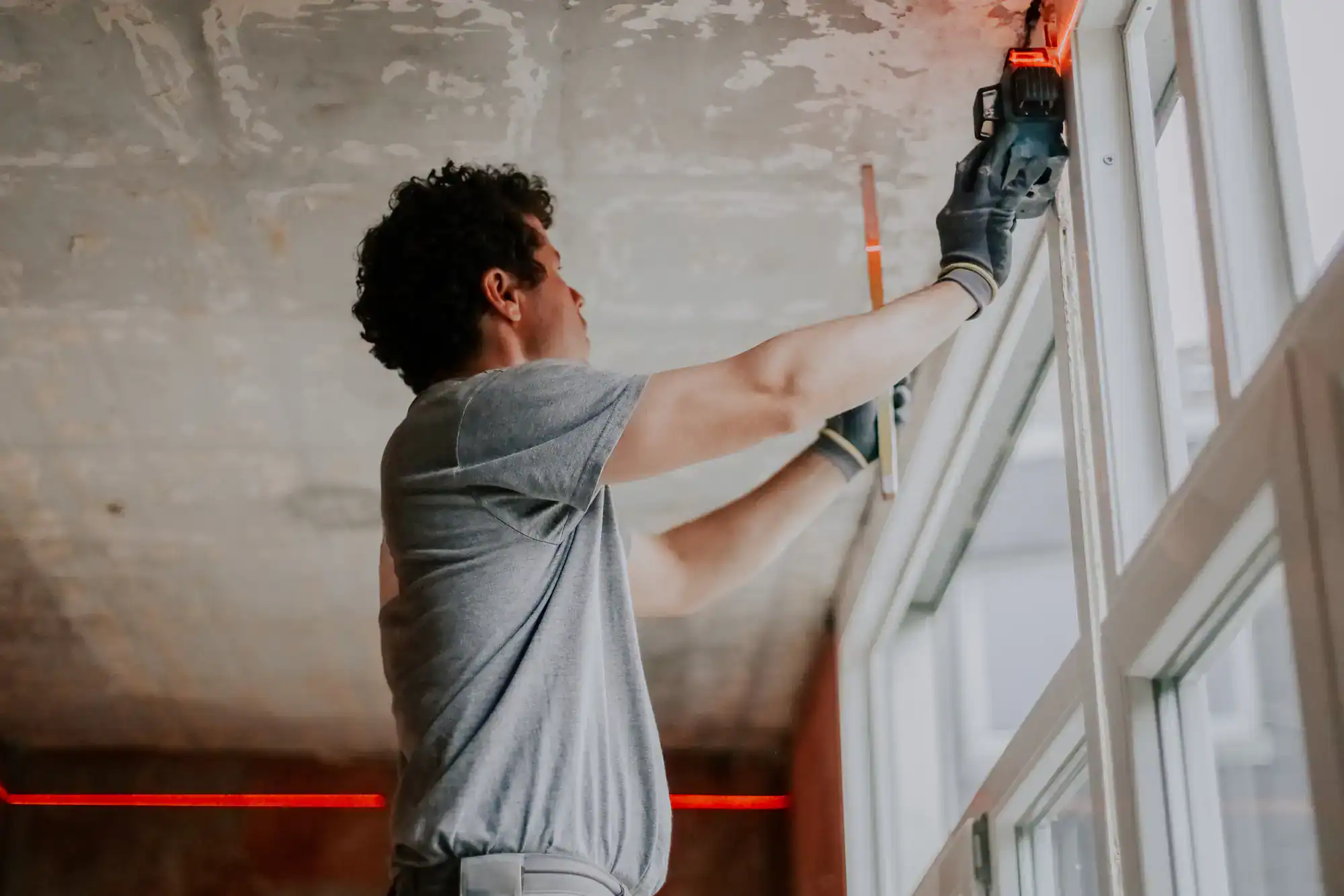
Before anything gets ordered, there’s a measurement visit. Window replacement requires exact sizing, and a small error at this stage creates a much bigger problem on installation day. For most standard insert replacements in Gaithersburg where the opening size stays the same no building permit is required under Montgomery County guidelines. But if your project involves changing the rough opening, or if your home sits within the Olde Towne historic district or near Washington Grove, that changes. We know the difference and handle the permitting questions correctly from the start, which protects you from code issues down the road. If you’re in a community like Kentlands or Lakelands with an active HOA, window style and color approvals may also be needed before installation begins something worth confirming early.
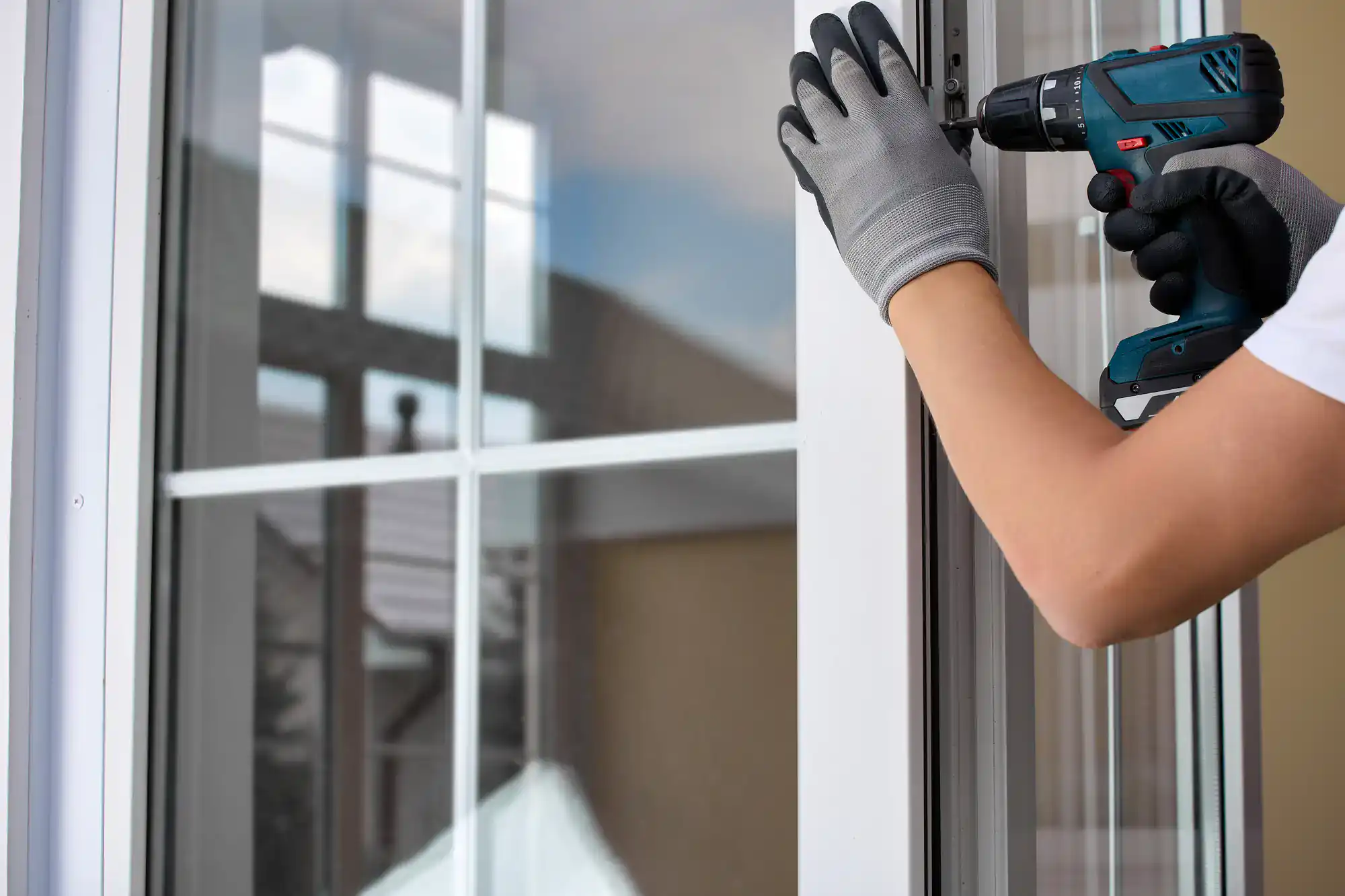
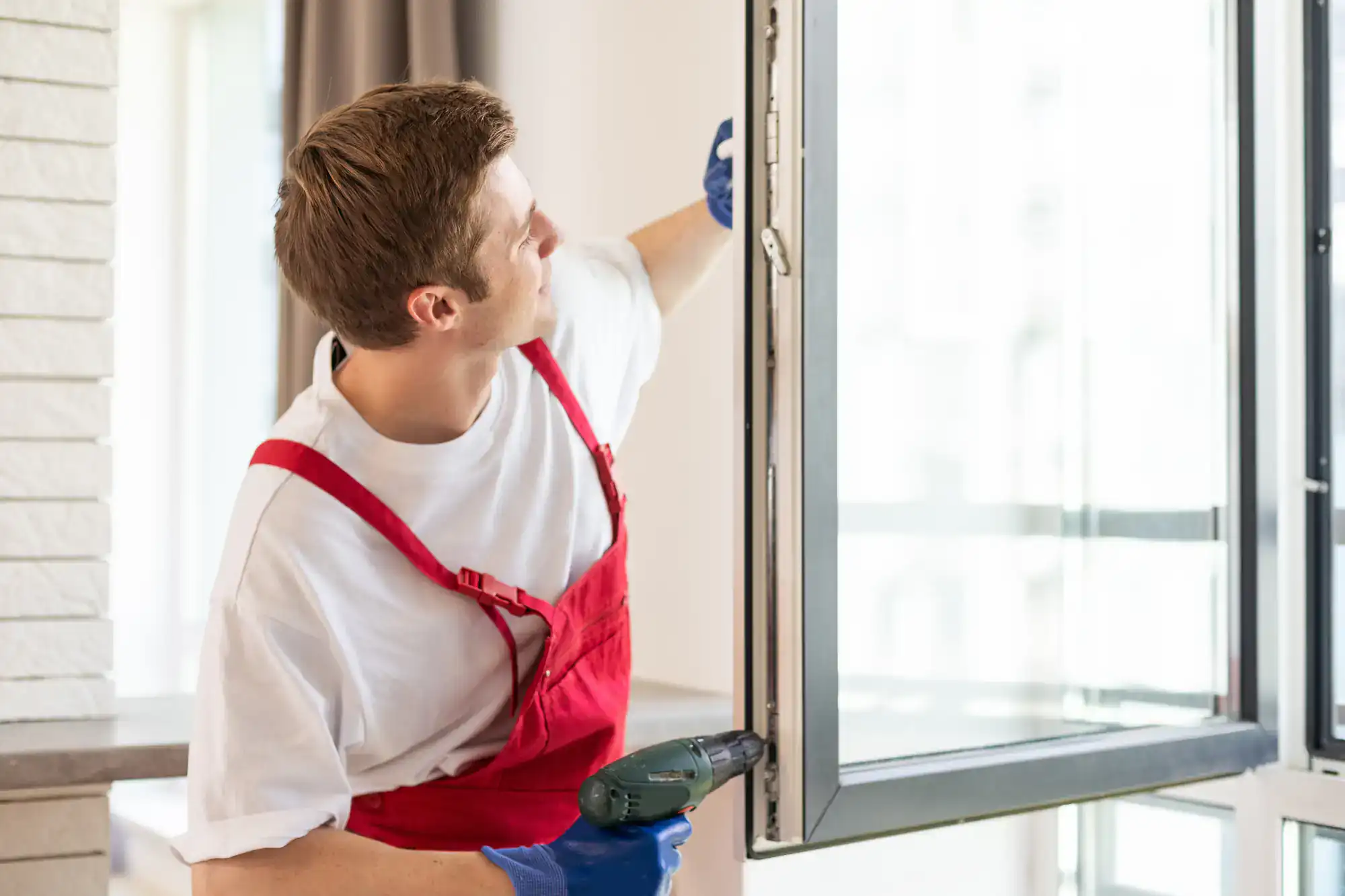
On installation day, our professional crew handles the full scope. A standard insert replacement takes roughly 45 to 60 minutes per window, so most homes are done in a single day. The crew handles cleanup before they leave. If the project turns up anything adjacent trim repair, carpentry, paint touch-up we can handle that too, so you’re not left coordinating a second contractor to finish what the first one started.
Ready to get started?
Window replacement in Gaithersburg isn’t one-size-fits-all, and the right approach depends on what you have and what you’re trying to solve. The most common scenario and the most cost-effective is insert replacement, where the new window goes into the existing frame without disturbing the surrounding wall, trim, or siding. This works well for the majority of Kentlands and Lakelands homes, where the original frames are structurally sound but the glass units have aged past their useful life. Fogged glass between the panes, difficulty opening or closing, and drafts you can feel on a cold January night are all signs that insert replacement is the right call.
Full-frame replacement is the better option when the frame itself has deteriorated which is more common in eastern Gaithersburg’s older housing stock, where wood frames have been absorbing 46 inches of annual precipitation for decades. It’s a larger scope of work, but it’s also the only way to fully address rot, water intrusion, or a frame that’s shifted out of square over time.
On the glass side, the specification that matters most for Gaithersburg’s climate is a low U-factor combined with an appropriate solar heat gain coefficient for the DC climate zone. Low-E coatings with argon gas fill are the standard for energy-efficient double-pane units they reduce heat transfer in winter and limit solar heat gain in summer without darkening the glass. Double-hung windows remain the most popular style for this market, and vinyl frames are the most common material choice, covering roughly 70% of all U.S. replacements. We work across window styles and materials and can advise on what makes sense for your specific home and neighborhood.
For most window replacements in Gaithersburg, the answer is no as long as you’re not changing the size of the opening. Montgomery County’s Department of Permitting Services explicitly lists window and door replacements that don’t alter the rough opening as work that doesn’t require a building permit. That covers the majority of insert replacement projects, which is the most common type of residential window replacement.
That said, there are exceptions that matter in Gaithersburg specifically. If your home is in the Olde Towne historic district or near Washington Grove which has its own preservation review process exterior changes including windows may require approval before work begins. Full-frame replacements that change the rough opening size also trigger a permit requirement. And if you’re in a community like Kentlands or Lakelands with an active HOA, you may need HOA sign-off on window style, color, or material before installation. We flag these requirements upfront, not after the fact.
The honest answer is that it depends on what’s failing. Some problems are repairable a sticky sash, a worn weatherstrip, a latch that won’t catch. Those are maintenance issues, and replacing the whole window for a worn weatherstrip doesn’t make financial sense.
But some problems can’t be fixed with a repair. If you have fog or condensation between the glass panes that won’t wipe away, the seal has failed and the insulating gas has escaped the only fix is replacing the glass unit or the whole window. If the frame itself is soft, cracked, or rotted, repair is a temporary patch on a structural problem. For Gaithersburg homes in eastern neighborhoods where wood frames have been dealing with decades of wet winters and humid summers, frame deterioration is common and tends to be more extensive than it looks from the inside. A proper assessment tells you which category you’re in before you spend money on either option.
Gaithersburg’s climate puts real demands on windows. You’re dealing with winters that regularly drop below freezing January lows average around 27°F, with occasional dips below 15°F and summers that push past 88°F with high humidity. On top of that, the area gets about 46 inches of rain per year, which is significant for frame materials and seals over time.
For this climate, a double-pane unit with a low-E coating and argon gas fill is the baseline for energy efficiency. The low-E coating reduces heat transfer in both directions keeping heat in during winter and slowing solar heat gain in summer without noticeably affecting how much light comes through. For the U-factor and solar heat gain coefficient, the right specification depends on the window’s orientation and your home’s specific heat load, which is something worth discussing during the estimate. Vinyl frames hold up well in Gaithersburg’s wet climate and require less maintenance than wood. If noise is a factor which it is for homes near MD-355 or I-270 laminated glass adds meaningful acoustic performance on top of the thermal benefits.
For a standard insert replacement, our professional crew moves at roughly 45 to 60 minutes per window. A home with 10 windows is typically done in a single day. That’s the most common scenario for Kentlands and Lakelands homes, where the frames are intact and the project is straightforward insert work.
Full-frame replacements take longer because there’s more demolition and finishing involved removing the existing frame, preparing the rough opening, and addressing any rot or damage that gets uncovered along the way. For older homes on Gaithersburg’s east side, where wood frames may have absorbed years of moisture, it’s not unusual to find more work than expected once the frame comes out. We walk you through what was found and what it means before proceeding, rather than just billing for it after. Either way, the goal is a clean job site when the crew leaves no debris, no open gaps, no half-finished trim work waiting on a second visit.
Under the Inflation Reduction Act, homeowners can claim a 30% federal tax credit on the material cost of qualifying windows up to $600 per year through 2032. To qualify, the windows need to meet ENERGY STAR Most Efficient criteria, which is based on the NFRC performance ratings for U-factor and solar heat gain coefficient. Not every window on the market qualifies, so it matters that your contractor specifies products that meet the standard and can document it for your tax filing on IRS Form 5695.
At Gaithersburg’s local electricity rate of about 22 cents per kilowatt-hour higher than the national average the ongoing energy savings from replacing old or single-pane windows are also larger in dollar terms than the national averages suggest. The DOE estimates that windows account for 25 to 30% of residential heating and cooling energy use. ENERGY STAR windows can cut that loss by up to 13% annually compared to single-pane units. Between the tax credit and the utility savings, the financial picture for window replacement in Gaithersburg is more compelling than the upfront cost alone implies.
A well-manufactured window installed incorrectly will underperform a mid-grade window installed correctly. Air leakage, water infiltration, and thermal bridging are almost always installation problems, not product problems. A bad installation can also void the manufacturer’s warranty, which typically requires proper installation as a condition of coverage.
This is especially relevant in Gaithersburg’s older housing stock, where window openings in homes built 50 to 100 years ago may not be perfectly square, level, or plumb. Our installers know how to shim, flash, and seal around an imperfect opening in a way that protects the wall assembly from water intrusion which is a real concern in a market that gets 46 inches of rain a year. Our 50-year track record in Gaithersburg and Montgomery County matters in a practical sense: we’ve seen what happens when installation shortcuts meet a Gaithersburg winter, and we don’t take them.
Other Services we provide in Gaithersburg