“
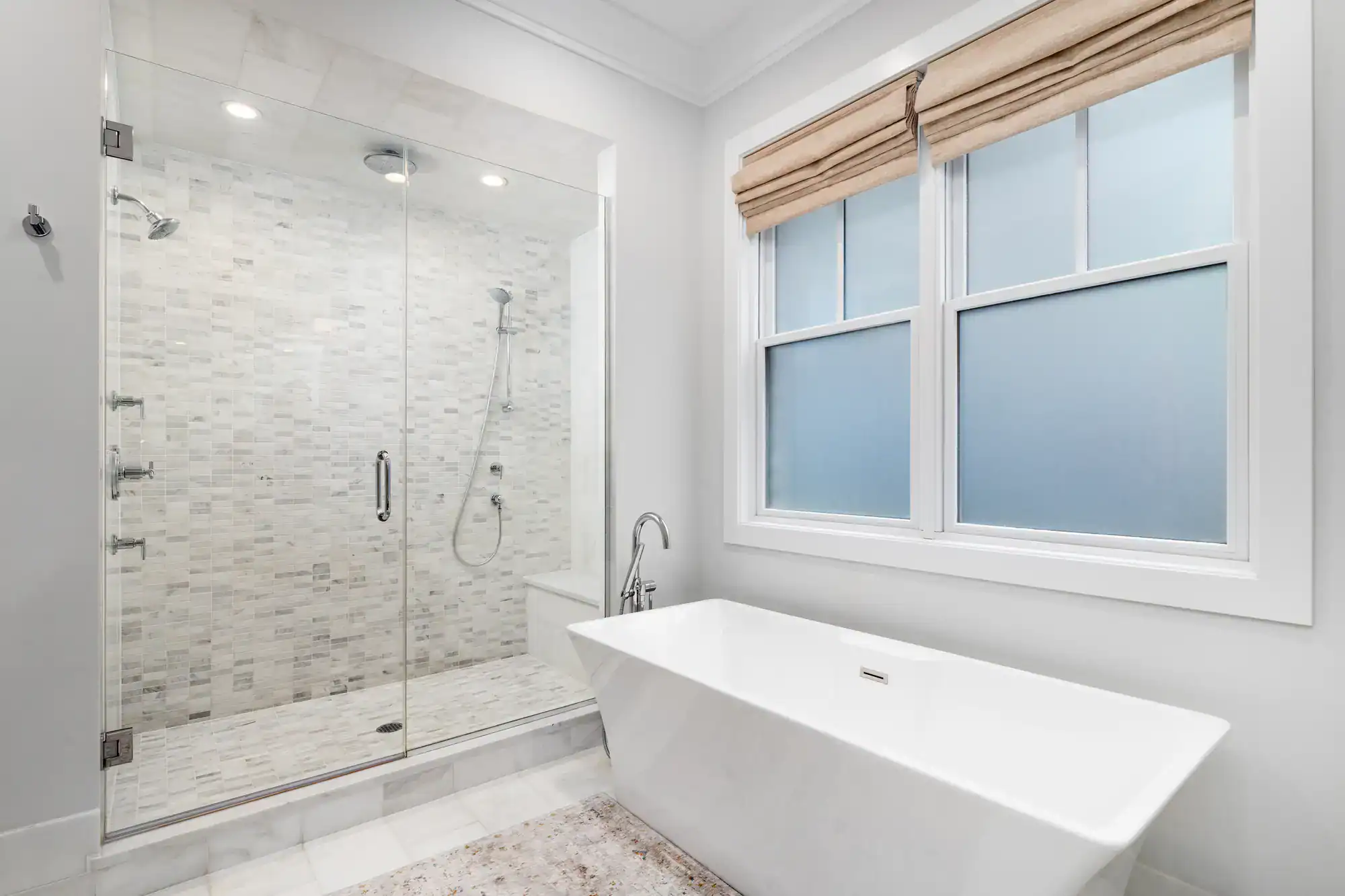
Most Glenmont homeowners aren’t going anywhere. With the Red Line terminus right here and mortgage rates where they are, moving doesn’t make financial sense and honestly, this neighborhood has too much going for it. What does make sense is investing in the home you already own, starting with the room you use every single day.
A professionally remodeled bathroom in Glenmont isn’t just about how it looks. The original bathrooms in Glenmont Village and Georgian Forest were built to FHA minimum standards one bathroom per house, no waterproofing membrane beneath the tile, exhaust fans that were barely adequate in 1958. After 60 or 70 years of Maryland’s humidity cycling through those walls outdoor relative humidity running 60 to 80 percent year-round, with summer dewpoints regularly above 70 degrees what’s behind your tile is often a much bigger problem than what’s on the surface.
When we do the work right, you get more than an updated bathroom. You get a space that’s structurally sound, properly waterproofed, and built to handle this climate for decades. Midrange bathroom remodels currently recoup around 80 percent of their cost at resale the highest return since 2007 and Glenmont home values rose 5.33 percent between 2023 and 2024. That matters when your home is already worth over half a million dollars.
Optima Design Group has been remodeling homes in the Washington, DC metro area since 1973 which means we were working in Glenmont and surrounding Montgomery County neighborhoods long before the Glenmont Metro station even opened. That kind of history isn’t just a number. It means we’ve opened up walls in homes exactly like yours and know what to expect, what to fix, and how to build something that lasts.
We hold Maryland MHIC license number 28145 the required Home Improvement Commission credential for every contractor doing this work in Montgomery County along with active licenses in DC and Virginia. We’re also bonded and fully insured, which matters when our crew is working inside your home for several weeks.
What sets us apart from contractors who show up with a slick website and no track record is straightforward: we’ve been doing this specific kind of work, in this specific market, for over five decades. We handle tiling, painting, carpentry, and plumbing coordination under one roof. You deal with one team, one schedule, and one point of contact from start to finish.
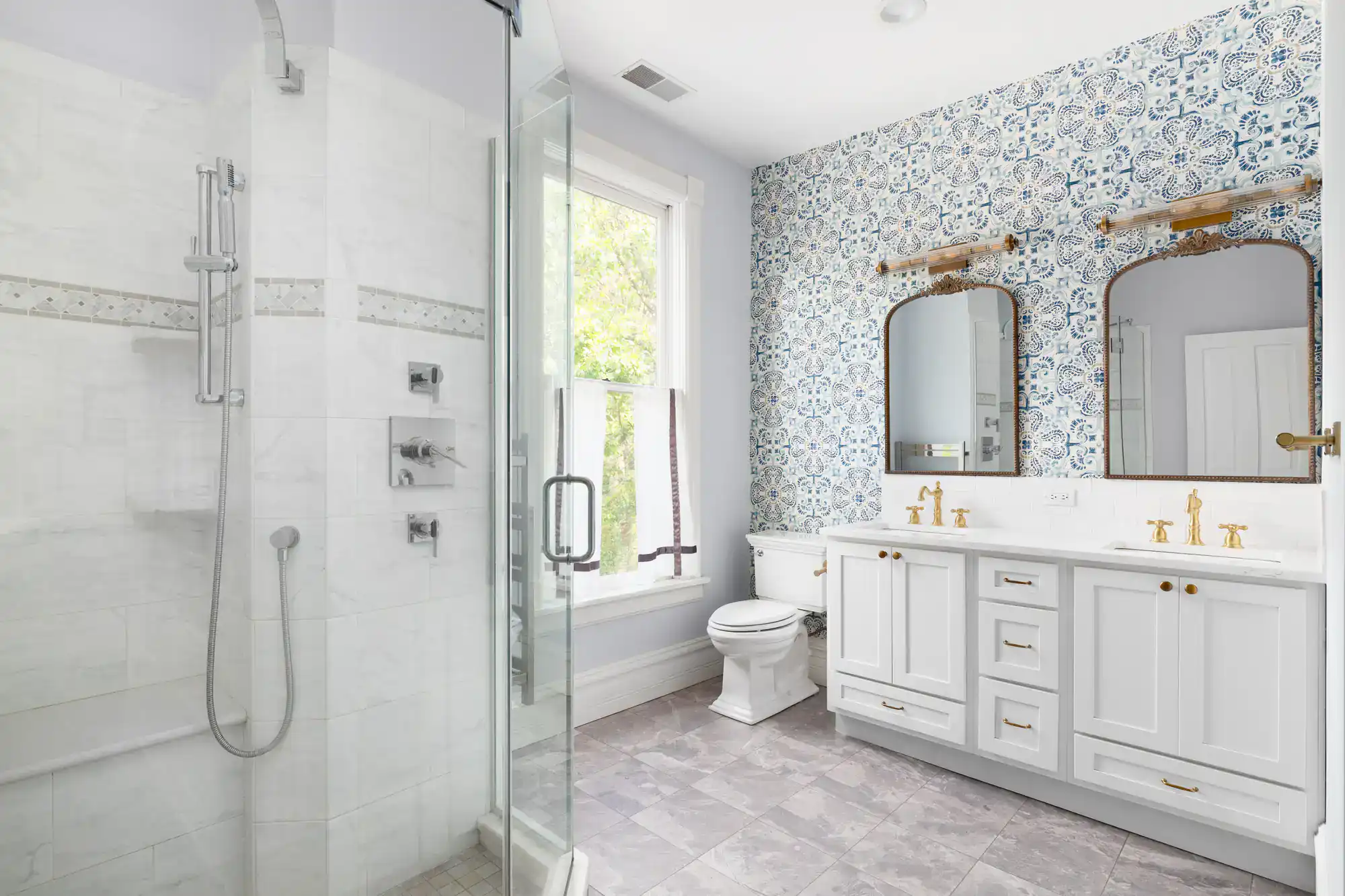
It starts with an in-home consultation where we define the scope clearly what’s being replaced, what’s staying, what the timeline looks like, and what the written estimate covers. You get specifics before anyone picks up a tool.
Once the project begins, the first thing that happens is demolition and discovery. In a Glenmont home built in the 1950s or 60s, this phase matters more than most contractors will tell you. When the tile comes off, what’s underneath sometimes changes the scope subfloor moisture damage, absent vapor barriers, deteriorated substrates. We address what’s actually there, not just what was planned for on paper. Any plumbing changes trigger a permit through Montgomery County’s Department of Permitting Services, and if the project involves new drains or supply line work, WSSC inspects the underground piping before anything gets closed up. That’s not optional it’s the code and we handle it for you.
From there, it’s substrate preparation, waterproofing, tile installation, fixture work, and finish details. A small bathroom remodel typically runs three to eight weeks depending on scope. Our crew cleans up after each day’s work. You’ll know what’s happening and when not because you had to chase anyone down for an update, but because that’s how we manage projects.
Ready to get started?
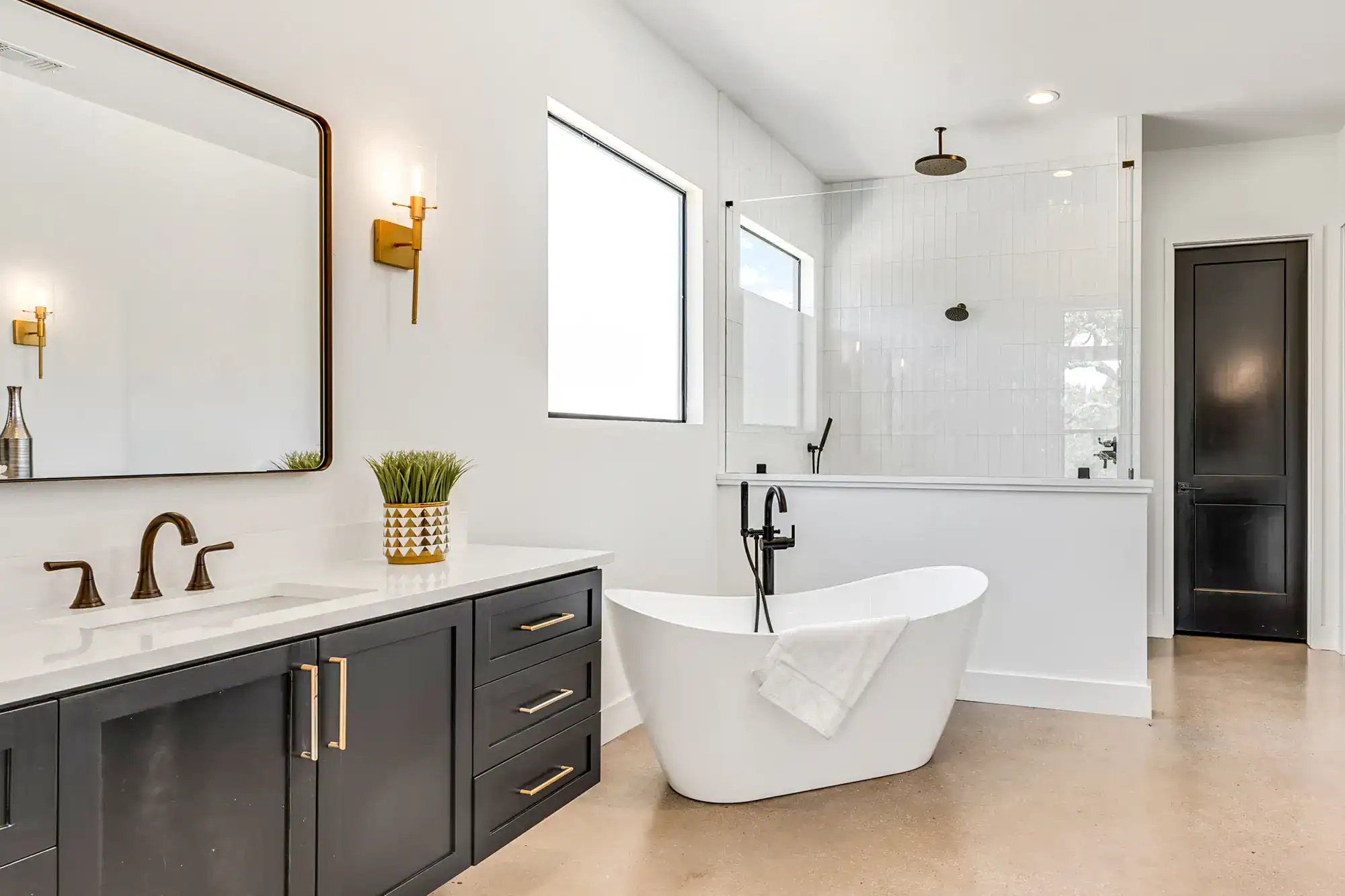
Bathroom remodeling in Glenmont covers a wide range of project types, and the right scope depends on your home, your household, and what you’re trying to solve. For a Glenmont Village or Georgian Forest home with an original single bathroom, a full gut renovation new tile, new waterproofing, new fixtures, new subfloor if needed is often the most practical path. Covering up old problems with new tile is the fastest way to end up calling a contractor again in three years.
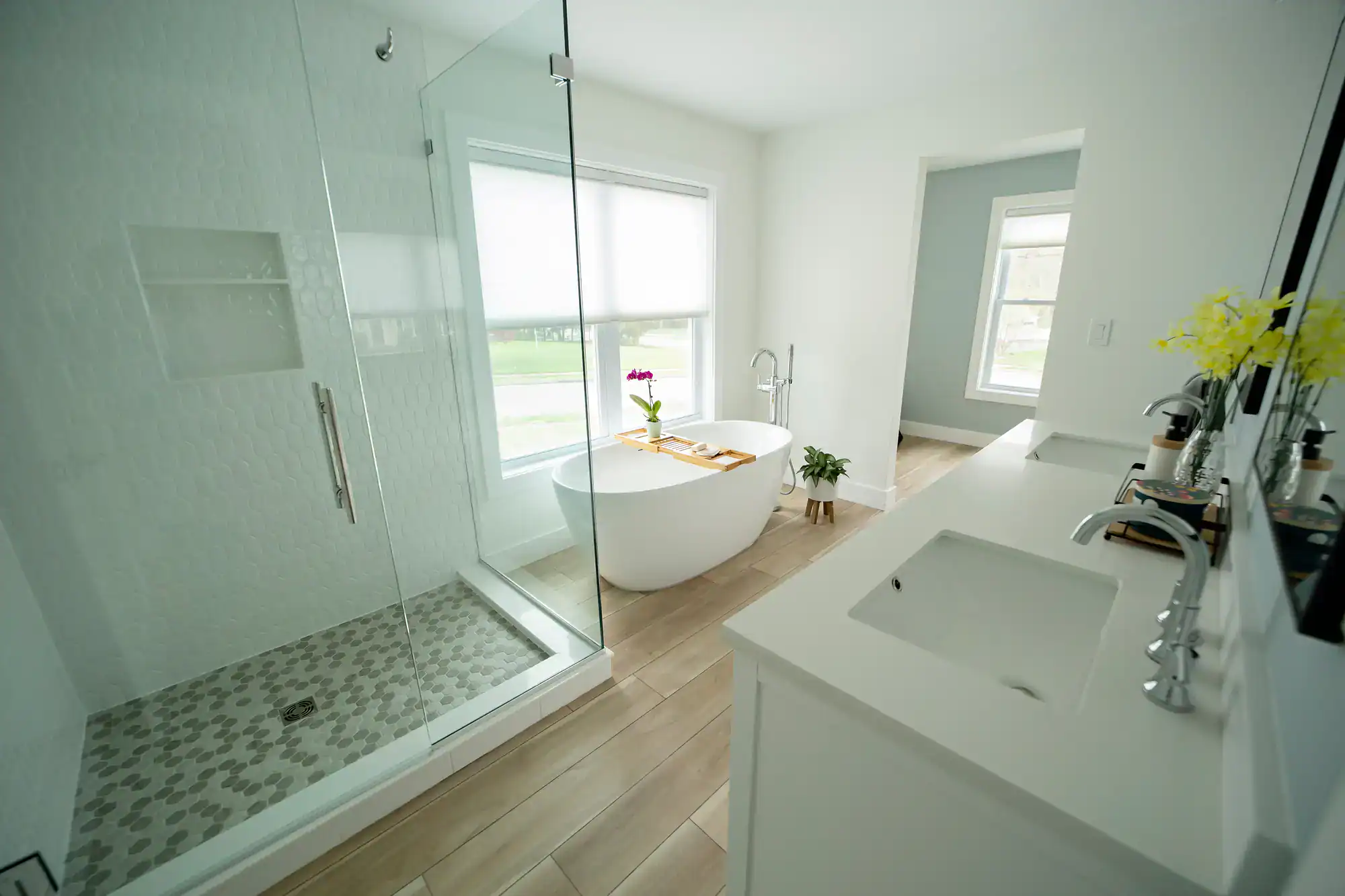
Walk-in shower installation is one of the most common requests we handle, and it’s a particularly good fit for Glenmont’s housing stock. Converting a tub-shower combo to a walk-in shower opens up a small bathroom, improves daily usability, and with a curbless entry and bench seating makes the space work for aging parents or a multi-generational household without looking clinical or institutional. Grab bar-ready construction, non-slip tile, and proper ventilation are part of the conversation from the start, not an afterthought.
Small bathroom remodeling is handled with the same attention as a full master bath renovation. Floor tile, wall tile, shower tile, cabinet replacement, vanity work, and repainting are all managed in-house. No subcontractors being handed off mid-project. The same team that starts your bathroom in Glenmont finishes it and we know Montgomery County’s permitting requirements well enough that you won’t be caught off guard by an inspection.
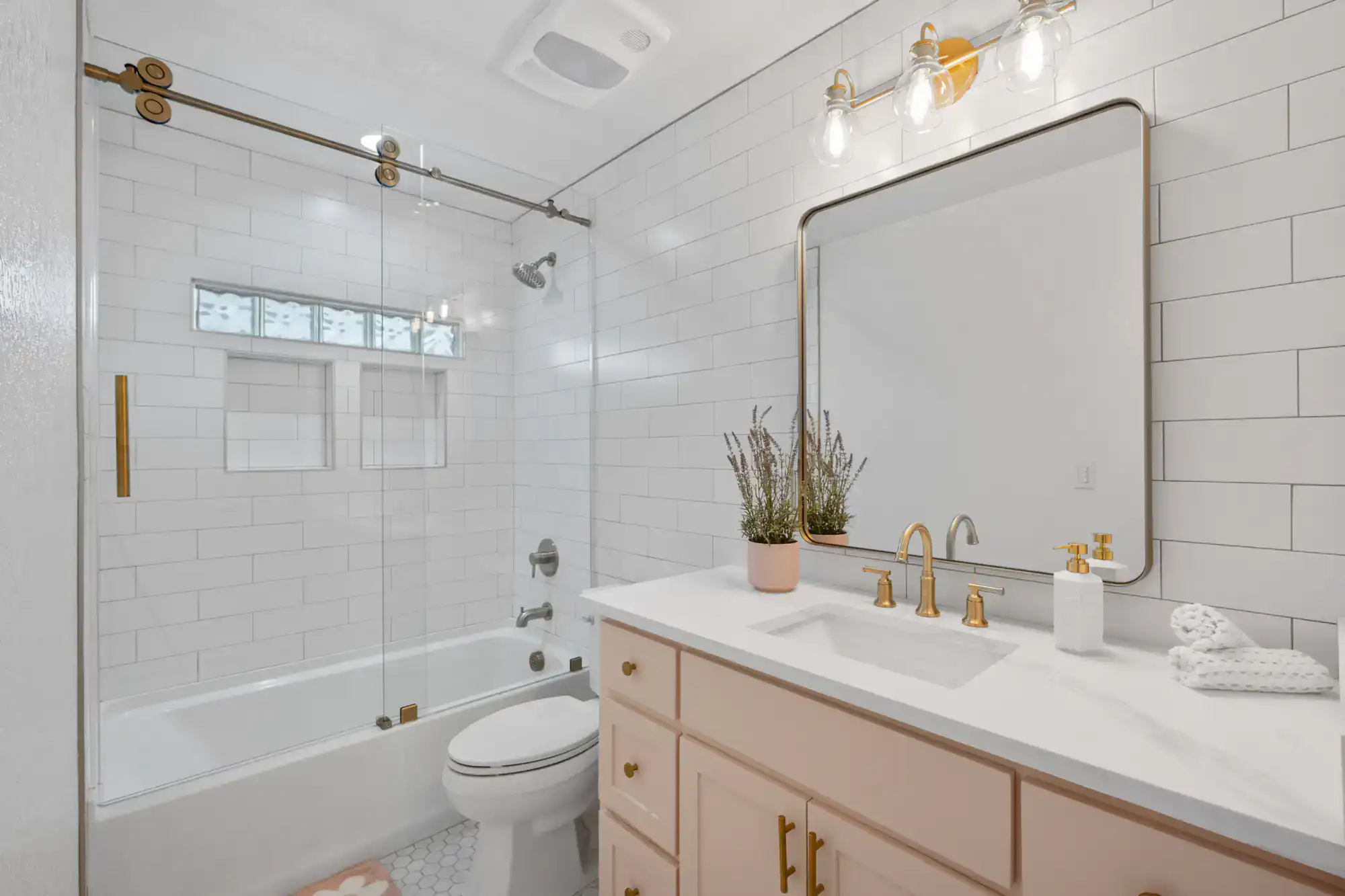
In Glenmont, all permitting runs through Montgomery County’s Department of Permitting Services there’s no separate city-level process since Glenmont is an unincorporated community. Whether you need a permit depends on what the project involves. Cosmetic work like painting, replacing a faucet, or installing new tile over an intact substrate generally doesn’t require one. But if your remodel involves any plumbing changes relocating a drain, replacing supply lines, adding a fixture you’ll need a plumbing permit, and WSSC has to inspect the underground piping before the slab or subfloor gets closed back up.
Skipping that step isn’t just a code violation. It can create real problems when you sell or refinance, because an unpermitted plumbing change shows up as a liability during inspection. We hold Maryland MHIC license number 28145, which is the credential required to pull permits in Montgomery County, and we manage the permit process as part of the project not as an add-on.
For a small bathroom remodel in Glenmont think a standard one-bath layout like the original floor plans in Glenmont Village active construction typically runs two to three weeks. Factor in the permit process through Montgomery County DPS and any lead time on materials, and the full timeline from signed contract to finished bathroom is usually four to six weeks for a straightforward project.
Larger scope or more complex situations a split-level home in Greenwood Knolls where the plumbing runs are more complicated, or a full gut renovation where significant moisture damage is found during demolition can push that timeline out. What you should expect from us is a specific start date, a realistic completion window, and communication throughout not a vague estimate and silence until it’s done.
This is one of the most important questions to ask before you start, because the answer directly affects your budget and timeline. In a Glenmont home built in the 1950s or 60s Glenmont Village, Georgian Forest, and similar subdivisions the original bathroom was constructed without the waterproofing standards that exist today. There was no cement board substrate, no multi-layer moisture membrane, and often no functioning vapor barrier. Decades of steam and condensation in Maryland’s humid climate have had a long time to work their way into the wall cavity and subfloor.
What gets found during demolition varies: soft or rotted subfloor sections, mold in the wall cavity, deteriorated drywall behind the tile, outdated galvanized supply lines. None of this is a reason to panic, but it is a reason to work with a contractor who has experience with this housing stock and won’t just tile over what’s there. A detailed written estimate and a clear scope of work before the project starts gives you the best protection against unexpected cost overruns which hit nearly half of all bathroom renovations when the scope isn’t properly defined upfront.
Yes and it’s one of the most common projects we handle in Glenmont’s older housing stock for good reason. The original bathrooms in this area were designed around a tub-shower combo, which made sense in 1958 but doesn’t reflect how most households actually use their primary bathroom today. More than 60 percent of homebuyers now prefer a shower over a tub in the primary bathroom, and a well-designed walk-in shower with frameless glass actually makes a small bathroom feel more open, not more cramped.
For households in Glenmont dealing with aging parents or multi-generational living which is common across the community’s diverse population a curbless walk-in shower with bench seating and grab bar-ready blocking in the walls is a practical upgrade, not just an aesthetic one. The key is designing the shower correctly from the start: proper waterproofing, appropriate tile size for the floor pitch, and a showerhead placement and bench height that actually work for the people using it. That’s the kind of detail that separates a bathroom that holds up from one that looks good on day one and causes problems in year three.
In Maryland, any contractor performing home improvement work is required to hold an active Maryland Home Improvement Commission license the MHIC number. You can verify any contractor’s MHIC license directly through the Maryland Department of Labor’s online lookup tool. For work in Glenmont specifically, that license is non-negotiable. An unlicensed contractor cannot legally pull permits through Montgomery County DPS, which means any plumbing or electrical work they do is unpermitted by default.
Beyond the MHIC license, ask specifically about general liability insurance and workers’ compensation coverage. General liability protects your home if the work causes property damage including to a neighbor’s property, which matters in Glenmont’s densely built neighborhoods. Workers’ comp protects you from liability if a worker is injured on your property. Ask for the certificate of insurance directly, not just a verbal assurance. A legitimate contractor will hand it over without hesitation. We hold MHIC license number 28145, are bonded, and carry both general liability and workers’ compensation coverage.
For most Glenmont homeowners, the answer is straightforwardly yes and the reasoning goes beyond just resale value. Glenmont home values rose 5.33 percent between 2023 and 2024, reaching a median of $571,200. Midrange bathroom remodels currently recoup around 80 percent of their cost at resale, which is the strongest return this category has seen since 2007. With Montgomery County’s active Glenmont Corridors planning initiative signaling continued investment in the area around the Metro station, the long-term trajectory for property values here is positive.
But the more immediate reason to remodel is functional. If you’re in a Glenmont Village home with one original bathroom that’s never been professionally updated, you’re not just living with an outdated aesthetic you’re likely living with a bathroom that has active moisture problems building inside the walls. Addressing that now, before it becomes a structural repair, is almost always less expensive than waiting. And if your household includes older family members or you’re thinking about aging in place, a properly designed walk-in shower with a curbless entry and bench seating changes the daily experience of the space in ways that go well beyond square footage or tile selection.
Other Services we provide in Glenmont