“
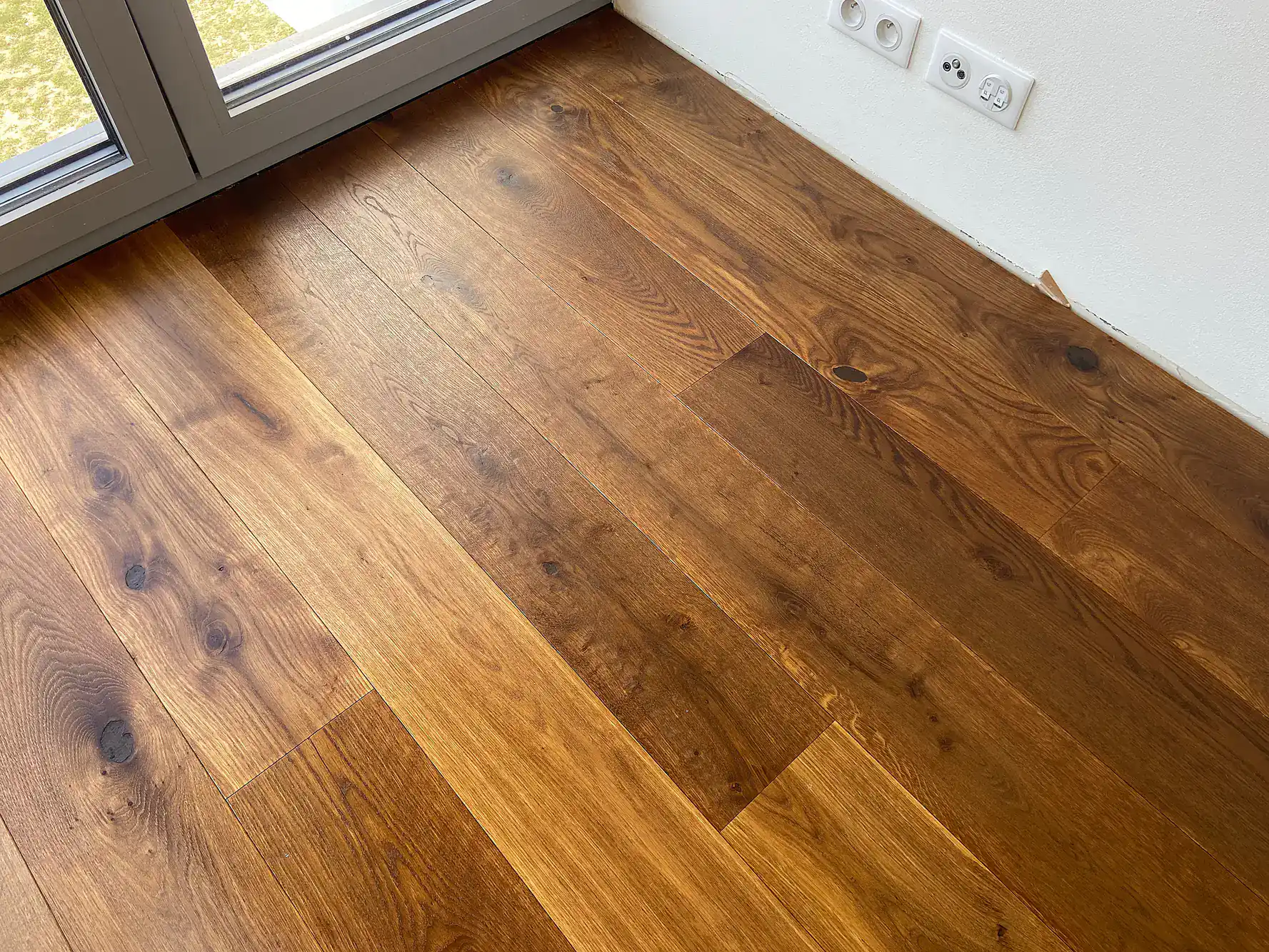
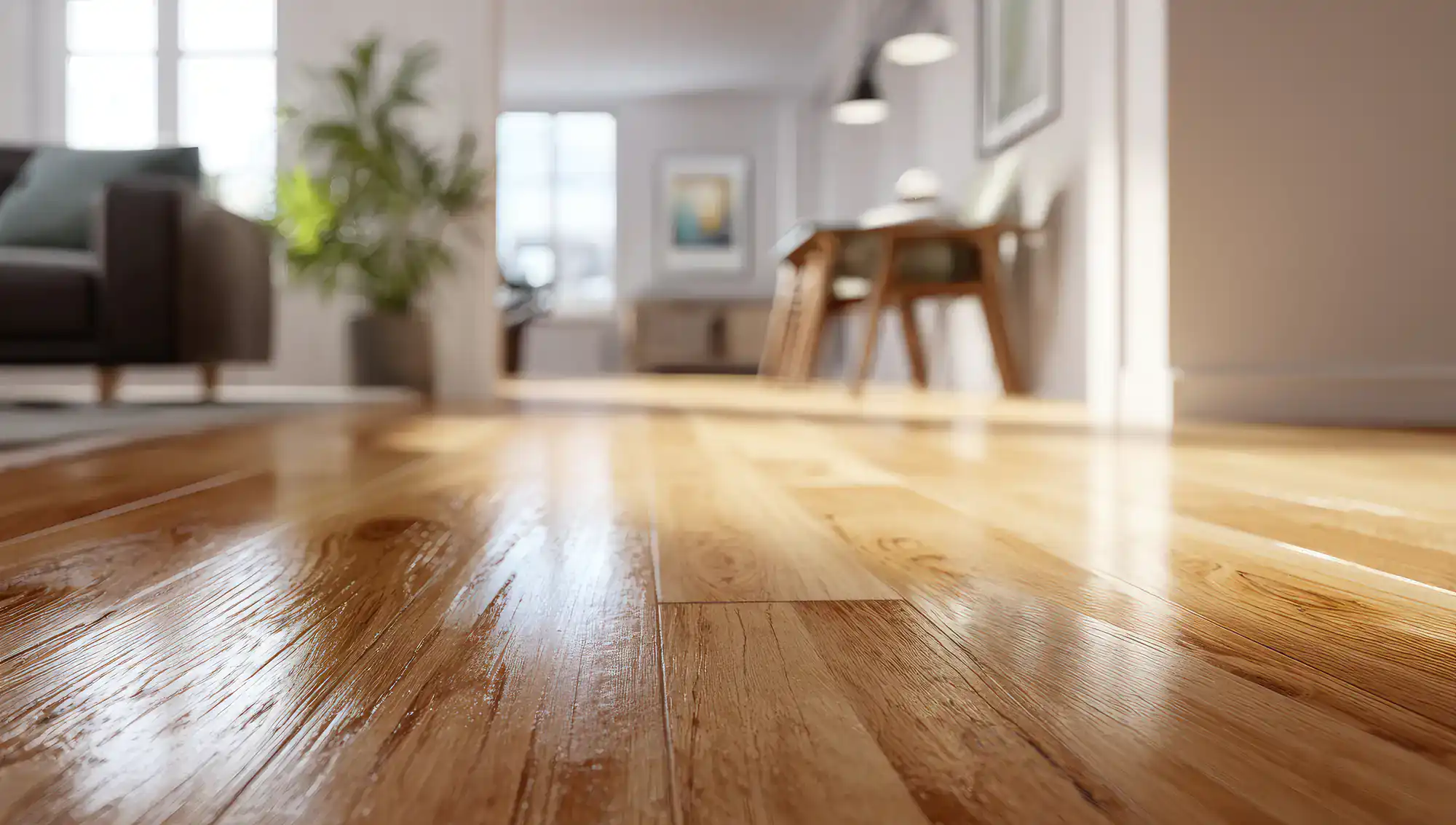
There’s a version of your home where the floors don’t embarrass you when guests walk in. Where the wood is smooth, the finish holds, and the whole space just feels pulled together. That’s not a renovation fantasy it’s what a proper refinishing job does, and it lasts.
For Glenmont homeowners specifically, this matters more than the generic pitch. The ranch-style ramblers and split-levels in Georgian Forest, Glenmont Village, and Greenwood Knolls were built in the late 1940s through the 1960s with solid oak floors floors that have been covered with carpet, scuffed through multiple owners, and subjected to decades of Maryland’s humidity swings. Those floors expand every summer when the humidity climbs and contract every dry winter when your heating system pulls the moisture out of the air. Over 60 or 70 years, that cycle leaves gaps, raised edges, surface checking, and a finish that’s long past done.
The good news: solid hardwood can typically be refinished four to five times over its lifespan. A floor that looks rough may have real life left in it. Getting a professional assessment before you commit to replacement is the move that saves you money and in Glenmont’s competitive housing market, where average home prices are sitting around $612,000 and appreciating fast, the condition of your floors is a financial decision, not just an aesthetic one.
We’re based in Bethesda a straight shot from Glenmont down Georgia Avenue and have been working in Montgomery County homes for over 50 years. That’s not a marketing number. It means we’ve seen virtually every floor condition that exists in this area’s housing stock, from original oak under three layers of carpet in a Georgian Forest rambler to water-damaged boards in a Randolph Road townhouse.
We hold Maryland MHIC # 28145, which is the license that legally authorizes home improvement work in Glenmont and throughout Montgomery County. We’re also licensed in DC and Virginia, fully insured, and have earned 300+ recommendations on Washington Consumers’ Checkbook the review platform that DC-area homeowners actually rely on when they’re vetting a contractor.
Gordon Franks, our owner, stays directly involved in every job. He’s not handing you off to a crew you’ve never met. Clients consistently mention his responsiveness, his straightforwardness, and the fact that he shows up. That kind of accountability is harder to find than it should be.
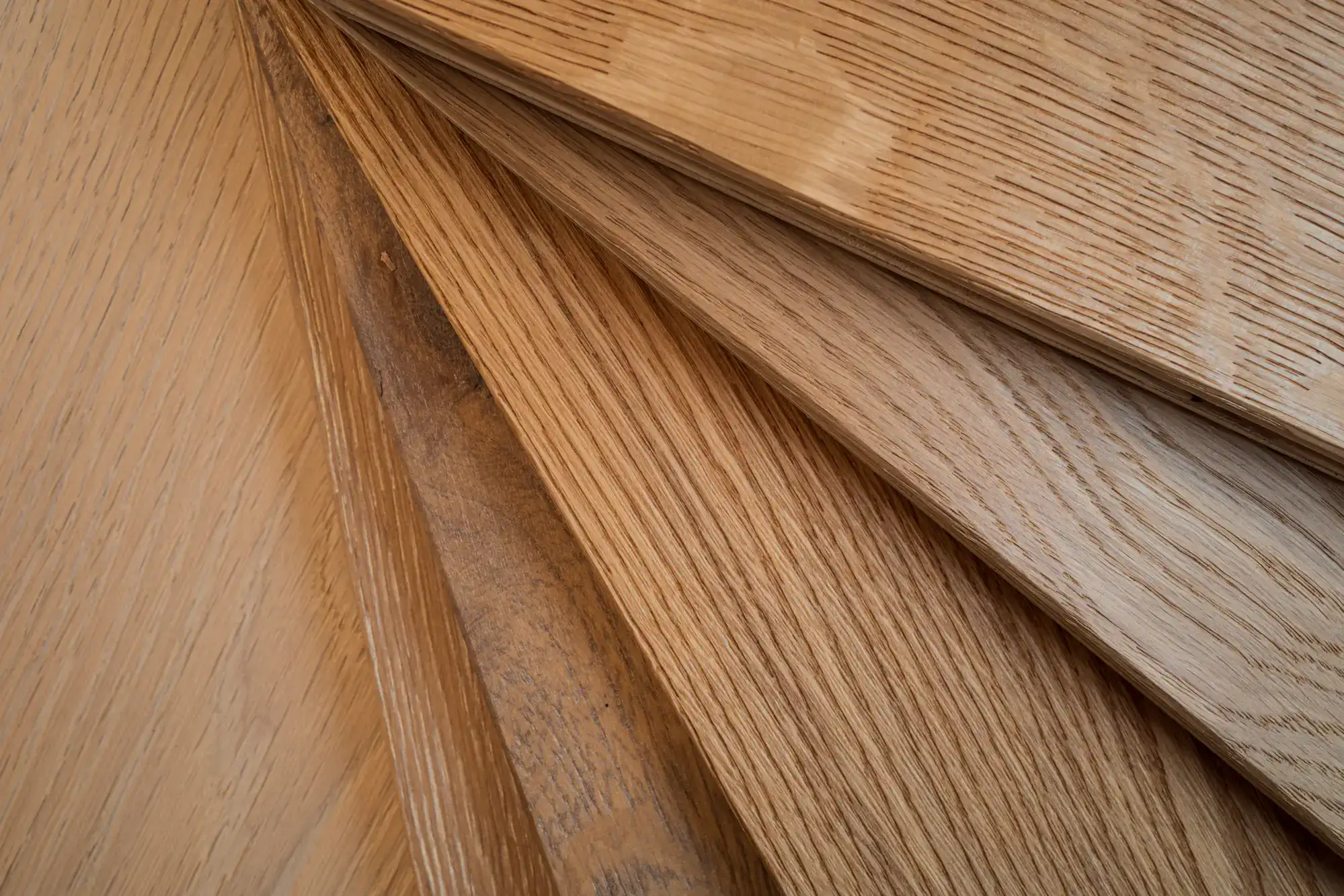
It starts with an honest assessment. Before any work is quoted or scheduled, we evaluate the actual condition of your floors wear layer thickness, board integrity, subfloor condition, and whether refinishing is the right call or whether targeted repair or replacement makes more sense. For Glenmont homes with engineered hardwood installed during an 80s or 90s renovation, this step is especially important, because whether engineered floors can be refinished depends on how thick the wear layer is. You get a real answer, not a default recommendation toward the more expensive option.
Once the scope is clear, the work follows a defined sequence. We repair damaged or compromised boards first. Then comes sanding multiple grits, working progressively finer to open the wood grain evenly. If you’re changing the stain color, water popping is used to help the wood absorb the stain uniformly. We monitor humidity between coats, which matters in Maryland, where ambient moisture levels can affect how a finish bonds and cures. Multiple finish coats go down, with adequate dry time between each.
Because hardwood floor refinishing in Glenmont doesn’t require a building permit it’s considered maintenance work under Montgomery County’s guidelines there’s no waiting on county approvals before the project starts. Timing-wise, spring and fall are the most favorable seasons for this work, when humidity is stable and the wood behaves predictably. But climate-controlled homes can be done year-round without issue.
Ready to get started?
We handle the full range of hardwood flooring work installation, refinishing, sanding, repair, and engineered hardwood flooring and the recommendation you get is based on what the floor actually needs, not what’s easiest to sell.
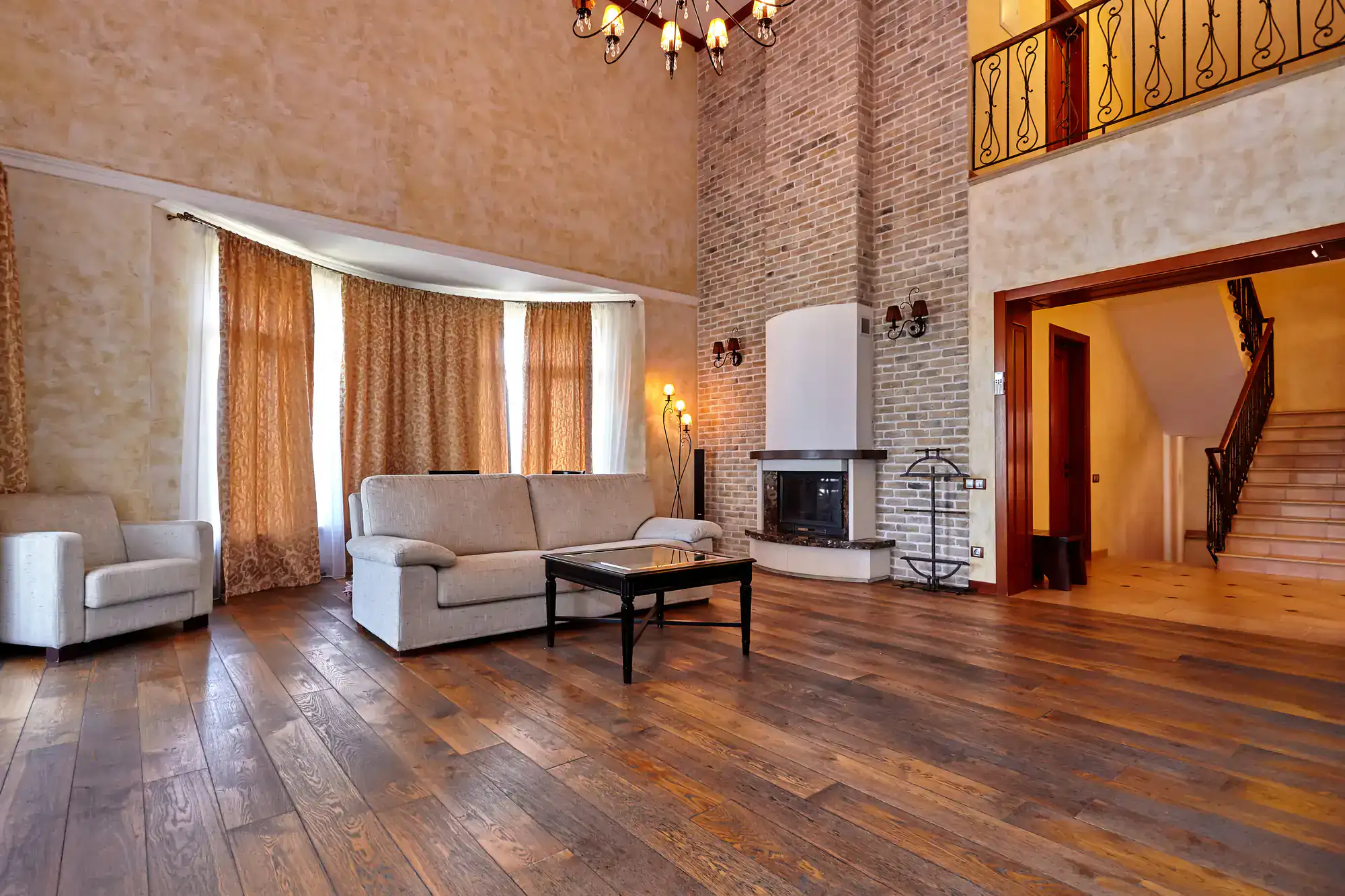
For Glenmont homeowners in the older subdivisions, hardwood floor refinishing is often the right call. The solid oak floors in these homes are thick enough to sand, and refinishing costs a fraction of full replacement while returning roughly 147% at resale, according to NAR and NARI data. If the damage is concentrated a section of water-damaged boards near a window, a patch where a wall used to be hardwood floor repair can address it without touching the rest of the floor.
New hardwood floor installation comes into play when the existing floor is beyond refinishing, when a room never had hardwood to begin with, or when you’re finishing a basement or addition. Engineered hardwood is often the better fit in those situations, particularly in below-grade spaces or rooms with radiant heat, where solid hardwood isn’t recommended. Because we also handle interior painting, tiling, and remodeling, Glenmont homeowners doing a broader home refresh whether before a sale or after buying a place on Randolph Road can coordinate everything through one contractor instead of juggling three.
In most cases, yes and it’s worth finding out before you assume otherwise. The post-war homes in Glenmont’s older subdivisions, like Georgian Forest and Glenmont Village, were built with solid oak floors that are typically thick enough to be sanded and refinished multiple times. Solid hardwood can generally go through four to five refinishing cycles over its lifespan, and a floor that’s been covered with carpet for decades may have barely been touched.
The honest answer depends on what’s actually there. Some floors have been sanded down significantly in previous renovations. Others have boards that are too damaged or warped to hold a new finish well. The right starting point is a professional assessment not an assumption either way. We evaluate the wear layer, board condition, and subfloor before recommending anything, so you’re not spending money on a refinish that won’t hold or replacing floors that didn’t need to go.
Nationally, professional hardwood floor refinishing runs between $3 and $8 per square foot for traditional refinishing, with dustless refinishing typically falling in the $5 to $8 per square foot range. Average total project costs run from about $1,100 to $2,700, depending on the size of the space, the condition of the floor, whether you’re changing the stain color, and how much repair work is needed before sanding can begin.
In Glenmont’s housing market where homes are averaging around $612,000 and appreciating at roughly 8% year over year the math on refinishing before a sale is straightforward. Spending $1,500 to $3,000 on floors that return nearly 150% at resale is a different kind of decision than a cosmetic upgrade. For homeowners who aren’t selling, it’s still significantly less expensive than full floor replacement, and the result lasts for years when the job is done correctly.
Refinishing involves sanding the floor down to bare wood, then applying stain and multiple coats of finish. It removes scratches, stains, and surface damage, and it gives you the option to change the color entirely. It’s the more involved process, and it’s what’s needed when the floor has visible wear through the finish, deep scratches, or discoloration that a surface treatment won’t fix.
Recoating sometimes called screening is a lighter process. The existing finish is lightly abraded to give the new coat something to bond to, and a fresh layer of polyurethane is applied on top. It refreshes the sheen and adds a layer of protection, but it doesn’t address scratches or damage that have gone through the finish into the wood. Recoating is a good option for floors that are still in decent shape but starting to look dull. If you’re not sure which applies to your floors, that’s exactly what the initial assessment is for we’ll tell you what the floor actually needs, not what costs more.
It depends on the wear layer the top layer of real wood above the plywood core. If the wear layer is approximately 3mm or thicker, the floor can typically be sanded and refinished at least once, sometimes twice. If it’s thinner than that, sanding through it is a real risk, and the better options are recoating (a surface treatment without sanding), targeted board replacement in damaged areas, or full replacement if the floor is at the end of its life.
Many Glenmont homes that were renovated in the 1980s and 1990s have engineered hardwood that homeowners assume can’t be touched. That’s not always true. It’s also not always safe to sand without checking first. The wear layer thickness isn’t something you can eyeball it requires a professional evaluation. We assess engineered floors before making any recommendation, so you know exactly what your options are before any decision gets made.
A typical hardwood floor refinishing project takes anywhere from three to five days from start to finish, depending on the size of the space, the number of finish coats, and the dry time required between coats. Maryland’s climate adds a variable here during Glenmont’s humid summers, finish curing can be affected by ambient moisture if the home isn’t climate-controlled. In a properly air-conditioned home, timing is predictable regardless of the season.
You’ll generally need to stay off the refinished floors for at least 24 hours after the final coat, and it’s advisable to avoid heavy furniture and rugs for several days while the finish fully cures. Whether you need to vacate entirely depends on the scope of the project and how much of the home is being done at once. For families with kids or pets, planning around the work schedule matters we communicate the timeline clearly upfront so you’re not caught off guard mid-project.
Yes on both counts. We’re based in Bethesda, which is in the same county as Glenmont a direct drive via Georgia Avenue and have been serving Montgomery County homeowners for over 50 years. We hold Maryland MHIC # 28145, which is the license issued by the Maryland Home Improvement Commission and required for any legitimate home improvement contractor operating in Glenmont and throughout the state.
This matters more than it might seem. In a community where nearly half of residents were born outside the United States and where many homeowners have learned sometimes the hard way to verify contractor credentials before work begins, a published license number is a concrete starting point. We also hold licenses in DC and Virginia, are fully insured, and have 300+ recommendations on Washington Consumers’ Checkbook, which covers the Montgomery County market specifically. If you want to verify any of it before picking up the phone, everything is published and searchable.
Other Services we provide in Glenmont