“
Homes in Martin’s Additions routinely sell for over a million dollars. The 1920s farmhouse on Woodbine Street or the 1940s Colonial on Thornapple didn’t get there by accident these are homes people hold onto, invest in, and take seriously. But a lot of those same homes still have bathrooms that reflect the era they were built in: cramped tile layouts, original plumbing, fixtures that were already outdated decades ago.
That mismatch between what your home is worth and what your bathroom looks like is exactly what a well-executed renovation fixes. When the bathroom works when the shower is properly waterproofed, the tile is set right, the layout actually makes sense for how you use the space you stop thinking about it. That’s the goal. Not a showpiece, just a bathroom that functions the way a home at this price point should.
In a market this supply-constrained, where moving isn’t realistic for most Martin’s Additions residents, investing in the home you have is the only move that makes financial sense. The Mid-Atlantic humidity doesn’t help older homes either. Bathrooms built before modern moisture-management standards were written are especially vulnerable to grout failure, tile delamination, and mold behind the walls. Getting ahead of that with professional waterproofing and proper surface prep is cheaper and far less disruptive than dealing with the damage after the fact.
We’ve been doing bathroom and home remodeling work in the DMV since 1973. Our office is in Bethesda less than two miles from Martin’s Additions and we’ve spent decades working in exactly the kind of pre-war and mid-century housing stock that defines this village. That’s not a coincidence. It’s just what working in this part of Montgomery County for half a century looks like.
We hold an active Maryland MHIC license (#28145), are bonded and insured, and have documented project experience in Bethesda, Chevy Chase, McLean, and Potomac neighborhoods with the same architectural character and the same high expectations as Martin’s Additions. Reviews from clients in this area specifically call out our crew by name, note thorough prep work, and describe a team that shows up, does the job, and cleans up after themselves. In a village of roughly 1,000 people where word travels fast, that kind of track record matters.
It starts with a conversation about what you actually want not a sales pitch. Someone comes out, looks at the space, understands the scope, and gives you a detailed written estimate that breaks down what’s included. No vague numbers, no surprises buried in the fine print later.
One thing worth knowing upfront: Martin’s Additions is an incorporated village within Montgomery County, which means most bathroom remodels that touch plumbing, electrical, or structural elements require permits from both the Village of Martin’s Additions and Montgomery County’s Department of Permitting Services. The village’s own building code sometimes runs stricter than the county’s. We handle permit coordination correctly from the start that’s how the project stays on schedule and avoids problems at resale.
Once permits are in place, the work follows a clear sequence: demolition and removal, waterproofing and substrate preparation, tile installation, fixture and vanity work, paint, and final walkthrough. In a pre-war home, the prep phase often reveals conditions old pipe configurations, original substrates that need to be addressed before anything goes on the walls. That’s not a surprise; it’s just what working in homes of this age looks like, and it’s factored into how we scope the project. Most bathroom remodels in a home like yours run three to eight weeks depending on scope, and you’ll know the timeline before any work begins.
Ready to get started?
Bathroom remodeling in Martin’s Additions covers the full range full gut renovations, walk-in shower installations, tub-to-shower conversions, tile replacement, vanity and cabinet work, floor tiling, and interior painting. Because we operate as a full-service general contractor, tile, carpentry, painting, and installation all stay under one team. You’re not coordinating between a tile guy, a painter, and a separate plumbing contractor. One crew, one schedule, one person accountable for the finished result.
In a village where the housing stock is predominantly pre-World War II, a few things come up consistently. Original galvanized plumbing, small bathroom footprints that weren’t designed with modern fixtures in mind, and tile substrates that predate current waterproofing standards are common. Our approach accounts for these conditions professional-grade waterproofing membranes, proper surface preparation, and fixture selections that work within the spatial constraints of a 1920s or 1930s bathroom rather than fighting them.
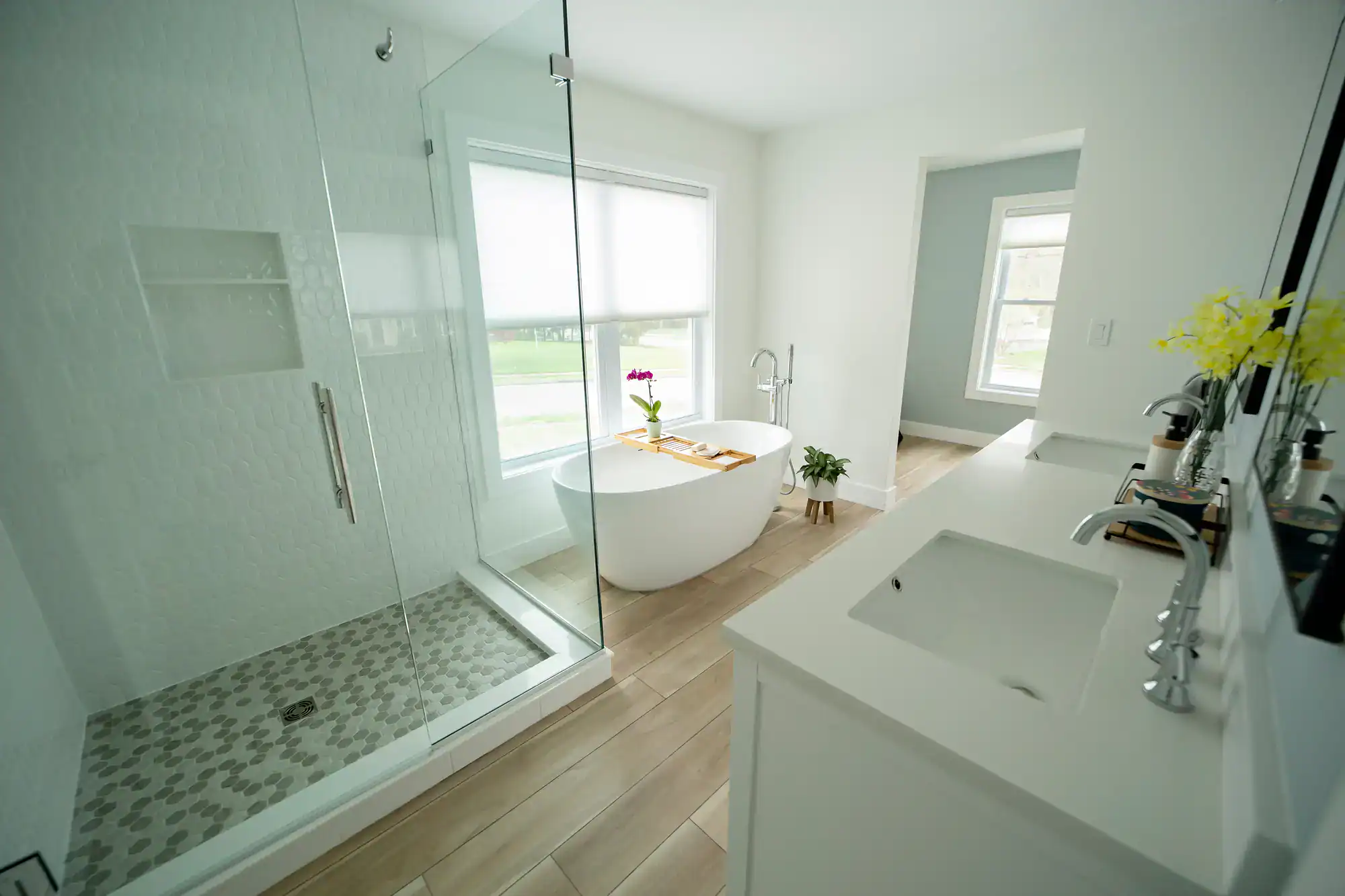
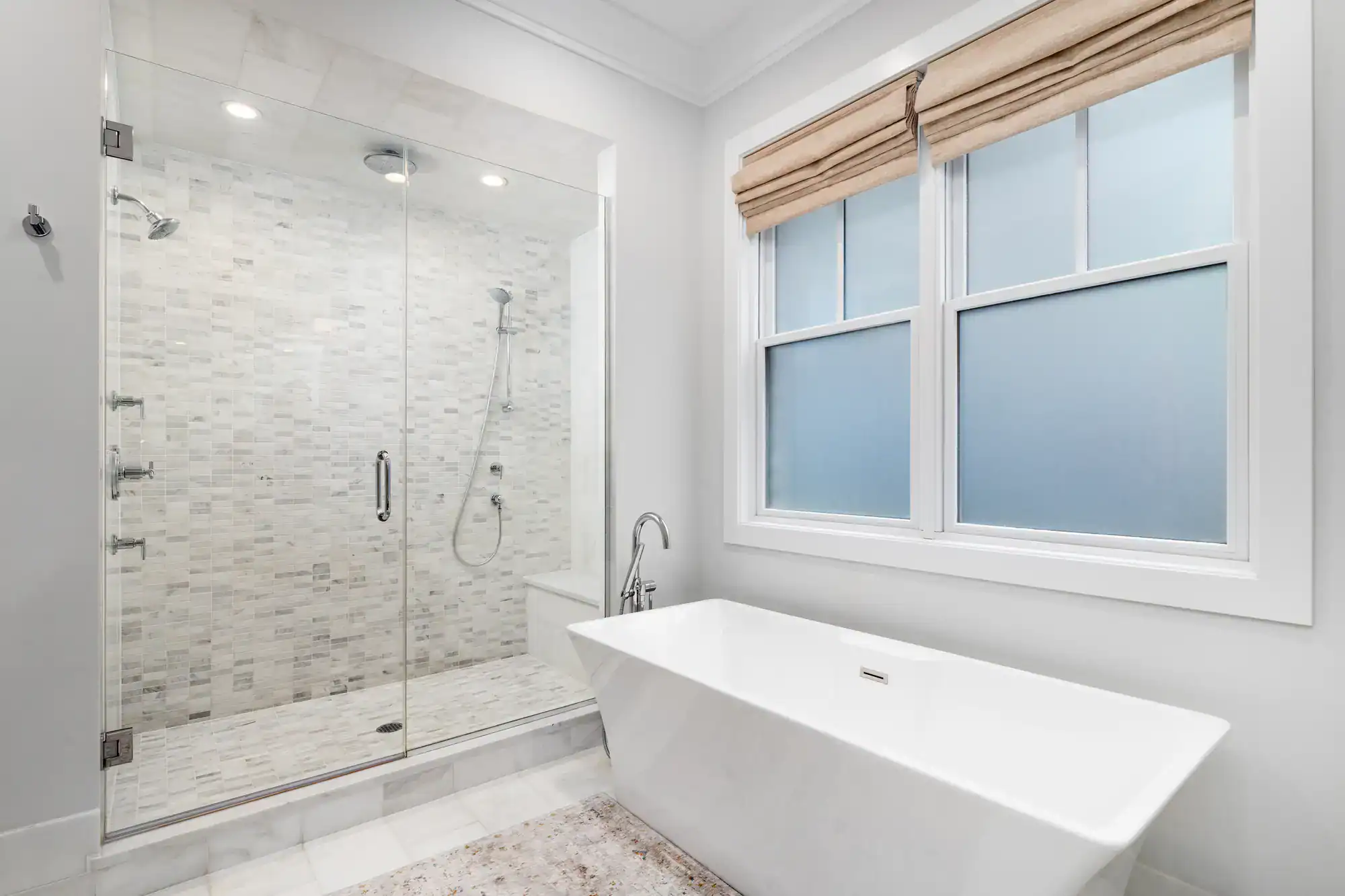
Walk-in shower installations are particularly popular in Martin’s Additions, and for good reason. A curbless entry with frameless glass actually makes a small bathroom feel more open, not more cramped and it’s one of the most practical upgrades for homeowners who plan to stay in their homes long-term. With 68% of bathroom remodels in 2025 incorporating some form of accessibility feature, and with most Martin’s Additions residents having no interest in moving, designing for how you’ll use the space over the next 20 years is worth thinking about from the start.
Yes and this is one of the most important things to understand before starting a bathroom renovation in Martin’s Additions specifically. Because the village is an incorporated municipality within Montgomery County, most bathroom remodels that involve plumbing, electrical, or any structural changes require permits from both the Village of Martin’s Additions and Montgomery County’s Department of Permitting Services. The village’s own building code is sometimes more restrictive than the county’s, and both tracks need to be satisfied before work can proceed.
This dual-permit requirement doesn’t apply in unincorporated parts of Montgomery County it’s specific to Martin’s Additions and a handful of other incorporated villages in the area. Contractors who haven’t worked in villages like this may only pull the county permit, not realizing the village requires its own sign-off. That gap can cause stop-work orders, delays, and complications when you eventually sell. Our familiarity with Montgomery County permitting built over decades of work in Bethesda, Chevy Chase, and surrounding communities includes navigating exactly this kind of layered requirement.
The national median spend for a primary bathroom remodel in 2025 is around $15,000, but that number moves significantly depending on scope, materials, and what’s found behind the walls during demolition. In a pre-war home in Martin’s Additions where original plumbing configurations and older substrates are common it’s realistic to plan for some additional work once the tile comes off.
Budget overruns affect nearly half of all bathroom renovations nationally, averaging 23 to 35 percent over the original estimate, and that figure tends to be higher in older housing stock where conditions are harder to predict until work begins. What you can control is the quality of the estimate going in. A detailed, itemized written estimate that clearly defines scope, materials, and contingency gives you a much more accurate picture than a vague number thrown out over the phone.
In a market where homes sell for over a million dollars, the cost of a well-executed bathroom renovation is a small fraction of the home’s value and a midrange remodel recoups approximately 80 percent of its cost at resale, which is the highest rate since 2007. The question isn’t really whether it’s worth it. It’s whether the work is done correctly.
For a small to mid-size bathroom remodel, active construction typically runs two to four weeks once permits are in place and materials are selected. When you factor in the permit process which in Martin’s Additions involves both the village and Montgomery County the full timeline from signed contract to finished bathroom is generally four to eight weeks depending on scope. Larger projects or full gut renovations take longer.
If your home has only one full bathroom, which is common in the pre-war construction throughout Martin’s Additions, this is a legitimate practical concern and worth discussing directly during the estimate phase. We build the schedule around minimizing disruption as much as possible work is sequenced so that plumbing is functional again as quickly as the project allows, and the timeline is communicated clearly before any work begins. You’ll know what to expect going in, not find out mid-project.
Tub-to-shower conversions in pre-war homes involve a few layers that newer construction doesn’t. The original plumbing configuration may need to be adjusted to accommodate a shower drain in the right location, the existing substrate almost certainly needs to be replaced with a moisture-resistant backer before any new tile goes up, and the waterproofing membrane needs to be applied correctly not as an afterthought, but as a foundational step.
Waterproofing failures are the leading cause of post-renovation insurance claims, with repair costs ranging from $2,000 to $12,000. In a 1930s bungalow, getting that layer right the first time is especially important because the original construction wasn’t built with modern moisture management in mind. On the design side, a curbless walk-in shower with frameless glass is one of the most effective ways to make a small bathroom feel larger and more functional. More than 60 percent of homebuyers now prefer a shower over a tub in the primary bathroom, so if resale is ever part of the equation, the conversion also makes practical market sense.
In Maryland, any contractor performing home improvement work is required to hold an active Maryland Home Improvement Commission license, known as an MHIC license. You can verify any contractor’s license status directly through the MHIC database it’s a public record and takes about two minutes to check. Beyond the state license, you want to confirm the contractor carries general liability insurance and workers’ compensation coverage. Those two things protect you from being held liable if someone is injured on your property or if the work causes damage to your home or a neighbor’s property.
For work in Martin’s Additions specifically, it’s also worth asking whether the contractor has experience navigating the village’s permit process alongside the county’s. Not every licensed Maryland contractor has worked inside an incorporated village where a second layer of permitting applies. We hold MHIC #28145, are bonded and insured, and have a BuildZoom score of 91 placing us in the top 37 percent of over 58,000 licensed contractors in Maryland. Those aren’t self-reported claims; they’re third-party verified credentials you can look up independently.
In most cases, yes particularly if the bathroom is visibly dated or has functional issues. Martin’s Additions is one of the more supply-constrained real estate markets in the DMV. Homes here rarely come to market, and when they do, buyers are comparing them against a very high baseline. A bathroom that hasn’t been updated since the 1970s or 1980s can be a real drag on buyer perception, even in a market where demand is strong. A well-executed renovation removes that friction.
The numbers support it too. A midrange bathroom remodel recoups approximately 80 percent of its cost at resale in 2025 the highest return rate since 2007. In a market where homes are selling at $1.5 million and above, even a modest improvement in buyer appeal can translate to meaningful dollars at closing. The key is doing the work correctly and not cutting corners on the things buyers and their inspectors will notice waterproofing, tile quality, fixture selection, and the overall finish. A bathroom that looks good but fails an inspection or shows early signs of moisture damage is worse than no renovation at all.
Other Services we provide in Martin'S Additions