“
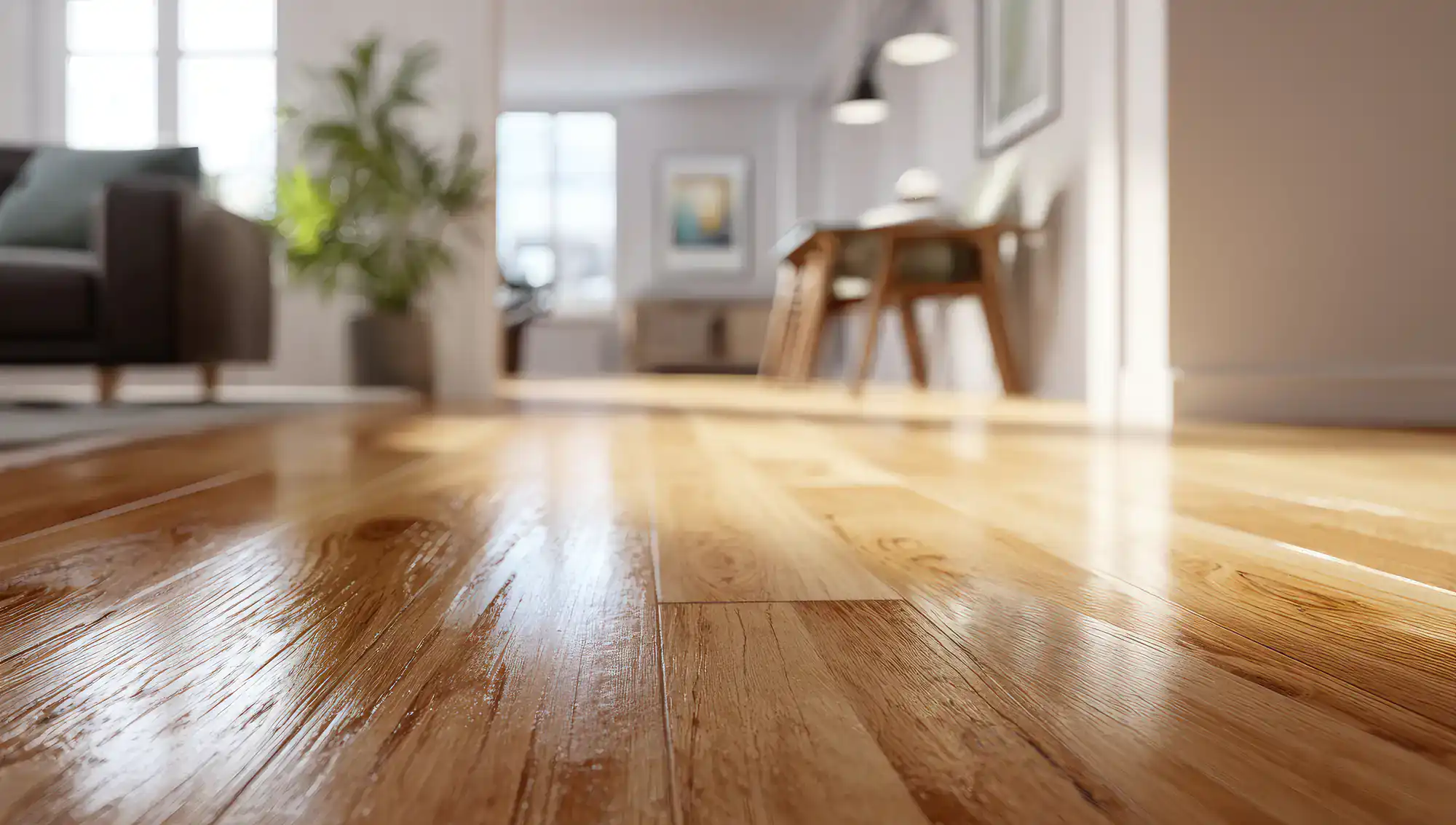
When a hardwood floor in Martin’s Additions gets properly refinished, you’re not just looking at a cleaner surface you’re looking at a floor brought back to what it was built to be. Solid oak that’s been in place for 80 or 100 years still has life in it. Done correctly, refinishing recovers the grain, the warmth, and the character that years of foot traffic and seasonal wear have dulled down.
Martin’s Additions sits in a climate that’s genuinely hard on wood floors. DC-area summers push humidity into the 80–90% range, which causes hardwood to absorb moisture and expand. Then winter heating pulls that moisture back out, and the wood contracts sometimes leaving visible gaps between planks. Homes on Cummings Lane, Thornapple Street, and Summit Avenue have been cycling through those extremes for decades.
A contractor who understands how Maryland humidity affects wood movement, and who times the work accordingly, produces results that actually hold up season after season. We also know that at the price point of homes in Martin’s Additions median values well over $1,000,000 hardwood floor refinishing returns roughly 147% ROI at resale, according to NAR and NARI data. That’s not a reason to refinish on its own, but it’s worth knowing that restoring what you already have is one of the smarter investments you can make in a home like this.
We’re based in Bethesda, MD right at the edge of the Chevy Chase corridor that Martin’s Additions sits within. We’ve been doing hardwood flooring work across DC, Maryland, and Virginia for more than 50 years, and thousands of completed jobs later, our approach hasn’t changed: show up, do the work right, and stay accountable to the client throughout.
Gordon Franks founded the company and still personally supervises every job. That’s not a tagline it’s how the work gets done. You’re not handing your floors over to an anonymous crew and hoping for the best. Gordon stays in direct contact with clients from the first call to the final walkthrough, which is exactly the kind of accountability that matters in a close-knit village of 329 homes where word travels fast.
We hold 300+ recommendations on DC Consumers’ Checkbook the review platform that DC-area homeowners actually rely on along with a 4.8 out of 5 rating on Houzz. We’re fully licensed in Maryland (MHIC # 28145), DC, and Virginia, and fully insured. Those aren’t just credentials in Martin’s Additions, where the village’s own building regulations can run stricter than Montgomery County’s, they’re the baseline for working here responsibly.
It starts with an honest assessment. Before any sanding happens, we inspect the floor condition of the boards, how many refinishing cycles may remain, whether there are areas that need repair or board replacement first. For pre-WWII homes in Martin’s Additions, this step matters more than most people realize. A century-old solid oak floor that’s been waxed, then polyurethaned, then refinished once or twice already tells a different story than a newer floor, and our approach has to match what’s actually there.
From there, any necessary repairs happen before the refinishing work begins. If boards have been replaced at different points in the home’s history which is common in older Chevy Chase-area homes we match the species, cut, and grain to the surrounding original floor. Once the floor is ready, sanding moves through progressively finer grits to create a smooth, even surface without gouges or uneven spots.
Staining and finishing follow, with humidity monitored between coats. This is where Martin’s Additions’ climate makes the process non-negotiable: applying finish coats without accounting for ambient humidity leads to adhesion problems and finishes that don’t last. The job wraps with a final walkthrough you see the result, you raise anything that needs attention, and we address it before the crew leaves.
Interior hardwood floor refinishing typically doesn’t require a permit on its own, but if your project involves subfloor repair or connects to a broader renovation, we can help you navigate the dual-permit process that Martin’s Additions and Montgomery County both require.
Ready to get started?
Hardwood flooring work in Martin’s Additions doesn’t follow a single script, because the homes here don’t either. The village has turn-of-the-century farmhouses, 1930s bungalows, Colonials, and a handful of contemporary replacements each with a different floor situation underneath. We handle the full range: hardwood floor installation for new construction or full replacement, wood floor refinishing for floors that have the bones but need the surface brought back, hardwood floor sanding as a standalone service, targeted hardwood floor repair for boards that have cupped, split, or sustained water damage, and engineered hardwood flooring assessment and work for homes where solid hardwood wasn’t the original choice.
On engineered hardwood specifically a lot of homeowners in the Chevy Chase area don’t know whether their floors can be refinished at all. The answer depends on the thickness of the wear layer. If it’s 3mm or more, full refinishing is usually an option. If it’s thinner, recoating or targeted repair may be the better path. We can assess what you actually have and tell you what’s possible before any work starts so you’re not pushed toward a full replacement you may not need.
Because we’re also a full-service contractor handling painting, tiling, and remodeling, homeowners doing a broader renovation which is common in a village where century-old homes are being updated without losing their character can run all of it through one contractor. That’s one point of contact, one consistent standard, and no juggling multiple vendors across the same job.
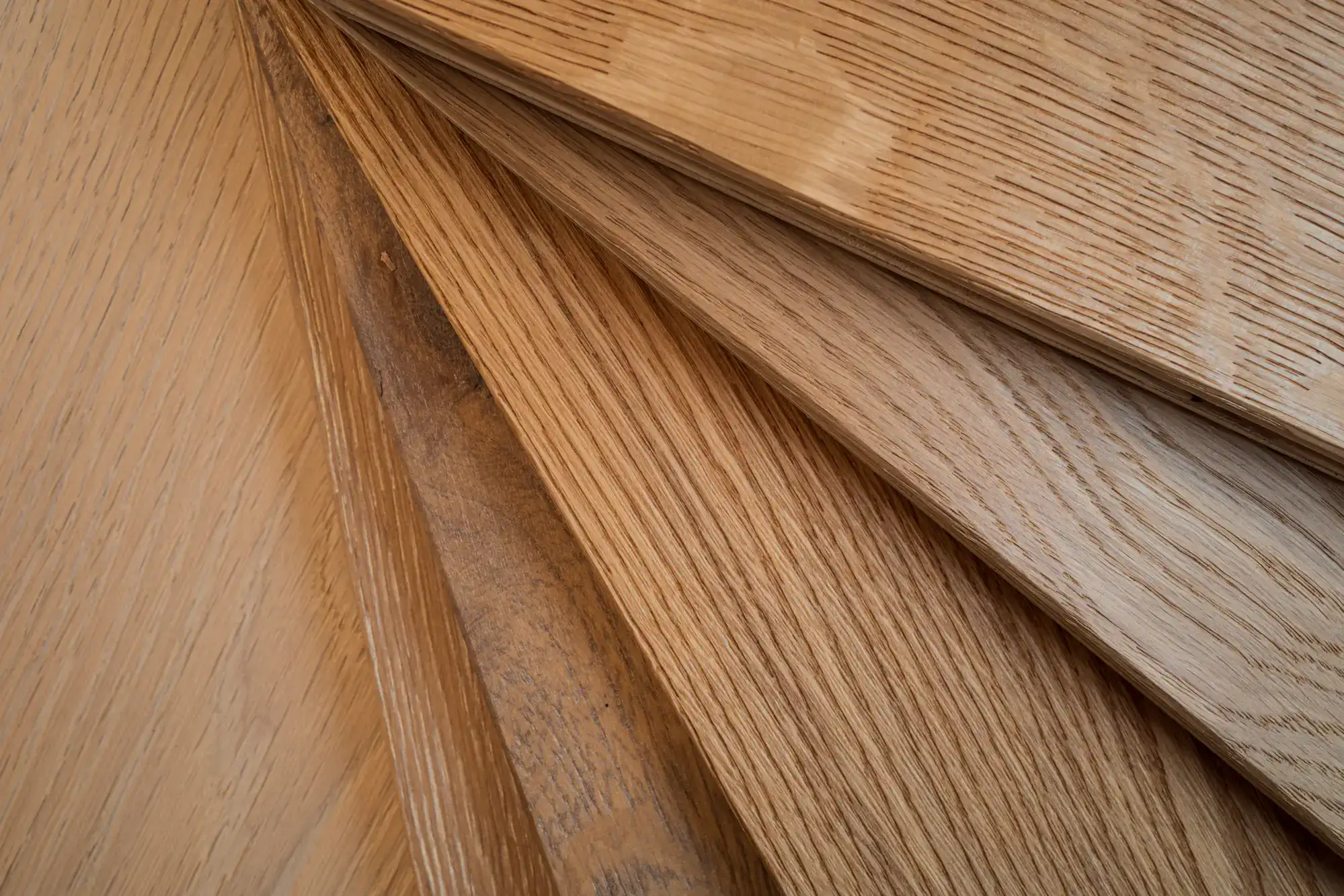
In most cases, yes but it depends on what’s actually there. The majority of homes in Martin’s Additions were built before World War II, which means the floors are likely solid hardwood, usually oak. Solid hardwood can typically be sanded and refinished four to five times over its lifespan, and a floor that’s been in place for 80 or 100 years may still have one or two refinishing cycles left in it.
The key is an honest assessment before anything starts. A floor that’s been waxed for decades and then coated with polyurethane at some point requires a different approach than one that’s had a straightforward refinishing history. The thickness of the remaining wood above the tongue-and-groove joint determines whether sanding is still viable. We’ll tell you exactly what the floor can support including whether targeted board replacement makes more sense in certain areas before any sanding equipment comes out.
Maryland’s seasonal humidity swings are one of the most common reasons hardwood floors in the DC area show premature wear, gapping, or cupping. In summer, relative humidity regularly reaches 80–90%, which causes wood to absorb moisture and expand. In winter, indoor heating drops that humidity sharply, and the wood contracts sometimes leaving visible gaps between planks that weren’t there six months ago.
For homes in Martin’s Additions, where many floors have been cycling through these extremes for close to a century, the cumulative effect shows up as boards that no longer sit perfectly flat, gaps that don’t fully close when humidity returns, or surface checking in areas that dry out fastest. We refinish floors during stable humidity conditions typically spring or fall so the finish adheres properly and holds up through the seasons. Timing matters, and we don’t rush finish coats when the humidity is wrong.
Refinishing is almost always the better call if the boards themselves are structurally sound. It costs significantly less than full replacement, it’s faster, and it preserves the original wood which, in a home built in the 1920s or 1930s, is often old-growth oak with a grain density you simply can’t replicate with new material. Refinishing also returns roughly 147% ROI at resale, according to NAR and NARI data, which matters in a market where Martin’s Additions homes regularly list above $1.5 million.
Replacement makes more sense when more than 30–40% of the boards have been damaged beyond repair, when the subfloor has significant structural issues, or when the wear layer on an engineered floor is too thin to sand again. We’ll give you a straight answer about what the floor actually needs not a recommendation shaped by which option costs more.
For standard interior hardwood floor refinishing sanding, staining, and applying finish coats a permit is not typically required in Maryland. That holds for most straightforward refinishing projects in Martin’s Additions.
Where it gets more complicated is when the scope expands. Martin’s Additions is an incorporated village with its own building regulations, and those regulations are sometimes more restrictive than Montgomery County’s general code. If your floor project involves subfloor repair, structural modifications, or is part of a broader kitchen or bathroom renovation, you may need permits from both the village and the county. The village’s own guidance explicitly states that homeowners should contact the village before beginning any project that touches the structure. We hold Maryland MHIC # 28145 the license required for legal home improvement contracting in Maryland and we’re fully insured. If your project has any scope that might trigger the dual-permit process, that’s worth discussing during the estimate conversation before work begins.
Engineered hardwood can often be refinished, but it’s not a blanket yes the determining factor is the thickness of the wear layer, which is the solid wood veneer on top of the plywood core. If that layer is 3mm or more, full sanding and refinishing is generally viable. If it’s thinner, you’re looking at recoating (which refreshes the finish without removing wood), topical repair products, or in some cases section replacement.
This matters in Martin’s Additions and the surrounding Chevy Chase area because a number of mid-century renovations and more recent contemporary builds used engineered hardwood rather than solid. Many homeowners don’t know which type they have, let alone how thick the wear layer is. We can assess the floor directly measure the wear layer, evaluate the current finish condition, and tell you honestly what’s possible. The goal is to give you the most cost-effective path forward, whether that’s refinishing, recoating, or something else entirely.
In a village of roughly 329 homes, contractor reputation moves quickly. Neighbors talk at Brookville Market, at Norwood Local Park, through the village’s own street captain network. A contractor who does excellent work on Oxford Street gets recommended on Shepherd Street within weeks. That social accountability is built into how Martin’s Additions operates, and it’s worth factoring into how you evaluate your options.
Beyond word of mouth, the practical checklist is straightforward: verify that the contractor holds a valid Maryland MHIC license (required for any home improvement work in the state), confirm they’re fully insured, and look at reviews from sources that DC-area homeowners actually trust DC Consumers’ Checkbook carries more weight here than generic platforms because it’s a curated, paid-subscription service, not a self-selected review pool. We hold 300+ recommendations there, along with a 4.8 out of 5 rating on Houzz, and have been working in homes across the Bethesda and Chevy Chase corridor for more than 50 years. Ask any contractor you’re considering to show their license number and proof of insurance before signing anything a contractor with nothing to hide will hand that over without hesitation.
Other Services we provide in Martin'S Additions