“
If your home was built in the 1920s or 1930s which describes a large share of Martin’s Additions there’s a good chance your windows are either original wood-frame units or first-generation replacements installed in the 1980s or 1990s. Either way, they’re not doing what modern windows do. You’re losing conditioned air in the summer, pulling in cold drafts in the winter, and your HVAC system is working harder than it should to compensate.
The U.S. Department of Energy puts it plainly: windows account for 25 to 30 percent of a home’s heating and cooling energy use. Replacing aging single-pane or failed-seal windows with ENERGY STAR-certified double-pane units can cut that loss significantly homeowners average around $510 a year in energy savings after replacement, based on a 2025 This Old House survey. In Martin’s Additions, where Maryland’s humid summers and cold winters put constant pressure on older homes, that’s not a small thing.
Beyond energy, there’s the moisture issue specific to Martin’s Additions. The village’s famous canopy of mature live oaks and beeches maintained by the village’s own arborist creates shaded, damp conditions on north- and east-facing elevations that accelerate wood frame deterioration. If you haven’t inspected those window frames recently, it’s worth doing. Rotted sills and failed caulk on shaded walls often go unnoticed until the damage spreads to the surrounding structure. New windows, properly installed, stop that cycle before it becomes a bigger repair.
We’ve been working in the DC metro area since 1973 which means we were remodeling homes in the Chevy Chase and Bethesda corridor before most of the current residents of Martin’s Additions moved in. We’re based in Bethesda, a short drive from the village. This isn’t a regional chain dispatching crews from across the county we’re a neighbor who knows the housing stock, knows the market, and knows what a 1930s Colonial Revival or Tudor bungalow actually requires when you’re replacing a window.
We hold active contractor licenses in Maryland (MHIC #28145), Washington D.C. (#39937921), and Virginia (#2705077763). We’ve earned more than 300 recommendations on Washington D.C. Consumers’ Checkbook the subscription-based consumer research service that DC metro homeowners actually rely on when making decisions like this one. Gordon Franks, our founder, personally responds to inquiries, personally reviews estimates, and is reachable by name. That’s not common in this industry, and in a village of 329 homes where neighbors talk, it matters.
It starts with a conversation. We review your project, visit the home, and take accurate measurements of each opening. In Martin’s Additions where homes date to the 1920s and 1930s window openings are often non-standard sizes that don’t match anything off a modern shelf. Getting the measurements right before ordering anything is the difference between a clean install and a costly correction.
Before any work begins, permitting gets handled properly. This is critical in Martin’s Additions specifically: because the village is an incorporated municipality, exterior construction work typically requires permits from both the Village of Martin’s Additions and Montgomery County. The village’s own guidance notes that its building regulations are sometimes more restrictive than the county’s. A contractor who doesn’t know to contact the Village Office before starting can create a compliance problem for you one that surfaces at resale. We operate in this market and handle the permitting process correctly from the start.
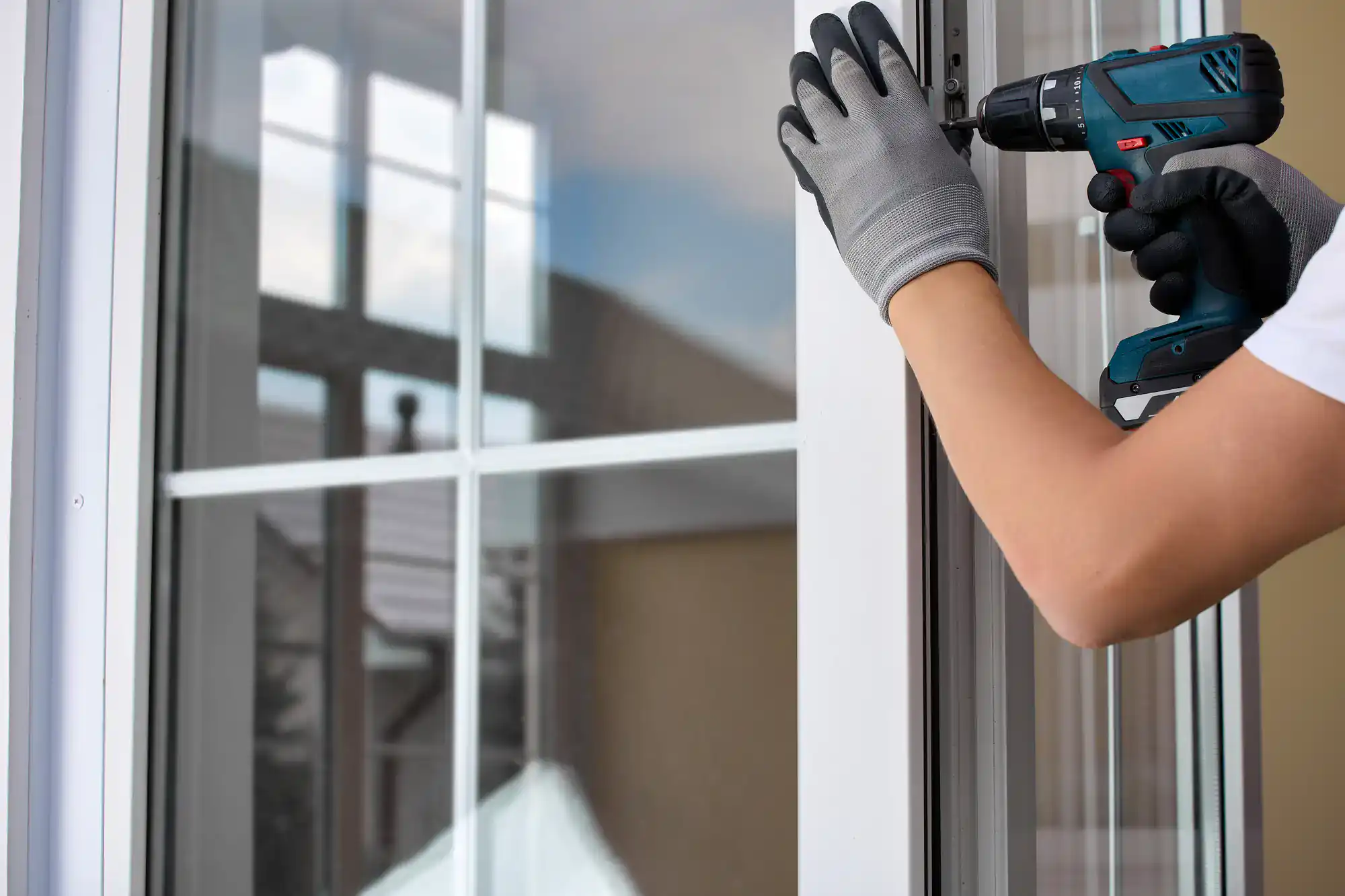
On installation day, our professional crew works through each window systematically. Insert replacement the most common approach, where the new window unit is installed within the existing frame typically runs 45 to 60 minutes per window. Most whole-house projects in a home this size are completed in a single day. Trim is protected, original millwork is handled carefully, and cleanup happens before we leave. If the installation reveals rotted framing, damaged plaster, or trim that needs attention, we have the in-house capability to address it no separate contractor coordination required.
Ready to get started?
The dominant window style in Martin’s Additions’ Colonial Revival, Tudor Revival, and Arts and Crafts homes is the double-hung window the classic two-sash design that has defined American residential architecture for over a century. Modern double-hung replacement windows preserve that traditional appearance while delivering dramatically better performance: double-pane Low-E glass, argon gas fill, and tilt-in sashes that make cleaning upper-floor windows manageable without a ladder.
Vinyl is the most common frame material for replacement windows it covers roughly 70 percent of all U.S. window replacements and for good reason. It holds up well against Maryland’s humidity cycles, doesn’t require painting, and delivers strong energy performance at a reasonable cost. For homeowners in Martin’s Additions who want a wood look to match historic trim, wood-look vinyl and fiberglass options are available. For openings that don’t need full-frame replacement, energy efficient window glass replacement within the existing frame is often the right call less disruption, same performance improvement.
Montgomery County homeowners are also eligible to stack incentives on qualifying installations: the federal IRA Section 25C tax credit covers 30 percent of material costs up to $600 per year for ENERGY STAR Most Efficient certified windows, and Montgomery County offers an additional energy efficiency tax credit of up to $250 per year for window replacements. Pepco, which serves this area, also offers rebates through the EmPOWER Maryland program. A properly documented installation with the right certified products ensures you have what you need to claim those credits we install products that meet those standards and can walk you through what documentation you’ll need.

Yes, and this is one of the most important things to get right before any work begins in Martin’s Additions. Because the village is an incorporated municipality not an unincorporated community like Bethesda or Silver Spring exterior construction work typically requires permits from two separate entities: the Village of Martin’s Additions and Montgomery County. The village’s own guidance states that its building regulations are sometimes more restrictive than the county’s, and they strongly advise contacting the Village Office before starting any project.
For window replacement specifically, insert replacement (where the new window goes inside the existing frame without disturbing the exterior casing) carries less permitting exposure than full-frame replacement, which alters the exterior of the home. But the right answer depends on your specific project and home. We operate in this market and handle the permitting process correctly which means no compliance issues surfacing at resale and no surprises for you mid-project. If you’re unsure where your project falls, the Village Office can be reached at 301-656-4112.
The honest answer is: it depends on what’s wrong. Some issues are repairable a broken latch, a failed weatherstrip, a single cracked pane in an otherwise sound frame. Those don’t necessarily warrant full replacement. But certain conditions can’t be fixed to a standard that makes repair worthwhile. Fogged or cloudy glass between the panes means the seal has failed and the insulating gas has escaped you can’t restore that seal. Rotted wood frames, especially on shaded north-facing elevations common in Martin’s Additions’ heavily canopied streets, often can’t be stabilized without replacing the entire unit. Single-pane glass, which exists in some of the village’s oldest unrenovated homes, simply cannot be upgraded to meet modern energy performance standards through repair alone.
The practical test is whether the repair cost gets you meaningfully closer to what a new window delivers in performance and longevity. If you’re spending money on a frame that has another five years in it, you’re not solving the problem you’re delaying it. A straightforward in-home assessment will tell you which windows are candidates for repair and which ones have passed that threshold.
For most homes in Martin’s Additions, the answer is a double-hung replacement window and that’s not a coincidence. Double-hung windows are the historically accurate style for Colonial Revival, Tudor Revival, and Arts and Crafts homes built in the 1920s and 1930s. A double-hung unit has two operable sashes that slide vertically, which matches the proportions and visual character of what was originally there. Modern double-hung replacement windows add tilt-in sashes for easier cleaning, double-pane Low-E glass, and argon gas fill all without changing the exterior appearance of the home.
Frame material is a separate decision. Vinyl is the most common choice and holds up well in Maryland’s climate it doesn’t rot, doesn’t require painting, and performs consistently through the humidity cycles that affect this area. For homeowners who want to preserve a wood look to complement original millwork or painted trim, wood-look vinyl and fiberglass options are available. What matters most is getting the proportions right for the existing opening, which is why accurate measurement before ordering is non-negotiable in older homes where opening sizes are rarely standard.
This is a legitimate concern in Martin’s Additions, where many homes have original millwork, painted wood trim, and plaster walls that are genuinely irreplaceable. Insert replacement the most common approach for existing homes is designed to minimize interior and exterior disturbance. The new window unit installs within the existing frame, so the surrounding casing, interior trim, and plaster remain untouched in most cases. The exterior siding and brick are also left intact.
Full-frame replacement is a different story. It involves removing the entire window assembly down to the rough opening, which does require disturbing the surrounding wall finish. Full-frame is typically warranted when the existing frame is rotted, out of square, or structurally compromised not as a default approach. We tell you which method is appropriate for each window and why, rather than defaulting to the more invasive option across the board. We’ve been working in pre-war homes in the Chevy Chase and Bethesda area for over 50 years protecting original details in older homes is part of the job, not an afterthought.
Martin’s Additions homeowners are in a good position when it comes to incentive stacking. At the federal level, the IRA Section 25C tax credit covers 30 percent of material costs up to $600 per year for ENERGY STAR Most Efficient certified windows claimed on IRS Form 5695. Montgomery County adds its own energy efficiency tax credit of up to $250 per year for qualifying window replacements, claimed separately through the county. Pepco, which serves the Chevy Chase and Bethesda area, also offers rebates through the EmPOWER Maryland program for energy efficiency upgrades.
The key to accessing these incentives is making sure the windows installed actually meet the qualifying standards ENERGY STAR Most Efficient certification for the federal credit, and the county’s own qualifying criteria for the county credit. That requires both the right products and the right documentation from your contractor. We install products that meet these standards and ensure you have what you need for your tax filings. Note: federal credit eligibility and amounts can change verify current status with a tax professional before filing.
It’s one of the things that makes the village genuinely beautiful the canopy of mature live oaks and beeches lining the streets, some hundreds of years old, maintained by the village’s own arborist. But for homeowners with wood-frame windows or aging first-generation replacements, that same canopy creates conditions that accelerate deterioration in ways that aren’t always obvious until the damage is significant.
Shaded north- and east-facing elevations stay damp longer after rain. Leaf debris accumulates in window sill channels and tracks, holding moisture against the frame. Reduced sun exposure on shaded walls means small failures in caulk or weatherstripping go undetected longer than they would on a sun-exposed south-facing wall. Over time, this leads to wood rot, paint failure, and moisture infiltration into the surrounding wall framing problems that start at the window but don’t stay there. If your home has mature trees close to the structure, the windows on the shaded sides deserve a closer look than the ones facing the street. Catching frame deterioration early is significantly less expensive than addressing it after it’s spread to the surrounding structure.
Other Services we provide in Martin'S Additions